



In August 1945, the world was transformed in the blink of an eye when the U.S. dropped atomic bombs on Hiroshima and Nagasaki. That act of destruction sparked the end of World War II, and the beginning of endless suffering for those who survived.
It was the first and only attack with nuclear weapons in our history, and the story of White Light/Black Rain is the reason it should never, ever happen again. Hundreds of thousands of people died as a result of the bombings, but when you meet the survivors, it seems that the worst victims were those who lived.
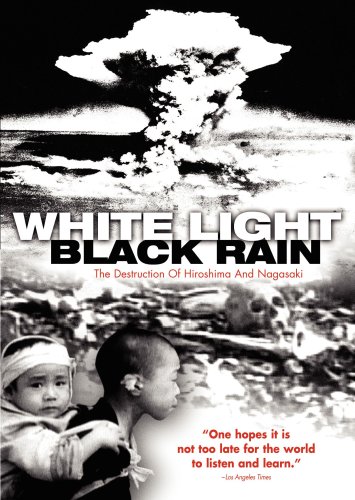
White Light/Black Rain introduces us to the survivors of Nagasaki and Hiroshima. Through horrific archival footage, shocking photography and unbelievably moving interviews with the survivors and with the Americans who believed their involvement with the attack would help end the Second World War, this HBO documentary film presents the painful legacy of humankind’s most terrible actions. To watch White Light/Black Rain is to understand the terrible consequences of nuclear war, to wish the the atomic bomb had never been invented and to hope those in power will not forget August, 1945.
I’m hesitant to write much more about this film. It is an incredibly powerful documentary, and its topic is strife with horror, pain and grief. I will say that part of what makes this film succeed is how producer/director/editor Steven Okazaki lets the images and the interviewees’ words speak for themselves. There is no narration, unless you count the titles and facts that appear as on-screen text, but even those are few and far between. Even the editing is quite simple, but highly effective.
You will not enjoy White Light/Black Rain, but I certainly hope you’ll see it.
Video
White Light/Black Rain: The Destruction of Hiroshima and Nagasaki is presented on a single disc, in a 16:9 aspect ratio. Given the nature of this documentary, there is a wide variety of source footage that correspondingly varies in quality. The bulk of the film, the interviews, look the best, sharp and detailed with consistent colour. The most visually interesting portion of the film is the collection of art, drawings and paintings done by the victims, which are almost more horrific than the actual photography.
Audio
Sound is a mix of English and Japanese (with English subtitles), in 2.0 stereo. There’s no need for a full surround track, though, as the audio is limited to the dialog of the interviewees and a moving score. There’s very little in the way of ambient sound or effects. Everything here sounds lively and clearly audible.
Special Features
There are no extras on this disc, unless you count the chapter-selection feature.
Final Thoughts
White Light/Black Rain is a must-see documentary, but be warned: a lot of the imagery is not for the squeamish, and definitely not appropriate for young audiences. If you can handle it, rent or buy this DVD in the near future.





2 Responses
Hi guys-
I’ve been looking forward to seeing this on HBO and blogging about it as well. I was in Nagasaki in 2001 and visited the location where the bomb detonated. Completely frightening when you realize how residential the area is (and was then). And the sculpture and architecture in the park where it occurred is somber, hopeful and protective all at the same time.
Thanks for the review.
On a much lighter note, I noticed that Pom Poko is listed as a related post. I reviewed that movie — what a riot!
Best,
Norm
Thanks for your comment, Norm. I’m sure it’s quite the experience to see the site for yourself, even so many years later.
As for Pom Poko, haven’t seen it, but it certainly sounds interesting.