



“When my father smells oil, nature repents! And there’ll be oil; when it flows – and flow it will – my father will be right here with a bonus for everybody! It’ll be Saturday night in a few hours, and I’ve only one more duty – to see our Mexican workers and wish them a safe journey ‘home’. You all have a happy weekend and wish me one; we’ve labored hard, and we deserve the happiness that all Americans know to be their birthright!”
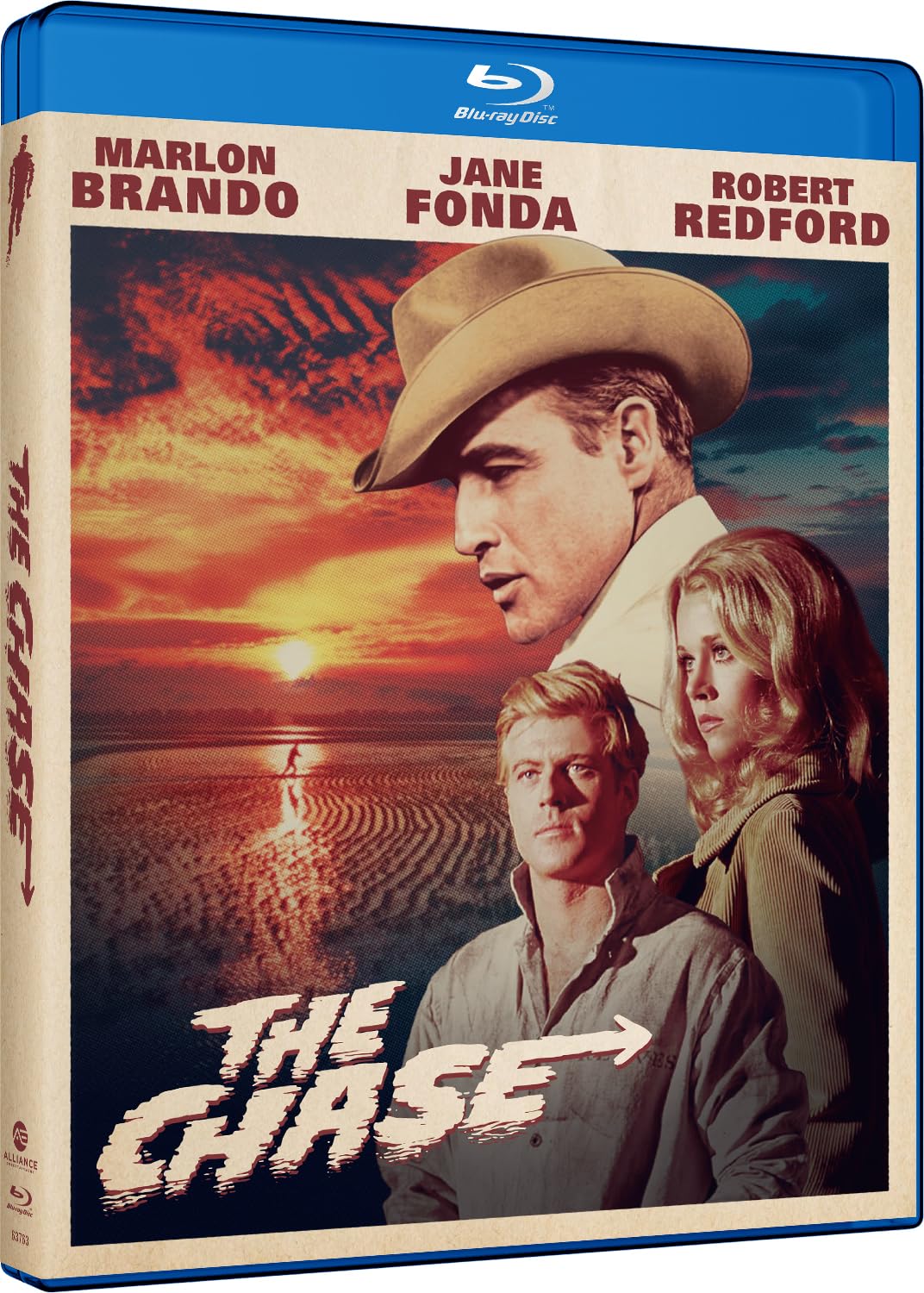
It was Sam Spiegel who first saw the potential of the Horton Foote novel and play The Chase back in the 1950’s. It was suggested as a vehicle for Montgomery Clift, but the rights languished for almost 10 years. Spiegel finally got the film off the ground and lured a pretty solid cast into the fold. Marlon Brando was a huge star, but the futures of actors like Robert Redford and even Robert Duvall hadn’t quite risen yet. He brought on director Arthur Penn, who was a year away from his breakout film Bonnie And Clyde. He also gave John Barry his very first film score. John Barry would go on to compose one of the most familiar themes in movie history. He went on to compose the scores for 11 James Bond films, more than any other composer, and his twangy electric guitar theme has taken center stage on every official Bond film no matter who writes the score. And just to eventually top off his career, he composed scores for Out Of Africa and Dances With Wolves. It wasn’t exactly clear at the time, but The Chase was packed with both stars of that time and stars of the future in all areas. It never did well at the box office, and it’s one of those gems most of you have never seen. Now’s your chance with the release of the film on Blu-ray in high definition. It’s a keeper.
Bubber Reeves (Redford) has been away at a prison work camp. He’s broken out, and the news quickly reaches his small Texas hometown, where it seems everyone has a reason to hope he doesn’t come home. It doesn’t help Bubber’s case that his running mate kills a man for his car and leaves Bubber alone to make his way somewhere on his own with a murder charge chasing him through those dark woods. Preparing for his return is the town Sheriff Calder (Brando), who seems like the only one in town who doesn’t believe Bubber’s a killer and hopes to find him before an angry mob gets their hands on him.
Bubber picked a hell of a night to break out. This is really the story of two parties that are going on in the town. It’s Val Rogers’ (Marshall) birthday. He’s 60, and he is pretty much the rich boss of the town. Calder owes him for getting his job, and he’s gotten resentful about it. Rogers talks about leaving an empire for his son, Jake (Fox), but what he doesn’t know is that his son is part of a game of musical lovers going on in town. In many ways this film starts to play out like a new version of Peyton Place. Jake walks around with a kind of JFK swagger and has been hanging out with Bubber’s wife, Anne (Fonda). In another home there’s a party going on at the home of Edwin Stewart’s (Duvall), and his wife has been pretty open about an affair of her own. Edwin’s the only one not having any fun. Damon Fuller (Bradford) makes no secret that he wants to marry Edwin’s wife, Emily (Rule).
“With all the pistols you got there, Emily there’s no room for mine.”
It’s a sordid collection of town secrets that aren’t really very much secrets. And now the news that Bubber might be coming home has agitated this barely stable chain of relationships in town. You might get the idea that Bubber is coming home to settle some scores, but he’s really a red herring in this whole mess. He’s a catalyst for the town breaking apart at the seams, and a lot of angry folks have a not-so-friendly welcome for Bubber. When Bubber does get to town, it only ends up costing his friend Lester (Fluellen), and Brando’s Calder gets himself beat up pretty bad.
The film isn’t very cohesive, and there’s a pretty good reason for that. For some reason the studio decided not to let director Penn anywhere near the film as it was being edited, and it shows. Penn has built up terrific atmosphere, and he weaves quite an amazing collection of tales here. He also has an outstanding cast, but he lost the fight for the edit, and the film never quite gets to where it’s going. We change between these complicated stories too abruptly, and sometimes we’re not even quite sure why a character is doing something they might be doing. Penn was able to prove himself later, but I would love to have seen what a “director’s cut” of this film might have looked like. It was common then. Orson Welles saw the same thing happen to him in Touch Of Evil. He at least had the power to document his complaints, and we now have an idea what he intended for that film. Penn’s intentions are lost, but he gathered such a brilliant cast and crew that it’s compelling even as it is.
A film is basically shot three times. Once when a script is written. Second in the actual film production. The third time is when the film is edited. The Chase gets two out of three here and is worth a look. You could have ended up watching this film without knowing about the editing struggles. “I felt it was my duty, and there it is.”
