1080p

When you want to get the most bang for your buck in a low-budget 1980's slasher film, you could do a lot worse than The Dorm That Dripped Blood. It's an elusive film that has never really enjoyed much of any kind of wide release even in the video market. It was really nothing more than a student film put together as a thesis for UCLA students Stephen Carpenter and Jeffrey Obrow. Like most student films, the piece utilizes locations on the UCLA campus and makes use of local talent both in front of the camera and behind.

I’ve been a fan of South Park ever since a friend introduced me to the internet Christmas card that started it all. It was Santa versus Jesus and these short potty-mouthed kids that somehow wormed their way under your skin. Pretty soon I was downloading the episodes and watching them on my computer. For some reason I can’t quite explain, I’ve very rarely watched an episode on Comedy Central. By the time things were getting tighter and riskier downloading the shorts, the single disc, 4-episode DVDs began to arrive in stores. So my South Park viewing moved from the PC to the DVD player.

Every year when the Academy Awards have been given out, I look over the winners in each category, and more often than not I scratch my head at the ultimate winners. I find myself wondering if they saw the same movie I saw. I start to ponder if there might be an alternate-universe version of these movies that somehow find themselves in the hands of the Academy jury. Sure, once in a while they get it right.

"In the beginning was the word, and the Word was with God, and the Word was God. I am He. He was in the beginning with God. All things were made through Him, and without Him, was made nothing that has been made. In Him was life, and the life was the light of man. And the light shines on in the darkness, and the darkness grasped it not. The greatest story ever told..."

Every spring around the time of Easter you could count on several annual films to make their way to televisions across the country for special family presentations.

By the early part of World War II, the Soviet Union’s ultra-harsh prison system was already an established key to Josef Stalin’s paranoid dictatorship. Hundreds of concentration camps, called gulags, kept criminals and innocents alike trapped behind barbed wire, without edible food or minimal medical care. The most miserable gulags were the notorious Siberian compounds, stuck in such hostile sub-arctic territory that an attempt to escape was considered just another form of suicide.

There are usually two schools of thought when it comes to judging sequels. One tends to be very harsh on the proceedings expecting it to surpass the original (which it hardly ever does) in all aspects of film-making. The other still expects a good film but realizes that this sort of thing is usually financially driven and just hopes for something that can favorable stand against the original. I happen to be in the later crowd. But, I certainly found myself inching towards the former when I received the blu-ray package to review Ip Man 2, Legend of the Grandmaster. Let's go inside, shall we?

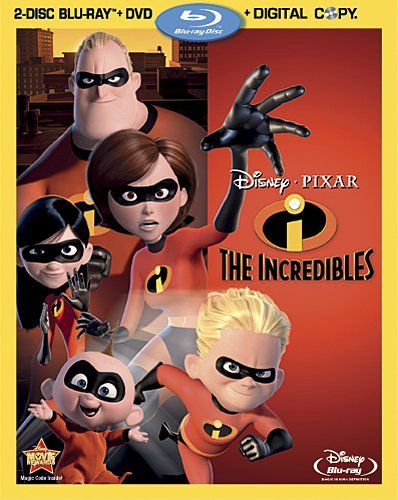
I've long held the belief that the folks at Pixar are really just children who have refused to grow up. That doesn't mean that they don't have to deal with the realities that adulthood thrust upon each of us. I'm sure they have families and are responsible citizens and parents. They consistently make movies, that while there is certainly appeal for children, are obviously intended for adults, adults like them, who have decided to never grow up. If you ever required proof of that concept, The Incredibles should prove the point quite nicely.

"So far every person I've met in this strange place suffers from the most florid delusions, chasing green mists and looking for lost lords. I can only assume that this is the result of poor diet, or they're all just barking mad."

C.S. Lewis created an incredibly imaginative world when he wrote his Chronicles Of Narnia. The stories were an escape, of sorts, from a war-torn Europe. They integrated elements of Christianity in an effort to provide a semblance of hope in the form of a children’s fairy tale.

Urine jokes. Fart jokes. Breast and penis jokes. What could be more tasteless? How about telling them all in a place where people are trying to eat? That’s the unappetizing summary of Still Waiting …, one of those unnecessary, straight-to-video sequels designed to make a quick payoff before the first film’s fans catch on.

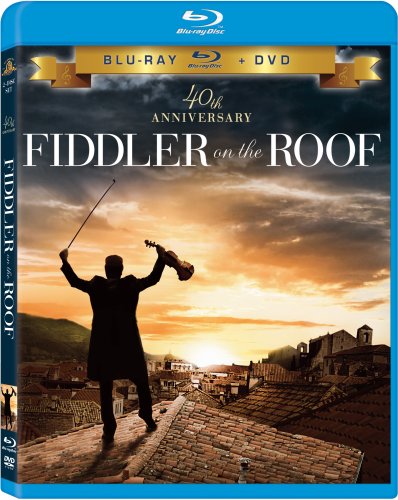
Adapted from the hit stage musical, Norman Jewison’s film version of Fiddler on the Roof has established itself as a classic over and over again since its release in 1971.

“He loves her. Love, it’s a new style… On the other hand, our old ways were once new, weren’t they?” I’ll hardly be the first to write it, but the reason Fiddler on the Roof, a story about Jewish people and their culture, is so popular, is that its themes have universal appeal.