1080p

We begin in Vietnam, where the unit of which Jacob Singer (Tim Robbins) is a member comes under attack. Jacob is bayonetted, and as he struggles with his wounds, the film flashes forward to his post-Vietnam life in New York City. He works for the post office, is divorced, is still grieving over the death of his youngest son (Macauley Culkin), and is living with his new girlfriend (Elizabeth Pena). He is also being tormented by visions of demonic figures. And then suddenly this life turns out to be a dream, and he's at home with his wife and all of his kids are alive. Or is that a dream? And what really happened in Vietnam?

Most people are aware that I don’t care for romantic comedies but nothing gets under my skin more than a horrible prison movie. My attempts to forget the movie are usually successful until the next time a similar movie appears in my review pile. Maybe it is the cliché plot, the contrived and stereo-typed characters, or the male on male forced action. How would a movie fare where it simulates the jail experience in a behavioral experiment? I dare to find out.

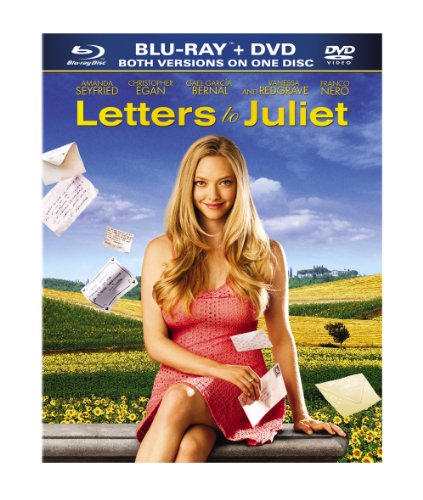
When I met my husband, and found out he wrote reviews, I never pictured myself writing as well. I had never really played with the concept, other than some short stories. But here I sit, once again, in front of my computer screen with another disc in front of me. And what do we have this time? A romantic comedy. Yes folks, I love the torture. I was asked to do Letters to Juliet as a favor for my busy husband who is adjusting to his busy new job. This has to land me home made waffles in bed sometime in the near future. But was this one really that bad? Could there be a decent romantic comedy out there? Meh, we shall see. And away we go!

Tennessee Williams was both a prolific writer and celebrated personality in his day. His plays are still making the rounds of community theaters and even more than a few higher- end performance halls around the country. Songs have been written about the guy, and he's quite honestly become a bit of a mythic legend over the years. A lot of that owes, in no small part, to his huge hit A Streetcar Named Desire. The 1947 play was a huge hit on its own. The thing even snagged a Pulitzer. There hadn't been a bigger play before it, and few have reached the popularity and classic status since. Then director Elia Kazan got his hands on the material.

"There is a fifth dimension beyond that which is known to man. It is a dimension as vast as space and as timeless as infinity. It is the middle ground between light and shadow, between science and superstition, and it lies between the pit of man's fears and the summit of his knowledge. This is the dimension of imagination. It is an area which we call the Twilight Zone."

It would be very hard, indeed, to argue against the impact that The Twilight Zone has had on television. To say that the series was a milestone in that medium would be an understatement of the worst kind.

"It is said some lives are linked across time. Connected by an ancient calling that echoes through the ages. Destiny."

The Prince Of Persia is not some new phenomenon sweeping the country. The original video game goes back quite some time to the pre-high-definition consoles of the late 1980's. Over the years the title has had some major staying power and has continued to flourish across several platforms and generations of graphics and game play. Today video games are more and more like movies themselves. Many of these games carry budgets as high as blockbuster effects-laden tent-pole films. It's big business.

I did not see Tyler Perry's moderately successful 2007 film, Why Did I Get Married. I never thought that would present much of a problem with his recent Why Did I Get Married, Too. I've seen plenty of Perry's films and think that I have a pretty good grasp of where he's coming from. Early this year I watched and reviewed I Can Do Bad All By Myself. It was a new direction for Perry and, while he did include his famous Madea character, the film wasn't really about her usual antics. I guess I expected this film to follow in the footsteps of that rather impressive effort. Unfortunately, I may have misjudged my ability to follow this film without having seen the first.

"On April 21st,1967 the 100-millionth GM vehicle rolled off the plant in Janesville. A blue two-door Caprice. There was a big ceremony, speeches, the Lt. Governor even showed up. Three days later, another car rolled off that same line. No one gave two craps about her, but they should have. Because, that 1967 Chevrolet Impala would turn out to be the most important car in pretty much the whole universe...I guess that's where the story began. And here's where it ends."

Except it doesn't; not really.

Look up in the sky. It’s a bird. It’s a plane. No, it’s…. well, Clark Kent. When Smallville was first developed for television, the show runners made a few conscious decisions that have, for the most part, been kept for the show’s first 8 seasons. There was a strict “no flights, no tights” rule that was in effect for anyone hoping to pen an adventure for the show. Everyone knows we’re talking about Superman here, but the term is avoided like a deadly disease. All of the familiar places and names are firmly in place, but make no mistake. This is the world before Superman began to make his presence known to the world.

When I saw the title for this movie my immediate thoughts went to that old Neil Diamond song of the same name. I don't know why, but I absolutely expected to hear it at some point in the film. So I actually found myself smiling a bit when the first guitar chords for the song began during the opening credits. I was a little disappointed to hear the song, but performed by the Man In Black, Johnny Cash. Not that I dislike Johnny. I just was expected something else.