1080p

“Space … the final frontier. These are the voyages of the starship Enterprise. Its continuing mission, to explore strange new worlds. To seek out new life and new civilizations. To boldly go where no one has gone before.”

Nearly 20 years after the original Star Trek left the network airwaves, Gene Roddenberry set out to discover whether he could catch lightning in a bottle once again. Some say he did an even better job with Star Trek: The Next Generation. There are times I tend to agree. The Star Trek sequel series had a lot more advantages from the moment it was conceived. Star Trek, a series that barely registered on the ratings during its three-year primetime voyage, became a huge sensation in syndication. By the time The Next Generation came on the scene, the original show had been syndicated in over 20 different languages all over the world. It had launched an animated series, and a fifth feature film was already in the early stages of consideration. So it isn’t quite fair to judge the success or quality of The Next Generation over the original series. One thing is inarguable. The second would never have existed if not for the first.

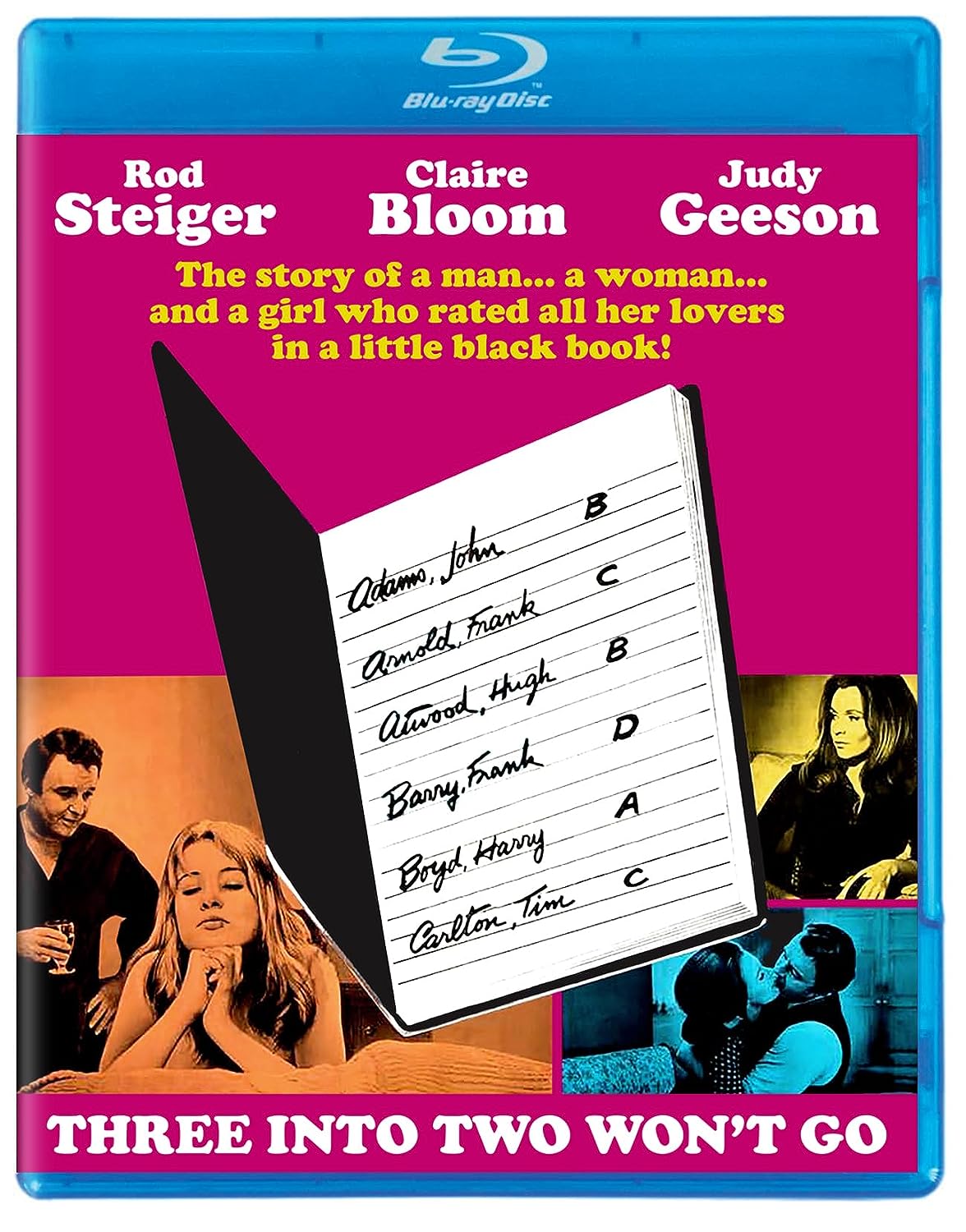
I probably could be called a lot of things, some kind and some not so kind.  But the one thing that probably most people would say about me is that I'm loyal.  Loyal to my job, loyal to my wife, loyal to my son.  However, in my life, I have certainly felt the pain of disloyalty, even to the point of infidelity.  Despite what people might say or think, you never quite expect it, and furthermore one can't predict how you might feel or act given the situation.  Today's movie Three into Two Won't Go explores the idea of what happens when a man cheats on his wife with another woman.  However, this woman stays around long after the fact and continues to press into his everyday life until it becomes unbearable.  Let's take a look.

Steve Howard (played by Rod Steiger) is driving down the road listening to some bumpy and festive music while the credits roll.  He's finger-waving and whistling and generally having a good time.  All of a sudden, he sees a 19-year-old girl named Ella Patterson (played by Judy Geeson) hitchhiking on the side of the road.  He stops the car, and honks for her to walk to the car.  She stands her ground, and eventually Steve backs up and lets her inside.

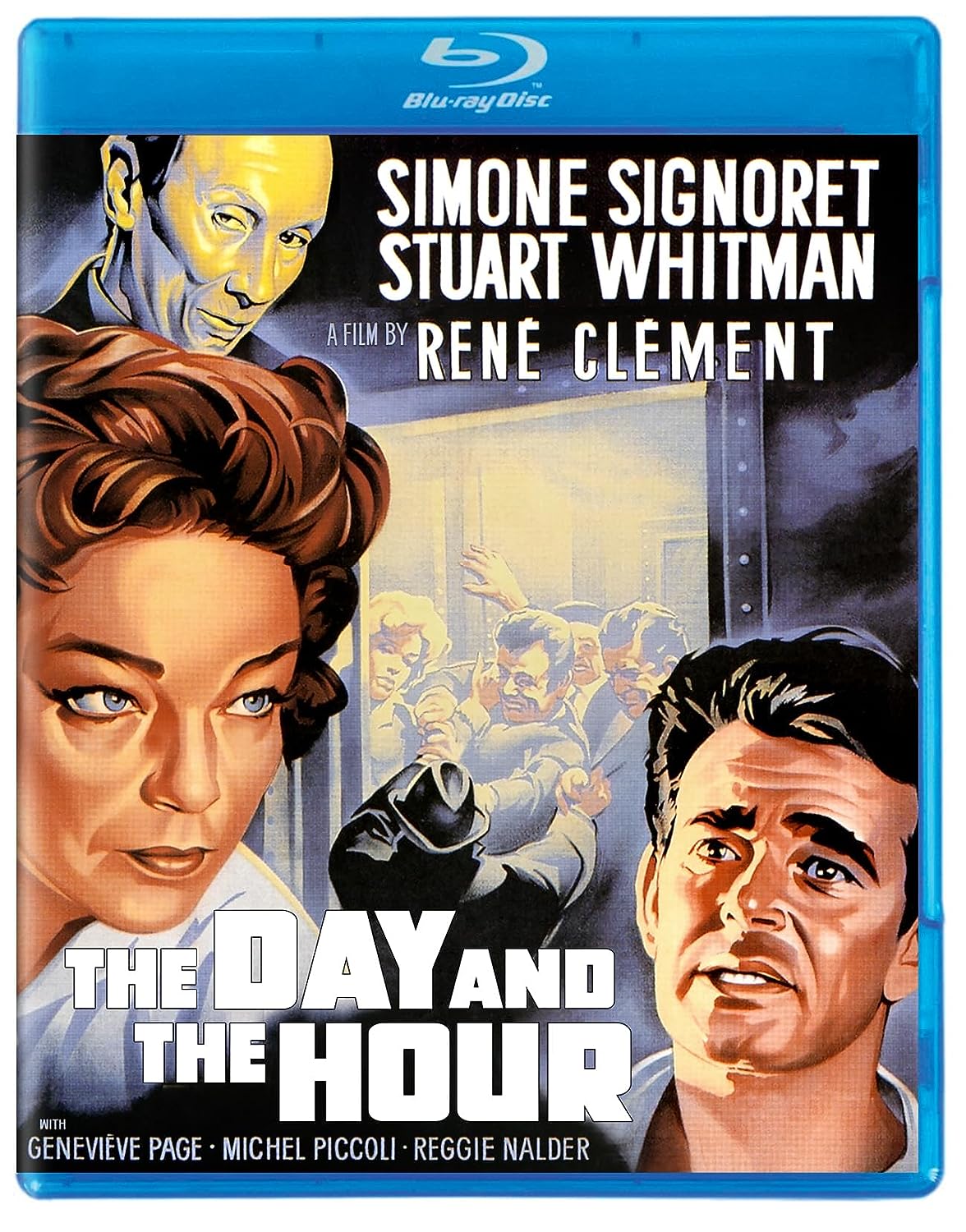
Typically, I avoid World War II period films like the plague.  I literally see the word Nazi or German occupation and usually find a reason not to see the movie.  I have nothing against the pictures; the problem is that so many of these films are surrounded in clichés that it feels like an old hat with nothing new to offer.  However, when I saw The Day and the Hour in my review pile, I was intrigued by the notion of it being in France with a female lead and something of a romance.  Far different from the usual pow pow, war is heck, or a film that's going to have buckets and buckets of tears and worrying about the human condition.  Though from the looks of things, this one might have some waterworks too.  Let's take a look.

1944, the Germans have occupied France. We open the film to a newspaper clipping. The German police have proof that three crew members on an enemy plane that was recently shot down are hiding in the Rethel commune region.  Their names are Allen Morley, Pat Riley, and Norman Thompson.  Anyone who is helping them is subject to punishment up to and including death.

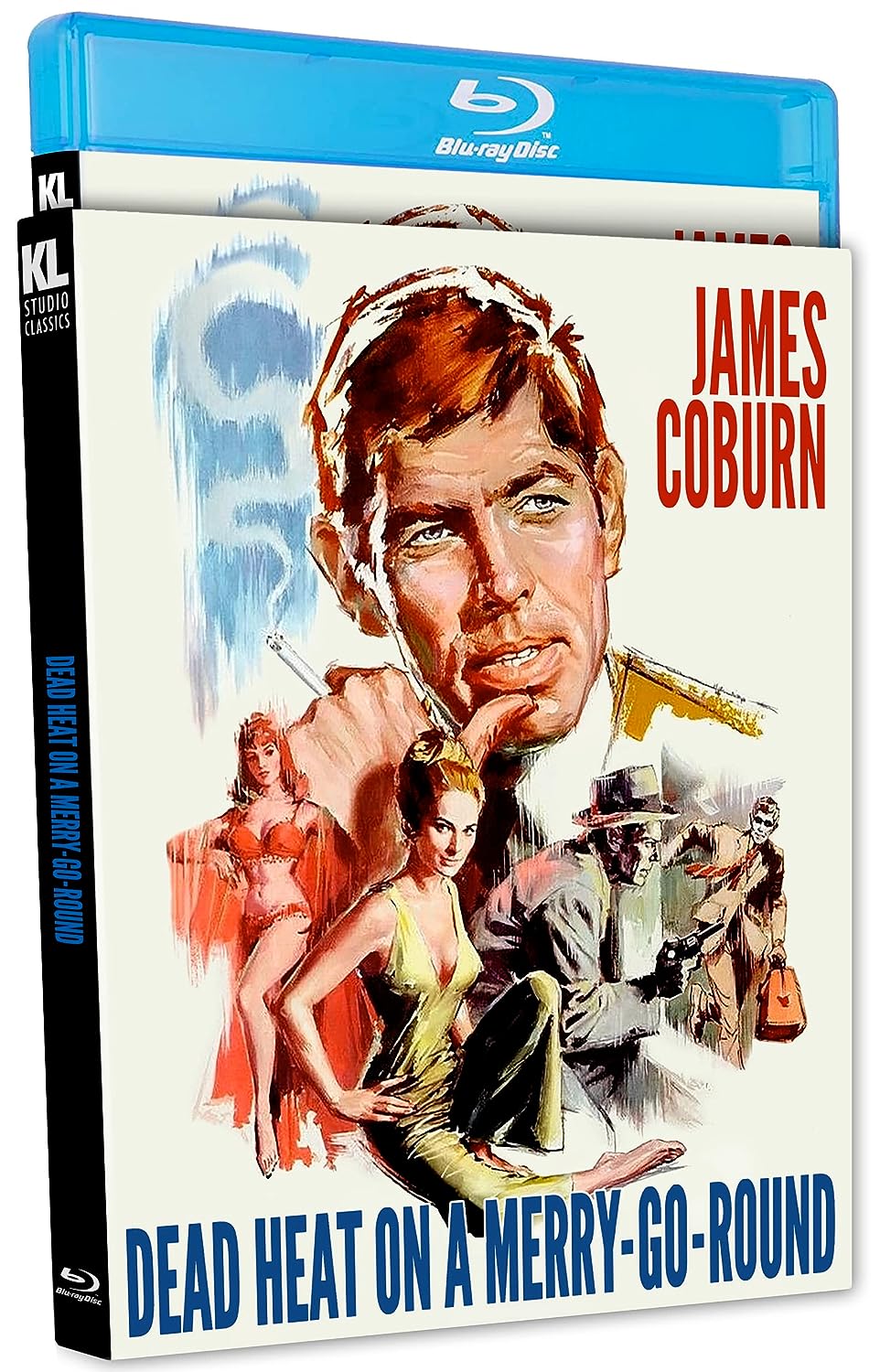
I'm a sucker for clever movie titles.  The best example I can think off the top of my head is I'm Gonna Git You Sucka.  Or perhaps you need something from yesteryear, like Bring Me the Head of Alfredo Garcia or They Shoot Horses, Don't They?  Along the lines of Sucka, we can't also forget about Don't Be A Menace to South Central While Drinking Your Juice in the Hood or The Assassination of Jesse James by the Coward Robert Ford.  So imagine my surprise when I saw the title of today's movie and jumped at the chance to provide a review.  Hopefully it is as good as the title suggests.

We get some light orchestral music (score by Stu Phillips) as the credits roll.  After the credits, we are taken to a prison where we listen to an inmate tell a story about his alcoholic father who would drink vanilla extract when he couldn't find something stronger to drink.  Therefore, he always associated his father with the smell of vanilla extract, and he couldn't stand the scent.  Perhaps we should move on to another story.

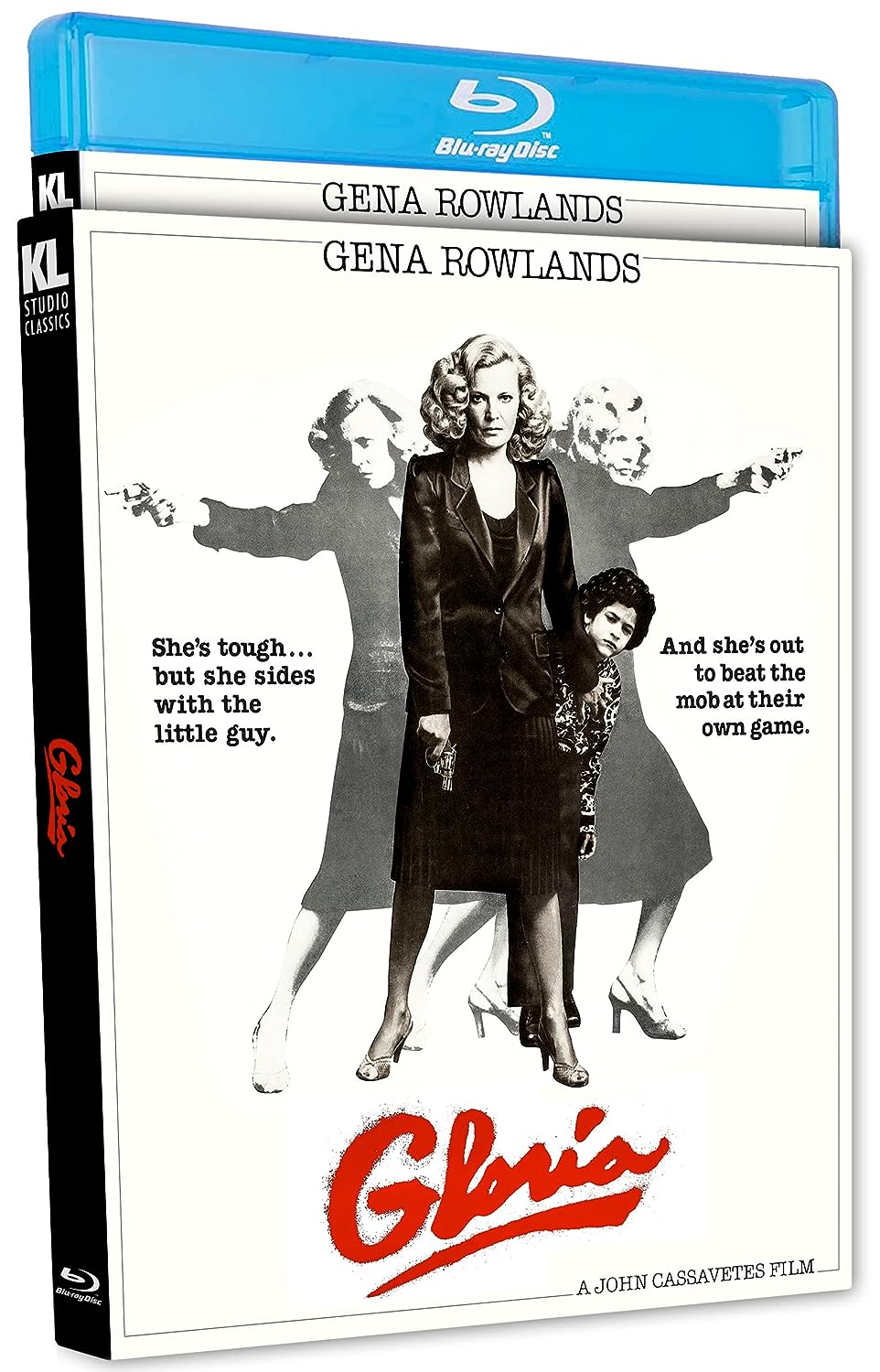
Some of my fondest memories growing up were those of my Polish grandmother and visiting her in New York for a week or two during the summer.  It was so different than when I was with my parents in North Carolina.  From the living arrangements to actually having a real basement to the subway itself, it was almost surreal in a very urban type way.  Then everyone seemingly moved to Texas, including our family, and all of the innocence was lost.  Today's movie is Gloria, a movie set in New York where a six-year-old Puerto Rican kid loses his innocence as his family is gunned down by the mob.  The only thing he has to cling to is a friend of the family named Gloria who has a few special skills of her own.  Let's check it out.

We are introduced to that funky saxophone with some bad opera singing (let's not pretend).  During the credits we are shown the artistic talents of one Romare Bearden before eventually giving us our first view of the New York City landscape at night.  We get to see Yankee Stadium, the Statue of Liberty, and either the Washington Bridge or the Brooklyn Bridge (I apologize; it's been a while since I've been in New York).

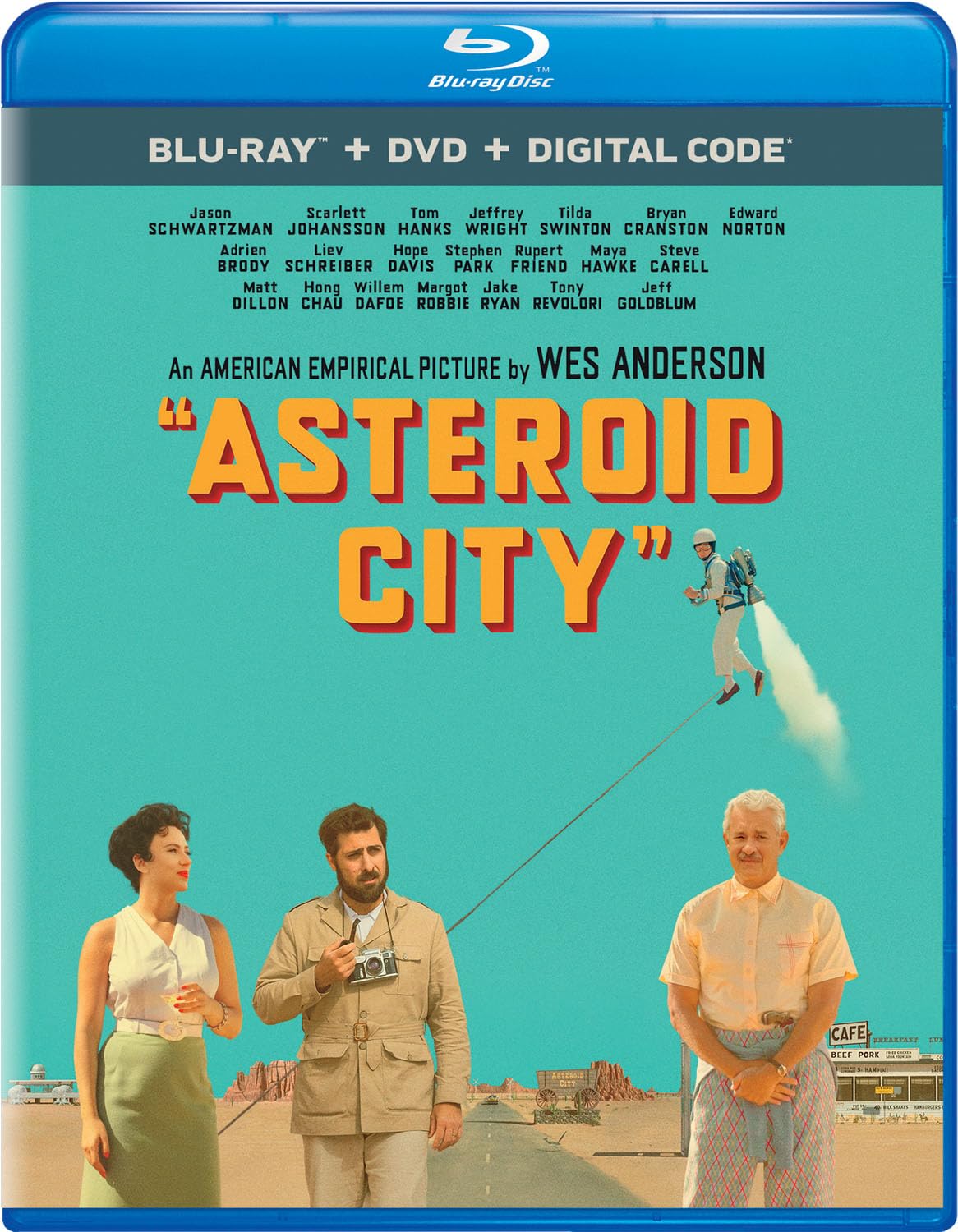
Wes Anderson is pretty much the perfect example of being a cinematic auteur. He has such a unique style that you can simply look at a couple seconds of his work, and you just know immediately you’re watching a Wes Anderson film. Even from his early days with Bottle Rocket and Rushmore to The Fantastic Mr. Fox and now Asteroid City, these films are all very different, but still one would say are uniquely Wes Anderson. His films are a bit divisive, and I completely understand, but those who are fans tend to really love his work.  Personally the only my favorite from him is Moonrise Kingdom; it was a perfect blend of style, charm, and heart; then he has a film like The French Dispatch that got plenty of critical love, but I just couldn’t really get into it. That brings us to his newest release, Asteroid City, which boasts a huge ensemble cast with many familiar faces from his previous films and some big-name stars we get to see him work with for the first time.  Is this a trip to the desert worth taking, or should you simply take a viewing detour?

The film is done in a unique way.  The black & white portions are dramatized portions about a play that is being produced for a 50’s style TV show by a famous playwright, Conrad Earp (Edward Norton).  We get to see the drama unfold as the production of the play comes to life for the TV show with the stars played by Jason Schwartzman and Scarlett Johansson. Then there is the director of the show, Schubert Green (Adrien Brody), who has his own sort of drama with his wife and his cheating ways.  Maybe I missed something, but none of this was hinted at in the trailers, and to be fair, this really took me out of the film, because the behind-the-scenes action of the TV show is constantly interrupting the pace of “Asteroid City”, which is basically a movie within a movie.

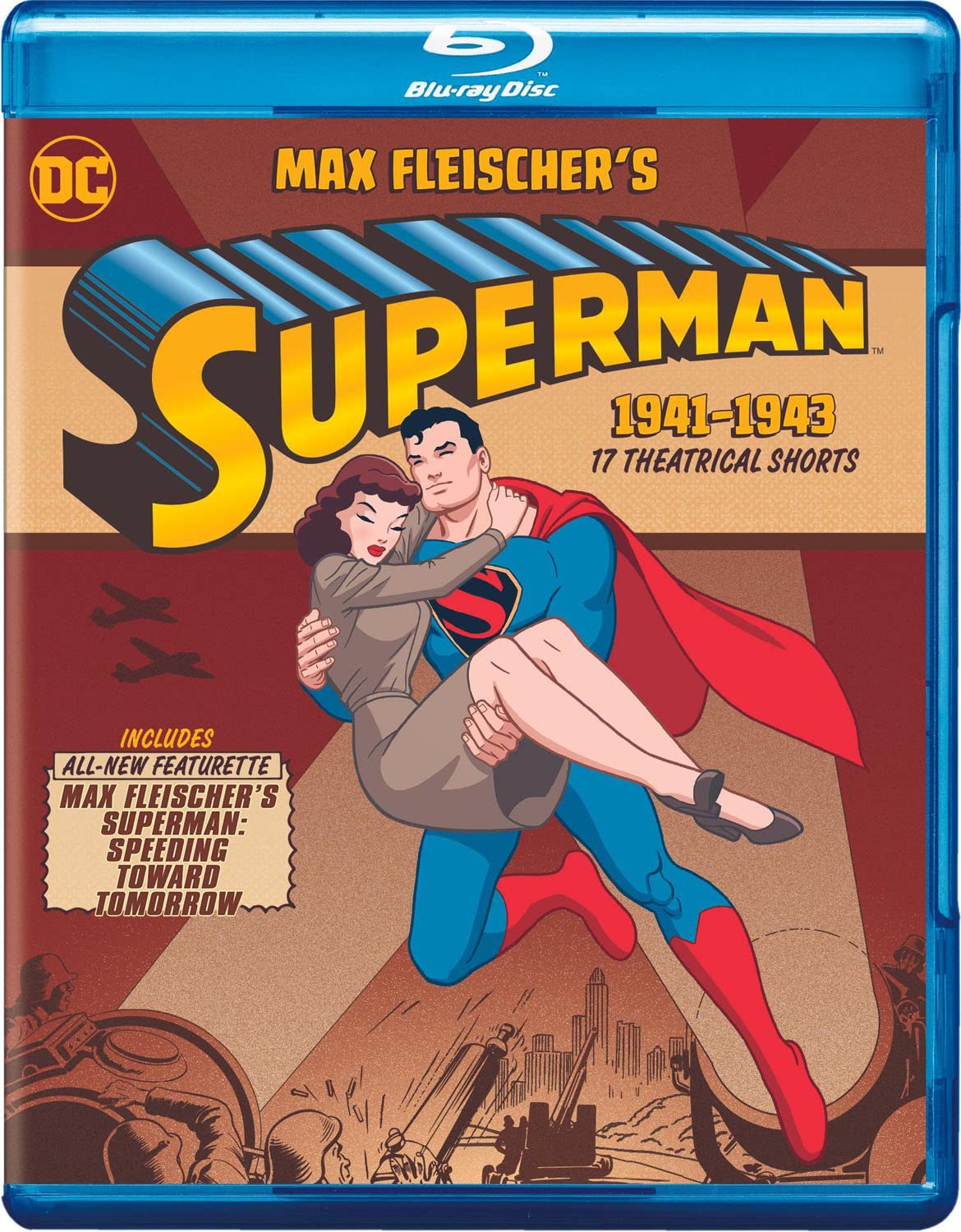
When Superman was first introduced to us, it was in Action Comics #1 back in 1938 from the writer Jerry Siegel and the artist Joe Shuster.  Since then the character has become a cultural phenomenon that’s been featured in just about every form of media from radio shows, TV shows, cartoons, movies, and everything else in between.  The character has evolved quite a bit since those early comic book days, and one of the characters biggest evolutions came with the Max Fleischer cartoon series.  It was 17 animated short films that played in theaters before the feature film began, but these short films would draw in audiences that wanted to see this caped hero and his amazing adventures.

The collection contains 17 animated shorts.

I’ll admit it; when it comes to Netflix, I’m a fan of the shows that they put out, but their movies rarely impress me.  I kind of look at Netflix films as the modern version of direct-to-video releases. They have big stars, but the quality just isn’t up to par with the big releases you’ll see in the theater. Even big name stuff like The Irishman -- it was good,  but not the masterpiece I was expecting. Honestly, my favorite films on Netflix are The Babysitter films with Samara Weaving, just a fun little film, that is basically the kind of expectations I have for a Netflix film, and even the more recent release of We Have a Ghost I thought was charming and may have done well on the big screen. As for Knives Out 2, fun but forgettable. So when I see films from the streaming service get Oscar nominations and even win, I can’t but feel the need to pull the wax out of my ears and make sure I heard that right. This is also why we’re in May and I’m just now watching the adaption of the film All Quiet on the Western Front.  This is the third time the film has been made, but this is the only version I have seen, and, well, I have to admit not only is this a good film, but it is a great film, and I feel it deserves every bit of recognition it has received.

One of the most impressive moments in this film comes early on in a brief battle sequence, but it is the aftermath of the battle that matters here. We get to see the journey of a uniform as it is stripped off the corpse of a soldier and then is shipped away to be washed up, sewn up, and prepared for the next soldier to call it their own. It’s an effective moment early on to remind us that not only is war unkind, but that it is a machine that is always working and churning out the next shooter and inevitably the next unfortunate soul to watch a bullet, a stab wound, or a random bit of shrapnel, and then the cycle starts all over again.  Then for an added touch of inhumanity to it all, when a name tag on a uniform is ripped away and discarded with many other discarded name tags on the floor, that visual reminder that these boys are nothing more than bodies of flesh, and who they really are doesn’t even matter.

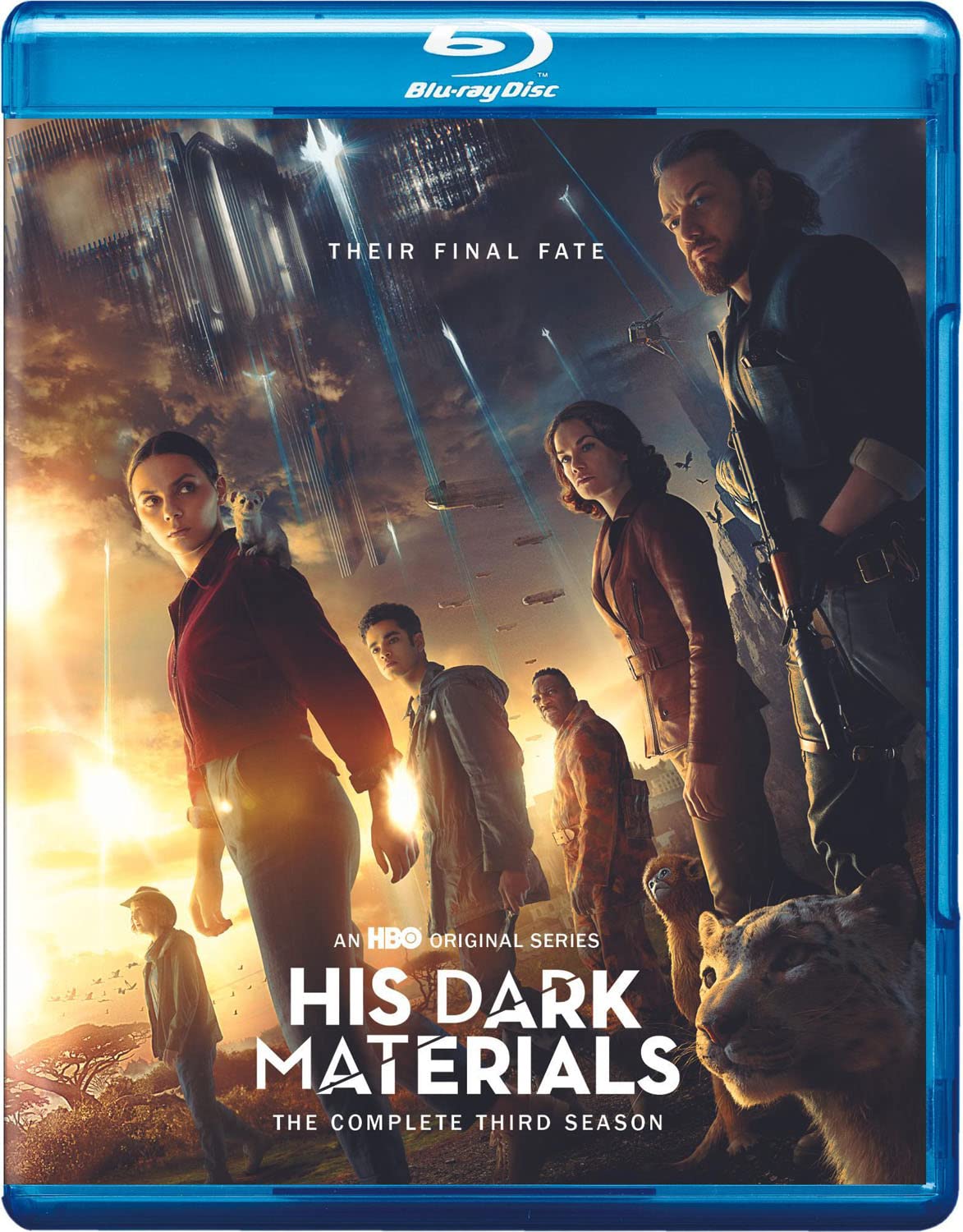
I remember when The Golden Compass came to theaters. I know I saw it because I was a projectionist and had to screen the print, but for the life of me I couldn’t remember anything about the film. Perhaps that’s why that when I first heard about HBO doing a TV series adaption of the beloved book series His Dark Materials I wasn’t all that thrilled.  I’d never read the -adult series, and considering the amount of awful YA film and TV adaptations that have bombarded us for nearly two decades, it played a role in squashing any excitement I may have had in different circumstances.  I was definitely pessimistic about watching the show, but when I finished Season 1, I was excited about where the next season would take us. I loved the characters, the daemons and the worlds that the show took us to. Not since Stranger Things had I been more excited about a new series.  Season 2 was a step up from the first season, and I absolutely loved what the show was delivering.  There has been a bit of a wait for this third season; after all COVID did get in the way of the show’s production, and the delay can dampen the excitement for others. But with sSeason 3 now here, would the final eight episodes be enough to wrap up this pretty great storyline about the multi-verse and the war set to be waged between man and the Authority?

Season 3 opens up with a bit of a time jump with Lyra (Dafine Keen) being held captive by her mother, Mrs. Coulter (Ruth Wilson). We want to believe that Lyra is being held for her own protection and that her mother has finally seen the evil of her ways in the past, but we’ve seen in the past she simply can’t be trusted. The Magisterium continues to establish themselves as the big bad of the show as they are wanting to hunt down Lyra because they believe she is the girl in the prophecies who will bring ruin to all the worlds. Then there is Will (Amir Wilson), who is trying to find Lyra, though to help him in his search he teams up with an angel and Iorek (Joe Tandberg), our favorite polar bear. Then we also have Mary Malone (Simone Kirby), who continues her journey to better understand dust, though to be fair, considering all the peril we see just about every other character experience, her journey seems more like a simple vision quest that leads her to strange elephant-like creatures with wheels on their feet … yeah, this show can get weird. Then of course there is Lord Asriel (James McAvoy), who seems to be hell-bent on waging war against the Authority, and he doesn’t seem to care who he loses or may die because of his actions.

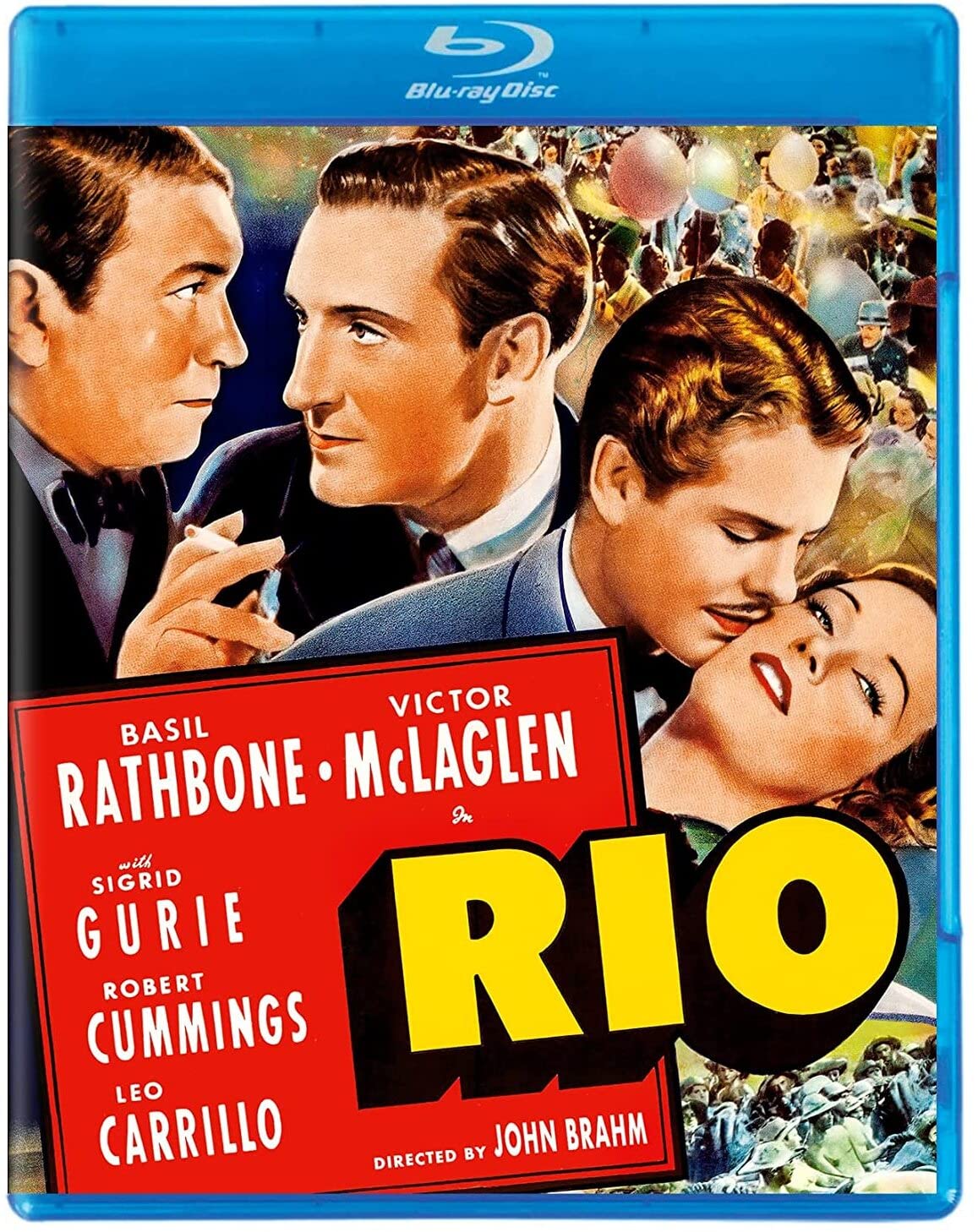
If someone were to read my biography below, one would probably learn one of two things, I have an unhealthy obsession with Alyssa Milano movies, and I deeply appreciate Basil Rathbone, the man who popularized Sherlock Holmes films.  While many would argue who the best Holmes would be (Downey, Brett, Cumberbatch, etc), my heart will always go to Basil.  So naturally, when I saw the movie Rio with him in the starring role had come to Blu-ray, I jumped at the opportunity to review it.  Let's take a look.

We get a tight close-up of a sign that reads Paul Reynard & Associates Investment, Paris Branch.  Here the board of directors are meeting and waiting for a phone call from the one and only Paul Reynard (played by Basil Rathbone).  Where is Mr. Reynard?  Why, he's in London securing a loan.  We soon see Paul's friend, Dirk (played by Victor McLaglen) telling the board of directors to hold, Paul should be in soon.