Dolby Digital 2.0 (English)

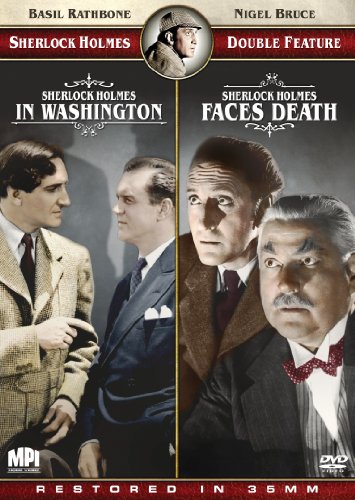
"Sherlock Holmes, the immortal character of fiction. Created by Sir Arthur Conan Doyle, he's ageless, invincible and unchanging. In solving significant problems of the present day, he remains -- as ever -- the supreme master of deductive reasoning."

Abstraction indicates a departure from reality in depiction of imagery in art. It is an interpretation of a visual that is different from what most perceive as normal. Art is no longer simply drawing a bowl of fruit but rather what the fruit means to the artist. Recently, I found myself trying to interpret a film named (Untitled), which takes a journey down the road of abstract art and music. After a great deal of reflection, I believe I am still confused.

Adrian Jacobs (played by Adam Goldberg) is a composer who makes music by kicking buckets, breaking glass and occasionally playing notes on a piano(usually without any rhythm and described as nonsense). He makes a living by working at restaurants, weddings and any other function in need of a piano player. Those engagements usually don’t last too long as he is annoyed by most of his clientele.

This documentary follows four different families as they await the date for a charter school lottery in Harlem. As the date approaches, we bear witness to the heated debates that go on between those that wish to implement more charter schools (a charter school being one similar to public schools but relies on stringent academic results and standards from its students and operates as an autonomous public school) into a “project” area, and members of the community who believe that their children would be excluded and object to the idea of closing public schools who have failed to produce positive results.

This film clearly has an agenda, and so comparisons to the likes of An Inconvenient Truth have been made. The key difference between this film and Al Gore's, aside from style and topic, is that The Lottery allows both sides to speak their minds and address their concerns. It is the difference between simply saying the other side is wrong versus allowing them to speak so that the folly in their arguments will present themselves naturally. Harlem Success Academy is the organization running the charter schools, and have proven their worth to both the neighbourhoods they exist in, and the nation as a whole. The debates they enter can be frustrating to watch as they are often vicious attempts to mudsling (politicians) or ignorant bravado (community members led by a hired protest group) versus reason (Harlem Success Academy) and endorsements (members of the Harlem community whose children have all been accepted into the schools despite parental history of prison, drugs, lack of money etc.). If they are not entered into unnecessary and hurtful debates, they are also bogged down by bureaucracy and challenges presented by the teacher's unions.

This documentary is a mainly a sea of praise for the late guitar legend, as it promises to not focus on “drudging up scandal and outworn hypothesis about his lifestyle and ultimate death.” historical footage tells the biographical portions while high-profile interviws with the likes of Lemmy Kilmister (Motorhead), Eric Clapton, Mick Taylor (Rolling Stones), Stephen Stills (Crosby, Stills & Nash) and moany more, plus narration by super-fan Slash (Guns N Roses).

As the early history of Hendrix is told, namely when he was brought to England, where he made a name for himself, a baffling series of celebrities' names are dropped as noted admirers. For example, one London club concert featured in its first few rows, all of the Beatles, most of the Rolling Stones, Cream, Steve Winwood, and The Who...all there to see Hendrix redefine the sound of the electric guitar. The filmmakers use this explosion of legendary names to gain interest in the audience, which is a fine tactic. They save biographical details for the second act but never let up on the limitless line of admirers, celebrity or otherwise. As a matter of fact, the amount of praise borders on being redundant for it seems relentless, but such a subject truly deserves every word the interviewees have to say.

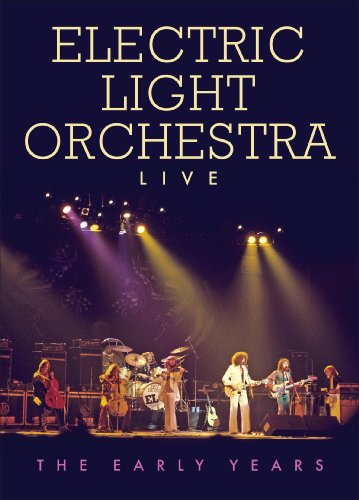
In the late 1960's three musicians came together with an idea. It was a somewhat unconventional idea. Roy Wood and Bev Bevan were part of the band The Move when they met up with Jeff Lynne from The Idle Race. The three hit it off almost instantly. So much so that before long Lynne would also become a member of The Move so that he could work with Wood and Bevan. But that wasn't going to be the ultimate goal. That unconventional idea that the three had involved combining rock and roll with classical music. Of course, other bands had done orchestral arrangements, most notably, The Beatles. But their idea was to fuse the concepts more integrally together. The idea was to have live violins and cellos as part of the actual band itself. Lynne would once describe the concept as picking up where The Beatles had left off. Together they invented a new way to rock "n" roll. That invention was The Electric Light Orchestra, or ELO to the fans.

The band started with a bang. The first album, while not a huge commercial success received more than its share of attention. But band squabbles would almost doom this ambitious project before it got off the ground. Roy Wood left the band to form his own and took some members with him. It looked bleak for the struggling concept. But that might have been the best thing that could have happened. Jeff Lynne would become the controlling force and the band would go on to enjoy commercial success to go along with those critical appreciations. The band's second album was called No Answer, but it wasn't really intended to carry the title. A secretary with the record company was assigned to contact Jeff Lynne to get the correct album title. He wasn't home. Naturally, the secretary made the notation "no answer". The notation was misinterpreted as the album title, and the mistake would be a permanent entry in the band's discology.

Back in 2001 Larry Blamire and his troupe released The Lost Skeleton Of Cadavra. Blamire was obviously a fan of the science fiction films of the 1950's and decided to take many of those standard elements and pretty much have a blast with the material. The end result was an over-the-top spoof that left you laughing, not because the material was all that funny. You laughed because they sometimes hit those ludicrous devices so perfectly that you have flashbacks to your favorite Mystery Science Theater 3000 episode. The film had all of the clichés including special effects that were anything but special. And it was all done on purpose. It was a stroke of genius, really. They did a low-budget film with all of its deficiencies and made them out to be deliberate.

Now, Blamire and his wacky group of players is back at it ... again. Shout Factory is releasing two films that the team has recently added to the Cadavra legacy. Both films utilize pretty much the same amateur cast with a few seasoned veterans sprinkled in to keep things interesting. Both films are in black & white, for the most part, to maintain the intended atmosphere.

The original Batman: The Animated Series is one of my favorite cartoon shows of all time. Depending on which day you ask me, I might go ahead and say it is my favorite (the other times, I'll probably mention X-Men or Johnny Bravo). It was the perfect blend of cartoon super-hero drama, with a dose of dark and foreboding circumstances. Enter 2008, Batman: the Brave and the Bold, another Batman cartoon but on the lighter side of the equation. Would this show hold up as much as the historic original?

Before the Dark Knight, Batman Begins, heck even before Jack Nicholson wanted to dance with devil in the pale moonlight, there was a Silver age television show of Batman. It was light-hearted and we always knew that Batman was going to save the day and foil some of the most oddball villains along the way with intelligence and an awesome utility belt. Somewhere, in Heath Ledger's crooked smile and a really raspy squawk box for a Batman voice, we lost that wholesome value caped crusader.

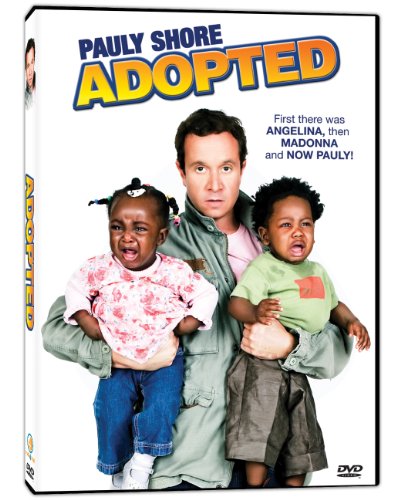
Pauly Shore seems to be trying to steer his career from being a washed up b-lister to being a self-aware washed up b-lister. Pauly Shore is Dead was his first dabbling into mockumentaries about himself, and now he has followed it up with Adopted. This yarn is about Shore, following the trend set by Angelina Jolie and Madonna, of flying to Africa (and later Cambodia) to adopt a child, with the hopes that being a father would fill a void in his shallow Hollywood hills life.

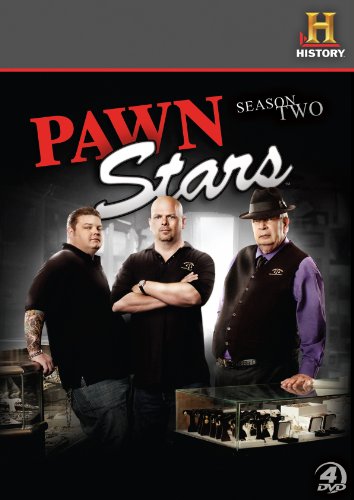
"I'm Rick Harrison, and this is my pawn shop. I work here with my old man and my son, Big Hoss. Everything in here has a story ... and a price. One thing I've learned after 21 years? You never know what is going to come through that door."

"In the beginning there was darkness. And then bang, giving birth to an endless expanding existence of time, space, and matter. Now, see further than we've ever imagined. Beyond the limits of our existence. In a place we call The Universe."

Up until now these History releases have been season sets of the documentary series. This release is the first which appears to be a planned series of specific subject titles. It does create a bit of confusion when you see a series called The Universe and all of the episodes on the set deal with our own back yard, a place we call the Sol System, or Solar System, for those of you unfamiliar with the name of the star that happens to brighten your afternoons, particularly for us here in Florida on an August day. But while it's true that the series itself has explored most of the known, and quite a few of the unknown, corners of creation itself, this set focuses on those objects that orbit the star Sol.