Dolby Digital 2.0 (English)

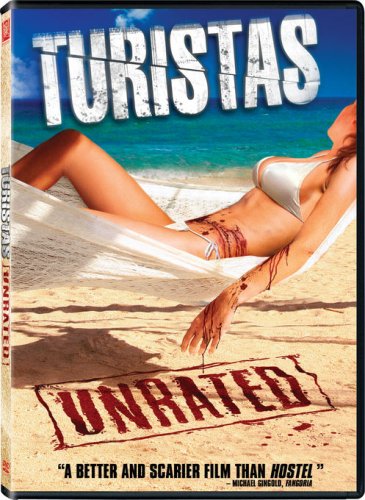
Turistas is a horror film about six hard-bodied 20-somethings whose vacation in paradise turns bad when they're drugged, robbed and kidnapped on behalf of a crazed doctor who wants to harvest their organs while they're still alive.

I think that about sums it up. Now let's talk about why this film isn't any good. First, while I realize characters in horror movies are supposed to fall into traps, never before have I seen characters this stupid. They don't just make one or two dumb choices. No, these kids take every single chance they get to put themselves in danger.Even when someone - in absolute terror - tries to warn them away from the evil doctor's home in the middle of the jungle, they insist on going anyway.

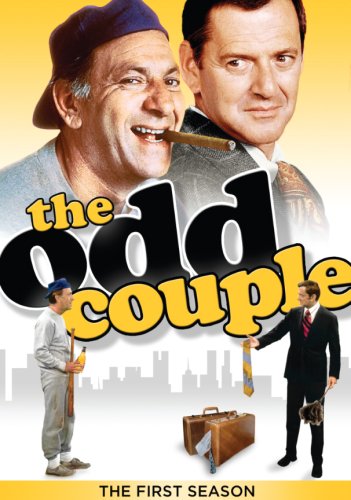
The Odd Couple on DVD was something that admittedly was a long time coming out on DVD. The set was previously available as a Time Life exclusive, and now Paramount has come to the rescue, releasing this as a standalone set. From the Neil Simon play (not to mention inspired by the 1968 film with Jack Lemmon and Walter Matthau), the show chronicles the lives of roommates Felix Unger (Tony Randall, Will Success Spoil Rock Hunter?) and Oscar Madison (Jack Klugman, 12 Angry Men), one's a neat freak, the other lives like a slob, and they live in New York.

The show could have easily capitalized on the success of the movie, but it helped break away from it by letting Klugman and Randall make the characters their own. In addition, their chemistry was also something that was crucial for the show's success, and it completely worked. Not to mention a guy named Garry Marshall helped get the show realized. Let me see, helped get Happy Days and Laverne and Shirley on air, not to mention writing for greats like Lucille Ball, Dick Van Dyke and Jim Nabors back in the golden days of television.

Prior to this review, my familiarity with Jeff Foxworthy began and ended with his famous stand-up routine, "you might be a redneck if". That's how this comedian made it big back in the early to mid-90's, but his attempts at television, which is the usual next step for stand-ups, have failed.

And so, apparently, it goes for Foxworthy's Big Night Out, which aired last year on Country Music Television. This 2-disc release presents all 12 episodes of the sketch-comedy variety show that never really got off the ground. In the past, Foxworthy has explained his sitcom cancellations by arguing that the big networks just didn't know how to market his brand of common man, redneck comedy to a national audience. Surely, though, CMT is the place to be for Foxworthy. After all, country fans are just a bunch of gun-toting rednecks with single-digit IQs, right?

Midnight Cowboy (Awards Series) is a previous DVD version re-released with a cardboard slipcover.

"I'm walking here! I'm walking here!" Smart money says you're familiar with that quote whether you've seen this film or not. Midnight Cowboy was a hit back in 1969, and it's been referenced plenty of times in pop culture since.

Misery (Awards Series) is the 2000 DVD version re-released with a cardboard slipcover. (Cover art pictured is the 2000 edition)

Of the many films based on books by prolific writer Stephen King, Misery ranks near the top. Falling somewhere between the horror and thriller genres, this film about a twisted obsession is frightening because the premise seems very real.

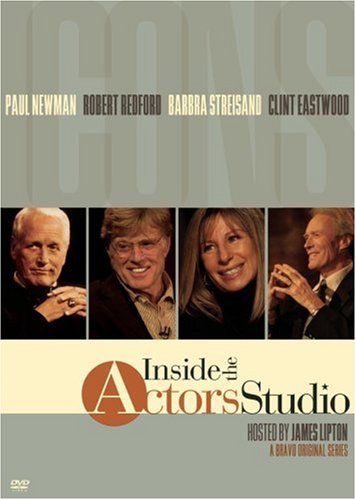
Since its premiere in 1994, Inside the Actors Studio has been a fascinating talk show for film fans and aspiring actors, writers and directors alike. Each episode a famous guest � usually an actor � is interviewed one-on-one by host James Lipton, followed by questions from the student audience.

If you�ve never seen the show, this three-disc set would make a fine introduction. Inside the Actors Studio: Icons features episodes with four towering entertainment personalities. In chronological order, star...ing with the series� first episode, the �icons� are Paul Newman, Clint Eastwood, Barbara Streisand and Robert Redford.

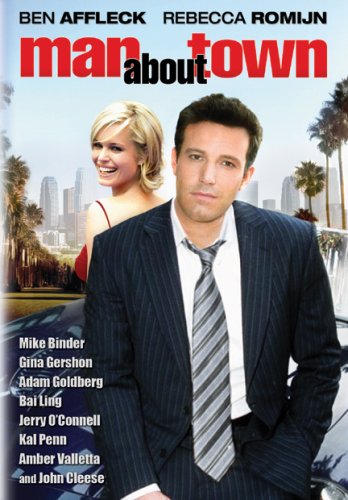
Ben Affleck is a good actor. So why does he make so many bad choices? I can understand how mistakes like Pearl Harbor could happen on the front end, but how do you explain the fact that he did wonderful work in Hollywoodland and he shows up in a low-budget film like this one all in the same year? He was wonderful in Good Will Hunting and ate up every scene he was in in Boiler Room. Then he did Gigli. This guy is all over the place.

What's frustrating is that he's pretty good...even here, in a film that is overwhelmingly bland. Our man plays a talent agent who is having a crisis of personality. He has lost his confidence, his marriage is falling apart, and there's some unfortunate business with a personal journal. In fact, it's the journal that is the crux of the film. Journal, journal, journal. Practically the entire film is told in voice over. The only thing that I can imagine that is more bland than reading the journal of a no-talent Hollywood agent is hearing the guy read it to you himself.

Cupt Epics here presents five films identified as "underground" (a fluid term at the best of times). Certainly, they are all deliberately transgressive, though not all are equally successful. Two are by Nico B. - the perviously released "Pig" and "Hollywood Babylon." The former has been reviewed here before, but briefly, its catalogue of murder and S&M horrors, working out a killer's fantasies, is rather too self-conscious about its own transgression. The latter is a 4-minute tribute to Kenneth Anger, taking in exhibits at the Museum of Death. It's not a bad little piece, but it is interesting to note that its existence confirms once and for all that now even the underground film community has an established history to look back on. "Dislandia" is a half-hour, plotless portrayal of a little girl (whose face is covered in a mask) doing odd things and moving through a gritty, disconnected landscape. Interesting visually, the film is sufficiently obscure in its goals that one's mind does begin to wander. "Adoration," on the other hand, is gruelling, brutal, intelligent and effective. Based on an actual case, we see a young man invite a woman to his apartment, record her reading poetry, then kill and eat her. All of this is seen through the eyes of a camera he has place on a wall. The unblinking gaze is explicitly equated with the audience's own, and many uneasy questions about art and voyeurism are thus raised. Finally, "Le poéme" is the one that most viewers will find hardest to deal with: we watch an actual autopsy while listening to the poem "Le bateau ivre" by Arthur Rimbaud. Difficult though the film is, it is also, like "Adoration," quite beautiful.Audio

The sound is 2.0, and the actual sound quality depends primarily on the source material. In fact, "Adoration" is largely silent. But at any rate, the overall audio quality is perfectly satisfactory. There isn't too much by way of surround, and what emerges from the rear speakers isn't always perfectly placed, but the job is generally quite effectively done.

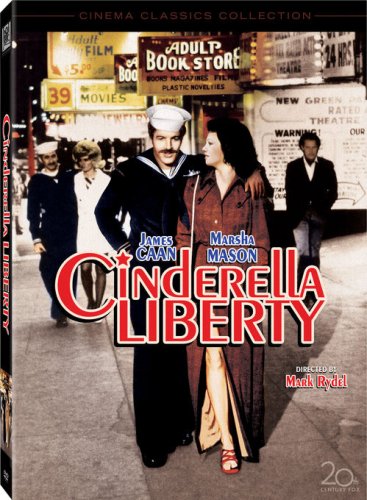
James Caan is a sailor whose stopover in Seattle becomes much longer than he expects, as first he has to wait for new orders when a medical exam forces him to miss shipping out with his crewmates, and then his records disappear. During this time, he meets Marsha Mason, a prostitute with an 11-year-old son. Caan falls for both of them, and a finely developed sense of responsibility sees him moving heaven and earth to make life good for all three. His task won’t be an easy one.

On the one hand, the film has the quality common in films of this era (it’s from 1973) to take its time and soak the audience in a convincingly quirky ambiance. Screenwriter Darryl Ponicsan (adapting his own novel) and director Mark Rydell have fun bouncing the various characters off each other, and we have fun as they do so. But the further into the film we go, the more predictable everything becomes, until there is a generalized collapse into hackneyed melodrama. Ponicsan also wrote the book that The Last Detail was based on, and here, as there, he seems incapable of conceiving of female characters who are not prostitutes (that is, when they are not needy, self-absorbed, neurotic, self-destructive prostitutes). The film has fine performances, is crafted well, but is also badly flawed at its core.

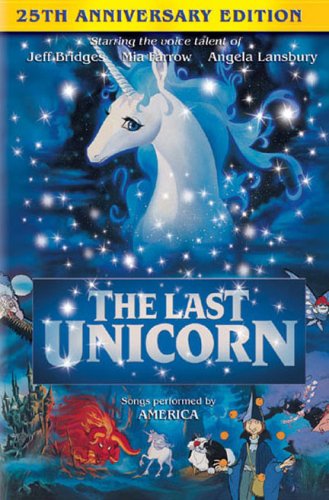
I can't say I'm too familiar with The Last Unicorn, I mean overall, animated children's films were in the midst of a decline in the '80s. However my wife was more than familiar with it and enjoyed it a lot growing up. And Lion's Gate has presumably cleaned up the film and thrown some extras on it just in time for the film's 25th anniversary.

Based on a novel by Peter Beagle and directed by the animation team of Jules Bass and Arthur Rankin (who helped produced such shows as the stop motion of Rudolph the Red Nosed Reindeer and The Hobbit animated version back in the '60s and '70s), the unicorn in question is named, well, Unicorn (voiced by Mia Farrow, The Omen), who walks around rather peacefully in the countryside. She is captured by a witch and is released by her assistant named Schmendrick (Alan Arkin, Little Miss Sunshine). So when Schmendrick and Unicorn are threatened by an ominous red bull, he turns her into a mortal named Amalthea, who finds love by Prince Lir (Jeff Bridges, Tron) and finds out why she was the last unicorn from King Haggard (Christopher Lee, The Lord of the Rings).