Dolby Digital 2.0 (Spanish)

Billy Bob Thornton got himself a well deserved Oscar for the film Sling Blade. If you’ve ever seen the film, or anything else by the man, there’s no surprise that he took home one of the coveted statues. What is a bit surprising is that he took the Oscar home for the screenplay for Sling Blade and not for the masterful performance. Now don’t get me wrong. The screenplay is a brilliant one. He certainly deserved that award, but there hasn’t been a performance as riveting as his portrayal of Karl Childers in a decade or more. It was this performance that made Thornton the household name he became. It’s doubtful many of the other opportunities he did get would have come his way without such a landmark role. The character has become an icon in American pop culture and is imitated frequently in films, television shows, and skits. There have been plenty of imitations, but there’s only one Sling Blade.

It’s almost hard to imagine that this baby is almost singlehandedly the product of Billy Bob Thornton. He wrote the story, directed the film, and played the lead character. It just doesn’t happen this way very often. You’ve seen enough of my reviews here to know what I tend to think of these, often egotistical, one man shows. Most of the time they are self serving crap that passes for high art or entertainment. This is certainly one of those exceptions that, as they say, proves the rule. Of course I never did understand that phrase all that much. Still, it fits about as perfectly as you please here. Every aspect of this film is near perfect. The story is a compelling one to be sure, but I don’t think it would have been nearly as good without such sweet direction and acting. The award might have been deserved; probably was, as Karl would say. But it was the other two elements that really made this film.

Why does every Adam Sandler character seem to be Happy Gilmore? I don’t know if there’s an actor out there, comedian or otherwise, who has made so many movies essentially playing the same character. If it seems at times like I really hate Sandler, believe it or not, I don’t. The guy has a charm and natural ability that can, when he works at it, come off as a very entertaining couple of hours at the movies. Unfortunately, he’s not willing to work at it, and so continues to bombard us with new versions of the same character and story.

You’ve seen it all before. Young guy with some kind of a mental problem or at least simplemindedness ends up overcoming his self esteem issues and becomes a hero. It’s no different here. This time the guy is Bobby Boucher (Sandler) who takes his waterboy duties with the local college football team a little too seriously. Taste testing the water and making sure the serving temperature is just right are just a couple of ways that Bobby looks like an idiot to the team’s players and coaches. He’s picked on, and for good reason. Finally the coach considers him too much of a distraction and fires the kid. Bobby’s thrown into a deep depression and no one seems to understand him. That goes doubly for the moviegoers caught paying out good money for the movie. He ends up getting another, non-paying gig at SCLSU, the losingest school in the state. Once again he’s picked on. This time the frustration builds, and Bobby ends up tackling one of his tormentors on the team. When Coach Klein (Winkler) sees the amazing tackle he decides to give Bobby a shot to make the team. Predictably, Bobby becomes a star, elevating the crappy team into the championship. Of course, just as easy to predict, you know what team they face in the big game. Yes, it’s Bobby’s old team. It just so happens the coaches are old rivals, and so it’s personal all around. The rival coach tries to get Bobby disqualified for the big game, but of course we have to have that moment when Bobby realizes everybody is counting on him and that he’s a hero. Again, the operative word here is predictable.

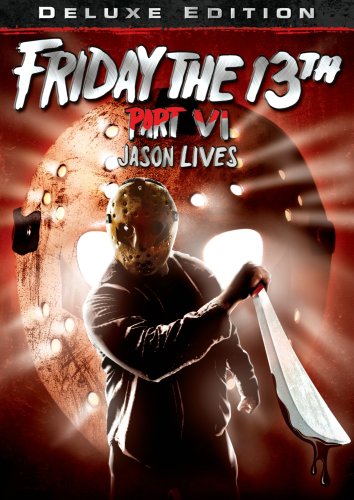
“Just because our parents keep telling us that Jason was only a legend, doesn’t mean it wasn’t true. What if he did come back here looking for the camp counselor that caused him to drown as a boy, searching for the one that decapitated his vengeful mother? And you do know what today’s date is, don’t you?...Happy Friday the 13th.”

Legend or not, Jason’s back in the 6th Friday the 13th film, and he’s out for more blood than ever before. Filmed under the fake name of Aladdin’s Sane, in an overt tribute to director Tom McLoughlin’s favorite musician, David Bowie, the new film was a return to the franchise’s more established roots. Gone are the psychological thriller aspects of the previous disaster. Jason is back, and there’s no mistaking him for anyone else again. As the titles implies: Jason Lives.

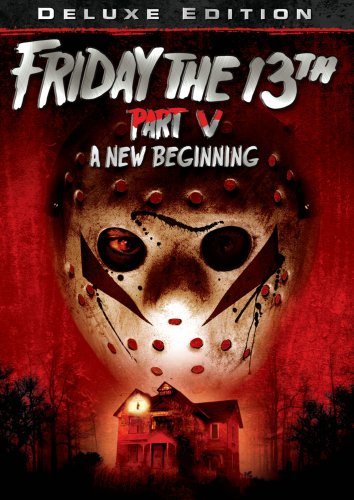
We were all told that the fourth film in the Friday The 13th series was going to be the last. From the cast and crew to the studio execs it was official: Jason was dead and gone. Time to move on. But it took less than a year for a new chapter to be tacked on to that final one. The fifth entry into the franchise would contain one of the more limited budgets. But it wasn’t the budget cuts that has made this one of the most highly criticized films of the series. It’s the total disregard for the tradition of the films and the poor choices that were made in making this film. The movie was filmed with little fanfare. This was in the days before the internet made such things all but impossible. It was made under the name Repetition to hide the true nature of the shoot from anyone who caught wind of the production. Perhaps it wasn’t such a good idea to try and diminish the film’s buzz. It brought in a very disappointing $21 million at the box office. That might have had a better chance of truly killing Jason than anything else.

Director Danny Steinmann’s only real credit was a porno film. You can’t mistake the tendencies in this outing. It certainly contains a greater amount of nudity than any of the other films. The sexual scenes are by far more graphic. It was also the last we'd hear of the troubled director.  Meanwhile Jason was relegated to an almost non-existent part in the film. The kills all are very quick and happen mostly outside of camera range. The obvious excuse is that the MPAA had reined down hard on these films, and to an extent that was true. The real problem here was a lack of both imagination and money. Tom Savini was again gone from the scene, and his replacement couldn’t carry Savini’s latex jockstrap. The series went from using barrels of stage blood to a couple of toothpaste tubes’ worth. Finally the killer isn’t even necessarily Jason at all. It’s almost impossible to criticize this kind of a film for being ridiculous, but the series reached a low point with this outing.

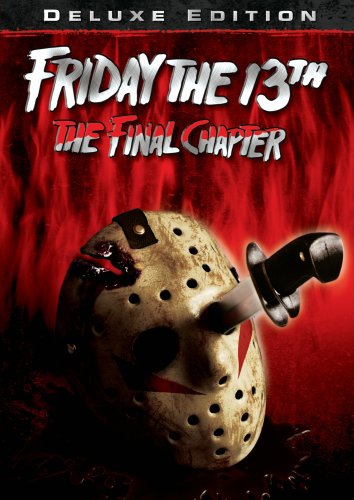
When the cast and crew went about their work on Friday The 13th: The Final Chapter it appears that it really was intended as a sendoff for the popular franchise. There had been a turnover at Paramount, and the powers that be thought the slasher cycle was pretty much over. Now whether any of that is true is anyone’s guess. Everyone associated with the project claims that that was their firm understanding from the beginning. Writer Barney Cohen insists that the Paramount brass made it very clear that he was supposed to kill off Jason with such Hollywood “grammar” that there was little doubt he was dead and gone forever. We, of course, know that Jason might very well be dead, but he’s far from gone.

It’s minutes from the events of the previous film. Police and paramedics are on hand to clean up the mess left by Jason in full 3D glory. Jason’s body is taken to the hospital morgue. Fortunately for Jason, the place is has a couple of teen attendants with those raging hormones that bring out the best in our hockey-masked avenger. After a little play time with the attendant and nurse, Jason is once again on the loose. Meanwhile a group of teens are moving into a remote house out in he woods. The only neighbors are the Jarvis family. There’s single mom (Freeman), daughter Trish (Beck) and young Tommy (Feldman). Tommy is a monster fan who has a Tom Savini-like ability to create killer monster masks and prosethics. He’s a bit introverted and nerdy. Little do they know that Jason is going to crash the new neighbors’ party. It’s left to Tommy and sister to take Jason out, supposedly for good.

“One night stands can be murder.”

That’s the tagline for 1987’s Fatal Attraction. Perhaps it’s no coincidence that both Fatal Attraction and the later Indecent Proposal were both directed by Adrian Lyne. Both were quite controversial upon their release. Both dealt in a kind of “what if” scenario that got people talking around their water coolers and watering hole gatherings. While the latter was pretty much a morality or ethics drama, the former was a gut wrenching morality tale with a Grimm’s Fairy Tale twist. Even if you’ve never seen the film you’ve at least heard of the “Bunny Boiler”, a term that’s entered the pop culture lexicon describing a woman who is likely to go psycho on you. The film was almost never made.

“So you think you can stone me and spit in my eye. So you think you can love me and leave me to die. Oh Baby, just can’t do this to me baby. Just gotta get out, just gotta get right outta here… Nothing really matters. Anyone cane see. Nothing really matters, nothing really matters to me.”

I don’t think I can ever listen to Bohemian Rhapsody without conjuring up the image of the gang in the Mirth Mobile bobbing their heads up and down and singing to the Queen classic song. It’s one of those iconic moments in cinematic history that will be with us long after Wayne’s World is forgotten. Too bad the rest of the film hasn’t aged as well.

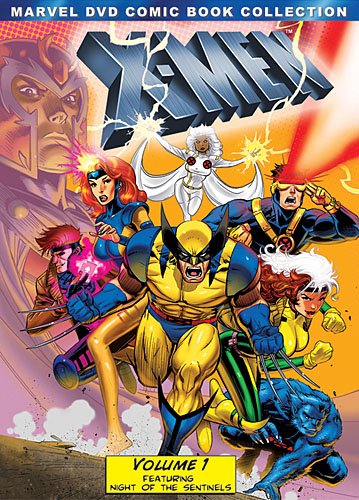
The day of October 31st is usually Halloween to most people. However, back in 1992 it was the day one of the best cartoon superhero shows premiered on the Fox Network. It was simply called X-Men. The show would last seventy-six episodes and five seasons while rising to considerable popularity. I’m not one to toot personal bias, but this is probably my second favorite comic book related animated show next to Batman: The Animated Series. Most of us X-Men fans have been waiting for these episodes to be released for as long as the dvd format has existed. Finally that time has come and I couldn’t be more delighted to watch these again.

Two parents sit in a living room wondering if they did the right thing. Their adopted child: Jubilee is a mutant. They have felt the best thing to do is file her name with the Mutant Registration Program, a privately funded program with ties to the government. The Mutant Registration Program is supposed to be a peaceful group helping humanity and the mutants carry on in their existence. However, things are not as they seem.

If you can’t see where this thing is going after 10 minutes, check your forehead for lobotomy scars. I strongly suspect that everyone associated with this film, from the writer to the actors to the money people who thought this was a good idea, all have matching scars. The box art claims that someone from Bloody Disgusting calls this the best time travel movie of all time. What?! Either that guy was taking some serious medication at the time, or he was paid off, or his sister worked on the film in some capacity, or he’s actually managed to never see films like: Back To The Future,The Time Machine (both versions), Time After Time, Star Trek IV, Frequency, Somewhere In Time, or Jaws. Okay, so I made the last one up. It’s still a better time travel film than Timecrimes.

I can’t really even offer you much on the plot without destroying what mystery might exist for you, should you decide to ignore my warnings and give the movie a spin for yourself. Suffice it to say that the film thrives on paradox. The acting is simply horrible. There’s a limited cast, but you’d think they could find just three or four actors that could…you know….well….act. It makes some attempt at being a horror film, but even those aspects are quite laughable. And there’s the only chance you have of enjoying this film. Every now and again, I’ve had guys over for what we used to call Schlock – O – Rama. The idea is too laugh our behinds off at the absurdity of what we were watching. You pick up the lamest looking film you can find, and away you go. It’s like your own private Mystery Science Fiction Theater.

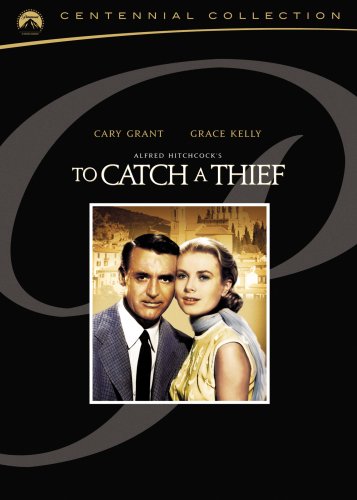
To Catch A Thief is not typical Alfred Hitchcock territory, but then again, it really is. It’s not a terribly suspenseful film coming from the acclaimed “Master of Suspense”, nor is it at all a frightening film even though it was directed by one of horror’s genius minds. What really is scary, however, is how close to a different film this almost was. Cary Grant had exiled himself into retirement. If you can believe his statements at the time, he was concerned that the moviegoing public was pretty much sick of seeing him and preferred the younger actors just then coming of age. He turned Hitchcock down for the role at least twice, before Hitch made a personal visit and appeal to the Hollywood legend. Grace Kelly was also reluctant to do the part. She did it because she loved working for Hitch. Unfortunately, Paramount had other plans. They were troubled that Grant was nearly twice Kelly’s age, and worried either the public or the standards censors would not accept the situation. They were half right. While the film was one of Hitch’s toughest battle with the Standards folks, the public flocked to see Grant and Kelly on the screen together. Grant would continue his return to acting for over a decade longer. Not so Grace Kelly. The Philadelphia native would have her faithful meeting with Prince Rainier of Monaco and would spend nearly 30 years portraying the larger than life, but real nonetheless, Princess Grace of Monaco, before a tragic automobile accident would end her life. All the same, To Catch A Thief would remain one of her last films. Hitch almost lured her out of retirement some years later, but she declined, saying that if she were to do a film, Hitchcock was about the only man she would have done it for.

John Robie (Grant) is a renowned jewel thief and cat burglar. While he’s been retired for fifteen years, he’s still the prime suspect when a rash of burglaries occurs on the French Riviera. The MO is the same as Robie’s, and before long the police are blaming him for the work of France’s newest celebrity thief, The Cat. Robie sees only one chance to get himself out from under the mess. He has to go to the area and catch the real thief. Once there he hooks up with insurance agent Hughson (Williams) who cooperates on the off chance his company can be spared these high payouts. Robie also meets young and attractive socialite Frances Stevens (Kelly), who sets her sights on catching this thief for her own. She constantly tries to seduce Robie, knowing who he is and suspecting him of being The Cat. When her own family jewels turn up missing, she begins to rethink the dangerous game she was playing. That only gives Robie even more incentive to catch the real crook. Will Robie catch The Cat? Will Frances catch Robie? Only Hitch knew for sure, and in 1955 audiences found out in the film classic, To Catch A Thief.