Dolby Digital 4.0 (English)

Elvis Presley is often referred to as The King Of Rock And Roll, at least to his fans. There's no denying the impact that he had on the music scene. He was the first rock and roll star, to be sure. Colonel Tom Parker, his long-time manager and partner, created many of the marketing traditions that are commonplace in the industry today. He knew the value of his star, not only as a performer, but as a brand. For the first time, a musician's image and name started to appear on everything from bath towels to women's underwear. Fans are often split on their feelings for the self-styled Colonel, but Elvis would not have become the name brand he still is today, without him.

One of those brand expansions tapped into Elvis's own boyhood fantasy. Elvis had worked as an usher at a local movie theater as a teen. He's often related that he would linger in the auditoriums, watching those movies and fantasizing that he was James Dean or Marlon Brando, two of his idols. With the help if Colonel Parker, Elvis would get to see that dream become a reality. The King was to expand his realm to include the movie business and Hollywood. No experience? No problem. After all, if Elvis could go from failing music in high school to becoming the highest paid musician on the planet, he could certainly tackle the world of acting. And he did just that.

This is a new release of the film, and its main interest, for those who already have a copy, is the meatier set of extras (even though some on the other disc are now gone). As for the film itself, what I said before still goes, so once again, I quote myself.

“Greed is Good.”

No other cinematic phrase described the 1980’s better. And no other movie captures the financial corruption of the 80’s better than Oliver Stone’s Wall Street.

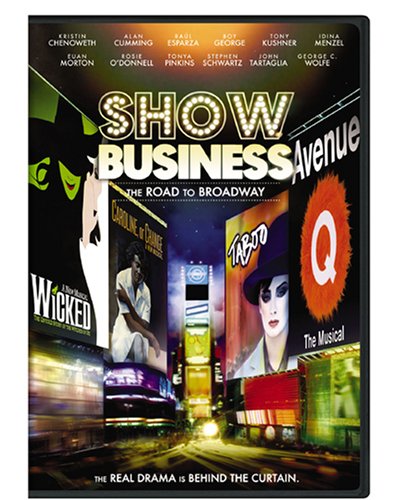
Prepare to take a journey behind the curtain, with the all-access pass that is Show Business: The Road to Broadway, a documentary chronicling the fates of four musicals that beat the odds to reach theatre's "big show."

That's the premise for Show Business, and it certainly does get behind the scenes with Wicked, Avenue Q, Taboo and Caroline, Or Change, showing how they made it to Broadway, and then how they vied for the big prize: the Tony Award for Best Musical. Hardcore musical fans may not learn anything new here, but the average viewer will likely be enlighted considerably. At the same time, theatre buffs will likely be much more excited than most viewers about seeing stuff like rehearsal footage and interviews with show creators.


Scientists Edward Pretorious (Ted Sorel) and Crawford Tillinghast (Jeffrey Coombs) successfully construct a machine (dubbed the “Resonator”) that links our world with another, hostile dimension. Pretorious gets his head bitten off by something summoned by the machine, while Tillinghast is incarcerated in an asylum. Psychiatrist Katherine McMichaels (Barbara Crampton) believes Tillinghast’s story when she discovers his pineal gland is growing enormously, and she has him released into her custody to recreate the experiment. Baaad idea.

Director Stuart Gordon’s follow-up to Re-Animator ups the gore and mutated flesh aspect, and in this uncut version, we at last get to see Coombs sucking Carolyn Purdy-Gordon’s brain out of her eye-socket, among other gruesome delights. There are plenty of distorted monstrosities on display, too, and the film certainly benefits from an enthusiastic commitment to its material. But Gordon, despite his great love for Lovecraft’s material, has always struck me as not quite having the right temperament to really capture Lovecraft’s spirit. He comes close in Dagon, but there, as here, he coaches performances that are pitched far too broadly, and gets carried away, not just with the sex and gore (which isn’t necessarily a problem), but with the equally broad humour such that the movie never really captures the true cosmic terror of Lovecraft’s tales. (In the Mouth of Madness is much more successful in this regard.) So, while this film doesn’t quite work, it is still huge fun.

Synopsis

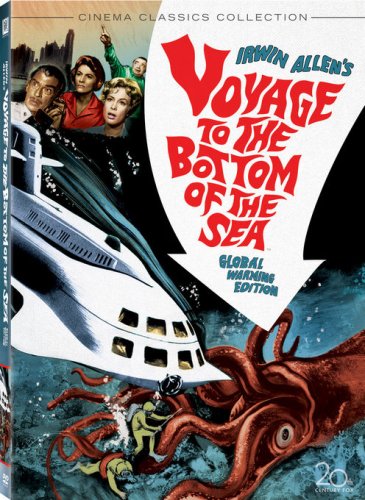
When Admiral Walter Pidgeon’s glass-nosed submarine (?) Seaview surfaces at the North Pole after an extended stay underwater, Pidgeon and crew discover the sky is on fire. It turns out the Van Allen radiation belt has caught fire (?!) and life on Earth will be incinerated once the temperature reaches 175 Farenheit (and not, apparently, a single degree less). Pidgeon and co-hort Peter Lorre come up with a plan to launch a nuclear missile into the belt and use the explosion to blow out ...he fire (??!!). The UN scientists think they’re made, and subs are dispatched to stop the Seaview as it makes a desperate journey to the reach the correct location and time to launch the missile. On top of everything else, there’s a saboteur aboard.

I remember that this film was all the rage when I was a kid growing up in the early 80's. I always assumed that the reason that I didn't care for the film at the time was that I was just too young to fully appreciate it. Turns out, it's just not a very good movie. I certainly appreciate where it is trying to go, it's just that it takes the hokiest path possible to get there. The film tells the story of a military academy that is slated to be shut down and turned into condominiums. The cadets, who apparently enjoy the fact that they are in military school, are so proud of the institution that they use their minimal combat training to hold off the developers. It this a dramatic film that wishes to be taken seriously, or The Goonies? By the time the situation escalates to the point where the cadets are involved in a full-fledged skirmish with the real US military, audiences will likely be too bored to care. Part of what makes Dog Day Afternoon such a fantastic film is that the standoff in that film comes at about the 5-minute mark. This thing is more like an 80's sitcom for the first hour or so.

The acting, however, is surprisingly good under the circumstances. This film marks the first real film efforts from both Tom Cruise and Sean Penn. Even with such hokey source material, these two fine actors give it their all, and it is occasionally possible to believe that they really care about the academy here and there. George C. Scott is also here as the school's Dean, which was an excellent casting decision for anyone who remembers him best as General George Patton. In the end, though, the mixture of great young actors and seasoned veterans just isn't enough to elevate this film beyond being a second-rate After School Special version of The Lord of the Flies.

Synopsis

Marilyn Monroe was THE blonde bombshell. Jayne Mansfield was the cartoon version of Monroe, bombshell become sex bomb, with proportions so improbable she could give Barbie an inferiority complex. Her cartoon figure makes it appropriate that two of the movies here are directed by a specialist in cartoons: Frank Tashlin. In fact, this set might almost be more appropriately called the Frank Tashlin Collection.

Synopsis

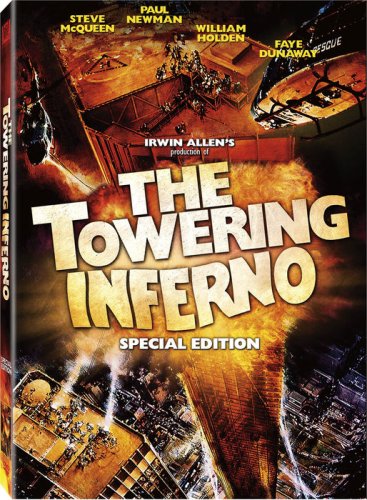
The Who’s Who of San Francisco is gathering for the grand opening of the Glass Tower, the world’s tallest building. The architect, Paul Newman, is disturbed by what appear to be corners cut in the electrical installations by Richard Chamberlain, and sure enough, a fire starts on the 81st floor. Fire Chief Steve McQueen is soon on the scene, but the situation deteriorates rapidly, and hundreds of celebrants on the top floor are at risk of fiery death.

Synopsis

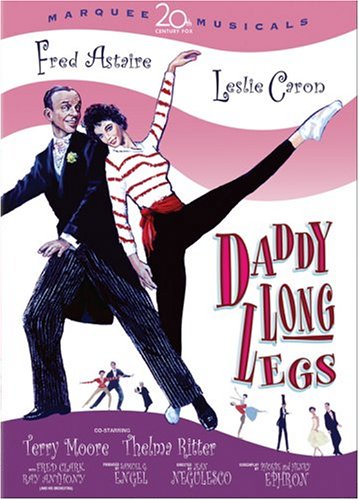
Fred Astaire plays wealthy businessman and inveterate bachelor. On trip to France, his car goes into a ditch. Seeking help in a nearby orphanage, he catches sight of the vivacious Leslie Caron. Captivated by her joie de vivre, he arranges for her to receive a full scholarship and education in the states, and watches from the safety of anonymity as she flourishes. But then, whoops, he begins to fall in love with her.