Dolby Digital Mono (French)

Synopsis

Directed by Gordon (Them!) Douglas, these three crime thrillers have Frank Sinatra doing his best hard boiled as he unravels complicated (and not always entirely comprehensible) mysteries.

Synopsis

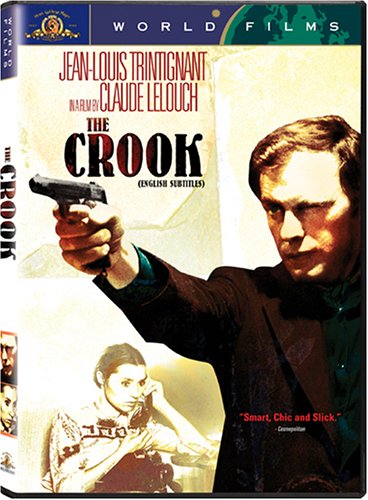
This is a film that delights in not being what it appears. The opening moments look like a period gangster film. Suddenly, the scene transforms into a musical. Then this turns out to be movie within the movie. And so it goes, as one scene after another turns out not to be what we thought it was. The plot has roguishly charming Jean-Louis Trintignant setting up a kidnapping scheme with two colleagues. I can’t say much more without giving away the whole plot and the strange circuit on which it...operates. Suffice it to say that though there might be a couple of confusing moments, this is a playful, light-on-its-feet effort that will have you smiling (if sometimes sardonically) from start to finish.

Synopsis

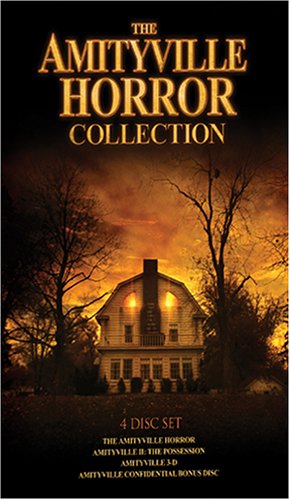
The Amityville Horror (1979) remains one of the most successful haunted house movies ever. Based on a supposedly true story (emphasis on “supposedly”), the film sees George and Kathy Lutz (James Brolin and Margot Kidder) buy their dream home, only to be driven out by supernatural events (little girl makes friends with demonic piggie, blood runs from the walls, and so on). In scenes that have so little to do with the rest of the action they might almost belong to a separate movie, Rod ...teiger overacts to a degree excessive even by his own none-too-restrained standards as the priest who is targeted by the evil in the house. Too tame to be truly frightening, the film succeeds thanks partly to its “true story” aura, but most especially because of the design of the house, whose eye-like windows made it the most recognizable of all cinematic haunted houses.

Hugo (Mathieu Carrière) sets out on an errand, but is sidetracked in the Paris metro whenhe chances upon the seductive Myriam (Marino Pierro). Their eyes meet, he follow her, theybeing to chat, and a dance of seduction ensues. They make their way through Paris to anapartment where they have sex, and then nothing turns out as Hugo expected.

That’s about it as far as plot is concerned. So what? you ask. You wouldn’t expect anythingmore from an avowedly erotic film. Don’t be fooled into thinking that the rest of the film is anorgy of naked flesh, however. What you have instead is a film so talkative it makes BeforeSunset look like Gerry. In fact, this 1988 effort (director Walerian Borowczyk’s lastto date) has a rather similar structure to the Richard Linklater romance, but plays out to a muchdarker conclusion. The dialogue is surreal and unbelievably ornate, and one’s enjoyment of thefilm lives or dies by how one feels about all this palaver. The subtitles can only translate the gistof the script, but not its style, and the result might well be crashingly dull for non-French-speaking viewers. There are some visual compensations, as Borowczyk, that most obsessivefetishist of inanimate objects, here worships the everyday of Paris, and invites us to look at theleast romantic, most mundane objects in a new light. The sex scene builds to a denouement thatis a remarkable visual moment, and is worth waiting for. Surreal masterpiece or interminable artwank? My own jury’s out, but I’m glad to have had the chance to think about it.