Posted in: Disc Reviews by Archive Authors on July 6th, 2006
This is the first Woody Allen film I’ve ever seen.
Something always put me off about the guy. Maybe his infamous personal life plays a part in my not wanting to explore Allen’s cinematic offerings, but I would chalk up my ignorance to Allen’s physical appearance. Shallow, I know. But he’s a little nub of a man who has self-indulgently cast himself as the romantic lead in most of his films. But whatever, he’s a respected filmmaker and the responsibility of being a film buff requires me to keep an open mind -... even when it comes to Woody Allen. In short, I need to shut up and start watching his films.
Posted in: Disc Reviews by Gino Sassani on June 1st, 2006
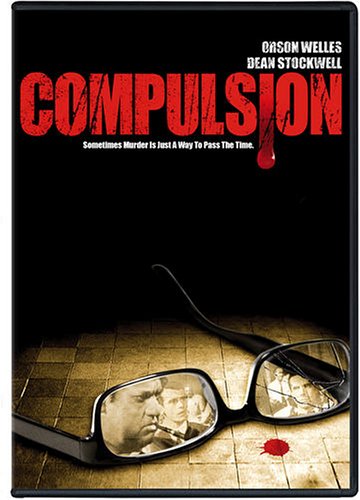
This film’s slogan was “Sometimes murder is just a way to pass the time.” A better way to fill up those empty minutes would be to watch this film. The film is based on a highly publicized real life case out of Chicago. A play was produced in the 1920’s. A book would also be written by Meyer Levin, which is the source material for this film. The story would not end there. It would be made at least twice more, including Hitchcock’s first color film, Rope. The case was perhaps made famous as much for the presence of Clarence Darrow as the defense attorney than for the senseless act of violence it represented.
A college classroom philosophical discussion opens the film and sets the stage for the crime. Judd Steiner (Stockwell) and Artie Strauss (Dillman) are intrigued by the Nietzchean concept of a superman. We’re not talking Clark Kent here. The idea is that a man of superior intellect could, and perhaps should, move through the world acting without the constraints of remorse or common law. These two guys see themselves in this role and commit a brutal murder as a sort of experiment. There really isn’t much of a whodunit. The prosecution soon stumbles upon a pair of eyeglasses that ultimately bring the two men down. Enter world renowned lawyer Wilk (Welles). He quickly finds he can’t argue innocence, so he diverts his attention to keep the young boys away from the gallows. It is in the trial version of the film that interest mounts. Welles delivers one of his best and yet most subtle performances here. The role is akin to Marlon Brando’s in A Dry White Season. His passionate closing statement is likely one of the cinema’s longest monologues.
Posted in: Disc Reviews by Gino Sassani on May 30th, 2006
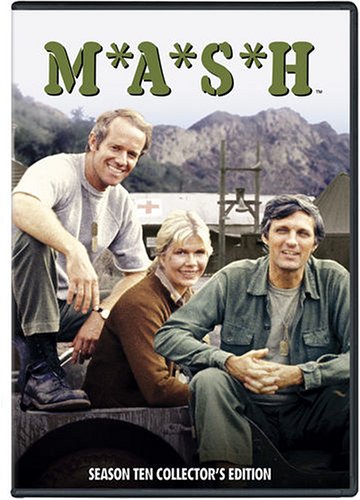
It’s true that MASH was winding down by year 10. Everyone involved already knew that the next year would be the last. This is what separates the true professionals from those in it for the money. Instead of dragging out the concept until there was virtually nothing of quality remaining, the entire cast and crew decided it was time to finish on top. A lot of folks would have simply gone through the motions once the end was in sight. Instead, these guys kept pouring it on. The stories and acting in this season are just as good as in any other. The saddest thing about this release is that there is only one more to come.
For the first time in a while there were no major cast changes in this season. All of the characters from season 9 remain. I think if anything can be said about this particular year it might be that the characters have become a bit more vulnerable. Almost every character comes into a story where they are left questioning themselves. For Hawkeye it is mostly philosophical. For Potter and Winchester there are real questions of limitations. For Houlihan there are a ton of emotional issues when she is stranded on her birthday. BJ has to deal with changes in his wife. Klinger has a close encounter with the spirit of a dead soldier that causes his own inner reflection. Finally, Father Mulcahy has to decide a huge moral issue in one of his best episodes. An AWOL soldier seeks sanctuary in the mess tent after Mass.
Posted in: Disc Reviews by Archive Authors on May 29th, 2006
Synopsis
The attack on Pearl Harbor and the days leading up to that fateful event are the subject of the 1970 effort. The narrative jumps back and forth between the Japanese and American perspectives as just enough things go both wrong and right and both sides (the ascendancy of the militant army faction over the reluctant navy in Japan, crucial intelligence always arriving just a bit too late to the right people in States) to make the surprise attack inevitable.
Posted in: Disc Reviews by Archive Authors on April 12th, 2006
Cecil B. DeMille’s The Ten Commandments hits store shelves in a new three-disc special edition, just in time for the release of the new made-for-TV mini-series. While the film classic is no stranger to DVD, it has yet to be released with this kind of gusto. At over three-and-a-half hours long, the film is simply too much for one disc to hold. The first disc contains the first 140 minutes, while disc two finishes up with the last 80. Plus, as a bonus, we get the original 136-minute silent version (also a DeMill... picture) on disc three. Since the later version is the most famous – and the centerpiece of this release – I will treat the inclusion of the silent version as a bonus feature.
Unless you’ve been living under a pyramid for the last 5000 years, you’re probably familiar with the story. Moses (Charlton Heston) grows up in the Egyptian palaces as a brother to Ramses (Yul Brynner). He discovers his true heritage as a Hebrew and forsakes all the riches and comforts of his childhood for the harsh life of a Hebrew slave. After killing an abusive Egyptian overlord (Vincent Price) in defense of a fellow Hebrew, he flees into the wilderness for about thirty years, until God decides it’s time for Moses to deliver the Hebrews from their plight. At first reluctant, Moses embraces the task at hand, and boldly marches back to Egypt for the famous showdown with the man he once called “brother.” Of course, the film takes certain liberties with the source material, but not so much to fall beyond the realms of reason. Moses really did grow up as an Egyptian, or so historians tell us, and so he must have had some deep ties to that people. DeMille does a fine job of honoring the text, while parlaying it into a compelling story of a house divided.
Posted in: Disc Reviews by Archive Authors on April 10th, 2006
The original 1959 version of The Shaggy Dog is notable for two reasons. First, it is the first live action film that Disney ever produced. They had created some animated features, of course, but this was the company's first real foray into the live action market. Secondly, the film marks the screen debut of Annette Funicello, a name certain to be familiar to fans of later Disney films. Later known as “America's Sweetheart”, Annette became a staple of the popular teenage beach movies of the 60's.
This ...VD release is notable for a couple of reasons as well, though they are not nearly as positive. The box states that this disc contains the original theatrical release, but it then goes on to say that the cut includes 10 additional minutes of footage. How can the same cut include both the original theatrical version and 10 minutes of additional footage? The disc also contains a second, colorized version of the film. Any true cinephile will tell you that colorization is a horrendous practice that completely changes the original vision of the filmmaker. So what consumers are left with is two versions of The Shaggy Dog, neither of which is the original. Clearly, this disc was released solely as an additional money making scheme to tie-in with the theatrical release of the remake, but at the very least I was expecting to find the film in its original format. That's just common courtesy. This is just the kind of horrible decision making that has plagued Disney over the past several years. Walt Disney would never have let such poor decision making go unchecked.
Posted in: Disc Reviews by Archive Authors on April 4th, 2006
For those Flintstones collectors out there, the ride is almost over. Season five of this show's six season runis now available on DVD. Of course, this show will never completely go away, and for good reason. The Flintstones was quite progressive for its day. Not only was it the first prime time cartoon program to develop a following, but it also has other things in common with modern animated sitcoms. It is easy to see traces of the characters of Homer Simpson and even Peter Griffin in these episodes. F...ed means well, but it is abundantly clear that Wilma is the brains of the family. This is a plot device that has almost been taken for granted today.
There are 26 episodes in this season, and each one includes some great laughs that easily translate to today's modern lifestyles. Though the show was created in the 1960's, it is still funny to see Wilma hang clothes on a clothesline with birds, or to see Barny fix the garbage disposal by poking it in the hindquarters with a stick. Our tools may have changed, but the personalities still ring true today.
Posted in: Disc Reviews by David Annandale on February 16th, 2006
Synopsis
Audrey Hepburn is Holly Golightly, a young woman to her name born. Flighty, hopping from party to party, she waits for her life to match her ideal. Into her apartment moves writer George Peppard, who is certainly not the millionaire our heroine imagines will sweep her off her feet. Peppard himself is a kept man, and his keeper is Patricia Neal. Peppard does have a more realistic view of how life works, in the long run, and that is a lesson that Hepburn must learn before romance can follow it... natural course.
Posted in: Disc Reviews by David Annandale on February 14th, 2006
Synopsis
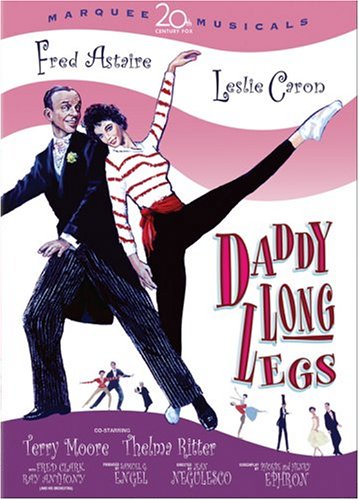
Fred Astaire plays wealthy businessman and inveterate bachelor. On trip to France, his car goes into a ditch. Seeking help in a nearby orphanage, he catches sight of the vivacious Leslie Caron. Captivated by her joie de vivre, he arranges for her to receive a full scholarship and education in the states, and watches from the safety of anonymity as she flourishes. But then, whoops, he begins to fall in love with her.
Posted in: Disc Reviews by David Annandale on February 13th, 2006
Synopsis
Jane Fonda plays Lilliam Hellman. She is living in a beach house with Dashiel Hammett (Jason Robards), struggling with a play (The Children’s Hour, though the film is ridiculously coy about mentioning its title). She is also worried about her childhood friend Julia (Vanessa Redgrave), who is caught up in the struggle with the rising tide of fascism in 1930s Europe. Hellman loses contact with Julia, but on a trip to Europe in the wake of her play’s success, she is contacted by friends ...f Julia’s, asking her to take on the risky job of transporting bribes to Hitler’s Berlin.