Dolby Digital Mono (Italian)

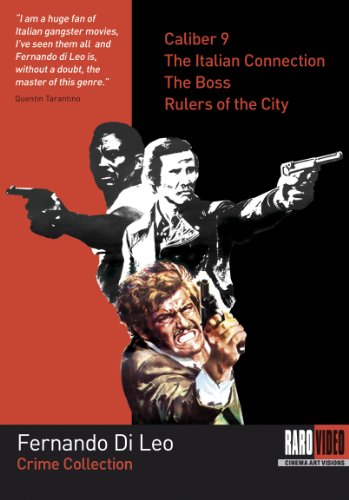
Looking for a something a bit different for you gangster flick fix? Then look no further than this box set of gritty, thematically linked Italian crime pictures from director Fernando Di Leo. Things don't get much more delightfully 70s than this.

Caliber 9 headlines Gastone Moschin as Ugo Piazza, a mob tough guy just out of prison. Everyone believes he stole 300 grand from the the mafia, which leads to no end of beatings and threats of worse. The old gang forces Ugo to work for them again, in order to keep an eye on him, and he tells girlfriend Barbara Bouchet that his plan is to find out who really took the money.

Clowns have been a recurring obsession for Fellini, by the director's own admission, and after having been memorable presences in his films (perhaps most notably in La Strada), here they have an entire film devoted to them. Fellini here offers a mixture of biography, documentary and comedy. The film opens with a young boy (meant to be Fellini) first encountering (and being frightened by) clowns at the circus. Fellini's narration recounts how the clowns reminded him of real characters from the village of his youth, which cues recreations of those people, their actions essentially circus clown routines transposed to world outside the circus tent. Fellini then heads off to Paris in search of clowns and their history.

Fellini incorporates many clowning routines, and how well the gags work will, of course, depend on the individual viewer. But the value here is less that gags than the history and broader meaning of the circus itself. What clowns mean, what we take from them, what the different figures represent – these are the kinds of meditations the film engages in, and there is a great deal of melancholy and poignancy to go along with the broad slapstick. A fascinating piece then, originally done for Italian television.

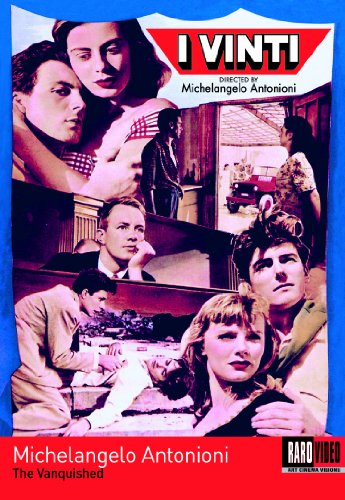
A stern, hectoring narrator laments the state of the Young People of Today's Modern World, and ascribes their terminal amorality to their having come of age during the World War Two. Having set the stage, he then withdraws until the end, that we might draw the proper moral conclusions from a trio of tales (inspired, loosely, by actual cases) that show the terrible depths to which the Young People of Today's Modern World have plunged.


The first is set in France, where a group of teens head off for a day in the countryside. Their goal is to murder one of their own, believing that a) he is about to betray them by taking off to Canada; and b) that all his fanciful tales are true, and that he is fabulously rich. In the second story, a young man from a good home in Rome is involved, for no very good reason beyond selfishness, with cigarette smugglers. Barely escaping from a police raid, he guns one man down and is badly injured himself. We then follow him through the day as he slowly stumbles toward his destiny. The last story takes us to England, where a fellow, utterly convinced of his own superiority, courts a newspaper's interest first by letting a reporter know about a body he has found, and later by boasting he killed the woman himself, believing that his crime is so perfect that he can confess to the police and then recant without suffering any particular inconvenience.

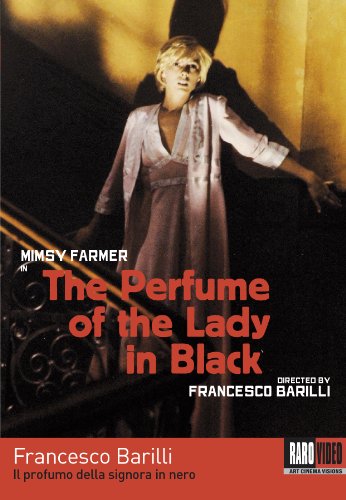
Three years after her unsettling turn in Dario Argento's Four Flies on Grey Velvet (1971), Mimsy Farmer headlined this giallo-related effort by director/co-writer Francesco Barilli. She plays a successful chemist on the verge of a psychotic break. She has been haunted since her childhood by the death of her father, and she has recurring memories (or are they fantasies?) of her mother in the arms of a sinister man. Her sense of reality crumbles as objects and people from her past appear and vanish. She retreats deeper and deeper into a paranoid shell. But just because you're paranoid doesn't mean they aren't out to get you, and there are signs that she may be the victim of a sinister conspiracy.

By the time Barilli's film reaches its admittedly chilling finale, it has ceased to make a lick of sense. This isn't necessarily a bad thing: many gialli (and related Italian horror films) follow a logic that belongs to dreams rather than the real world. But even as Barilli adopts a stately pace (all of the violence in the film is reserved for the last fifteen minutes), he also tries to do too much, as if he were trying to fuse Repulsion with The Wicker Man. The film's head-scratching aspects get in the way of the fist-in-the-gut denouement, or at least prevent it from having quite the impact it deserves. However, the film is handsomely shot, and the ending is sufficiently powerful that it will linger in the mind.