Disc Audio

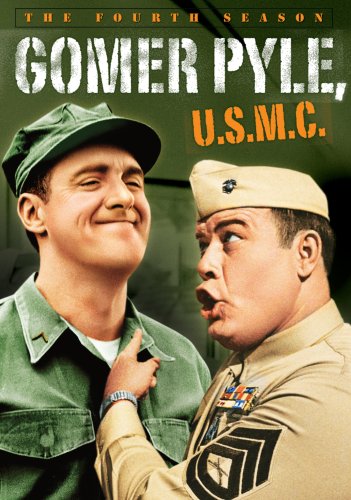
We’re in the US Marines, boys and who could have guessed that it would be so much fun? I often wondered how the real life members of The Corp think about Gomer Pyle. It would have made a great extra. I remember one of the F Troop sets offered a look at members of the real unit. With only another season to go I hope Paramount looks over the idea.


I’m going to admit right from the start, I hate cell phones. They’re evil, and I didn’t need a horror film to tell me about it. The world would be a safer and certainly a more courteous place without them. Just last week I was run of the highway by a Werner semi because the idiot driver was on his cell phone. So it didn’t come as any surprise that someone was bound to include them as part of a horror film. One Missed Call is simply the latest Asian Invasion film to be retooled for American audiences. What started with The Ring, which was a truly original and suspenseful film, has also given us losers like The Grudge. Unfortunately this film falls into the latter category. Believe me, I wanted so much to love this film. I was the annoying guy cheering the trailer at the local cineplex.


Many attempts have been made over a decade or so to imitate South Park in an attempt to cash in on the money train. So far no one has been even remotely close. The industry consensus appears to be that it’s all about crudeness and pushing the standards envelope. That couldn’t be further from the truth, and Drawn Together is proof of that. Drawn Together is wickedly foul and raunchy. The problem is that’s all there is. It started out with a clever enough idea. Let’s take several cartoon archetypes and put them in the same house, Big Brother style. The first few episodes had some genuine humor to them while poking fun at reality television and pretty much anything else that gets in the way. Before long the show just began to be how much gross-out will the public take? Like South Park, the characters in Drawn Together are potty-mouthed and antisocial, but they lack any of the charm that Parker and Stone were able to infuse into their characters. Also, like South Park, the show drops a ton of pop culture references. The difference is that in South Park there is usually context that makes the references funny, but in Drawn Together they appear to be dropped from out of the blue and serve no purpose. When one of the characters kills another, the dead guy’s mom shows up and delivers Mrs. Kitner’s line from Jaws about knowing there were sharks in the water but letting folks swim anyway. Where the heck did that come from? If this had been South Park the line would absolutely have tied in to something that actually happened to the dead guy. The writing is incoherent, and usually the show is a series of nonsequiturs. Gross for gross sake isn’t funny.

Just in time for the release of one of the most eagerly awaited films in years comes a new box set of the Indiana Jones Adventures. The problem is that these transfers are not upgrades so, aside from squeezing out a few extra bucks, what’s the point? I’m sure that The Kingdom Of The Crystal Skull will add hundreds of millions to the Paramount coffers, so this just looks like greed to me.


12 Angry Men is one of those rare films that appears to defy all the Hollywood constants and yet become one of the best films of its kind ever made. The setting is entirely too claustrophobic. With the exception of two bookend scenes the entire film takes place in the tight quarters of a jury deliberation room. The story had only a couple of years earlier been the subject of a live television drama, so the story was far from a fresh idea. The director was a complete unknown who had not at that point directed a major picture. Enter Henry Fonda, the only member of the cast who was a strong A list name. He was also the driving force behind getting the film made. He produced the film and was involved with most of the major decisions. With all of these elements going against it, you would expect the film to fail miserably, and that’s exactly what it did. During its premier run the film only lasted a week and was a complete financial failure. It happens all the time, and we would expect the story to end there, but it didn’t.


Jim Phelps (Graves) led his team in a fourth season of Mission Impossible starting in 1969. The show continued its trademark traditions. Jim would receive a mission from the “self destructing” tape and would gather his IMF (Impossible Mission Force) team. The team was necessarily eclectic in nature, and it changed significantly in the fourth season. Gone were Martin Landau in his signature role of Rollin Hand and Barbara Bain as Cinnamon Carter, model and the team’s chief seductress  Still in the team we had Barney Collier, the gadget man, played by Greg Morris. The muscle was still supplied by Willy Armitage, played by brute Peter Lupus. Leonard Nimoy joined the team in season four as Paris, who also had a skill for disguise. He was a magician, so his sleight of hand skills came in … well, handy. Together they took on missions that the government could not be officially a part of. They were always admonished that should they be caught “the secretary would disavow any knowledge” of them.  Usually they were sent somewhere to put some evil mastermind out of business. Their tactics ranged from scams to outright theft. Sometimes they were a rescue team, while other times they would infiltrate a group of bad guys. There were certainly cold war elements to the whole thing. Each week the team concocted some convoluted con to play on their mark, walking away at the end of each episode often without getting any credit or congratulations.


In the first season of The 4400 we are introduced to 4400 people who, we are led to believe, have recently returned from being abducted by aliens. Before you can look for Samantha Mulder among the group, we eventually discover that it was in reality the future that abducted these hundreds for nefarious reasons of their own. Some abductees have returned with mysterious powers and abilities. No, this is not Heroes or X-Men; in fact it’s a lot more like The X-Files than anything else, particularly in this the final season. Up to this point the government has developed a vaccine that inhibited these powers. Again we seem to be treading on X-Men territory here, don’t we. When the third season left us we were introduced to another drug that can reverse the effects of the inhibitor, but it carried an almost even chance of death. It is here that season four begins its likely final stories to tell.

The original Teenage Mutant Ninja Turtles series ran from 1987-1996 and had over one hundred and ninety episodes. Millions watched as Leonardo, Donatello, Michaelangelo, & Raphael grew up from little turtle babies into mean, green, fighting machines. They could take on Shredder, Krang and any other bad guy that wanted to turn them into turtle soup. The sixth season takes on episodes 128-143 and spins them into a tiny two disc package from Lionsgate. Over a hundred episodes in, do the turtles still pack the punch they did back in 1987? As Splinter would say, "Be patient young ones, the answer will come."

Let's see, where were we in the TMNT saga? The last episodes of the fifth season saw the Turtles land up on a planet where turtles ruled and introduced us to a couple of new mutants named Groundchug and Dirtbag. True to form however, the turtles were successful in their exploits and sent Krang & Shredder back to the Technodrome. Season six opens with Krang & Shredder in the Technodrome, trapped in the Arctic. The Turtles are busy eating pizza, fighting crime and striking back at whatever plan the bad guys hatch at them each episode.

A couple of years ago, I was out a trip to New Jersey on business with my boss. When we got there, he wasn’t feeling well, so I had him sit down while I went to the clinic down the hall to see if some medical attention could be given to him. As I turned the corner with an attendant, that’s when I saw him hit the floor. After a few moments of stabilization he was taken to the hospital, where it was determined that he had a stroke. A co-worker and I stayed with him for the duration of the next couple of days until his family could get there, and over that time, he suffered several smaller strokes in the process. One minute he could talk rather lucidly, and like flipping a switch his facial muscles would sag and be nonresponsive. Once his family came, we managed to get the chance to come home, and he spent several more days in the hospital, remarkably without any repercussions from this incident, and came back to work, where we still talk (I’ve moved to another company) and share the occasional gallow humor about what happened.

He was lucky, though there are others that have experienced far worse situations. The Diving Bell and the Butterfly is a look at the life of Jean-Dominique Dauby. The editor of the French version of Elle magazine led a somewhat glamorous life,and one day had a severe cerebrovascular incident, whereby he was left paralyzed, but responsive in his left eye, which allowed him to communicate solely by blinking. With the help of speech therapists, he was able to state his thoughts in his book by the same title, as a metaphor of his useless body, labeled as the “diving bell,” ironically clashing with his free spirit, your “butterfly,” if you will.

It’s hard to peg a movie like Things We Lost in the Fire. While people want to slam it and say that it’s not an uplifting movie, I think that upon further review, they might want to examine those behind it, and see that it’s another solid effort from them.

Written by Allan Loeb in his writing debut and directed by Susanne Bier, the talented Danish director behind the film Brothers, the film centers on a recent widow named Audrey, played by Halle Berry (X2), who lost her husband Brian (David Duchovny, The X-Files) to a murder in tragic circumstances. After notifying Brian’s friend Jerry (Benicio Del Toro, Traffic) about the murder, Jerry doesn’t seem to take it so well. Brian and Jerry have been friends since they were kids, and while Brian went onto a life as a successful architect, Jerry was a lawyer before becoming addicted to cocaine and heroin, and was spending his days at a sleazy dive apartment getting high. Yet Brian would come and visit Jerry, to catch up and talk about his family. When Audrey would be skeptical of how Jerry might be exploiting Brian, Brian stuck by him. So what Audrey winds up doing is inviting Jerry to live with them. In the process, Jerry helps Audrey and her kids cope with their loss, while trying to strike the delicate balance of sobriety.