Posted in: Disc Reviews by Archive Authors on October 25th, 2005
Synopsis
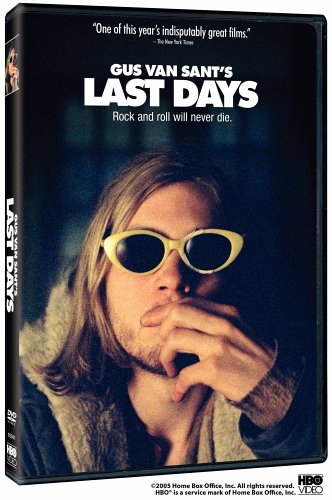
In his mansion and forested estate, a rock star (played by Michael Pitt and named Blake, but obviously supposed to be Kurt Cobain) wanders about in a terminal drug stupor. Hangers on, business associates, Mormons and salesmen besiege him, but his flees human contact, withdrawing completely into himself.
Posted in: Disc Reviews by Archive Authors on October 24th, 2005
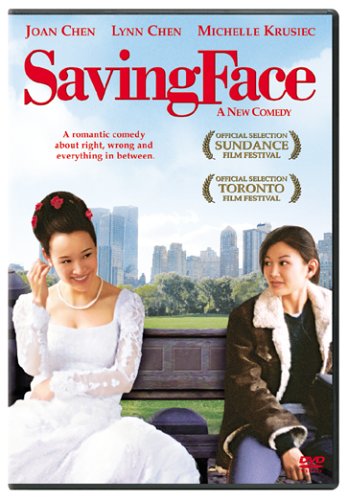
I was dreading watching this DVD. Hmmm...indy film, Sundance film, a woman "coming out" to her family film. This had all the hallmarks of arty and annoying. Thankfully, Saving Face is not like that at all. Michelle Krusiac plays "Wil", a surgeon, who falls hard for Vivian (Lynn Chen), a ballet dancer. Complications arise because Vivian is the daughter of Wil's boss. Yes, there are some screwball comedy elements. But it's all tastefully done. Joan Chen (what has she done since Twin Peaks) does a n...ce turn as Ma.
Alice Wu writes and directs the film. She shows a steady hand in both areas. The movie verges over into "feel good" territory, but this seems to be on par for the genre. Saving Face has a certain charm, and garners strong performances from the lead actors. Well done
Posted in: Disc Reviews by Archive Authors on October 24th, 2005
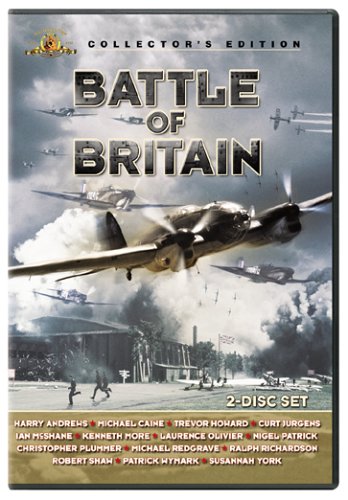
The Battle of Britain was a famous turning point in the World War Two theatre. The movie, Battle of Britain, was brought to your home theatre a few years ago. This single disc edition, with very few features, seemingly cried out for more. Now we have it in Battle of Britain: Collectors Edition, 2 discs of military goodness.
The film itself has spectacle. The planes used for this film helped create an air force equal to a medium sized country. No CGI here. The director is Guy Hamilton (b...st known for early James Bond films). Battle of Britain is one of those large all star cast war movies (think of A Bridge Too Far) that was made popular in the late 60's/early 70's. This movie is all Brits however (with a sprinLing of Germans). Michael Caine, Ralph Richardson, Robert Shaw, Laurence Olivier, and many others take part in the action. The film has a few flaws. There are some phony photography shots and the dramatic construction is a bit sloppy. There’s an attempt at a romantic sub-plot (featuring Christopher Plummer and Susannah York), and thankfully it’s not as damn annoying as the love plots in Pearl Harbor. But I quibble.
Posted in: Disc Reviews by Gino Sassani on October 23rd, 2005
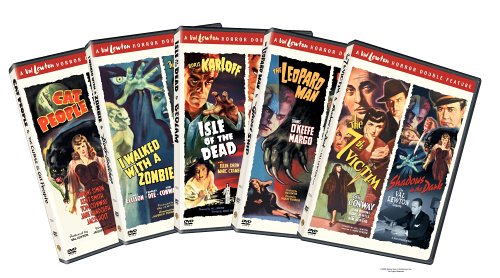
Val Lewton produced 9 horror films for RKO back in the 1940’s. His films did not rely on terrible monsters or horrific images. Lewton was a master at atmosphere. Unfortunately these films have mostly been forgotten over the years, The Cat People being perhaps the most recognizable title in the collection. Sadly, this might be more for the lackluster remake in the 1980’s. Truth be told, these films are not really horror films in the usual sense of the genre. In most cases the evil is the product of an all too human hand rather than anything supernatural or fantastic. Not surprisingly Boris Karloff stars in the three best of the films including The Body Snatcher, one of the best horror films ever made. Please don’t confuse the title with the Invasion of the Body Snatchers.
Lewton’s films were all about mood and ambience. Violence more often than not occurs off-screen and portrayed as shadows, allowing the audience to imagine frights far more fantastic than could be placed before our eyes. Lewton’s productions were budget affairs but had comparable quality to the higher cost features that the big studios, most notably Universal, were creating at the time. This collection brings together all 9 films on 5 DVD’s…
Posted in: Disc Reviews by Archive Authors on October 21st, 2005
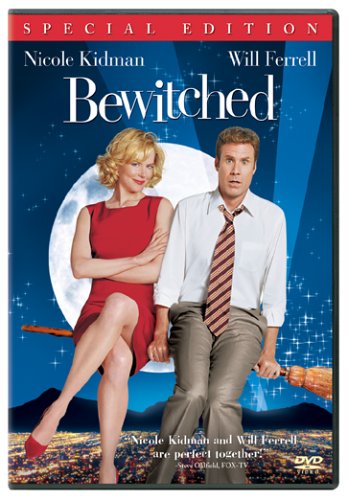
When comic book movies started becoming popular in the 90's with Batman, The Punisher, Dick Tracy and the like, directors weren't really sure how to handle the subject. The most popular methods involved making the film look like a comic, to help to tie the narratives together. Unfortunately, audiences soon discovered that the result of this mash-up of styles was a heavy-handed, overblown color explosion that just looked hokey (Batman Forever, anyone?) Finally, in recent years, it has been ...iscovered that the best way to tell these stories is to make them look just like normal films. If you focus on the story first and foremost, and real emotions, the supernatural aspects will be readily accepted by the viewer. As a result, audiences have now been treated to such fine films as Spiderman, Hellboy and X-Men.
Now that movies based on old TV shows have come into popularity, it seems this is a lesson that has to be learned all over again. The Mod Squad, Starsky and Hutch and The Dukes of Hazard have all been miserable failures, with the first Charlie's Angels being the only possible exception to this trend. All of these films tried way too hard to cram in all of the elements from the original TV show, instead of focusing on creating an excellent story first and foremost. Sure, it is pop candy to hear that clever narrator trick in Dukes, or the "fade to commercial" music cue in Angels, but the cleverness easily wears off over two hours, and in the end, it is a strong story that matters the most to the film.
Posted in: Disc Reviews by Archive Authors on October 20th, 2005
Synopsis
Two playwrights argue over whether life is inherently tragic or comic. To illustrate their point, they each tell the tale of Melinda (Radha Mitchell) who unexpectedly bursts in on a dinner party, creating all kinds of romantic complications. The film then alternates between the two stories. The set-up could hardly be more utterly Woody Allen, simultaneously pretentious and shallow. One story is comic (with Will Ferrell taking Allen’s usual role), the other is tragic, but you’d be hard-presse... to tell the difference. All the characters spout the same kind of incredibly stilted and self-conscious dialogue, which is neither funny nor revealing. The result is a halfway interesting idea with a talented cast outgunned by their God-playing director. Based on the evidence at hand, it turns out that life is, in fact, inherently boring.
Posted in: Disc Reviews by Archive Authors on October 20th, 2005
Synopsis
A group of young folk on their way to the “biggest college football game of the year” (you would do an overnight trip for THAT?) take an unfortunate detour. In groups of two, they are lured into a town run by two madmen, where the only other inhabitants are the was-coated effigies of their victims. What follows is the expected gory slaughter, and some of the deaths are gruesomely imaginative. There is, however, no terror. What does it say when practically the most likeable character in a fil... is played by Paris Hilton? It says that you can’t wait for these people to die. Even the more amiable heroine behaves in ways that are colossally stupid even by slasher movie standards. And the twist at the end is so trivial and meaningless, so utterly irrelevant to the plot, that it is the narrative equivalent of bicycles for fish.
Posted in: Disc Reviews by Archive Authors on October 19th, 2005
Synopsis and Comments
Apparently “Land of the Dead” was created for an audience that the producers of the movie (and writer Romero) consider to be no more intelligent than the zombies that populate Romero’s world. We shuffle into the theatre, clutching out-sized drinks like totems from the outside world, moaning piteously that they cost us five bucks to get. Unnnghhhhhh. Mooooovie. RRRrrrrgghhh.
Posted in: Disc Reviews by Archive Authors on October 19th, 2005
Criterion doesn't put out too many box sets, so you know that when they do, it is really going to be something special. Their Brazil set is a benchmark release that all other single-film, multiple-disc sets are measured against. The Wrong Men & Notorious Women – Five Hitchcock Thrillers set is a brilliantly-themed way to showcase five of the director's most devious films. They have taken that same approach with Rebel Samurai – Sixties Swordplay Classics. The four films in this set, Samurai Re...ellion, Kill!, Samurai Spy and Sword of the Beast, represent unrelated productions that turn the proven conventions of the samurai film genre on its ear.
In the sixties, rebellion was occurring worldwide; not just in the United States. These films show how revolutionary thoughts of freedom were affecting the citizens of the East. While each of these films is different in its style and tone, the unifying message is the same. The Japanese were starting to see that the ruling class may not be the flawless entity that it had been perceived to be for so many hundreds of years. It is not only a citizen's right, but their duty to question authority, and to stand up for injustice, even when that injustice comes from within. These are powerful and controversial ideas in a culture devoted to duty, honor and respect. The examination of the fall of the samurai through film may have been the best way to safely share these new national feelings. The films in this boxed set may be one of the best examples that I have ever seen of the power of art to affect and change the collective conscious of a society.
Posted in: Disc Reviews by Archive Authors on October 19th, 2005
In an odd sort of way, Samurai Spy has the feel of one of the Sean Connery Bond films. The plot seems to be more convoluted than it really needs to be, and there are many scenes that show a character quiet and alone, as they discover a new piece of the plot puzzle for themselves. I would say that parts of the film could be a bit too complex for some American audiences to follow, as so much of the story is driven by Japanese character and clan names. It seems that Criterion anticipated this problem, as they hav... included a character gallery in the extras, complete with brief character bios.
However, as is the case with many of Criterion's releases, patience is well rewarded. Those that put in the effort will find a film that is rich in its message and quite modern in its tone. While most samurai films up until this point rested on the fact that a samurai can always trust completely in his shogunate, this film is full of double-crosses and wavering allegiances. No longer is what is good for the community always best. Sometimes, this film teaches, personal interests are more noble than those of the collective.