Disc Type

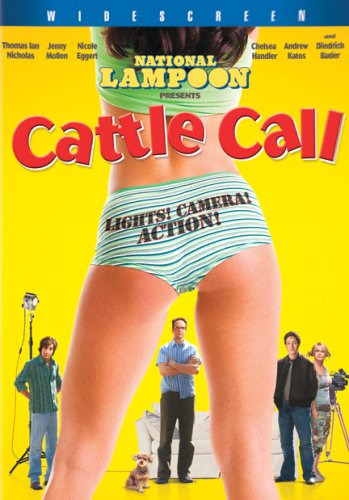
The movies of National Lampoon haven't always had the best track record. On on the good side, we have Christmas Vacation, Van Wilder or European Vacation (Chevy Chase is gold after all). On the bad side we have movies like Senior Trip, Dorm Daze, or Dorm Daze 2 (Wretchedness has sequels?) But every once in a while, you can take a bad movie and suddenly realize that you are holding something that is worse than any National Lampoon movie to date (I don't care what anybody says but Loaded Weapon wasn't half bad). A movie so bad, that even Jonathan Winters or Diedrich Bader could not save it.

If it's Wednesday, that must mean another batch of SpongeBob cartoons. The lead-off here is the is title episode, a 22-minute piece that recounts the adventures of SpongeBuck SquarePants, our hero's 19th-Century ancestor. The rest of the episodes are an eclectic bunch, and the thematic consistency is less than that of some other collections (there is a vague adventure link that runs through several of the stories). At any rate, the silliness is just as engaging and bizarre as ever, and there are plenty of quick absurdist sight gags to keep you chuckling.

Some years back, I reviewed Elite's Millennium Edition of the NOTLD. That was certainly the most definitive edition at that time. So now we have another deluxe edition. How does it stack up? Before we get to that, a few (largely unnecessary) words about the film. There's a blurb on the box that calls this “the most influential horror film since Psycho,” and there is a great deal of truth to that. As has been pointed out before, the film single-handedly transformed the mythology of the zombie, changing the monster from mindless slave to flesh-eating ghoul. I can't think of any other instance where a mythology was changed so completely and with such finality.

I don’t remember that much about Diva growing up; it was a film that I heard about as a kid, and a lot of people liked it, but that was the first time I can honestly say I was exposed to the arthouse film, and that it was something that I wanted to find out more about. Through the years, I’ve seen many a foreign or independent film, however the one that started all of it off for me I hadn’t seen, until now.

It’s not that these fantasy-epic films that feature a young child in the starring roles bore me, it goes to the larger notion that Hollywood will remake every child’s fantasy novel into some sort of cinematic product, so a buck or two can be made. For every Harry Potter, there’s a Golden Compass or even Spiderwick Chronicles. The well is rapidly running dry, and you needn’t look much further than The Seeker: The Dark is Rising, a film about a young lonely boy who finds himself in circumstances and an adventure beyond what he might initially suspect. Wait, doesn’t that sound like EVERY children’s movie lately?

When The Ruins opens, it doesn’t look quite so promising. We’ve got two American couples sharing a vacation in Mexico. They’re reaching the end of their stay and are getting a tad bored with the sun and surf. Enter the foreign stranger who happens to have access to a secret archeological dig and invites the foursome along. Immediately I begin to suspect I’ve seen it all before. I figure the guy’s going to lead them to some isolated torture garden where sadistic maniacs will have their way with the tourists.

They say that it isn’t over until the Fat Lady sings. Did you ever wonder what “it” was or who the heck this Fat Lady is they keep talking about? I can’t help you there, but I do know who the Fat Man is. It’s William Conrad, who came back to television in 1987 as J.L. McCabe, better known as “the Fatman”. McCabe was one of those tough as nails district attorneys. He was actually an ex-cop, so had great criminal instincts. McCabe wasn’t above bending the law to put away the bad guy, and he wasn’t considered a very friendly type of fellow. He majored in stubbornness and plain speaking.

William Conrad was no stranger to audiences when Cannon joined the Quinn Martin stable of television dramas. In fact, most folks knew his voice before they got to know his trademark girth. Conrad was the original Matt Dillon when Gunsmoke was a radio drama. When the drama entered the visual medium of television, even Conrad admitted later that the audience, who thought of him as tall and handsome, would have been disappointed. His voice lent authority to any role he played, and on radio his size was never an issue.

I don’t know what it is about Owen Wilson, but whatever film he’s in he seems to be playing himself. The soft-spoken, rather glib personality has taken him places over the years, but you have to ask yourself if he’s ever going to actually take any risks. Drillbit Taylor is no more a stretch for the actor than any of these other roles. What that means for us, the viewers, is that we’re sure to get a solid and quite believable performance. We know that we’ll end up warming to Wilson’s character in spite of the various flaws we are apt to discover along the way. If Wilson does anything well, it’s redemption.

If you read my recent review of Bender's Big Score, you'll know I wasn't exactly thrilled by Futurama's first dvd movie. But like many things (such as relationships and less than average presidents), you always want to give it a second chance. Bender, Fry, Leela & others are fantastic characters and perhaps with the first film, they just had a bump in the road. We, as viewers know they can do better. They just have to steer clear of disgusting & annoying villains as well as confusing plots. Let's hope that it holds together for the solid ninety minutes and see what pans out.