Comedy

Running for a single season in 2008, this ABC Family production is a humorous pastiche of superheroics and Avengers-style adventure. Natalie Morales plays Wendy Watson, a struggling artist making ends meet as a temp. When she demonstrates incredible unflappability when a monster is unleashed at her current job, straight-arrow superhero the Middleman (Matt Keeslar) recruits her to join him in the fight against all sorts of bizarre menaces. A sampling of titles gives the flavour of the series: “The Boy-Band Superfan Interrogation,” “The Palindrome Reversal Palindrome,” “The Flying Fish Zombification.”

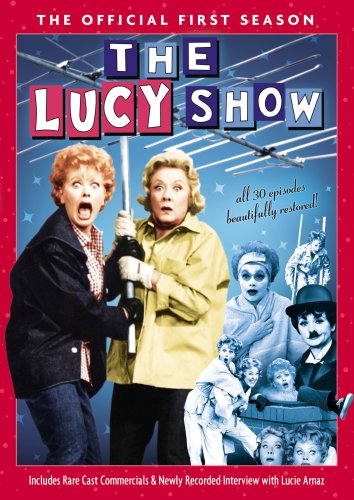
This was Lucille Ball's follow-up to I Love Lucy, and the first season is, apparently, the most highly regarded one. Here Ball is a widowed mother of two, sharing her home with best friend Vivian Vance, who is a divorced mother of one. All the other members of household are, of course, faced with the disasters triggered by Lucy. I screened this set immediately after viewing its close contemporary, Petticoat Junction, and the difference between the two was instructive. There are plenty of hoary gags and situations on The Lucy Show, but there is an enormous difference between the shows thanks to the comic genius of Lucille Ball. Her energy fills each episode, her timing is spot-on, but there is also her commitment to a type of physical comedy that to this day remains pretty much the exclusive domain of male performers. Not only does she make this style her own, she grounds it in a female reality. There is a reason she was so beloved a performer, and why her work still stands up today.

Though the image is a bit soft, with features losing definition in long shots, the picture is still looking remarkably good for television from 1962-63. The black-and-white tones are very warm, and the grain, though present, is minor. There is no edge enhancement to deal with. It is, frankly, very unlikely that these episodes have ever looked better.

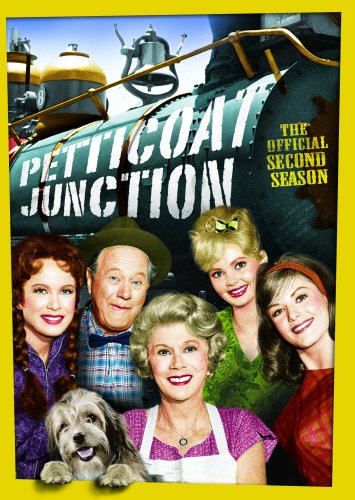
Once upon a time, there was an age of TV where hit shows where women in their 20s played high school students, and an entire episode could revolve around the burning crisis of whether the dog that followed one daughter home could stay. It is from this era that Petticoat Junction hails. This series about a widowed mother and her three daughters tending the Shady Rest Hotel ran for seven years, and begat both Green Acres and The Beverly Hillbillies, in that characters from all three series would interact with each other.

So our principle cast here consists of mother Kate Bradley (Bea Benaderet), daughters Billie Jo (the flirt, played by Jeannine Riley), Bobbie Jo (the bookworm, played by Pat Woodell, who would leave after this season), and Betty Jo (the tomboy, played by Linda Kaye Henning, daughter of series creator Paul Henning). Throwing in his two bits is lazy Uncle Joe (Edgar Buchanan). Joining the cast this season is Higgins the dog, who would subsequently star as Benji, and thus eclipse his human co-stars.

“It’s like one of those fatal attraction things, like they show on the Donahue Show, you know?”

It might not have exactly been “fatal”, but the attraction that Jack Lemmon and Walter Matthau had for each other, and we still have for them, is on perfect display in Grumpy Old Men. Then again… it might just as well have been fatal, if not fate. The two men died just months from each other. Matthau left us in July of 2000, and just under a year later in June of 2001 we lost Jack Lemmon. Chris Lemmon, Jack’s son, doesn’t think it’s entirely a coincidence. He told me in a recent interview that the men loved each other. He joked that “if Walter had played golf, he’d have married him.” Whether it was the chemistry these guys had off screen or just their natural abilities, might be hard to pin down. Whatever the reason, there have been few Hollywood duos that put out as impressive a body of work. With Lemmon, it was the fact that he was always rather a dramatic actor who found himself in hilarious roles. With Matthau, he was always the lovable buffoon whose characters almost always got in their own way. They appeared in about a dozen films together, from the enigmatic Oliver Stone JFK to The Odd Couple, perhaps their most renowned comedy. Like all of their films the main attraction, fatal or otherwise, is watching these two buddies work together. Grumpy Old Men might not be anything like their best work, but I’d take these guys on an average day over most duos on their very best.

“Let me bring you up to speed. We know nothing. You are now up to speed.”

The Pink Panther is one of those properties that has given several generations some wonderful memories. If you were a kid, of any age, in the 1970’s you remember watching the cartoon series on Saturday mornings. It was one of the more innovative cartoons in that it had almost no dialog. The titular cat was always trying to outwit the witless Inspector Clouseau, and in true comedic fashion would always manage to escape. If you were a little bit older, you remember the truly inspired comedy films by Blake Edwards. Here it was the absolute genius of Peter Sellers who brought to life the famous bumbling detective. With his brilliant combination of physical sight gags and clever word play, Sellers would create an iconic character that would entertain through several films until his death in 1980 brought an end to the franchise…at least it should have. But MGM was too in love with the money stream the films had provided.

Released just in time for the global financial meltdown, this hymn to designer products features Isla Fisher, who demonstrated her comedic talent by stealing Wedding Crashers from both Vince Vaughn and Owen Wilson – no small achievement. Here she plays Rebecca Bloomwood, a compulsive shopper who, while hoping to land a job working at a fashion magazine, accidentally finds herself hired on a columnist at the sister publication, a rather less glamorous financial mag. Her columns, couching financial advice in shopping metaphors, become a surprising hit, and sparks begin to fly with her editor (Hugh Dancy). Meanwhile, a relentless debt collector is dogging her heels.

Combining Sex and the City voice-overs and clothes with Bridget Jones insecurities, the film sets out to be, I suppose, some sort of female fantasy. And sure, just as we are expected to buy Seth Rogen as a babe magnet in the male POV rom-coms, one can be fairly asked to do some heavy suspension of disbelief exercises when it comes to the match here, too. But why, as seems to be so often the case, are the female characters presented as ADD idiots? It becomes very hard to like Rebecca when, with her career (and quite possibly that of the man who is giving her a shot at the journalistic brass ring) hanging in the balance, she would rather rampage at a sample sale then do her work. Fisher throws herself into the part with enormous energy, but she is working with empty, predictable, numbing material.

“A long time ago in a land far, far away, way East of Chicago, in a place called Brooklyn, actually, a great man named Mel Brooks was born. And, that man begat this and that, and then some, and then he did this…”

This, was Spaceballs. Brooks had tackled pretty much every genre of film before Spaceballs. He took on horror films with Young Frankenstein. He tore up the old West and the Western with Blazing Saddles. He was bold enough to offer us a take up on the Silent Movie. On television he took on James Bond by giving us Agent 86 in Get Smart. With the success of Star Wars and the consistent top box office performance of the science fiction films, it was only a matter of time before he turned his trademark Jewish wit towards the space opera. While Spaceballs aims primarily at the first Star Wars franchise, there is plenty of fun poked at everything from Star Trek to Alien. Certainly there have been quite a few such spoofs since then, but most of them have been the standard dry slapstick in the Airplane mold. With Brooks there’s always a certain amount of class to go with your comedy. He always gives you a little meat to go with all of that cheese.

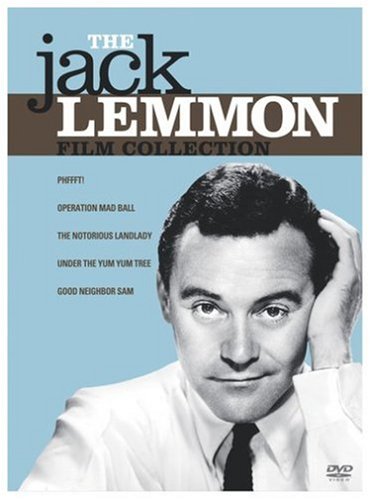
Perhaps best known and beloved for his portrayal of Felix Unger in the original Odd Couple film, Jack Lemmon has a long list of credits to his name. He’s appeared in 100 films and many stage and television productions as well. It was also a little known fact that he was an extremely accomplished musician and wrote music for a couple of his films. He was one of those actors who simply loved his job. He was known for uttering the phrase “It’s magic time” before a take on the set of almost all of his films. While primarily known for his comedy, Lemmon was actually not a bad dramatic performer and believed there was no reason the two couldn’t be combined. His role in The China Syndrome was far from a comedic one and showcased his ability to do drama.

Jack Lemmon might not be the most dramatic or even the most acclaimed actor out there. But there was something about him that defined him as an icon all the same. He was a very typically American actor. He brought to life characters that were instantly identifiable, but yet oddly eccentric enough to keep our interest. He always came off as genuine and was literally loved by the plethora of actors who always considered it an honor to work with him. He developed lifelong friendships with many of his co-stars, most notably Walter Matthau. The relationship you saw on the screen was what you got off the screen. Jack’s son Chris referred to him as Uncle Walter and claimed that if Matthau played golf, Jack would have married him. But this was just the kind of guy he was. In a day of angst-filled superstars who make more press outside of their roles, Lemmon is still a breath of fresh air. You might miss the man, but Sony and Chris Lemmon have gotten together to make sure you don’t miss some of the greater films.

Recipe for Ramen Girl (serves 4)

Take one American girl, preferably in her early 20’s, and place her in Japan.

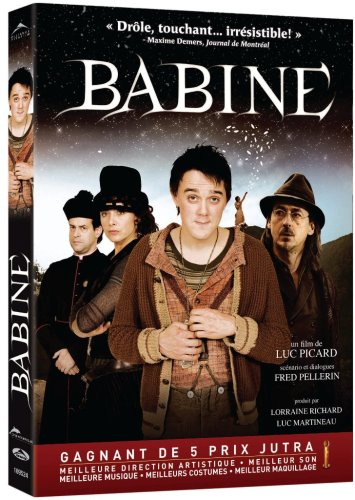
In a village where there is a great deal of time (there are months whose days are numbered in the 40s), the local witch gives birth to the title character. Twenty years later, Babine is the Village Idiot. Though he is a thoroughly gentle soul, he also becomes the scapegoat for every ill, real or imagined, that befalls the villagers. Fortunately, he has some champions, including Toussaint Brodeur (played by director Luc Picard), the local fly-raiser. But then the church burns down, and terrible trouble looms for Babine in the person of the new, fanatical village priest.

Obviously, as the above synopsis suggests, we are in the realm of the utterly fantastic here. Narrated by storyteller Fred Pellerin, whose tales form the basis of the script, Babine is endlessly inventive, at the cost of being a bit too episodic for its own good (something that Picard, during his commentary track, admits he struggled with) and giving short shrift to some of its striking characters. There is no denying, however, that its world-creation is very successful. The film is a visual feast, one very much on par with the likes of Tim Burton, and this achieved with a fraction of the budget of its Hollywood equivalent.