Comedy

Synopsis

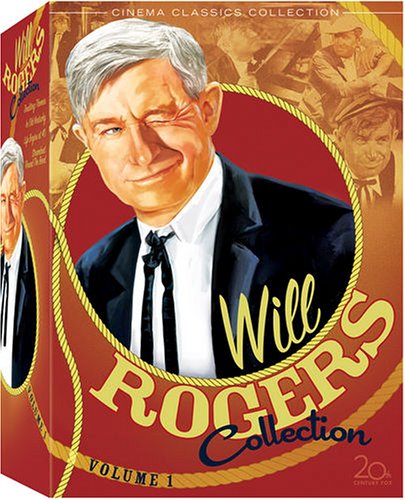
Will Rogers was once the biggest star in Hollywood. Think of any other big name from the late 20's and early 30's, and he outpaced them all. Today, he is little more than a name, and there are plenty of film guides out there that don’t even list his films. Quite the sobering lesson on the evanescent nature of fame. The films in this collection were all made in 1935, the last year of Rogers’ life, before he was killed in a plane crash. These comedies have definitely dated, but Rogers’ charm i... undeniable. He was an inveterate improvisor, but he apparently stuck pretty closely to the script of Doubting Thomas. Dismayed by his wife’s sudden theatrical ambitions, Rogers plots to derail those hopes and keep her in the kitchen, where she belongs (did I mention the films had become a bit dated?). Life Begins at 40 sees Rogers in full aphoristic mode as the crusty, mischievous and independently-minded newspaper editor determined to clear the name of an ex-con employee and triumph over the small town’s evil banker. In Old Kentucky has a feud between two families centred around horse racing. Rogers is the trainer who switches loyalties. Finally, <i <steamboat ‘Round the Bend has con-man Rogers captaining a steamboat as he searches for the half-crazed preacher who can prove that Rogers’ nephew killed a man in self-defense.

I really enjoy stand-up DVDs, but they're pretty formulaic. The show starts, there is usually a short un-funny skit, and then the stand-up portion starts. The comic does his show, the credits roll, and that's it.

This is really something unique and innovative, however. This film is something of a musical comedy, skit, music video stand-up film. It's a lot to squeeze into a 72-minute film, but is is done surprisingly well. The transitions work out well, and it really shakes up the standard notions of what a co...edy DVD should be.

Lately, I've been wondering out loud about what will happen to these over-produced teen pop stars who are thrown all this media exposure by their parents (to the point of exploitation). When are we going to start seeing some Playboy or Maxim photo shoots? When are we going to see someone on Cinemax After Dark, or even Night Calls? I mean, it's obvious at this point that Ashley Simpson can't sing, and she's starting to look more and more like her sister in an attempt to become her, without the appeal. And since there's a rumor floating around that she turned down a multimillion dollar Playboy photo shoot (after the proverbial "great deal of thought"), it seems to be the next logical step.

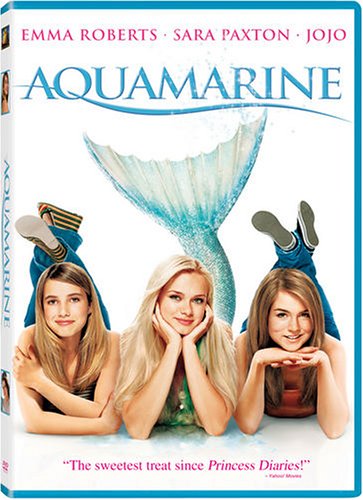
Enter Joanna Levesque (RV), a.k.a. "Jojo". I don't know what song she's famous for, I don't know what she's doing lately, but I know she's been thrown a lot at MTV and Nickelodeon for whatever reason. I know this because I watch copious amounts of both. She plays Hailey in Aquamarine, a bit of a tomboy and a close friend of Claire (Emma Roberts, Blow), who is the granddaughter (I think) of owners of a beach club of some sort, and they both seem to have a crush on Raymond (Jake McDorman, Echoes of Innocence), a local life guard and resident teen hunk.

Frank (Peter Mullan, Braveheart) has been designing and building ships in a British shipyard for 36 years. Suddenly and very cruelly, Frank is let go without any pension or prospects, and is left wondering what to do. An attempt at job searching finds him virtually at the feet of his sister-in-law, so he is basically left to walk around this nameless London suburb stunned and unsure of what to do with himself. His friends Eddie (Sean McGinley, Gangs of New York), Norman (Ron Cook, Quills) and Danny Boyd (yes, that's Pippin from the Lord of the Rings films, a.k.a. Billy Boyd) all try to help him out however they can. Frank's wife Joan (Brenda Blethyn, Secrets & Lies) is unsure about how Frank is holding up, so she decides to try out for a bus driver's license. Frank's son Rob (Jamies Sives, Mean Machine) is a stay at home Dad, but feels Frank has been resentful of that in some large way because Rob's brother (and Frank's son) died in a tragic drowning accident almost 30 years ago.

Written by first-time screenwriter Alex Rose and directed by Gaby Dellal (Football), the focus of On a Clear Day is undoubtedly Frank, the stoic patriarch who suddenly finds joy in life again with swimming. He notices a boy in the pool who is barely able to swim one length of the pool while Frank can do armloads. At the end of each length the boy rejoices. He perhaps finds these qualities in his lost son, but he is so introverted that he hardly indicates this. And it's that that becomes the inspiration for Frank's quest, which is to swim the English Channel.

A lot has been said about Roger Ebert and Russ Meyer. Ebert has been called the most famous film critic this side of Pauline Kael (he certainly is the most informative one since I've started becoming a wee critic myself), and Meyer certainly found a niche audience directing and producing films with large-breasted women. So when Fox got the two of them together and had them come up with a script that would be a pseudo-followup to The Valley of the Dolls, one would be interested to see what became of it.

The big misconception about Beyond the Valley of the Dolls is that it's a sequel to the Sharon Tate film before it. It's actually more of an homage to the first film (as the introductory title cards discuss), and goes in a different direction, rather than extending the current storylines. Pet (Marcia McBroom, Jesus Christ Superstar), Casey (Cynthia Myers, They Shoot Horses, Don't They?) and Kelly (Dolly Read, That Tender Touch) comprise a band that comes to Los Angeles looking for stardom. They run into their fair share of unique California characters, including Emerson Thorne (Harrison Page, Lionheart), Lance Rocke (Michael Blodgett, Catalina Caper) and perhaps most uniquely, Ronnie Barzell, a.k.a. the Z Man (John La Zar, Over the Wire).

Synopsis

Tony Curtis and Jack Lemmon are two down-on-their-luck jazz musicians in Prohibition-era Chicago. They witness a gangland massacre, and in order to hide from the hoodlums, dress up in drag and join an all-female jazz band that is off to play an extended gig in Florida. The vocalist of the band is none other than Marilyn Monroe, and though it is Lemmon who first casts designs for her, it is Curtis who engages in the wooing. Lemmon, meanwhile, has his hands full when billionaire Joe E. Brown f...lls head over heels for his female persona.

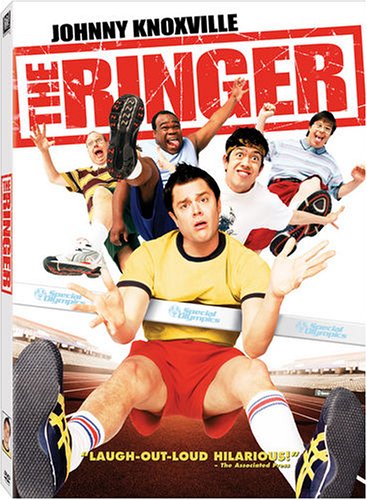
On paper, The Ringer must sound like the most un-PC movie in the history of cinema. After all, Johnny Knoxville from MTV’s Jackass plays a character in need of some cash, so he pretends to be “Jeffy” -- a mentally challenged athlete -- in order to fix the Special Olympics.

However, this movie is produced by the Farrelly Brothers, and as they have done in their past films (There’s Something About Mary, Shallow Hal), the Farrellys treat mentally and physically challenged people with resp...ct -- casting them in large supporting roles -- which allows The Ringer to become an endearing film, rather than the offensive and insulting piece of crap it could have easily become.

Hosted by Boston comic Fran Solomita, When Stand Up Stood Out is a detailed retrospective of the historic comedy boom that took the city by storm from the late 70’s to the early 80’s. You get the impression it was a fun crowd to be with most of the time. From the famous Ding Ho to the Comedy Connection, some of the nation’s biggest names worked out their routines to the local audiences.

The documentary tells its story very simply. With the use of extensive narrative, vintage clips, and countless interviews, you get a rather complete history of the phenomenon. To the film’s credit, there is as much time spent on the relatively unknowns who worked the circuit as it does with the eventual big names like Bobcat Goldthwait, Denis Leary, Steven Wright, and others. While this might not lead to as much mainstream success, it certainly adds a touch more honesty to the piece. The language is rough, and not a problem so long as you expect it. This is not a family entertainment video. You have to admire the brutal honesty on subjects such as drugs and competitive jealousies that began when Steven Wright was the first to crack the elusive Johnny Carson Show.

Synopsis

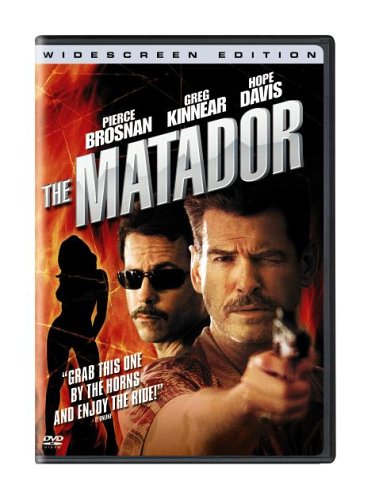
The ironically named Julian Noble (Pierce Brosnan) is a hitman whose lifestyle of promiscuous sex, exotic locales and contract killings is catching up with him. As he approaches meltdown, he runs into Danny Wright (Greg Kinnear), a businessman who has had a long run of bad luck. The two strike up a friendship in Mexico city, and toward the end of their stay there, something happens. Six months later, Noble, on the verge of a nervous breakdown, turns uup on Wright’s doorstep.

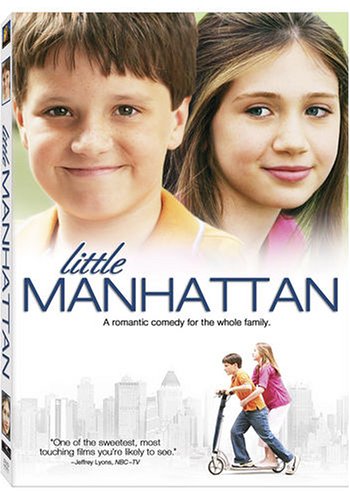
Once in awhile, a film comes along that really catches you by surprise. Little Manhattan is one of those films. At first glance, it appears to be an updated take on a coming of age film that warms the cockles of your heart and leaves you smiling, but it's actually a bit of a romantic comedy that is timeless and memorable.

Written by Jennifer Flackett and directed by Mark Levin, who are a married writing team whose most notable work was Wimbledon, the focus of Little Manhattan is Gabe (Josh Hutcherson, Kicking and Screaming), who also narrates the film. At first the film starts with Gabe, sitting on his bed with a broken arm, crying over someone named Rosemary (Charlie Ray, in her first acting role). From there, Gabe tells the story of how happy he was before he met Rosemary. He was a happy 10 year old boy, knowing that girls were gross and he was going to be a placekicker with the help of his father (played by Bradley Whitford, Sisterhood of the Traveling Pants). Gabe has known Rosemary for awhile, since kindergarten, but they bump into each other again in a karate class. Gabe suddenly realizes that he has feelings for Rosemary, and wants to be around her as much as possible.