Genre

“How would you like to use that gun belt for something more than just holding up your pants?”

Although the title of the blu-ray is Return of the Magnificent Seven, the original film’s title sequence just calls it Return of the Seven, and for good reason. There is nothing vaguely magnificent in this movie. This is the type of sequel that gives sequels a bad name.

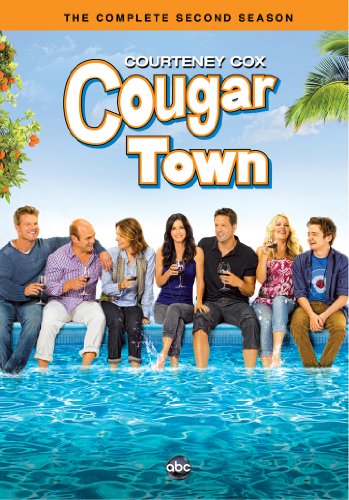
In many ways Cougar Town appears to be Friends 20 or more years later. It's not just the fact that the former Friends star Courtney Cox heads the call sheet on the new situation comedy. There are a ton of other elements that appear to tie the shows together. Like the old NBC show, the core of this show is a tight group of friends. They have a lot of the same kinds of adventures and conversations as the old gang used to have. The big difference here is that the adventures and the talk come from an older, if not more mature, perspective. They still talk a little too much about sex, except now the characters are in their 40's, so the tone of that conversation has changed up a bit. Call it a 40's version of Friends meets Sex And The City.

I actually hadn't been familiar with the term Cougar until recently. I listen to Minnesota sports radio so that I can keep up with the Vikings even here in Tampa. One of the hosts a year or so ago got in trouble at a club event when he referred to the ladies in the audience as Cougars. He later did a show segment where he was trying to find out from listeners if the term was an insult or not. The audience was divided, so I still don't know if most women in this position consider the term derogatory or not. It basically refers to a woman at least in her 40's who dates men younger than herself. But there does appear to be some controversy over the show's title. Apparently there was a rumor that the series was going to change its name for season 2. I'm not sure if the show's runners had seriously considered the move, but that doesn't stop them from having a blast with the idea. Each episode features a comic remark above the title. The remarks include: "It's okay to watch a show called..." or "Titles are hard".

"It's a question we all ask ourselves. Do I trust the people who live next door? Will that couple across the street be there when I need them? Can I count on the woman who lives down the block? Yes, good neighbors are people we can rely on. But if we discover our neighbor can't be trusted, then it may be time to move."

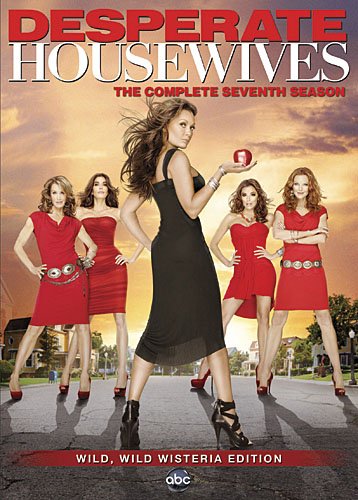
What you can count on from the neighbors of Wisteria Lane is another season of secrets, betrayals, and fashionable housewives.

"This is a picture of Walter Black, a hopelessly depressed individual who becomes The Beaver, who becomes a phenomenon."

When I first heard about this film, it was hard to keep the Mel Gibson story out of my mind. It almost seemed as if his casting was related to his off-screen situation. After all, this is a story of redemption, and there isn't anyone in Hollywood searching for that more than Mel Gibson. But as I watched the film, it became surprisingly easy to let go of that baggage and direct all of my attention to the performances and character delivered by the film. And while a lot of credit goes to Jodie Foster and her exceptional job of directing the film, the real credit belongs to Mel Gibson himself who creates a compelling character who you just can't take your eyes away from. It might be the best performance of his career, and it doesn't appear that very many people will ever see it. The film was never given a wide release. It never appeared on more than 200 screens for any given weekend and made less than $1 million at the box office. Unfortunately, I don't see it doing any better on video, and that's a bit of a shame, I think.

Baby here again, and I'm not exactly a happy German Shepherd/Chow mix puppy right now. Do you wanna know what's put the growl in my scowl this time? The other day I heard Gino say that somebody was in the doghouse. That sure sounded like fun, but it turns out the dude got fired and that being in the doghouse turns out to be not such a good thing. Now I understand if they said that UPS was in this dog's house. That would be bad for the UPS guy. And that spells O U C H. But why is it that humans say that when someone is in trouble. Heck, I spent most of my life in a doghouse, and I was havin' a good time. I never got fired or yelled at. Okay, I made that last part up. Yeah, I get yelled at all of the time, but it's never exactly my fault, you understand. How 'bout you guys start saying cathouse when someone's in trouble, although I think I heard someone use that word to describe something else. Never mind.

You know what else puts me in a snarlin' mood? It's when a studio takes a really good movie and decides to put out a new movie with the same name, 'cept they really don't have anything to do with each other. Somebody's just looking to get a bowlful of treats without working too hard. Me, I work for my treats, which reminds me... Anyway, that's exactly what you get with Marley & Me: The Puppy Years.

“We deal in lead, friend.”

In the fall of 1956, Anthony Quinn watched a special screening of Akira Kurosawa’s The Seven Samurai and had an epiphany; this Japanese masterpiece, inspired by the great American westerns of John Ford, would, itself, make a great American western. Quinn acquired the rights and contacted his then close friend Yul Brynner and pitched the idea of him playing the bad guy and Brynner the good guy. Brynner screened Kurosawa’s film and called in producer Walter Mirisch, who in turn contacted director John Sturges (Bad Day at Black Rock, Gunfight at the OK Corral, The Great Escape). Sturges loved the concept and immediately set about acquiring the rights, ultimately forcing Quinn out of the picture. Quinn sued, but lost.

"He is the unique high-seas hero. A man of unshakable courage, unwavering principles, and extraordinary skill. Joining the Royal Navy at the outset of the bloody Napoleonic Wars, Horatio Hornblower rises quickly from new recruit to seasoned sailor, and his exploits become the stuff of legends."

When Gene Roddenberry was preparing his "Wagon Train to the Stars" that would become Star Trek, he turned to the historic hero from the books of C.S. Forester. Horatio Hornblower would be the inspiration and genesis for Captain Kirk. Like Kirk, Hornblower became one of the youngest officers in the fleet and rose quickly to the point where he was commanding the flagship of the Royal Navy. His adventures have been the stuff of radio drama and feature films. Now A&E brings us two of their film series.

"You cannot run from a vampire."

The American Film Company is a new venture that intends to tell historical dramas. There are several stories on the way. They are particularly interested in the lesser known elements of historical events that are, in themselves, rather huge and universally known. One is left with the kind of film that we saw last year in The King's Speech. While we all know about the global events of that time, few knew the story of the struggle over public speaking that the King had during that fateful moment in world history. I think you can say the same for the material in The Conspirator. There's likely not an American alive who doesn't know something of the assassination of Abraham Lincoln. We all know the location was Ford's Theater and many even know the name of the play that was being performed at the time. But there are lesser known facts about the event. That Lincoln didn't want to go is one some of you already know. But how many know that his murder was part of a larger plot to take revenge on the government for the defeat of the South? This film goes even farther than that. It tells the story of one of the more controversial accused in the plot that included the attempted murders of the Secretary of State and Vice-President Johnson. That defendant was Mary Surratt, and she would become the first woman executed by the Federal government. And she may not have even been guilty of a crime.

The film begins at the conclusion of the Civil War where we meet Frederick Aiken (McAvoy) who is a wounded captain. He orders the medics to care for his fallen friend, Baker (Long) who appears to be as good as dead. While the scene plays no real role in the story to unfold, it attempts to set two stages. It's a chance to touch upon the brutal war that has triggered the film's main events. It's also intended to help us get to know how good a guy Aikens happens to be. From there the film quickly moves through the execution of the plot to kill three members of the federal government. Only President Lincoln is mortally wounded, and his killer John Wilkes Booth (Kebbell) is soon captured and killed. All that is left for the struggling government now is to put the entire experience behind them by burying the conspirators themselves.

“The windows around here are not big enough for you?”

Writer/Director Keith Bearden’s debut film, Meet Monica Velour, seduces you like raunchy 70s porn star, but finishes you off with a happy ending like a cheap masseuse in a roadside massage parlor.  Not that this is a sex comedy, nor are the stars particularly sexy (except for Jamie Tisdale who plays young Monica Velour who is very, very hot), but the theme is about sexual illusions. Illusions from a time long past, when pornos tried to be movies instead of a series of masturbation loops and there was an ironic air of innocence to the whole smutty affair.