Genre

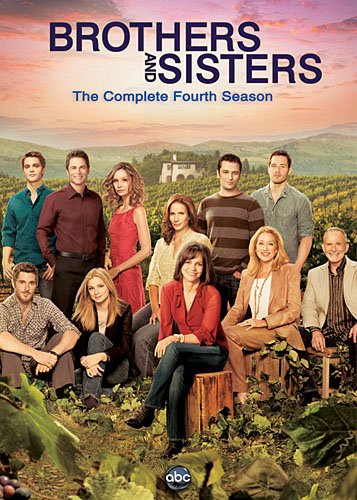
Ken Olin is truly a great talent that I’ve followed since back when he played the snotty detective Garibaldi on Hill Street Blues. Since then he’s done some wonderful work behind the camera, and Brothers & Sisters certainly shows his influence; however, this is not some of his best work. The show often leans on clichés and gets awfully lazy in moving forward at times. I do see the great family of characters they created here, but fail to find them interesting beyond the life breathed into them by their performers. This is a case of ego getting in the way of great potential. The writers and producers are trying way too hard to do something special. True greatness often requires the least effort. My advice to Olin and company is, play to the strengths of this great cast, and then get out of their way as often as possible.

Sally Field plays Nora Walker. Her husband has just died and left her with a lot of unanswered questions in her life. She soon discovers a twenty-year affair and some even more serious hanky-panky with the books of the company the family owns. Her emotional ups and downs can be about as compelling as television can get. Callista Flockhart plays the best opposite Field as the errant, and of course, conservative, black sheep of the family. The moments they share have given me a greater respect for Flockhart than her previous roles have. It is a little much watching her call someone else skinny. Ron Rifkin steals every scene he’s in as the old fashioned Uncle Saul, proving that Alias was no fluke for this accomplished actor. Rachel Griffiths again hides her English accent to show that if nothing else, she does a good job of crying. The remaining cast of Dave Annable, Balthazar Getty, and Matthew Rys are often just as nice as the three brother siblings on the show.

Despite lasting over a hundred episodes, The Patty Duke Show only lasted about three years from the fall of 1963 until the late spring of 1966. However, it was often penned as one of the best shows of the 1960’s and still finds a way into syndication when networks such as TV Land need a wholesome show to fill a time slot. So, it is little surprise that Shout Factory have decided to release all three seasons of the show to DVD. But how does the final season of this show hold up after all of these years?

Prior to this dvd set, I wasn’t very familiar with the show and had only caught a few random episodes on Nick at Nite. So I’ll do the service of giving a brief layout before we continue. The show is based in Brooklyn where the Lanes family resides. The main character of the show is Patty Lane (played by Patty Duke) who is a strong willed and outgoing teenager. She has a dad named Martin (played by William Schallert) and a mother named Natalie (played by Jean Byron).

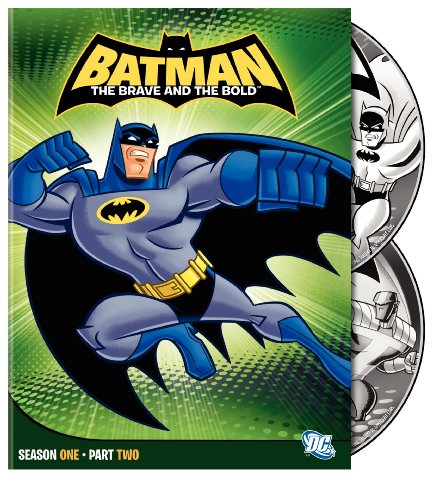
The original Batman: The Animated Series is one of my favorite cartoon shows of all time. Depending on which day you ask me, I might go ahead and say it is my favorite (the other times, I'll probably mention X-Men or Johnny Bravo). It was the perfect blend of cartoon super-hero drama, with a dose of dark and foreboding circumstances. Enter 2008, Batman: the Brave and the Bold, another Batman cartoon but on the lighter side of the equation. Would this show hold up as much as the historic original?

Before the Dark Knight, Batman Begins, heck even before Jack Nicholson wanted to dance with devil in the pale moonlight, there was a Silver age television show of Batman. It was light-hearted and we always knew that Batman was going to save the day and foil some of the most oddball villains along the way with intelligence and an awesome utility belt. Somewhere, in Heath Ledger's crooked smile and a really raspy squawk box for a Batman voice, we lost that wholesome value caped crusader.

Most of the male reviewers in this industry loathe romantic comedies. It is the only thing in the industry that we conceive to be as easy to make as a poorly written horror movie. Insert female who is looking for love in all of the wrong places and give her an unique situation to find that special love. Insert hunky guy who is a bit quirky to sweep her off her feet. Love, love, love and they go off to get married and make babies. So I did what any man would do in this situation, I begged my better half to write the review.

And hello there! It is I... the usual reviewers “back-up plan” to getting out of having to do a mushy movie! I am not the average female that goes oogly over these romantic comedies. I find them to be unrealistic, predictable, and boring. The plot is always the same. Woman who cant find love, finds it in some odd situation... someone is not truthful about something, they fight, and split up... after a short time apart, they decide to make nice and have woosa time. End of movie. Is this movie any different? Can they really break the cycle of really bad romantic comedies?

It's almost impossible not to compare The Square with No Country For Old Men. The themes are very much the same. The talent behind this Australian movie even includes a couple of brothers, but their name doesn't happen to be Cohen; however, one of these brothers is also named Joel. One of the original writers on the film is Joel Edgerton. The idea passed through a couple of other folks along the way to director Nash Edgerton who saw more potential in the film. So, a modest budget and a collection of relatively unknown actors combined to create a movie that does not easily fall into any one category, another trait these brothers share with the more famous pair.

Carla (van der Boom) is having a rather intense affair with Ray (Roberts). They both want out of their own marriages for different reasons but lack the proper funds to make their respective clean breaks. Carla is married to Smithy (Hayes) a small-time crook with a domestic violent streak. Ray is married to Martha (Bell) who he simply doesn't have much passion for. He feels his life has settled into an emotionless rut. Ray is a foreman for a contract business and has been taking kickbacks from his subcontractors in a bid to stash away enough money to run away with Carla. It's a slow business, and Carla is getting impatient, starting to wonder if he really wants to be with her. It all appears hopeless, that is until Carla returns home from a rendezvous with Ray to find Smithy stashing a large bag of cash into their attic crawlspace. It's a ton of money, more than enough to finance her escape with Ray. She tries to convince Ray that they should steal the cash and go. Ray is concerned that such a big score for a normally two-bit crook means others are involved. He suspects they won't take very kindly to having their money taken, and the two lovers would have to live in constant fear of being discovered. So they come up with a plan to steal the money and hire someone to torch the house, making Smithy and his pals think the money was consumed in the fire. Ray's a bit gun-shy about the idea, but Carla can be quite persuasive.

"Relationships don't come cheap."

I guess I'm pretty much like most film watchers in certain areas. When I saw that $5 A Day was rated PG-13 for sexual content and brief nudity, I did what most red-blooded American guys would do. I took a look at who was in the cast. This might work. I suspected we'd be treated to a little quick peek at Amanda Peet or Sharon Stone in a little birthday suit flash. OK, now I've got a little something to look forward to. Little did I know that the brief nudity part referred to watching Christopher Walken and, to a lesser extent, Alessandro Nivola, running naked on a beach. So much for MPAA warnings. I just gotta stop reading those things. Little did I know that that cheap thrill was going to be the only thing worth looking forward to in this standard relationship/road movie. And it didn't even happen. So what did happen? I mean, beyond the aforementioned scar to my retina?

Mention the name Jackson Browne and one thinks less of the performances and more of the music itself. While he never achieved quite the fame of many of his peers, his style and songwriting has had a lasting impact on some of the biggest names in the music industry. He was part of the whole Troubadour scene in the early 1970's where he hung out with the likes of James Taylor, The Eagles, and other notable artists who were about to find their golden tickets to larger stages and the crowds, money, and fame that went along with them. The likes of Crosby, Stills, & Nash have been inspired both by his ability to write and his passion for the causes he believes in. In the 20 years from 1979 to 1999 he organized and performed at over 1000 benefit concerts. It's not so much an accomplishment to be willing to give up your own time for the causes dear to your heart. Brown has a reputation in the business of being someone they can't say no to. His biggest cause has been his stand against nuclear power plants. Agree with him or not, Browne used his fame in a responsible way that today's artists can learn from. He did his preaching at the events and not so much at his paying gigs.

"For more than two decades, Jackson Browne has been one of the most compelling artists in popular music. In August of 1994, The Disney Channel presented Jackson Browne: Going Home, a chronicle of Jackson's remarkable career. Jackson Browne: Going Home contains interviews, performances, and rare footage spanning twenty-five years featuring Don Henley, Bonnie Raitt, David Crosby, Graham Nash, The Eagles, David Lindley, Jennifer Warnes and many more."

Pauly Shore seems to be trying to steer his career from being a washed up b-lister to being a self-aware washed up b-lister. Pauly Shore is Dead was his first dabbling into mockumentaries about himself, and now he has followed it up with Adopted. This yarn is about Shore, following the trend set by Angelina Jolie and Madonna, of flying to Africa (and later Cambodia) to adopt a child, with the hopes that being a father would fill a void in his shallow Hollywood hills life.

"The truth is, I've done dreadful things. My life has been a monstrous corruption. And there will be a price to pay."

The Picture Of Dorian Gray was actually Oscar Wilde's only full-length novel. It was quite a controversial subject when it first arrived on the scene in 1890, but not because of the horror element. The book is often sexually explicit and contains more than a flirtation with homosexuality. The main themes have survived, but much of the work itself has been forgotten. We know the work almost exclusively from the classic film from 1945 where Hurd Hatfield played the title character. The more notable members of that cast included Peter Lawford, Donna Reed, and Angela Lansbury. That film downplayed the debauchery elements and focused on the one element that appears to remain strongest in our collective memories, that of the picture aging instead of the man. It's that deal with the devil that most of us think about when we hear the name Dorian Gray, or Dick Clark for that matter.

It was hard for me to find any real solid information about The Diplomat. At first I decided that it was because the film was obviously not a movie at all, but a British mini-series. The piece is broken up into two parts that you must play separately, much like a mini-series is often presented when released on home video. That was still not enough to research the title, because it hadn't really been a mini-series at all either. Finally, a stroke of luck led me to the fact that The Diplomat hadn't been its original name either. The release was broadcast on British television as False Witness. Apparently, it had begun as something more ambitious, perhaps a single-season limited-run series. Whatever grandiose plans might have been in store of this title, whichever title you use, it fell pretty flat almost from the start.

Ian Porter (Scott) is a diplomat returning to London from his eastern European post. He is immediately stopped at the airport by Scotland Yard and charged with drug smuggling among other things. A cop was badly burned and nearly killed in a bust related to his arrest, and Chief Inspector Julie Hales (Blake) wants Porter rather badly. Porter's not talking, but the investigation leads to a Russian mobster named Krousov (Hany). Porter's ex-wife Pippa (Forlani) is threatened by the Russian mobsters, and the pair end up in protective custody. They are taken to Australia, where they will supposedly be safe so that Porter can tell his story. But Porter can't really tell his story at all. The crimes he is accused of committing were actually part of a plan to get Porter close to Krousov for MI6. A rogue agent there has started a black ops mission to bring the Russian down. Porter carries a key around his neck, but it's not related to drugs at all. This key sets a suitcase nuclear bomb that the Russians plan to explode in Australia. Wasn't that a lucky break? Some tension exists with his ex-wife. They lost a son, who drowned in their pool. She wants very much to get closer to Ian, but he's focused only on finishing his mission, something he hopes will atone for the guilt he feels over his son.