Genre

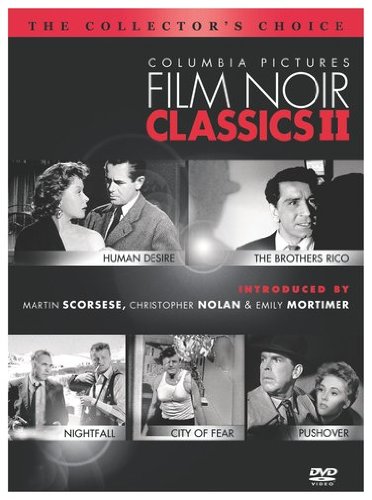
“In the 1940’s, a new genre – film noir – emerged from the world of hard boiled pulp magazines, paperback thrillers and sensational crime movies. These films, tough and unsentimental, depicted a black and white universe at once brutal, erotic, and morally ambiguous.”

And so Sony collects 5 of these films as part of what looks like is going to be an ongoing series. But what exactly is film noir? You hear the word used from time to time, but what does it mean?

Jeff Daniels plays Arlen Faber, author of the mega-bestselling Me and God, a book of self-help spirituality that comes across as an aphoristic mix of Zen and the Art of Motorcycle Maintenance and The Purpose-Driven Life. The book is coming up for its twentieth anniversary, and Arlen hasn't written anything since. He is now a cynical recluse, but begins crawling out of his shell when he encounters a struggling single-mother chiropractor (Lauren Graham) and an alcoholic used bookstore owner (Lou Taylor Pucci). They are looking to him for wisdom, though he doesn't really believe he has any to give. In turn, they are teaching him how to live again.

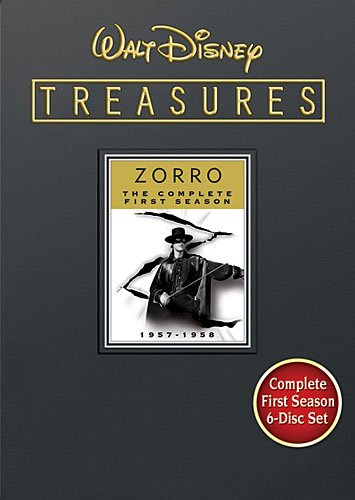
“Out of the night when the full moon is bright comes a horseman known as Zorro. This bold renegade carves a “Z” with his blade, a “Z” that stands for Zorro. The fox so cunning and free, Zorro who makes the sign of the “Z”. “

Zorro first appeared in pulp magazines in 1919 written by Johnston McCulley. He told the story of a talented swordsman who masqueraded as a dull, inept, and spoiled young rich man. But, when he put on his trademark black cloak and mask he took to the countryside of Spanish California in 1820, fighting for the peasants and anyone treated unjustly. He was a regular Robin Hood. While he did not steal, he was considered an outlaw and had to spend much of his time fighting off the law. He was known for using his sword to cut a “Z” on anything from trees to the clothes of his enemies. He lived by a strong code of honor and morals. He never killed, unless it was absolutely necessary, which it seldom was. It didn’t take long for this inspiring character to reach the silver screen. In just a year from his publishing debut, Zorro was a movie staring Douglas Fairbanks as the heroic vigilante. But it didn’t end there. McCulley kept writing books, and the character became one of the most famous characters of the age. Republic created serials and the films kept coming. From 1920 through 1990 there wasn’t a decade that did not feature a live action version of the hero. Comics would follow.

“The future is bright at Monsters Incorporated. We power your car. We warm your home. We light your city. Carefuly matching every child to their ideal monster to produce superior scream. Refined into clean, dependable energy. Every time you turn something on, Monsters Incorporated is there. We know the challenge. The window of innocence is shrinking. Human kids are harder to scare. Of course, Monsters Incorporated is prepared for the future. With the top scarers, the best refineries, and research into new energy technologies. We’re working for a better tomorrow, today. We’re Monster’s Incorporated. We scare because we care.”

When you do this job you get asked the same question a lot.You get it from friends, family and people who just met you. They all ask the same thing. “What is your favorite movie of all time?” That’s a hard question, and it’s one that changes from time to time. But if you’re talking animated films, my answer’s been the same for several years now. It’s Monsters, Inc. You hear me gush about Pixar films all of the time here, but with all of their advances on technology, this is still the best film they’ve put out. And that’s saying something.

“The perpetrator is an expert marksman. He’s an expert in explosives and tactics. Gentlemen, play this one by the numbers. Maintain your fields of fire… We’re blind and he’s seeing in 20/20… We have not contained him. He’s contained himself.”

“He” is Samuel L Jackson in the 1998 action thriller The Negotiator. Jackson stars as Danny Roman. He’s a Chicago Metro hostage negotiator. As the film opens we get to see him in action saving a little girl from a tight hostage situation. He’s obviously good at his job and he has the respect and admiration of his fellow officers and commanders. Roman’s partner Nathan Roenick (Guilfoyle) has gotten a hot tip from an informant. Someone inside the department has been skimming money from the union’s retirement fund. He’s about to blow the case wide open when he’s killed. Roman discovers his friend and partner just as other cops arrive to see him leaning over the dead body. He becomes the prime suspect not only in his partner’s death but the missing money as well. Someone has gone to great lengths to frame him for the crimes. When evidence of his guilt is found at his house, not even Roman’s friends believe he’s innocent. With everyone turning their backs on him, Roman goes to Inspector Niebaum (Walsh), an internal affairs cop that Roenick mentioned as a part of the embezzlement scam. The confrontation quickly gets out of control, and before anyone knows what’s happened, Roman has taken the internal affairs department hostage. He demands that Lt. Chris Sabian (Spacey), another hostage negotiator that Roman trusts, be put in charge of the operation. Sabian takes over, but he’s dealing with a perp who knows all of the rules of engagement. To make matters worse, the book doesn’t cover this kind of negotiation. Roman isn’t asking for money and a plane full of fuel at the airport. He wants someone to get to the bottom of the frame job, or else.

The names of the characters are hardly consequential, as they are used to further storylines more than develop character. But Pacino plays a cop who is tracking a group of robbers, among them Val Kilmer (Wonderland) and Tom Sizemore (Saving Private Ryan), a group headed by DeNiro. The group receives offers for work from Jon Voight (Runaway Train), and they rob anything from gold, to coins, to bearer bonds. They are all ex-cons, and know all the ropes. They are a highly professional crew, which you see in the opening moments of the movie, despite the addition of a new man to the crew. What also helps to differentiate this from a usual cops and robbers movie are the secondary plotlines of the families involved. Pacino’s is clearly distant and breaking (played by Diane Venora and Natalie Portman), while DeNiro doesn’t have one to speak of, despite an emerging romance with Edy (Amy Brenneman, Judging Amy). At 3 hours, there are some unnecessary scenes involving a banker (played by William Fichtner), but the underlying message is that almost all of the actions in the movie do not involve just the primary characters, but also friends and loved ones of those characters. Kilmer’s wife in the film, played by Ashley Judd, desperately wants to get him out of his line of work, as she wants to start a new life for her family. An ex-con (Dennis Haysbert, 24) is stumbled upon working in a greasy spoon, and offered a chance to work by DeNiro. Haysbert’s character wants to be right, but runs into so many obstacles from it that he takes the job, only to wind up perishing in what results in a massive gunfight in the heart of Los Angeles while a bank robbery is being pulled.

With other solid supporting performances by Ted Levine (Monk), Mykelti Williamson (Forrest Gump), and appearances by Bud Cort (Harold and Maude), Jeremy Piven (PCU), Hank Azaria (The Simpsons) and Henry Rollins (The Chase), the movie is certainly not without its star power. The director behind this work is Michael Mann, who also wrote a much better than expected story. The man responsible for such striking visuals in films such as Manhunter, Ali and The Insider contributes more outstanding work here, and while it’s been out for awhile now, Warner Brothers finally gives it a high definition Blu-ray release

Finally, this show has really gotten to me. I don’t know what it is about this 8th season, but I was far more interested in the show than I had ever been. Maybe I’ve spent so long with these characters that they started to come alive for me. Maybe I was resistant to a slightly different way of telling stories. Maybe it was that the stories became less about who was with who that I was finally able to enjoy the great courtroom drama and investigation elements of the series. Whatever it was, I am finally a fan.

Most of each episode is dedicated to the investigation of the particular case. For action junkies, this often means flying some sweet high tech aircraft. The show’s primary character, Commander Harmon “Harm” Rabb (Elliott) does a lot of the high flying investigations. He was once an ace pilot who developed night blindness, which essentially grounded him.

It’s been some years since I had seen an episode of Nash Bridges. I had almost forgotten everything about the show except for two things. I remembered how great Johnson and Marin were together and, of course, that ugly-colored Cuda. I watched these episodes and found that my perspective hadn’t changed. Who cares what the story is about? Who remembers any of the cases? I remember the characters and the car, and 10 years later it feels exactly the same way. In many ways Nash Bridges was the last of its kind. The cycle of buddy cop and car chases was pretty much over. What started with James Rockford and Starsky and Hutch was now evolving into Law & Order and CSI. We still had procedurals, but they had changed their procedures. If you have to say goodbye to a beloved era, what better way than with Nash Bridges?

When Miami Vice finally left the air in 1989, Don Johnson was a very hot commodity indeed. He decided to try and parlay that success into a film career that never really brought him the breakout roles and fortunes he envisioned. Not too proud to return to his roots, he signed a deal with CBS that gave him pretty much a blank check to star in whatever kind of television series he wanted. It was a rare deal that forced CBS to air, or at least pay for, whatever Johnson came up with. Many of us were expecting pretty much a Miami Vice clone when it was announced he would once again be playing a cop. It was all sounding pretty familiar. Bridges was a super cool cop, this time from San Francisco with a rather tattered personal life. He was going to be teamed up with a partner, who wasn’t going to be a cop, but an investigator whose cases would cross paths with Bridges’. It was rumored that the partner might not survive the pilot, thereby killing the buddy cop routine that was beginning to sound very much like Johnson’s previous show. It appeared doomed to failure, and even CBS was at first looking to back out of the deal. They tried to buy Johnson off, but he was by now very excited about the new show and insisted he get his episodes. But how could this new show not be compared to the old? How could anyone have the kind of chemistry with Johnson that John Diehl had? On March 29, 1996 everyone held their collective breaths as Nash Bridges appeared on the scene. Cheech Marin ended up with tons more chemistry with Johnson, helped by the fact the two had been friends for over 25 years. In short order Nash Bridges had arrived, and television audiences everywhere found themselves saying: “Miami Who?”

I was entirely too young to remember even the syndicated run that my mother was watching in the late 1960’s. Under more normal circumstances that would not matter as I could introduce myself to this world with the DVD release. That was before 1987, and the release of Brian De Palma’s classic film. Honestly, I simply can’t watch these episodes without thinking of that movie. For an entire generation that film has defined these characters and that time. It’s unfortunate, really, because this 1960 series had a lot going for it, particularly when you look at what else was on television at that time. Never before had such brutal violence in such a starkly real world graced the black and white sets of America. When I read articles about the controversy surrounding these depictions, I am forced to smile a little. By today’s standards these shows are quite tame. Still, the flurry of protests the show spawned were quite real. Italians were also vocal in their belief that the show went too far in portraying nearly every bad guy as being of Italian descent. I have to admit some of these accents make Father Sarducci sound good. Complaints went as far as the US Attorney General. My, have things changed. I am also of Italian heritage and gladly sit down to an hour of Tony Soprano, eating it up about as fast as a bowl of tortellini and gravy. While there are still those of us who feel racially exploited, most of us embrace the mob mythology of The Godfather and Goodfellas. We can accept the difference between reality and fantasy. And so I watch these episodes as if I were some remote viewer, not only from a different time but a different place.

The Untouchables took on a perhaps too convincing appearance of reality. Remember that the audience was made up of folks who grew up getting their news from newsreels at the local theater. It was a stroke of genius to have real life news reporter Walter Winchell narrate the series. Everything from that narration to the gritty dark photography carried a documentary style feel to every minute of the action. You can only imagine why too many Americans thought it was too violent. The show wasn’t too violent. It looked and felt too realistic. Robert Stack literally becomes the persona of Elliot Ness. The show was also based on a book that was co-written by Ness himself but was highly fictionalized by the time it reached millions of homes each week. In truth Ness’s team didn’t exist long after bringing down Capone for tax evasion. In the series the team becomes a strike force of sorts against an entire mug book of criminals real and imagined.

As explained by many authors in this site, remakes are becoming far too common. In fact, they are so many of these that we aren’t sure of the source material. An obscure movie comes out and apparently in 1953, there was a similar movie made. This movie also probably made the equivalent of $100 American Dollars at the box office. Well, perhaps not that bad. I received one of these movies to review recently and it was titled Angel and the Badman. Let’s see how this one fares.

Quirt Evans (played by Lou Diamond Phillips) is riding along on his horse. He stops when he sees that there is a dead body near a secluded cabin. He inspects the body and all of the sudden three men appear out of the shadows. It’s a trap. Thanks to his quickdraw skills, Quirt is able to put down the three men. He is also able to put down the dead body in its rightful place as he was just acting to set up the ambush.