Genre

What if you took the Desperate Housewives and placed them on an Army base? If that thought has been keeping you awake at night, sleep tight, gentle reader. You can find out simply by picking up a copy of Army Wives on DVD. I’m not exaggerating about this at all. Army Wives has the very same soap opera plotting and tone as the ABC hit does. You gotta really be into that sort of thing if you have any hope at all of keeping up with the antics of these four friends, or of having any desire to. I’m afraid I have to confess that I am not in that group and so found the 19 episodes to be very trying indeed.

The series follows the trials and tribulations of four wives of enlisted Army personnel. They call themselves “The Tribe”. Claudia Joy (Delaney) is the unofficial head of the group. The other women are Denise Sherwood (Bell), Pamela Moran (Brannaugh), and Roxy LaBlanc (Pressman). The show often focuses on their rather emotional situations and makes a center for itself in the idea that these women are there for each other. In this second season the Army life aspect of the show was intentionally held back somewhat, and the stories dealt more intimately with the wives. Likely a good move for the target audience that would have very little interest in the military aspects of the setting.

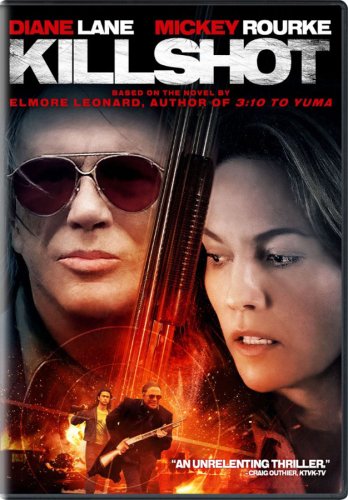
“You’ve gotta know what you’re doing when you go in. You gotta have it figured out. Those are the rules. How you get in. How you get out. How many shots you’re gonna need. Make sure you know where everybody is. Make sure nobody sees you. Don’t hang around. Don’t get interested. Then you don’t make mistakes.”

How many times have we seen some criminal looking to do that one last job that can get them out of the business forever? This time it’s a hit man known as “The Chief” or “blackbird” (Rourke). He’s an American Indian, and he’s considered one of the best in the business. He sticks religiously by his rules. As the film opens we see that he kills a young woman in the shower just because she saw his face. Unfortunately for Blackbird, the girl happened to be sleeping with the guy who hired him. That guy’s not so happy that she got killed during the job. Now the hunter’s going to become the hunted as the boss wants revenge for the girl’s death. Enter Richie Nix (Gordon-Levitt) who’s a young punk super crook wannabe. He’s been threatening a car dealer he intends to shake down. To get wheels for that job he jacks a car that happens to be driven by Blackbird. The two end up becoming somewhat kindred souls, and Blackbird needs a place to lay low, so he agrees to school Richie and help him pull off the job. Of course, that doesn’t go well, and a woman at the dealership gets a good look at them. She and her husband get away, but now Blackbird and Richie have to track them down and kill them. The couple, Wayne (Jane) and Carmen (Lane) have already had their share of problems and were about to split up when they’re forced into witness protection. The two rekindle the old romance somewhat while trying to stay alive.

Mike Riggins (Lundgren) has been languishing away in a Russian prison for many years. So he doesn’t have anything to lose when he’s approached by the CIA to help them save a young woman who has been kidnapped. The government needs Riggins’ special set of skills, namely the ability to cause a lot of carnage in a short amount of time. If he rescues the girl, he gets 20 grand and sprung from prison. Of course, everything is not what it seems to be, and the government really just wants Riggins dead. After about an hour and a half of shooting and mayhem a lot of people end up dead, but Lundgren is still technically alive. I say technically because as far as I can tell Dolph Lundgren has been brain dead since 1985 when his acting career began with A View To A Kill. But, like the energizer bunny he keeps going, and going, and going.

The plot isn’t anything all that imaginative; in fact it’s pretty simple. But the other thing that’s simple is the acting of one Dolph Lundgren. Lately we’ve been hearing a lot about torture and inhumane treatment of prisoners. There are apparently international laws on such things, but the Geneva Convention folks have turned the other way as Lundgren continues to subject audiences to what can only be described as cruel and inhuman punishment. I guess as a Constitutional scholar I could make an implied consent argument here, if you’re actually insane enough to pick up one of these films. It’s not like it’s a secret. If you watch these Lundgren films, particularly the direct to video stuff, you already know what you’re getting. I’m sure Lundgren’s folks have been opting for direct to video because too many moviegoers have been throwing stuff at the theater screens. The theory is they are less likely to act violently to their own 2 grand flat screen.

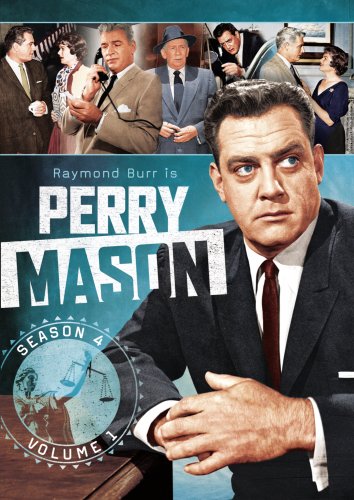
At this rate it’s going to be quite some time before you complete your collection. I’m not even sure that DVD will still be a viable format before the end of the series on DVD. It’s another half season, and the episodes continue to fly at us at a snail’s pace. But, slow and steady wins the race, and as long as the quality episodes continue to deliver that classic Mason charm and style, I guess folks like us will continue to come back for more.

Erle Stanley Gardner wrote crime fiction, and while many of his 100 or so works are unknown to most of us, he created a character that has become as identified with criminal lawyers as any other in fiction. It was in these crime novels that Perry Mason first faced a courtroom. He developed a style where he would investigate these terrible crimes his clients were on trial for. He would find the real killer, and in what has become a Hollywood cliché, reveal his findings in a crucial moment during the trial. While we may not remember the novels, we all remember the man in the persona of Raymond Burr. Burr had a commanding presence on our screens and enjoyed a well deserved 11 year run as the clever lawyer. What makes this run so amazing is that the show followed pretty much the same pattern the entire time. We always know what’s going to happen, but we wait eagerly for that gotcha moment when Perry faces the witness on the stand. We know when he’s got the guy squarely in his sights, and we can’t sit still waiting for him to pull the trigger. OK, so maybe that’s a little over the top, but so was Perry Mason. From the moment you heard that distinctive theme, the stage was set. To say that Perry Mason defined the lawyer show for decades would be an understatement. Folks like Matlock and shows like The Practice are strikingly similar to Perry Mason. If you haven’t checked this show out, this is your chance. See where it all began.

William Conrad was no stranger to audiences when Cannon joined the Quinn Martin stable of television dramas. In fact, most folks knew his voice before they got to know his trademark girth. Conrad was the original Matt Dillon when Gunsmoke was a radio drama. When the drama entered the visual medium of television, even Conrad admitted later that the audience, who thought of him as tall and handsome, would have been disappointed. His voice lent authority to any role he played, and on radio his size was never an issue. He was famous as the voice of the stern narrator in the Rocky and Bullwinkle cartoons who often crossed the laws of the trade and interacted with the title characters. He was also the voice that narrated the struggles of Dr. Richard Kimble on The Fugitive, another Quinn Martin production. He continued to narrate series intros even after his own success. He gave us the informative opening dialog in Buck Rogers In The 25th Century. As a voice, Conrad was one of the best, but when CBS approached Quinn Martin asking for a television vehicle for Conrad, it was a huge gamble. The gamble, of course, paid off… well… huge, and Cannon became an iconic figure in television. Cannon was so popular he was showing up on other shows as well. He appeared on the pilot for Barnaby Jones. The show ran 5 seasons and returned with appropriately enough The Return Of Frank Cannon tele-film in 1980. It is also interesting to note that Conrad, while greatly overweight, lived to be 74.

Frank Cannon was unlike any detective we’d ever seen on television before, or since. He was known as a high priced PI with a taste for the finer things in life, particularly fine food. His appearance was counter to all of the rules about rock-jawed handsome detectives who ran around shooting it out and beating up the bad guys. Cannon was a big man and wasn’t about to do much running and fighting. He wasn’t totally different, however. Cannon had a lead foot and could run a car chase with the best of them. He was smart and often a bit flashy in his technique if not in his appearance. It was also rare for a series to have a lone regular to carry the … um… weight. Conrad was up to the task and made the show and the character a permanent part of our pop culture.

The main plot of the film is that of a young woman from Brazil named Priscilla, whose student Visa expires and is lead into working as an exotic dancer. The title of the film comes from the ad posted by the pimps and promoters of exotic dancers “Waitresses Wanted.” The film is bookended by the profiles of all the dancers featured in the film, all of whom are from a different nation, all beautiful, and all arrived in Canada with different careers in mind than to get involved with Columbian pimps or Russian mob lords.

Priscilla is taken under the wing of Milagro, a fellow stripper who is known for recruiting new girls and the two start up a romance that leads them away from their shady work. I don't exactly buy the immediate seduction of Priscilla by Milagro. It seems to occur simply because the writer wants it to occur. Priscilla is not as strong as she claims to be and cannot get into or out of the stripper life without someone leading her, and she is very easily lead. There is a recurrence of memories and images of Brazil, obviously meant to be Priscilla's. These find a way of attaching themselves to Milagro as she continuously brings up her desire to escape to Brazil, which may explain her attachment and excitement for Priscilla. To Milagro, Priscilla is a part of what she really wants in the end, and as the twists start arriving at the climax of the film, we find out just how significant all of these ties really are.

Recipe for Ramen Girl (serves 4)

Take one American girl, preferably in her early 20’s, and place her in Japan.

In Tranzit is one of these odd films that you can never quite get a handle on. Even now I’m not exactly sure what kind of a film it was intended to be. While it takes place at the end of World War II and involves some Nazi officers in a Russian POW camp, I’m not sure that the film has all that much to do with the war, or POW camps for that matter. The film remains a kind of abstract art form with a rather loosely told story.

A group of German World War II prisoners arrive in an isolated Russian POW camp that is run by women. At first they are quite harsh in their treatment to their charges. It’s obvious that most, if not all of them, have lost family to the Nazi brutalities of the war. As the prisoners begin to spend more time at the camp the hostilities between the groups begin to soften. The first step is taken by the camp doctor, Natalia (Farmiga) who is married, but her husband has suffered severe head traumas that have made him a mute shell of a man. She falls in love with one of the camp prisoners. Eventually some of the other women form attachments to the men. The camp is often visited by Pavlov (Malkovich) who also begins by appearing quite inhumane but eventually softens as the film progresses. The prisoners are not to be quartered here permanently. The camp is a “Tranzit” camp as the film’s title suggests.

Forever Strong is a classic example of sports melodrama. The only wrinkle to this film is the sport. The sport in question, is not typical at all (i.e. Football, Basketball or Hockey) it is Rugby. The film revolves around a rambunctious youth, Rick Penning (Sean Faris) who runs into trouble with the law and is shipped out to a juvenile detention centre. He is introduced to Marcus (Sean Astin) who is an administrator and acts as Rick’s sponsor. After the initial introduction, Marcus uncovers Rick’s passion for Rugby and encourages him to play for his old team. Rick decides to play and the emotional journey begins from there.

In a village where there is a great deal of time (there are months whose days are numbered in the 40s), the local witch gives birth to the title character. Twenty years later, Babine is the Village Idiot. Though he is a thoroughly gentle soul, he also becomes the scapegoat for every ill, real or imagined, that befalls the villagers. Fortunately, he has some champions, including Toussaint Brodeur (played by director Luc Picard), the local fly-raiser. But then the church burns down, and terrible trouble looms for Babine in the person of the new, fanatical village priest.

Obviously, as the above synopsis suggests, we are in the realm of the utterly fantastic here. Narrated by storyteller Fred Pellerin, whose tales form the basis of the script, Babine is endlessly inventive, at the cost of being a bit too episodic for its own good (something that Picard, during his commentary track, admits he struggled with) and giving short shrift to some of its striking characters. There is no denying, however, that its world-creation is very successful. The film is a visual feast, one very much on par with the likes of Tim Burton, and this achieved with a fraction of the budget of its Hollywood equivalent.