Genre

Hi, Athena here. Well, this is going to be my last post for the doggie movies at Upcomingdiscs. Gino says it’s time to retire. He says my investments need to be cashed in so I can take it easy, before they’re all gone. I guess that means someone’s trying to eat up my treats. They better watch out or I’m going to go Siberian Husky all over them. I may be 14 years old and a little slow, but my teeth work just fine. Just ask Baby. She’s the newest member of the family here, and I had to let her know who the boss is right away, if you know what I mean.

Anyway…enough about me; of course there can never really be enough about me. Let’s talk about the latest Disney animation film, and the latest in a long line of movie dogs, namely Bolt (Travolta). Now, when this movie starts you get to meet Bolt and his human friend, Penny (Cyrus). Penny’s some kind of a spy or something, ‘cept she’s not really very good at it. You see, the bad guy is about to catch her, and I don’t think he wants her to give her some belly rubs. So, supercharged Bolt comes to the rescue. Man, that dog’s almost as cool as a Siberian Husky. He’s got something called super powers. He can shoot laser beams from his eyes and run faster than a race car. He even has a super bark that can cause earthquakes. Gino says it sounds and feels a lot like when I snore at night. Of course, Bolt is some kind of a white shepherd, and while they tried to make him look a little like a Siberian Husky, he isn’t one, so you know he doesn’t really have these super powers. Trust me, if Baby doesn’t watch out, she’s gonna see some real super powers, and that spells B I T E. Bolt is really just the star of a television show. The only thing is no one told Bolt that. So, when he thinks Penny has been kidnapped by the show’s villain, the Green-Eyed Man (McDowell), Bolt goes into action. He escapes his studio trailer and heads out into the great unknown to rescue her, just like on the show. He ends up locked in a box and shipped all the way across the country. Now he has to get back to California, before, at least he thinks, the Green-Eyed Man can do something bad to Penny. Along the way he meets up with a cute kitten, named Mittens (Essman) who was abandoned by her family, so she doesn’t think too highly of humans. He also meets Rhino (Walton), a hamster in a ball, who is a huge fan of Bolt’s television show, and like Bolt, thinks it’s all real. Along the way Bolt finds out that he really is an ordinary dog, and not a Husky, after all. But, this is a Disney film, so Bolt finds out that you don’t have to have super powers to be a super hero. He might not really have to rescue Penny, but she misses him a whole lot and he needs to get back to her.

In the vein of The Cincinnati Kid (1965) and a sprinkle of The Sting (1972) John Dahl brings us Rounders. Card prodigy Mike McDermott (Matt Damon) quits the game after losing everything. Once Mike’s best friend Les “Worm” Murphy (Edward Norton), gets out of jail, Worm attempts to get Mike back into the poker world. As Worm’s behavior begins to implicate Mike, Mike decides to come out of poker retirement.

The film itself is good. The on-screen chemistry between Damon and Norton is not forced. The other performances in the film do not distract from the narrative, with Martin Landau’s standing out. The film is shot very plainly without too many fancy editing techniques or wild Dutch angles. Dahl simply conveys a character piece that does what it is set out to do with little failure. David Levien and Brian Koppelman’s script has been appropriately dubbed “cool” by the poker community. Upon initial viewing most poker references will soar above the viewer’s head. However, upon multiple viewings, you tend to pick up on the language. This collector’s edition offers a plethora of bonus features which is miles away from the previous release.

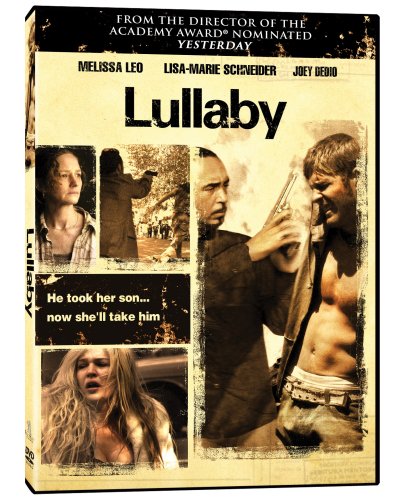
Melissa Leo is a hard-working café waitress in Tennessee who regularly sends what little extra cash she has to her adult son who, for reasons never explained, is a drug-addict in Johannesburg. A drug lord (Joey Dedio) kidnaps said son, and demands a ransom that, for Leo, is next to impossible. Nonetheless, a mother's love knows no obstacles, so she scrapes together the money to fly to South Africa. Once there, she connects with Tina (Lisa-Marie Schneider), her son's prostitute girlfriend, and is made to run the gauntlet by Dedio, who shows very little inclination to let his hostage go, no matter what demand is met.


This is an odd fish of a film, being a rather incongruous mix of gender-flipped Taken and gritty realism. Leo is called upon to do the impossible: be the grief-stricken mother and then terrified mother for the first part of the film, but transform by the end to an avenger whose strategy and vocabulary are worthy of Hannibal Lecter. All of her weepy moments are expertly performed, but so frequent they become tiresome. In other words, we have a first-rate actor being sandbagged by a silly script. And silly the whole thing very much is. Despite all kinds of gestures towards the Harsh Realities of Life, it is, in the end, no more a product of the real world than Transformers. What it is, though, is slick, quick and entertaining.

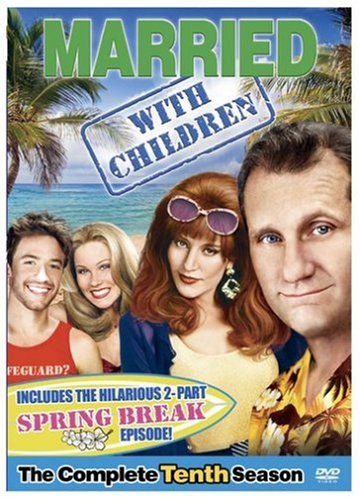
On October 9th 1986 the network television landscape did something that hadn’t been done successfully in its 40 year history. A fourth network broke on the airwaves. It was called FOX and wasn’t even going to broadcast 7 days a week. Most pundits in the television industry never gave it a chance. Most of the channels were in the double digit UHF range. This had long been considered the independent station area, and a lot of televisions didn’t pick up this band as well as the established VHF band. And for a while it looked like the network was going to disappear almost as quickly as it appeared. But by 1987 the network suddenly had two big hits on its hands. The first was a silly cartoon, originally aired as a throwaway segment on a variety show. The cartoon featured the most unlikely of television families, The Simpsons. That show is still with us nearly 25 years later. The second hit was a live action series, also based on a very unlikely and this time seemingly unlovable family, the Bundys. Right from the start there was criticism that the name itself was a death knell. At the time America was still dealing with the pending execution of a far more infamous Bundy. Married With Children, however, would become an almost instant break-out hit.

Al Bundy (O’Neill) was a working stiff. He had seen his high school glory years evaporate into the rearview mirror of his ancient Dodge when he married his childhood sweatheart (no, I did not misspell), Peggy (Segal). The red-headed woman would soon become his curse. She was lazy. Peggy wouldn’t know what a stove looked like if it fell on her. She was content to sit around all day while Al worked for minimum wage at a mall shoe store. Tying Al to his meager existence were two children. Bud (Faustino) was a frustrated teen who couldn’t seem to find his cool. Girls scorned him, and he appeared to be headed to the life of his father. Daughter Kelly (Applegate) was a teen slut. She slept around and used her looks to make her way in life, which was likely good, because she was dumber than rocks. Al was also plagued by neighbor Marcy (Bearse) who was a feminist and usually a thorn in Al’s behind. Her second husband, Jefferson (McGinley) was often Al’s accomplice in trouble. Most of the material involved Al’s suffering and the apathy of his family to his lowly station in life.

In 1976 a New York media group conducted a survey of the NYPD detectives. The question was: “Of all the TV cop shows, which most accurately portrays life as a detective?” The overwhelming response was the comedy Barney Miller. Seems real cops related to the daily grind and weekly wackos of Barney Miller. Let’s not put aside that this was also one of the most consistently funny shows on television. I remember it took me a while to accept Abe Vigoda in such a light role as Fish. My first exposure to Vigoda was the ruthless mobster in The Godfather. Barney Miller always managed to be funny while still telling a good short story. The characters were always wonderful.

Captain Barney Miller (Linden) was in charge of the detective squad at New York’s 12th Precinct. Among his detectives were a colorful group of odd individuals. Detective Ron Harris (Glass) was writing a book that detailed his life as a New York detective. It was called Blood On The Badge and was far more fiction than fact. He prided himself on his stylish clothes and culture. Arthur Dietrich (Landesberg) was a know-it-all. He had an almost encyclopedic base knowledge on everything and anything. He would bore his colleagues with his endless drone of facts. Stan “Wojo” Wojciehowics (Gail) was the typical New Yorker everyman. He might not have been the brightest tool in the box, but he more than made up for it in heart. At times his desire to show initiative would end up getting the squad in trouble. Fish (Vigoda) was past his prime and spent more time in the men’s room than actually fighting crime. He was always suffering from one old age ailment after another. His bulky frame made him look intimidating, however. Nick Yamana (Soo) was a lovable Japanese guy who wasn’t always the first to understand. He had a literal way of interpreting speech which led to some very classic misinterpretations. He was also a gambling junkie, often on the phone with his bookie. From time to time the squad would be visited by the clueless Inspector Luger (Gregory). He often reminisced about his glory days and often expressed regret that he didn’t go down in a blaze of glory like his old friends had. He was usually intruding upon the squad’s time with long pointless stories. Finally, patrolman Levitt (Carey) was an ambitious uniformed officer who wanted to be a part of the squad, which he eventually did.

“When you wish upon a star. Makes no difference who you are. Anything your heart desires will come to you. If your heart is in your dream, no request is too extreme.
When you wish upon a star, as dreamers do… Like a bolt out of the blue, fate steps in and sees you through. When you wish upon a star, your dreams come true.”

The song has become a standard. Every kid knows it. Walt Disney Studios has made it their theme song. You hear it each time you load up a Disney disc. If you have been fortunate enough to have visited Walt Disney World, you’ve heard it the entire day long. We know the song, but did you know where it originated from? It was back in 1940 and the release of Walt Disney’s, in fact, the world’s, second ever feature length animated film: Pinocchio. Now Disney brings us this timeless classic on high definition and Blu-ray. What a marvel this release is.

There’s a lot to want to love about this film. You have the return of the super powered Malone children, and more importantly, the same actors to portray them. Director John Hough returned to direct the sequel. The film also includes Christopher Lee and Bette Davis as the villains. Like I said, a lot to want to like. Something went terribly wrong along the way. Neither Christopher Lee nor Bette Davis take their roles seriously at all. I don’t think I’ve seen either accomplished thespian show so little effort in a performance. It’s very obvious they considered them to be throwaway roles. Davis remarks she did it only because she wanted to be in a film her grandchildren would like. She’s particularly bad in a role that has her so caked in makeup that she could be a Jack Pierce creation from the Universal horror days. What’s worse, the children spend about 80% of the film apart.

It’s three years later, and the children are returning from their home on Witch Mountain for a holiday, of sorts. They’re placed in a cab and sent off on a destination that they never do reach. Instead they play a prank on the cab driver and disable the engine. Believing he has run out of gas, he sets off to get some. In the meantime Tia has another vision of yet another unfortunate accident. For the second time, the children try to save the day only to be exposed to those who would profit from them. Victor (Lee) is a mad scientist who was experimenting with mind control at the time. When he sees Tony hold his subject in mid air to prevent his death from falling off the roof, he decides he wants to control that power. Along with his rich patron, Letha (Davis) they drug Tony and take him away before Tia knows what happened. Now Tia has to find and rescue her brother. Fortunately, Tony has advanced since the first film. He no longer needs the harmonica and he can now communicate with Tia, but the drugs are interfering. Tia encounters the Earthquake gang, a group of young boys who wanna be tough and bad, but aren’t. With their help she has to rescue Tony, who has fallen under Victor and Letha’s control. They use his powers to their own ends, eventually to hold the world hostage at a plutonium plant.

Walt Disney has always had as a main theme in its movies the idea of empowering children. It didn’t matter what circumstances the children might find themselves in, Disney always found a way to bring them out of their predicaments with an inner strength that they never really knew or believed that they had. It’s likely one of the reasons the studio has been so successful with children’s films over the decades. Escape To Witch Mountain is one such film. It’s certainly not the greatest from the Disney vaults, but you could do a lot worse. The film holds a certain element of charm that I remember from my own childhood, and it appears to still have some miles in it 30 years later.

Tony (Eisenmann) and Tia Malone (Richards) are orphans. They have no memory of their real parents or of anything that happened to them when they were much younger. Now they find themselves, yet again, transferred to a new orphanage, after their latest foster parents were killed. They may not know about their past, but they are aware they have special powers that other kids don’t have. They have the power of telepathy and molecular manipulation. Tia’s powers are a bit stronger. She can put her thoughts in Tony’s mind, and she can use her levitation powers almost limitlessly. Tony must still move his lips to send thoughts to Tia. He also relies on an external force, in this case a harmonica, to focus his powers. They make no secret of these abilities, at least to the other children. Almost at once, Tony uses his abilities to defend himself against the orphanage bully. When the kids are on a field trip, Tia exposes her ability to predict the future when she saves the life of a man about to have a tragic accident. Unfortunately, the man, Lucas Deranian (Pleasence) has been on the lookout for psychic powers. His wealthy employer and benefactor has an obsessive desire for such things. When Aristotle Bolt (Milland) hears of the encounter, he desires to possess the children. Deranian poses as their long lost uncle with forged papers in order to get the children. Once at Bolt’s mansion, they are tempted by a life of luxury and excess. But the men did not anticipate their telepathy skills. When the children learn of their plans for them, they escape with the help of an ornery horse. It appears the children can also communicate with animals telepathically. They are aided, at first unwittingly, in their escape by a kindly, but rather gruff on the outside old loner, Jason O’Day (Albert). The three bond, and eventually they work to unravel the mysteries of the children’s’ true nature, and where home really is. But to get them home, the trio must evade Bolt, Deranian, and the police.

A “sexy” movie is more than a movie that just has two people performing the horizontal mambo with heavy breathing. There needs to be passion, there needs to be raw emotion and even sometimes there needs to be love. If there are words to be spoken between the two beings, they need to have strength and feeling. For me personally, I also need a good selection of lingerie. Seriously though, I wondered if those elements would be found in A Good Day to be Black & Sexy or if it would just be an excuse to stick a good looking black woman on the cover.

The movie is a collection of 5 short films (one with two parts) directed by Dennis Dortch. The short films have a range of “sexy” subjects. Reciprocity is the story of Tony (played by Brandon Valley Jones) who goes down on his girl, Jeanette (played by Kathryn Taylor). However, Jeanette does not want to return the favor. The second story is called Her Man. Helena (played by Chonte Harris) and D’Andre (played by Marcuis Harris) have just finished making love and he gets a phone call that he needs to go to work. Helena doesn’t want him to go which leads to a discussion about their “relationship”.

Long before the magicians of movie special effects had computers to conjure up monsters and otherworldly creatures, or even talking dogs, they relied on more physical tricks of the trade. One method, used perhaps most famously in 1933’s King Kong, is stop-motion animation. Kong inspired a young boy who would go on to master the art form and establish himself as a legend of fantasy filmmaking: Ray Harryhausen. Over a career spanning more than 40 years, Harryhausen produced some of the most delightful moments ever captured on film, wowing audiences and inspiring people to believe in movie magic.

Harryhausen’s mastery is showcased in 1977’s Sinbad and the Eye of the Tiger, the third film in a trilogy about the legendary swashbuckler. Eye of the Tiger has its flaws, but the animation is still captivating after all these years.