Genre

The voices aren’t the same. The animation has lost that classic charm. The story is completely contrived. What remains is a dim reflection of a few beloved characters from a bygone year of vintage Disney magic. This sequel of the classic Disney telling of Rudyard Kipling’s The Jungle Book looks more like a direct to video knockoff. I was actually quite amazed to note the film did have a box office run.

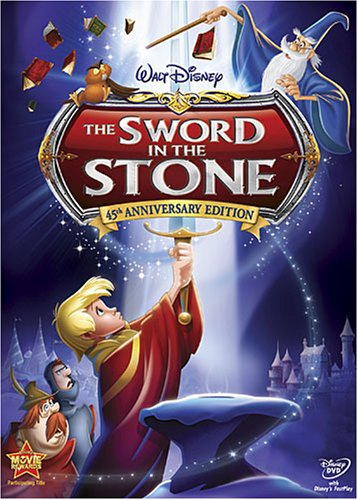
The time was that following the death of a good king, England was left without a clear heir to the throne. During the time without a king, England had descended into dark times. Suddenly as if through divine intervention a sword appeared in an anvil of stone. An inscription decreed that whosoever could remove the sword would become king. Think you’ve heard the story before? Well, of course you have. It is none other than the story of King Arthur. Most of us have heard the many stories. It shouldn’t have come as a surprise to anyone that Walt Disney himself was quite taken with the tale. When you consider it it’s about as natural a fit as one can find. Disney’s early works were replete with tales of seemingly ordinary people with extraordinary destinies. From Sleeping Beauty to Cinderella, Walt had put his own touch to many such tales.


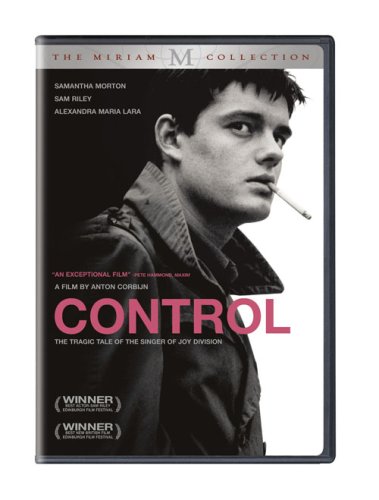
It’s nice when a movie lives up to its expectations and even surpasses them because it rarely seems to happen anymore. Such is the case with Anton Corbijn’s Ian Curtis bio-pic, Control.

I’ve been waiting to see Control for a long time. From the start, the film sounded interesting, since I am a huge fan of post-punk alternative rock music, the genre that Ian Curtis and Joy Division practically invented in the late 1970’s. But when I heard that long-time band collaborator and renowned music video director Anton Corbijn was directing the film, my anticipation rose to even higher levels.


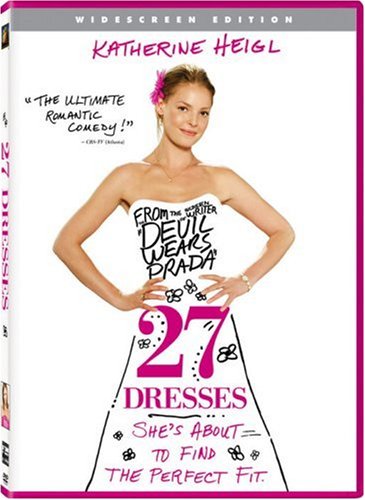
Katherine Heigl gets her Juila Roberts on in the romantic comedy 27 Dresses as Jane, a friendly woman who can't say no to planning weddings for the many people she knows. Ever since she was young she's loved weddings, even though she doesn't seem to have the time to find a future groom of her own. She's in love with her boss, George (Edward Burns), but when Jane's sister Tess (Malin Akerman) drops in for a visit, Tess and George fall in love and before Jane knows it, they're engaged to be married and she's planning their wedding. Let the cliched rom-com hijinks begin!

Along the way Jane meets Kevin (James Marsden), a cynical, anti-marriage commitments writer for the fictional New York Journal and the two begin a bickering love/hate relationship. Chances are you know how it'll turn out.

I’m not sure how many people are familiar with the process of moviemaking, but when a film is not up to studio expectation and takes a long time to finally arrive to theaters after filming has wrapped, the result is sometimes due to financial issues with the studio. But most of the time it’s due to the fact that the studio has seen the final product, and it’s so abhorrent and without any value, redeeming, comic or otherwise, that it will be released as quietly and without recognition as possible. Now I don’t know if there were any financial issues surrounding Strange Wilderness, but I will say this: the film was shooting as far back as December 2005 and was released in February 2008, and at this point on rottentomatoes.com, there is not one positive review from the three dozen that are on the site. I’ll leave it to you to decide what the reasons why are.

Strange Wilderness was written by Peter Gaulke and co-written (and directed) by Fred Wolf. Both of whom were writers on Saturday Night Live. Wolf, in fact, is the head writer for the show to this day. The film is based on a series of shorts the pair would put together, and in the feature, Peter (Steve Zahn, Rescue Dawn) is the son of a nature reporter and enthusiast, and does a show extolling nature, but things aren’t going his way. So, after an unproductive meeting with his network executive (Jeff Garlin, Curb Your Enthusiasm), he decides to go on an expedition for well-known wilderness legend Bigfoot. So he packs up his crew, which include Cooker (Jonah Hill, Superbad), Junior (Justin Long, Walk Hard), Fred (Allen Covert, Little Nicky) and Danny (Peter Dante, Big Daddy), and they all head out into the woods to find Bigfoot. Peter’s crew is a couple of cans short of a six pack, so wacky hijinks ensue.

Come on, admit it, you want to say that Hayden Christensen was the worst part if the latest trilogy of Star Wars films, and yeah, the guy did bring the suck, to be sure, but he wasn’t really that bad, right? Well yeah, he was, but he’s not the only thing wrong when it comes to Jumper, the latest film from writers David S. Goyer (The Dark Knight) and Jim Uhls (Fight Club), who adapted the Steven C. Gould novel. Directed by Doug Liman (The Bourne Identity), Jumper features Christensen as David Rice, a man who grows up with a genetic gift, the ability to ”jump” from place to place, Christensen’s performance was his first major role since transforming Darth Vader from an ominous, silently rueful and dominating presence, to a dude who thought his girl was cheating on him, so he started hanging out with a creepy old guy as a result.

David is unsure about his ability when he first discovers it but then starts to use it to his advantage, going to places ‘round the world, walking in and out of banks unnoticed, pretty much getting a chance to do whatever he wants. He leaves his Dad (Michael Rooker, Mallrats) early on in his life, and his mother (Diane Lane, Untraceable) had long since abandoned him, so the world is pretty much his oyster, right? Wrong. There’s a guy out there who captures and kills “jumpers,” a guy named Roland, played by Samuel L. Jackson with a grey wig, which, if I may, pretty much tells you it’s going to be a bad movie. Honestly, outside of a Quentin Tarantino movie, have you seen a really good movie that he’s in where he’s wearing some stupid hair prosthesis? Thank you. Soon, David finds someone else that can jump, a British guy named Griffin (Jamie Bell, King Kong), who, aside from telling David he’s not completely unique, also tells him that Roland is part of a group who hordes and kills jumpers named “Talismans,” so he’s generally got to watch his butt around them.

Serge Gainsbourg and Jane Birkin were the “it” couple in France during the late 60s and early 70s. This is the film that brought them together, their To Have and Have Not, if you will. Musician Gainsbourg (who, for the uninitiated, had a singing style that was a cross between Leonard Cohen and Tom Waits) plays a married director of successful TV commercials. He begins an affair with an 18-year-old (Birkin). Their relationship hits most of the predictable moments of such movie romances from that period.

And it is almost completely uninteresting. There is zero chemistry between the leads, but neither has much by way of screen presence to start with. Gainsbourg is startlingly ugly, and Birkin is strikingly beautiful, but that's hardly enough to keep us watching. Neither character is remotely likeable, and the self-referential moments in the film were smug clichés already in 1969. The film holds some interest as a pop culture trivia answer, but for anyone unfamiliar with Gainsbourg and Birkin, it's an intolerable bore.

The man is Richard Kimble and, not surprisingly, the man is tired. Tired of looking over his shoulder, the ready lie of the buses and freight trains. Richard Kimble is tired of running…

The elusive “one armed man” is one of the best known television icons of all time. The plight of Dr. Richard Kimball has been the subject of numerous imitations and even a feature film staring Harrison Ford as Kimball and Tommy Lee Jones as his pursuer. Tim Daly left the ranks of comedy to fill the shoes of Kimball in a very short lived revival series. While some of these efforts managed to capture the essence of The Fugitive, none can truly compare to the real thing.

What time is it? That’s right, Home Improvement fans, it’s once again Tool Time. Unfortunately for the show’s followers, Season 8 would be its last outing. It’s always nice to see shows go out on their own terms and in their own time. Home Improvement is one of those series. It leaves a void. This was one of those rare shows that didn’t rely on sex and innuendo for cheap laughs. Don’t get me wrong, who can forget Debbe Dunning as Tool Time girl Heidi, but there was never any attempt to debase the character. We all knew she was there mainly for her looks, but it fit the theme of the cable tool show. No, most of the laughs came from Tim’s over the top manly man humor. As much as we were laughing at Tim, we were really laughing at ourselves.


Tang Wei plays a student who is a member of a radical theatre troupe during the Sino-Japanese War. She and her cohorts determine to assassinate a prominent collaborator (Tony Leung). In order to get create the opportunity for the killing, our heroine must infiltrate Leung's household. She is on the threshold of becoming his mistress when he leaves Hong Kong for Shanghai. Three years later, now backed by the Resistance, she makes a new attempt. But she hasn't counted on the entanglements of passion in the affair she has embarked on.

Ang Lee's film was widely seen as both sumptuously beautiful but too leisurely for its own good, and there is something to that position. The story takes its sweet time, and the affair itself, along with its transgressive (by mainstream standards) sex scenes, doesn’t properly begin until over 90 minutes into the film. On the other hand, so much of the film is unspoken, left for the viewer to read between the lines (and Tony Leung is a master of conveying deeply repressed pain) that there is a lot going on, even when the images are still. And when the paroxysms of violence and sex do come, they are explosive.