Genre

Synopsis

Set in an imaginary European country on the verge of war, in a vague time period that is approximately Edwardian, this is the story of Sophie, a young girl who encounters Howl, the handsome wizard who lives in a gigantic, clattering contraption of a mobile castle. The interest Howl has in Sophie arouses the angry jealousy of the Witch of the Waste (voiced by Lauren Bacall in the English dub), who curses Sophie with instant old age. Sophie, no longer recognized by Howl, takes up residence in ...is castle and sets about transforming all within, perhaps ultimately freeing Howl of his own curse.

Synopsis

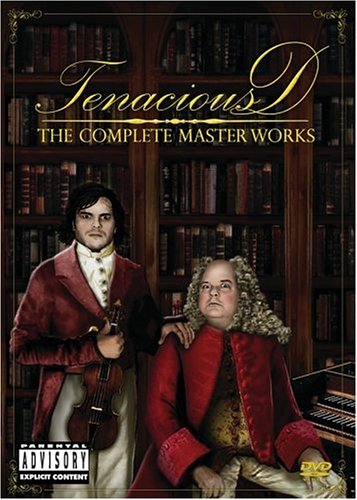
The world greatest rock band’s story about the rise to power, born from Satan, and ready to rock the world, may not be as accurate as one would perceive. As Jack Black and Kyle Gass (Jables and KG to those in the know), Tenacious D received a small run of episodes during the HBO series Mr. Show in 1999 that resulted in good word of mouth for the pair. It was only until last year, when the long-awaited first album finally dropped, that the world discovered just how good they were. And the alb...m is a very good indoctrination for new fans, and for longtime fans of the D, some of what they had seen was presented on the album in a surprising, but pleasant arrangement, featuring guest appearances by the Foo Fighters’ Dave Grohl and produced by The Dust Brothers.

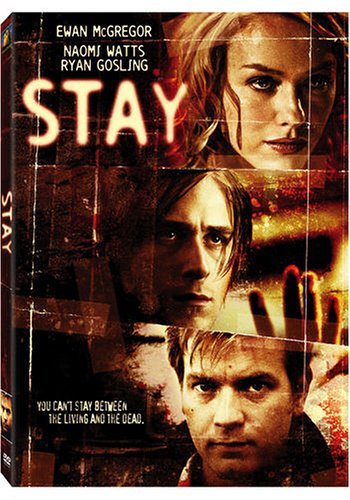
The genre of Thrillers and Suspense are usually categorized by types of films that the viewer watches and then wonders what they just watched. Films like Memento and The Machinist are prime examples of this. Both films, after many viewings, are excellent films solely because they require that the viewer think of each scene with careful scrutiny making note of each and everything on the screen. Both films end with the type of ending that doesn’t necessarily satisfy on the first viewing, but ultimately sa...isfies after many viewings. Add the film Stay to this list of films.

Henry Lethem (Ryan Gosling) is an art student at a university who plays to kill himself in three days, that is unless his psychiatrist Sam Foster (Ewan McGregor) can figure him out to stop his plan. Foster soon learns that Lethem is starting to hear voices, voices that are telling him to do things. But the enjoyment for Foster doesn’t end here as Lethem starts experiencing horrifying visions of pain. Lethem seems to be able to see the future at least as he knows everything that is going to occur a bit before it does. When Foster asks if they’ll meet again when Lethem informs him that he’ll kill himself, he declares “Yeah, there’s still three more days’. While the concept of seeing into the future before your ‘death’ is nothing new, I always find it to be interesting how every movie plays this angle out.

Synopsis

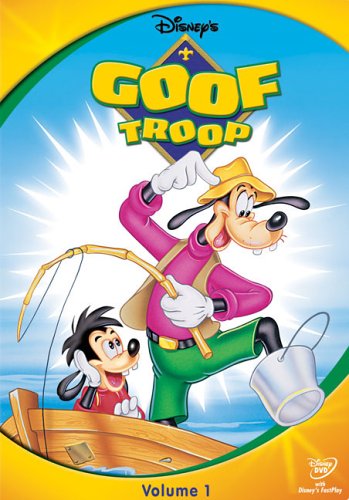
Sometimes Disney will release a film that provides feelings of nostalgia to a lot of people. And other times they release shows onto DVD that make me realize just how old I am. When Disney’s Goof Troop was released onto DVD, my wife said the most horrible thing I’ve heard her say so far: “I used to watch that show growing up.” Keeping in mind that Goof Troop aired from 1992-1993, that statement probably says more about her than it does me, it still didn’t make me feel good. For God’s...sake, I was of drinking age when this aired!

Anthology films are a good training ground for young filmmakers to flex their muscles and really get creative. However, with Eros, the three filmmakers have already been around the block a time or two, and on the surface, that could be considered a good thing. But when you consider what Michaelangelo Antonioni, Steven Soderbergh, and Kar-Wai Wong, are already capable of, these shorts seem a bit of a letdown. The best segment is Soderbergh’s “Equilibrium,” with its symbolic stylistic effects and wry sense of hu...or. It was the only one of these vignettes, which seemed neither cliché (“The Hand” – Kar-Wai) nor pointless (“The Dangerous Thread of Things” – Antonioni). In “Equilibrium,” Robert Downey Jr. plays a man caught up in an ambiguous dream world, who explains his situation to an eccentric psychiatrist (Alan Arkin). Arkin’s psychiatrist is a capable man, but he often uses his patients’ discussion time to do other less constructive things (i.e. stare out the window with binoculars, fly paper airplanes to the street below, etc.). The whole time, he is equally capable of dispensing advice and helping his patients get to the root of their issues. There are three color schemes in this segment (black-and-white; all blue, natural), all of which add artistic flare by making each portion a genre in and of itself. And in the blue portion (Downey’s recurring dream), the camera bobs slowly from side to side, giving an off-equilibrium effect, which is contrasted in the other two portions.

In “The Hand,” Kar-Wai proves himself a quality director, while the story of fading love and devotion rekindled for one final farewell lacks the intrigue of similar – and better executed – works. However, the performances by the two lead stars are solid. Unfortunately, even that perk is missing from the uninspired Antonioni contribution. “The Dangerous Thread of Things,” meanders about with all the importance of a porno (but without the excessive sex and nudity those, who might find such fare entertaining, are interested in seeing). It’s not a flattering introduction to the works of the great Italian director. As for storytelling, I’m not sure he even attempted to dabble in it here. Stick with Blow-Up, if you want a primer on Antonioni.

Biographies are nothing brand new. Hollywood has been making these types of films for quite sometime. Some of the more famous biographies are about people like George S. Patton and political leader Ghandi. Most recently, audiences were invited into the world of Truman Capote. The two aforementioned biographies tended to cast actors that seemed not to necessarily play the person, but more so become the character almost channeling him. Phillip Seymour Hoffman, like George C. Scott and Ben Kingsley, channels Capote in a...rare and artful manner.

The film version of Capote tells the story of Truman Capote who on November 15th, 1959, noticed a news item about four members of a Kansas family who had been shot-gunned to death. Capote telephoned William Shawn, editor of The New Yorker, wondering if Shawn would be interested in an article about the murders. It was later said, by Capote, that this was a big mistake of his as this sole event resulted in the occurrence of a lot of bad events for one Capote.

Synopsis

This is a portrait of the rookie year of Yao Ming, a Chinese basketball superstar who is imported to play for the Houston Rockets. He arrives not just with the expectations associated with being a first-draft pick, but also with the hopes of (we are told) one billion countrymen on his shoulders. His debut is a disaster, but he soon establishes himself as a force to be reckoned with, as well as charming American fans with his self-effacing personality and humour.

Director Pete Red Sky conducts a small, but capable cast in the psychodrama The White Horse Is Dead. Some bits of dialogue hit sour notes, but the cast, which consists of Resmine Atis, Andrew Welsh, and Irina Stemer, hold their own through the rough parts and truly elevate this flawed rendering of an otherwise intriguing – and sordid – tale. Atis plays Naya, daughter to Giselle (a domineering and beautiful hypochondriac), and at the film’s opening, we see she’s the kind of girl, who would do most anything to p...ease her mother. Inheritors of a rather large estate left to them following Naya’s father’s suicide, Giselle and Naya get along in quiet seclusion, so long as Naya does everything her mother says. Stemer injects a realistic sinister quality into the role of Giselle, but just how sinister she is, we never imagine until the film’s conclusion – a conclusion helped along by the arrival of sympathetic ex-con Vincent (Welsh), whom Giselle hires to upkeep the estate grounds. He does a lot more than that, striking up a relationship with Naya, and causing her to question everything about her past, which has been largely influenced by Giselle’s version of things. As Naya becomes more aware of her mother’s flaws, she starts to rebel and brings out the worst in Mommy Dearest. Atis is a revelation in the role of Naya, and it would be hard for me to imagine this young lady not having a long, fruitful career. Welsh shows some incredible range as well, and Stemer is a formidable antagonist for these two young lovers. As previously stated, there are some pieces of amateurish dialogue here and there, but even that is hard to detect under the guidance of these stars. And Red Sky’s direction rises above that of a typical first-time director. Out of the ordinary and sometimes over-the-top, indie fans will love what he’s done with his debut.

Video

Johnny Cash’s dramatic road to Christianity is no secret to his fans and thanks to the recent biopic, Walk The Line, it’s no secret to the masses. Cash made this film, he explains, to show people why he is so drawn to the Passion of Christ. This is no doubt a sincere effort to bring this expression to life. The film is entirely shot in the Holy Land. The film is enhanced by the wonderful locations. Cash attempted to follow the actual path of Christ. There is no doubt that the care and conviction Cash felt is evide...t on the screen..

Gospel Road is basically the story of Christ’s life. Cash narrates the entire film which gives it more of the flavor of an educational effort. At times it feels like watching an A&E biography. When Cash isn’t speaking he’s singing. It is in the music that this film separates itself from the many Christian biopics out there. Unfortunately there really aren’t many complete songs. Instead he uses musical phrases to reinforce more powerful messages. The bad news is that the cast has a very difficult job. There is no real dialogue from the actors. The only notable exception is June Carter Cash, who plays Mary Magdalene. She has the only real speaking part in the film. While she does a good job I’m not sure it fits the message Cash was trying to convey. It seems strange that that role would be stronger than even Christ himself. The action takes place not on sets but rather out in the wilds of Israel. The style recalls the technique also used to great effect in Jesus Christ Superstar, coincidentally another musical depiction of The Passion..

Synopsis

In his film debut, Sidney Poitier is a newly minted doctor at a downtown hospital. Two patients arrive in the prison ward, shot in the leg by police. One is Richard Widmark, frothing racist. The other is his brother, who dies under Poitier’s care, not from the wound, but from a terminal brain tumour. Widmark blames Poitier, and sets about inflaming racial hatred in his quest to destroy Poitier.