Television

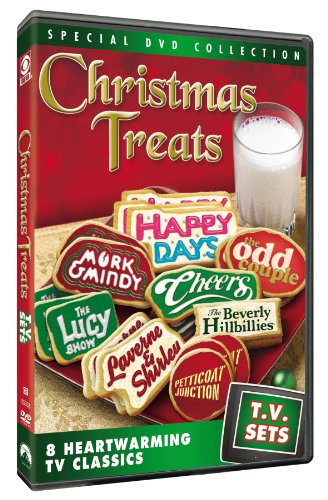
This single DVD contains 9 Christmas episodes of CBS’s most endearing comedies. All were influential to those that came after. These weekly shows offered that much-needed relief from the pressures of whatever decade they appeared in. The stars are names that everybody knows, even those that appeared 50 years or more ago. Celebrate Christmas with these classic moments in television history.

In the first season of Showtime’s Californication, we were introduced to David Duchovny’s character, bitter yet upbeat writer Hank Moody. Hank, after moving to Los Angeles on the heels of his first novel – a critical darling entitled “God Hates Us All” – has recently lost his long-time love and, by extension, his daughter, to a straight-arrow bore who makes his girlfriend Karen (Natascha McElhone) feel safe.

The first season told us the story of Hank’s attempts to win Karen back and his increasingly perilous relationship with a sixteen-year-old Lolita, whose inclination for combining sex with a wicked right hook leads to one of television’s all-time great novel titles. Oh yeah, and it also featured lots and lots of raunchy sex between Hank and many gorgeous women. This was a major reason for the show’s notoriety, but what really makes the show work is Duchovny’s portrayal of Hank. He imbues him with a charming kind of good-natured nihilism and, even when he is being a grade-A jackass, we still like him.

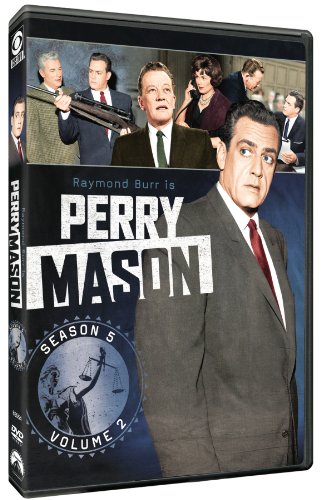
Erle Stanley Gardner wrote crime fiction, and while many of his 100 or so works are unknown to most of us, he created a character that has become as identified with criminal lawyers as any other in fiction. It was in these crime novels that Perry Mason first faced a courtroom. He developed a style where he would investigate these terrible crimes his clients were on trial for. He would find the real killer, and in what has become a Hollywood cliché, reveal his findings in a crucial moment during the trial. While we may not remember the novels, we all remember the man in the persona of Raymond Burr.  Burr had a commanding presence on our screens and enjoyed a well deserved 11-year run as the clever lawyer. What makes this run so amazing is that the show followed pretty much the same pattern the entire time. We always know what’s going to happen, but we wait eagerly for that gotcha moment when Perry faces the witness on the stand. We know when he’s got the guy squarely in his sights, and we can’t sit still waiting for him to pull the trigger. OK, so maybe that’s a little over the top, but so was Perry Mason. From the moment you heard that distinctive theme, the stage was set. To say that Perry Mason defined the lawyer show for decades would be an understatement. Folks like Matlock and shows like The Practice are strikingly similar to Perry Mason. If you haven’t checked this show out, this is your chance. See where it all began.

At this rate, it’s going to be quite some time before you complete your collection. I’m not even sure that DVD will still be a viable format before the end of the series on DVD. It’s another half season, and the episodes continue to fly at us at a snail’s pace. But slow and steady wins the race, and as long as the quality episodes continue to deliver that classic Mason charm and style, I guess folks like us will continue to come back for more.

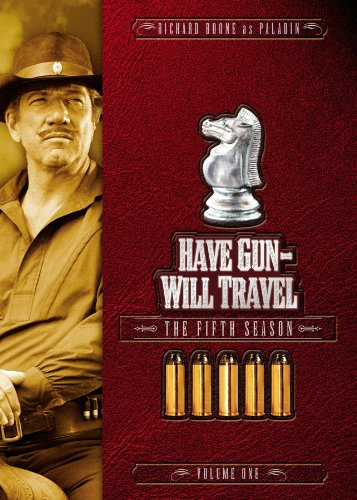
’Have gun, will travel’ reads the card of a man. A knight without armor in a savage land…”. Those words ended every episode of Have Gun Will Travel, sung by Johnny Western in a time that such words could be sung without irony. Outside of Richard Boone’s black-clad, craggy Rhett Butler gone-to-seed gunfighter, that song was all I could really recall about this venerable Western from television’s golden age. Would it, like so many revisited shows from my youth, ultimately disappoint? Or would it hold up fifty years after it was originally broadcast, viewed as it would be by the far more jaded, cynical man I’ve grown into?

The verdict? It’s pretty darn good.

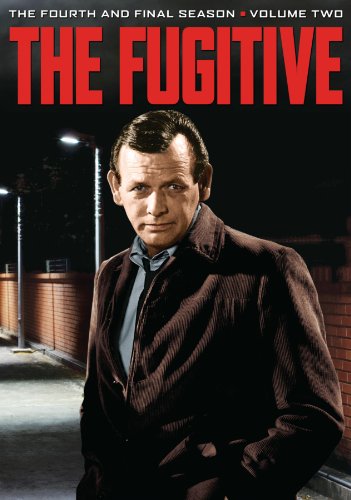
“The man is Richard Kimble and, not surprisingly, the man is tired. Tired of looking over his shoulder, the ready lie of the buses and freight trains. Richard Kimble is tired of running…”

The elusive “one-armed man” is one of the best known television icons of all time. The plight of Dr. Richard Kimball has been the subject of numerous imitations and even a feature film staring Harrison Ford as Kimball and Tommy Lee Jones as his pursuer. Tim Daly left the ranks of comedy to fill the shoes of Kimball in a very short-lived revival series. While some of these efforts managed to capture the essence of The Fugitive, none can truly compare to the real thing.

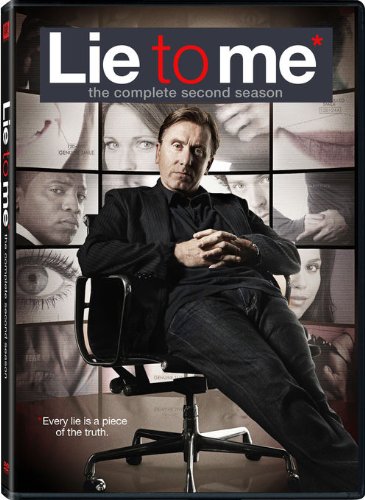
"Cal Lightman sees the truth. It's written all over your face. It's also in your voice, your posture, the words you choose. Give him five minutes and 20 questions and he'll know whether you went off to Argentina to cheat on your wife, lied about a well-timed stock sale, or murdered a one-night stand."

I spent quite a few years as a detective. My specialty turned out to be in the interview room. When some of my fellow detectives had a suspect they couldn't break, they often called me in. It was my job to get the person talking. You see, the company’s insurance recovery from the theft was based on how much I could get the thief to admit they had taken over and above whatever they just got busted for. I have to admit that I rather enjoyed the job. I was able to read the person's emotions well enough to gauge how my approaches were making the suspect feel. The key was to be able to separate the truth from the deception. Well, it turns out there's a science behind what I just took as instinct. Apparently, our faces and body language are almost impossible to control, and anyone who could read and translate that language would be nearly impossible to deceive. I don't recall consciously looking for any of these things. I could just tell. After watching a season of Lie To Me, I'm not so sure that there wasn't more to it than just instinct.

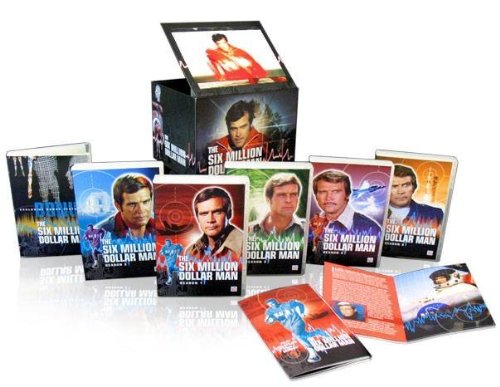
"Steve Austin, astronaut, a man barely alive. Gentlemen, we can rebuild him, we have the technology. We have the capability to make the world’s first Bionic man. Steve Austin will be that man. Better than he was before. Better. Stronger. Faster."

I remember as a kid we used to imitate the Bionic Man when we would be playing in the playground. We would run in slow motion and make that distinctive "chchacha" sound and pretend we were bending steel bars or lifting tons of weight. In the 1970's bionic play was everywhere. For a time it was the most popular thing on television.

Written by Diane Tillis

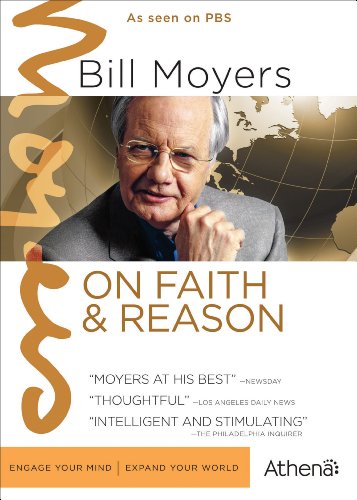
One hundred writers gathered together at the PEN World Voices Festival in New York to discuss faith and reason. PEN is a literary and humanitarian organization that is composed of poets, essayists, and novelists. Its chief concern at the festival was the threat to freedom of speech and conscience from religious extremism. Writers from diverse backgrounds and perspectives came together in an open forum to discuss their experiences with faith and reason. Bill Moyers: on Faith & Religion is a collection of interviews with twelve renowned authors who were among the speakers at the PEN World Voices Festival. Bill Moyers interviewed them on their background, literary works, how they related to faith and religion, and what they hoped to see for the future.

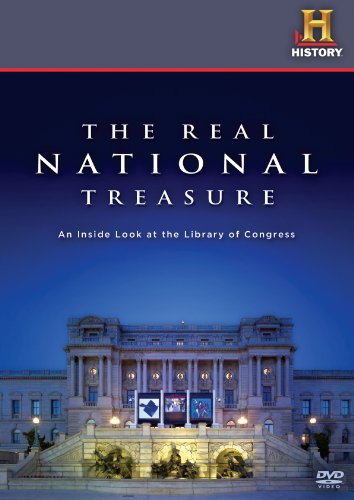
When I first put this dvd into my player, I had no idea of how much information and research the Library of Congress was responsible for. I, like most people, assumed that it’s a big building where members of Congress go to conduct research. This may be so, but there is so much more to the Library that it practically boggles the mind, which is the ultimate goal of The Real National Treasure.

The Real National Treasure is actually an episode of History Channel’s series, Modern Marvels. It focuses on every aspect of the Library of Congress, from its layout to the services it provides. There are some fascinating items showcased in the episode, including original texts handwritten by the founding fathers.

I don’t like referring to myself as a “fan” of anything. The word leaves a bad taste in my mouth; it suggests a kind of mindless devotion that doesn’t leave room for noticing any shortcomings in the subject of one’s devotion - The legions of Twilight fans immediately spring to mind. However, if being a fan means to regularly watch, re-watch, and enjoy a show for a period of years, then I can call myself a fan of How I Met Your Mother. The show has had its high and low points, and I must admit that during season 5 I was among the critics of the show who said it’s losing momentum and maybe it’s time to wrap this thing up already. Upon re-viewing the season for this review, my position, though unchanged for the most part, has softened a bit.

For those unfamiliar with the show, How I Met Your Mother is a hold-out sitcom of a bygone era in a way; it’s among the last of the old three-camera, laugh-track sitcoms, yet it manages to inject fresh ideas and some edge into the old horse now and again. It has consistently found original ways to tell its stories and continues to utilize its greatest strength, a superb comedy ensemble.