Disc Reviews

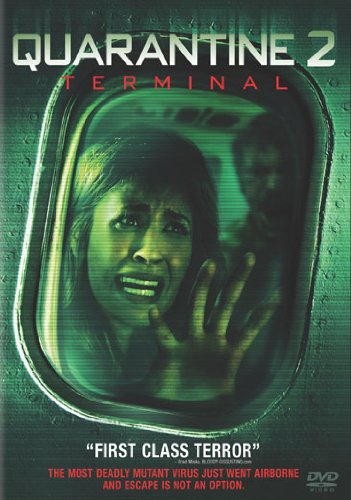
In 2007, writer-directors Jaume Balaguero and Paco Plaza created [REC], a truly frightening horror film. Considering their subject matter is so familiar to audiences it proved a major challenge not to fall into clichés. Somehow, against all odds, [REC] remained fresh by blending the elements so well… nasty contagion and fast zombies ala 28 Days Later captured in documentary-syle videography made famous by The Blair Witch Project. Add likable lead characters, natural dialog, horrific gore and scream-at-the-screen suspense; sprinkle in clues of a disturbing spiritual origin to the mysterious virus and you end up with one of the scariest and most effective additions to both the zombie and “found footage” horror sub-genres.

To appreciate the sequel, [REC]2, one should take the time to watch the first film, but if you haven’t, here is a brief spoiler filled synopsis of [REC]. A local Spanish TV journalist and her cameraman are embedded with a group of firefighters for the night as part of a human interest segment on their magazine news show. A routine call to an old apartment building on the outskirts of Madrid immediately leads to the team being sealed inside by a government quarantine trying to contain the origin of a ferocious viral pandemic. The news team chronicles the firefighters’ efforts to battle the frenzied, ravenous infected and escape the building, avoiding viral contamination or getting shot by government snipers.

The third BloodRayne film (and second with Nastassia Malthe in the title role) sees the titular dhampir slicing up Nazis, and so the chronology of the third film rejoins that of the first game. During a raid on a death camp train, Rayne accidentally infects a Commandant Michael Paré. Becoming a dhampir himself (a human/vampire hybrid), he and Mengele-figure Clint Howard (because who else are you going to cast as a Nazi scientist other than Clint Howard?) plan to use Rayne’s blood to grant Hitler immortality.

Vampires and Nazis notwithstanding, the important thing here is that this is yet another Uwe Boll film. So what exactly does that mean for you, the discriminating viewer? As regular visitors to this site might know, I have, in the past, actually praised some of Boll’s more recent efforts. I may well have destroyed whatever critical credibility I could lay claim to by being so impressed by Tunnel Rats, but damn it, it was good. Here, though, is yet more evidence that the Indefatigable One is not at his best when dealing with video game material. Also World War II. Opening an action movie about vampires with shots of Auschwitz-bound prisoners is not, methinks, in the best of taste. Furthermore, Boll’s decision to go with a washed-out, gritty feel does a disservice to his heroine. The world of the BloodRayne video games is a fantastic, exaggerated one, Gothic in every sense. It is a world of decadent costume balls, and villains headquartered in castles, and it is the cartoonish, occult-obsessed, iconographically berserk side of the Nazis that lends itself to the kind of stories we fine in the games, not to mention the look of the character. Rayne’s revealing costume, hardly practical, looks even sillier when placed in a context of grime, washed-out colours and snow.

A mockumentary is a piece of satirical entertainment that is shot like a documentary except it is fictitious and never really happened. Like my first marriage, HEYOOOO! (okay, not really) They can be funny or serious but they are often shot to be of the former. Sometimes, they can be pretty interesting or funny but more often than not, they tend to be just like most documentaries. Boring, pointless and liable to cure insomnia. We shall proceed to investigate Brother’s Justice which mocks movie making.

Dax Shepard has an idea. He calls one of his best friends, Nate Tuck who is a producer and tells him to come right over with a camera. Nate says he will need a couple of hours to get things together, Dax asks if he can make it a half hour, the producer says I will try to be there in forty five minutes. At this point, I am already wishing for Nate to slam down the phone and walk away.

I’ve seen some dysfunctional families on television over the years. Haven’t we all? It’s fun to laugh at someone else’s flaws. Along comes Showtime, and it’s rather hard to classify the series The United States Of Tara. This one takes dysfunction to a whole new level. Tara (Collette) suffers from multiple-personality disorder. Laughing yet? She has managed to control the problem by using medications and attending frequent therapy sessions. But the medication is sapping her creative ability. You see, Tara was once a gifted artist. She painted murals and was somewhat critically acclaimed. The meds put an end to all of that. With the blessings of her family, Tara goes off the meds, and the family grows by the multitude. Yes, there are multiple “alters” as she calls them inside of Tara’s body. Now they are all coming out to play.

The first thing you have to understand about this show is who the alters happen to be. We learn over time that they were constructed by Tara’s mind to protect her from a traumatic moment in her life. Tara can’t remember the event, but from time to time, the alters offer up little clues to what might have taken place. She is totally aware of the alters and their personalities. The family has developed some protection techniques of their own. Husband Max (Corbett) is not allowed to have sex with the alters. They’ve decided that would be cheating. How about just f***ed up? The kids are to treat the alters as they are, not as Mom. I’ll introduce you to the “real” people later. Here are Tara’s alters:

I’ve got to admit that for a long time, Four Weddings and a Funeral was in a category of movies that I had no intention or curiosity to see because of the title, the cast and the story. Hugh Grant was a significant step down towards the emasculation of man, where we start wearing large sweaters, hang out in pseudo-Starbucks coffee shops and talk about what happened on American Idol or some lame thing along those lines.

Well here I am, years later, apologizing for some of the things I thought about that film. I’d seen it before a couple of times through the years, but in putting my error out there for the world to read, I opened myself up for the scorn that comes with it. But at the end of the day, throwing away Hugh Grant (it was the role that launched him upon American audiences, but still) and Andie MacDowell (who I like to call Mrs. John Elway), the film’s story, written by Richard Curtis (most recently of Love, Actually) was a refreshing breath of air into a fairly dead (subconscious pun unintended) romantic comedy genre. With Mike Newell’s direction (Harry Potter and the Goblet of Fire), the film is funny, with some moments of poignancy and emotion.

I’ve got to admit that for a long time, Four Weddings and a Funeral was in a category of movies that I had no intention or curiosity to see because of the title, the cast and the story. Hugh Grant was a significant step down towards the emasculation of man, where we start wearing large sweaters, hang out in pseudo-Starbucks coffee shops and talk about what happened on American Idol or some lame thing along those lines.

Well here I am, years later, apologizing for some of the things I thought about that film. I’d seen it before a couple of times through the years, but in putting my error out there for the world to read, I opened myself up for the scorn that comes with it. But at the end of the day, throwing away Hugh Grant (it was the role that launched him upon American audiences, but still) and Andie MacDowell (who I like to call Mrs. John Elway), the film’s story, written by Richard Curtis (most recently of Love, Actually) was a refreshing breath of air into a fairly dead (subconscious pun unintended) romantic comedy genre. With Mike Newell’s direction (Harry Potter and the Goblet of Fire), the film is funny, with some moments of poignancy and emotion.

Renée Zellweger is Jane, a former country singer who has lost the will to live since an accident left her in a wheelchair. Forest Whitaker is Joey, who can talk to angels and ghosts since he witnessed the death by fire of his family. These two wounded souls bond and bicker, and when Joey finds a letter from Jane’s son, whom she gave up for adoption years ago, he decides that she must see him. Fortunately, there’s a talk being given in New Orleans by a man who is apparently an expert on communication with angels, so that gives Joey a reason-slash-pretext to drag Jane on a cross-country trip she wouldn’t agree to otherwise.

And so off we go, on yet another road trip discovery of America, this time filtered through the eyes of French writer/director Olivier Dahan (La Vie en Rose). As expected, it’s all very picaresque, with plenty of strange and quirky encounters along the way – Elias Koteas working the sleaze as the man who sells our protagonists an exploding car (and who is emotionally crippled, by his own admission – Symbolism!), Nick Nolte hamming it up as a musical hermit who trots out the old Robert-Johnson-sold-his-soul-for-music chestnut one more time, and so on. Zelwegger’s performance is serious of purpose, but she is done no favours by the voice-over she is saddled with, which babbles poetically on about this and that and is just as pretentious and annoying as Terrence Malick’s excesses in this department. Whitaker, meanwhile, takes his patented sensitive-with-tics shtick to some pretty zany heights. Despite some striking visuals (and sometimes because of the same), this is a pretty silly effort that occasionally rises to entertaining levels of camp, but more often just sets the eyes rolling.

Rango (Johnny Depp) is a chameleon with an enormous imagination. In his terrarium, he has developed a social network with inanimate objects that would be the envy of Castaway’s Tom Hanks. He essentially lives inside his head, but then reality (perhaps – the film maintains a certain ambiguity here) suddenly intervenes and he finds himself cast from his safe, hermetic world. Marooned in the desert, he arrives in the town of Dirt, where his inclination for the dramatic has him claiming to be a sharp-shooting, quick-drawing hero. When he accidentally proves his claim by killing, through sheer stupid luck, a hawk that has been terrorizing the town, he is enlisted by the townspeople to defend them from the tyrants who keep them oppressed and thirsty.

Another day, another self-referential computer-animated film, this one taking on westerns rather than fairy tales. And sure, there are more references than you can shake a stick at, to westerns or otherwise (check out the lightning-fast nod to Depp’s Fear and Loathing in Las Vegas during the highway scene). But this isn’t just a pastiche. The love of classic westerns is palpable, and the film is unapologetic in its adoption of the genre’s convention, but it does take care to fully realize its characters. Visually, the film is extraordinary, displaying a rich palette of colours and moods, an imagination as exuberant as its protagonist’s (a dream sequence becomes exactly what Salvador Dali would have imagined had he been a thirsty chameleon), and the detail work of the animation is bleeding edge. Not everything in the narrative is exactly a surprise, but some pleasures are pleasures precisely because they are familiar, and there are plenty of charming eccentricities to make us forgive the occasional lapses into the been-there-done-that. Certainly one of the better animated films of the year.

“Look, you got what you wanted, I'm officially out of control.”

Based loosely on (Executive Producer) Mark Walberg’s meteoric rise to fame, Entourage has always been a male bonding fantasy; it plays like a boys-will-be-boys version of Sex in the City. Following Vincent Chase (Adrian Grenier) and his posse’s misadventures through the decadent lifestyles of the hyper-rich and fabulously famous carried with it a certain insider’s credibility and made for fun, if not slightly debauched TV voyeurism. HBO sweetened the deal by liberally mixing in hard body nudity with jaw-dropping self-satirizations from a slew of Hollywood cameos the like not seen since The Larry Sanders Show.

“Give me a head with hair, long beautiful hair, shining gleaming steaming flaxen waxen. Give me it down to there, hair, shoulder length or longer, here, baby, there, mamma, everywhere, daddy, daddy hair! Flow it, show it, long as God can grow it, my hair!”

Born in the late 50s, I was a child of 60s and a teen in the 70s. I believed in the revolution. The Beatles and The Stones would lead the charge against the establishment. I grew my hair to mid back, stayed perpetually high, experimented sexually and washed infrequently. I used my selective service draft card to clean the seeds out of my pot. I was hippy and Hair was our manifesto. Now, I speak of the cult Broadway musical, Hair. The songs were prophecy of the future when the flower power movement finally conquered the squares. The lockstep Nixon youth, Wall Street plutocrats and pickled religious zealots would fall under the spell of free thinking and free love. Jupiter aligned with Mars. Peace would guide the planet and love would steer the stars. It was the dawning Age of Aquarius, man.