Disc Reviews

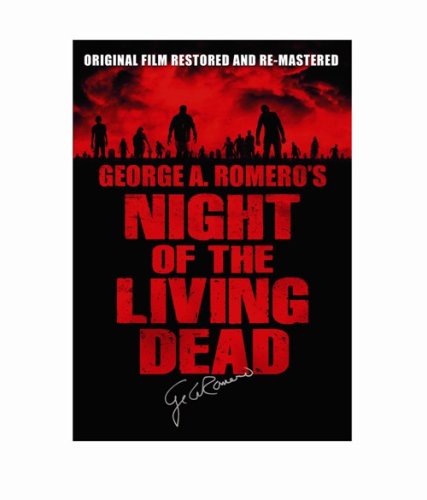
It’s ironic that 28 Days Later and the Dawn of the Dead remake (which was originally a George Romero film), have jump-started Romero’s long-running “Dead” series that started in 1968 with Night of the Living Dead.

Since 28 Days Later and the Dawn remake were released, Romero has released two new installments: Land of the Dead in 2005, and now Diary of the Dead in 2007.

It sounds like nothing new. Hard boiled detective uses computers and other forms of technology to solve cases. It isn’t anything new, except the detective in question is Joe Mannix and the series aired in 1967. The computer that Mannix used took up an entire room and was queried using cardboard punchcards. This wasn’t science fiction. We’re not talking some newly discovered Irwin Allen series. Mannix didn’t go after aliens or robots. This was a down to earth gritty detective show. Mike Connors played the tough as nails detective. He was perfect for the part and blended into the role seamlessly for 8 years.


The Pang brothers return with one more instalment to their series of ghost tales. This one also goes under the title of The Eye 10 (and The Eye: Infinity), which is actually the more accurate nomenclature, given the sheer number of hauntings that are present here. A group of friends on vacation in Thailand regale each other with ghost stories. Their host then produces a book that lists the ten ways of seeing ghosts. The group, whose instinct for self-preservation could do with some strengthening, proceed to put the book to the test. They get far more than they bargained for.

In the making-of featurettes that accompany the film, the Pangs talk about how they had too many ideas to fit into the first two instalments of the franchise. So here they have a structure that allows them to pack in a cornucopia of summonings and hauntings. Some of the manifestations are undeniably effective, and there are some pretty decent jolts. On the other hand, the Pangs recycle some of their greatest hits, sometimes to deliberately humorous effect. The tone generally is much lighter than before, but the humour has a tendency to disrupt scenes that are building up a good head of terror. The film is thus a frustrating mixed bag, where flashes of the Pang brilliance are present, but there are also plenty of moments where the brothers seem to be just going through the motions, when they aren't taking the piss entirely.

You probably remember where you were when you saw the trailer for Twister. Hot off the heels of Forrest Gump, which was a nice story with some pretty cool computer effects at the time, Twister simply took the effects to a whole other level. Barns were torn apart, cars were tossed into the air, and that one shot, where the car is driving as a tractor is thrown and slammed into the ground, and the tire from the tractor hurdles through the car window. You wanted to go see that film, whatever the cost might be.

But holy crap, once that movie came out, the film landscape was redefined. But it was less about actual storytelling per se, and more about the computer effects that carried the film along, with not a lot of significant or even interesting story or characters that were appealing enough to care about. No real original ideas, just 113 minutes where director Jan de Bont (Speed) tries to dazzle you and say, “Hey look! Really cool twisters!” And you know why that is disappointing? Because one of the writers was Michael Crichton, who’s written some pretty cool stuff: Jurassic Park and Westworld, and yet nothing much is to be had here. Bill (Bill Paxton, Aliens) has returned to Oklahoma and “Tornado Alley” with his fiancée (played by Jami Gertz of Still Standing lore), to find out if Bill’s estranged wife Jo (Helen Hunt, As Good As It Gets) has signed the couple’s divorce papers. Jo hasn’t yet, so Bill’s got to stay on her to get them done. In the meantime, the chase to find a twister has begun, and Bill, compelled by an urge to see a technology that he and Jo had envisioned come to fruition, helps Jo and her crew out for one day.

The Minutemen was not a theatrical release. I get the impression it did run on the Disney Network at one point, but I never saw the broadcast. So, for most of us, this release is pretty much a direct to video affair. The film is strictly for the kids, which is a little bit of a missed opportunity here. The subject matter lends itself to the inclusion of some wonderful references that might have been enough to keep the adult in me interested more. Instead Disney decided on the strictly youth oriented course. Unfortunately for Disney, that market isn’t usually the one with the twenty bucks to bring home the bacon, or in this case, the DVD. All of the adults are pretty much bumbling idiots. There’s plenty of popping music to keep the energy level high enough to keep the kids into it and wear out the adults. There are plenty of teen stereotypes to go around.


TNA Wrestling has evolved from being nothing more than a small third party wrestling organization to something much more. While they aren't the WWE in ratings, they have arguably better storylines and on average more enthusiastic wrestlers. There are established stars such as Kurt Angle, Booker T, & Team 3d(used to be known as the Dudleys) that have built up their reputation thru WWE, ECW and WCW. There are also equally exciting homebred stars including AJ Styles, Samoa Joe and Jay Lethal (now known as "Black Machismo") that play a prominent role in the league as well. Furthermore (without including the Japanese market), TNA also has the best wrestling females you will find anywhere from Gail Kim to the unstoppable monster Amazing Kong. So it is little wonder that from time to time, I pick up their ppv dvds including this one named Destination X 2008 highlighted by the main event: Kurt Angle,Tomko & AJ Styles vs the tandem of Samoa Joe, Kevin Nash, and Christian Cage.

March 9, 2008 - Destination X. Several angles were taking place around this ppv. The Angle Alliance was in full swing despite the growing tension/love triangle between AJ Styles, Karen Angle and Kurt Angle. AJ Styles and Tomko had distanced themselves from one Christian Cage which made him angry and led to the concurrent feud. Samoa Joe had found himself into the main event since he had been feuding with Kurt Angle in a desperate attempt to finally secure the TNA World Title. Kevin Nash? "Big Sexy" was probably in it for the thrill...of money. Being a seven foot monster, he served as the powergame for the trio. In the last Impact before the PPV, Christian Cage and Kurt Angle were involved in a cage match which found Cage winning in a controversial finish where his feet supposedly touched the ground first and his hand was raised by referee Earl Hebner. Film later showed that perhaps Angle's feet touched the ground first (though looking at it several times, it's really hard to tell either way). This situation has led to a one man advantage (3 on 2) at the PPV for the first five minutes.

Just because you’re paranoid doesn’t mean they’re not really out to get you. That old axiom has never been more true than for David Vincent in the Martin Quinn series The Invaders. Quinn was best known for his police procedural shows like The FBI. At the time of the The Invaders Quinn was going into the final season of one of his most popular shows, The Fugitive. While most people over the years have compared The Invaders to that Quinn production, they were really not as similar as all that. In The Fugitive, the hero, Richard Kimball, played by David Janssen had a very specific mission. He was wrongly convicted of killing his wife and was on the trail of the real killer, whom he had witnessed. The “one armed man” became an iconic figure in television history and provided Dr. Kimball with his “Holy Grail”. David Vincent’s mission was far more complicated and seldom so cut and dried. He was honestly more akin to Dr. Bennell, played by sci-fi favorite Kevin McCarthy from Invasion Of The Body Snatchers. In both cases you had one man who knew that aliens were invading and even replacing humans. As I watched this collection of Invaders episodes, I couldn’t help but be reminded of McCarthy’s famous scene running down the street trying to convince the world of the impending invasion.


This is the first half of the third season of Rawhide. Long before Clint Eastwood was making our day as Dirty Harry or even roaming the badlands without a name for Sergio Leone, he was working the cattle drive on Rawhide. Rawhide was created to take advantage of the huge Western film and television wave that Hollywood had been riding for nearly a decade. With huge ratings for Gunsmoke and Bonanza among others, Rawhide was a bit of an unlikely success. Here the show explored the West on an endless cattle drive to get a few thousand steer to market. Along the way the crew would find themselves involved in someone else’s troubles or meet trouble head on themselves. The cattle drive theme would rely on the changing landscape to distinguish the show from other more sedentary westerns. More like Wagon Train, the constant movement always gave a sense of action even when there wasn’t much. Of course, there was a large number of changing support players along on the drive. Every operation needs cooks, ropers, and red shirts.


The set comprises the second half of the second season of Gunsmoke. The show was still in black and white and in the half hour format. Some of the best episodes of the set included Bloody Hands. For once a western dealt with conscience. When Dillon begins to have haunting dreams and pangs of guilt over killing three bad guys, he tries to back down from a fight. Has Dillon gone yellow? Arness does a better than average job on this rather thought provoking episode. When a man comes from Washington to question Dillon’s methods, he finds out who his friends really are in The Bureaucrat. A man turns up dead in Chester’s Murder just after a fight with Chester so bad Dillon had to break it up. Now Dillon’s got to prove Chester wasn’t the killer, but he’s the worst witness against him. Modern technology reaches Dodge City in The Photographer. Many residents get their first introductions to a camera. But is the stranger with the fancy new camera a killer? Ever notice how a story gets out of hand with each telling? In What The Whiskey Drummer Saw, a story gets out of hand when Dillon’s told he’s about to die. In The Man Who Would Be Marshall, an Army officer wants Dillon’s job; that is, until he finds out just what that job really entails. All in all, this is a solid collection of episodes and certainly won’t be a disappointment to fans who haven’t seen them in decades.


The first National Treasure film took us on a historical journey through the locations that were the birthplaces of The United States. There might not have been a ton of historical accuracy, but there were enough things right that it was an entertaining adventure. For the sequel, the entire canvas was greatly expanded. While we’re once again deep in some arcane American history, the locations span the globe. Paris and London join the uniquely American locations, adding a fresh bit of variety to the mix, enough to make this film different enough from the first and yet still deliver on expectations.