Awards Edition

In 1993, three of the most influential executives in the entertainment industry decided to pool their talent, resources, and connections into the power company called Dreamworks. It was Steven Spielberg, Jeffrey Katzenberg, and music mogul David Geffen who formed the studio, at first to contribute to other films in production by other studios. It's no surprise that the studio's first impact was in contributing special effects. In 1997, the studio decided to begin creating their own brand of films. The first of those efforts was the Nicole Kidman/George Clooney post-Cold-War thriller, The Peacemaker.

In many ways the film itself became a victim of the milestone that it represented. It wouldn't be long before Dreamworks would start to live up to those expectations and in a huge way. But in 1997, films like Shrek, Gladiator, and Saving Private Ryan were still a couple of years away. So all of the massive expectations that came with such a powerhouse venture fell on The Peacemaker. And those expectations fell hard. The movie cost over $50 million to make and pulled in only $41 million in its domestic box office run. A mere speed bump in the upwardly mobile future of Dreamworks; a disaster for a film that deserved more attention for its own merits.

Dances With Wolves has always been a bit of a conundrum for me. The story is simply a beautiful one. The cinematography is often nothing short of breathtaking. What causes my trouble is when we get down to its star. Kevin Costner is horrible in this film. I’m not a Costner hater. Untouchables and JFK are two of his best films, and in each he delivered exactly what was required. I’m beginning to think, however, that the G-Man persona is all he is capable of delivering with any consistency. What exactly is my problem... I’m glad someone asked. Dunbar needs to be a very complex character. We find him at first a very loyal American soldier dedicated to his duty. His transformation under the Indian influence should be a dramatic one and pivotal to the essence of this tale. Costner doesn’t show us this change. The writers do in his words and actions, but Costner hasn’t changed the very soul of his character. Example: In the Godfather Al Pacino plays Michael, who is the son of a crime lord. He despises what his father stands for and has vowed never to be involved. When Michael makes the decision to lash out at his father’s attackers, you can see the change before he speaks a word. Pacino played a different man then. It’s obvious he understood this man was different not because of how he was now behaving, but rather that he had changed somewhere in the core of his being. His voice and speech changed as did even the way he walked across a room. Where is the change Dunbar undergoes inside? It’s simply not there. Costner was also the director, and perhaps there lies the true flaw. Maybe if another perspective had been there to better guide the transformation, we might have been given that dramatic metamorphism so desperately required for this film to work. There’s a reason why given the film’s many Oscar wins one was not for Best Actor.

Video

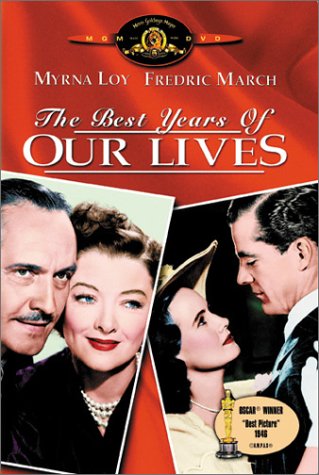
WWII over, three soldiers return to their home town of Boone City. Dana Andrews is the bomber officer unfit for any other kind of work, who foolishly married a party girl just before the war. Fredric March is the banker who is having trouble adjusting to the fact that his children have become adults in his absence. Harold Russell is the sailor who lost both his hands, and can’t bring himself to believe that his girlfriend still truly wants him.

Though clocking in at 168 minutes, this 1946 effort never drags, and does justice to all three characters, but Andrews is ultimately the real focus of the film. Russell himself really was a double amputee, and his scenes could easily have fallen into freak show elements or excessive sentimentality. Both traps are avoided. The film is powerful and moving without ever being sappy, and certainly earned its clutch of Oscars.

An epic is defined as an artistic work that celebrates the feats of a legendary figure. The film Cleopatra actually deals with many such figures, the title character being merely one of them. The truth is the film was never really about the Egyptian queen as much as it was about Rome and its relationship with Egypt.. Of course, Elizabeth Taylor's portrayal has achieved something of a classic status that is not completely deserved. Much has been made of the Richard Burton and Elizabeth Taylor pairing in this film. Certainly both delivered entertaining and even at times compelling performances. However, these efforts pale in comparison to the brilliance of Rex Harrison as Julius Caesar and Roddy McDowall as Octavian. Others like Martin Landau add considerable weight to often underused characters. It is doubtful much would have been made of this film at all, let alone Burton and Taylor's overrated contributions, without such help. Taylor in particular makes more use of her looks than any thespian grandeur here. Elaborate and frequent costume changes are designed to take full advantage of her more obvious attributes. She does appear a stark contrast to the unusual woman most notable in recent years for her staunch loyalty to Michael Jackson. The enormously grand cinematography also plays no small role in the film's ultimate success. This release is intended to pay homage to the Academy Awards taken by this film, which included statues for cinematography and visual effects.

Cleopatra runs over four hours and can be broken down into four distinct parts. Hour one is clearly a setup for things to come. Julius Caesar (Harrison) is close to a glorious victory over his rival Pompey Magnus in a Roman civil war. His quarry has fled to Egypt, where Caesar is in pursuit. Upon his arrival Pompey's head is presented by the boy king Ptolemy. Caesar inserts himself into Egypt's civil war in favor of the King's exiled sister, Cleopatra (Taylor). Upon his fathering a son with the Nile Queen, the hour ends with her safely back upon her throne.

Marisa Tomei caused quite a stir in 1993 when she walked away with the Oscar for Best Supporting Actress for her role in My Cousin Vinny. Even after watching the film again, I guess I'm still a bit amazed. Now that's not to say she doesn't do a wonderful job here. The fact is the entire cast did a splendid job. I can't say I found her performance any better than Joe Pesci as Vinny "Sack Of Potatoes" Gambini or the wonderful portrayal of the judge by Fred Gwynne. While it's not my intention to open up an old can of worms, it is that award which brings us to the re-issue DVD of My Cousin Vinny. To help celebrate this next round of Academy Awards and to line the old pockets with a little more gold dust, Fox is releasing some films that have taken those statues in the past. Unfortunately Fox did not see fit to add anything or even shine the print up in any way. This disc is identical to the 2000 release in every way. The video and audio transfers are exactly the same as is the commentary and small list of extras.

The story is nothing more than an elaborate setup for Pesci to do his thing. Billy, played by the old Karate Kid Ralph Macchio, is driving through backwoods Alabama with his buddy Stan (Whitfield). They accidentally steal a can of tuna from a small store. When the cops chase them down and cart them off to jail, they consider the threats of execution a bit harsh for shoplifting. That is, until they discover the clerk was killed shortly after they left, and now they're charged with his murder. Short on cash, they call in Billy's cousin Vinny who has finally after 6 years passed the New York Bar Exam. Vinny's in over his head, and his New York Italian attitude doesn't earn him any points with the down home justice ideology of Judge Haller. Desperately outclassed, Vinny must resort to street smarts to save the boys. The case turns on the testimony of automobile expert girlfriend Lisa (Tomei). The truth is, there are several rolling in the aisles funny moments here. Stan's seen too many prison films, so when he first meets Vinny he fears the man is there to have his way with him. In a play on words conversation that would make Abbott and Costello proud, this 20 second joke plays out for a few minutes of gut busting hilarity. Pesci's interplay with Gwynne is also classic, and while always predictable, it is nonetheless very funny.

Synopsis

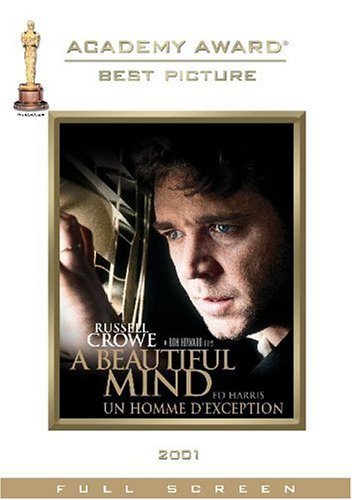
Crowe plays John Nash, schizophrenic genius. The film follows him from his grad student days at Princeton, to his revolutionary formulation of game theory, to his later breakdown, and climaxes in his reception of the Nobel Prize in 1994. Though overlong, often burdened by an excessively emphatic score by James Horner, and following all the usual conventions of Hollywood melodrama, the film also offers stunning cinematography by Roger Deakins, uncharacteristically good dialogue by Akiva Golds...an (can this be the same man who inflicted Batman and Robin and Lost In Space on us?), and excellent performances, especially on the part of Crowe, whose evocation of Nash is spooky.