Posted in: Disc Reviews by David Annandale on November 26th, 2008
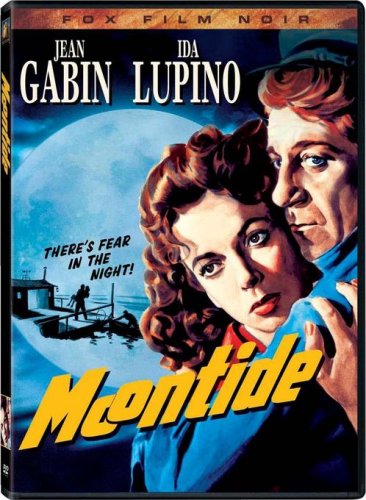
No, this isn't the Patrick Swayze vehicle. Instead, it's another golden opportunity for Richard Widmark to unleash his patented psycho act. Here he plays Jefty, playboy owner of the titular establishment. His right-hand man is Pete (Cornel Wilde), who is the serious-minded half of the partnership. Said partnership is strained when Jefty brings back the latest singer for the club, one Lily (Ida Lupino, in superb hard-boiled form). Pete thinks she's bad news, and she is, only not in the way any of the three suspect. Jefty decides he's in love with her, but she only has eyes for Pete, and he, despite misgivings, reciprocates. Jefty doesn't take rejection well. Not well at all...

The cast is terrific, bouncing cynical zingers off each other with aplomb. Wilde does well as the world-weary Pete, but Lupino and Widmark own the field, and their final confrontation is one for the books. Enormous fun for noir fans, and especially for lovers of Widmark as a terrifying nutjob.
Posted in: Disc Reviews by David Annandale on November 24th, 2008
Jean Gabin, in his American debut, plays Bobo, a French sailor who has been knocking around the States for quite some time in the company of Tiny (Thomas Mitchell). Their wandering comes to a stop when, the day after a night of drunken excess that he cannot remember, Bobo sees Anna (Ida Lupino) wading into the waves to commit suicide. He rescues her, and before long the two are living together on the bait barge where he is working, and fall in love. Dark clouds are on the horizon, however. A local man was murdered, and Tiny, resentful that his meal ticket has been taken from him, darkly hints to Anna that Bobo might be responsible, even though he doesn't know it himself.
Moontide was originally a Fritz Lang project, and as the accompanying documentary demonstrates, his influence is still felt in the finished project, notably during the climactic stalking sequence. Gabin, though a masterful presence, nonetheless seems almost as much a fish out of water as his character, and it doesn't really come as a surprise that neither he nor Hollywood wound up caring much for the other, and he would return to the greener pastures of France. Claude Rains is on hand as a wisdom-dispensing night watchman – hardly a stretch for him, but it's always a pleasure to hear his mellifluous tones. The real stretch, and indeed revelation here, is Thomas Mitchell – the man whose speciality was the cuddly, avuncular Irishman here becomes a twisted monster of childish, violent rage, giving us a real nail-biter of a denouement.
Posted in: Disc Reviews by David Annandale on November 9th, 2008
Small town Connecticut. A beloved priest is gunned down in the middle of a busy street, and the pressure is on for the police to find the killer. The new regime at city hall needs a conviction, and doesn't care too much about the niceties. When a suspect (Arthur Kennedy) is at last found, police chief Lee J. Cobb isn't entirely happy with the case, but he passes it on to DA Dana Andrews, who is under even more political pressure. At first pleased with the case, Andrews becomes uncertain the more he looks into it, and startles everyone (not least the defence attorney) by entering a plea of innocent at the beginning of the trial. Politicians and lynch mobs are soon baying at his door.
Elia Kazan's 1947 thriller is, as commentators Alain Silver and James Ursini point out, very much in the vein of the docu-noir. There is lots of procedural action going on here, and the voice-of-god narrator is frequently on hand to explain things to us. What is perhaps most interesting about the film, though, is that the case itself becomes of secondary importance to the political machinations. This isn't so much about the possible conviction of an innocent man, so much as it is about the mechanisms that make such a thing possible in the first place. Given what the future would hold for Kazan and his involvement with the HUAC hearings, the witch hunt scenes here take on additional, troubling, resonance.
Posted in: Disc Reviews by Gino Sassani on September 19th, 2007
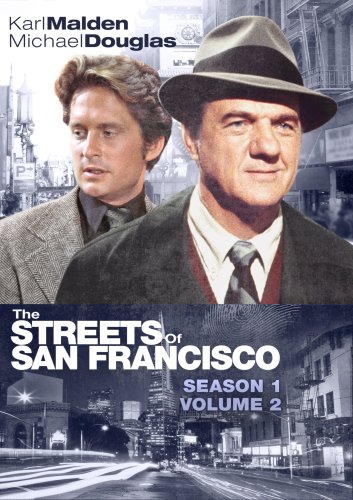
Detective “Iron” Mike Stone (Karl Malden) is a seasoned veteran of the San Francisco Police Department. He’s an old fashioned no nonsense detective whose life has taken some bitter turns of late. Much to his aggravation he gets partnered with Keller (Michael Douglas), a green detective who hasn’t lost his belief that he can make a difference. Together they just might be able to teach each other something. Before long the two develop a teacher/mentor relationship that works well enough to solve the cases and get the bad guys.
Posted in: Disc Reviews by David Annandale on August 16th, 2007
Volume 4 of Warner’s Film Noir Classic Collection series raises the bar over its wonderful predecessors by doubling the number of movies on offer: ten this time around.
Very briefly:
Posted in: Disc Reviews by David Annandale on August 1st, 2007
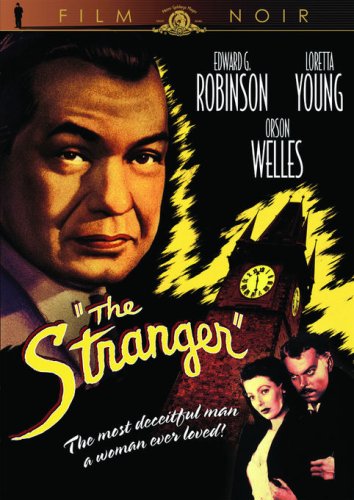
Edward G. Robinson is the war crimes investigator on the relentless hunt for the fugitive Nazi who masterminded the Final Solution. He arranges for the one man who knows his face to escape imprisonment, and follows him to a small Connecticut town. There he loses his quarry, but evidence soon points to Orson Welles, who, under the identity of Charles Rankin, is now a college professor and new husband to Loretta Young. Welles stops at nothing, including murder, to protect his secret, but little by little Young is forced to realize who her husband really is.
Welles’ third film as a director is far more conventional than Citizen Kane or The Magnificent Ambersons, and it isn’t quite up to its predecessors. Robinson is terrific as a detective who must become almost as cold-blooded as his prey, but Welles’ performance is too big: his character might as well be wearing a “NOT A NAZI WAR CRIMINAL†name tag. That said, the suspense is powerful, and the cinematography pure, gorgeous noir.
Posted in: Disc Reviews by David Annandale on July 31st, 2007
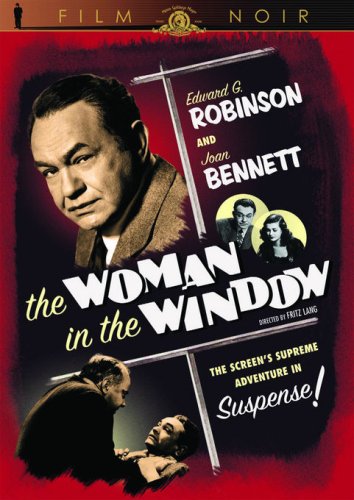
Left alone when his family leaves town to visit relatives, professor Edward G. Robinson hangs out at his club with his two cronies, one of whom is DA Raymond Massey. He is fascinated by a striking portrait of a young woman, and one night, leaving the club late and alone, he runs into the portrait’s model (Joan Bennett). Though he knows better, he accompanies her back to her apartment. A jealous lover bursts in and attacks Robinson, who murders him in self-defense. Panicked by the situation, Bennett and Robinson cover up the event, but both the authorities and a blackmailer circle closer and closer.
Robinson is magnificent as a basically decent man whose one lapse in judgment leads him to catastrophe. His eyes radiate a desperate desire to turn back the clock, and the audience squirms along with him. Bennett’s character is interesting as the unintentional femme fatale: she never has any desire to cause trouble for Robinson. Director Fritz Lang holds the audience in a lethal grasp, which never loosens in the slightest until the unfortunate cop-out ending.
Posted in: Disc Reviews by David Annandale on July 26th, 2007
Preston Foster is a bitter ex-cop who masterminds a gigantic robbery. Hiding behind a mask, he forces three cons to work with him, and makes sure they too wear masks, so only he knows everyone’s identity. The heist also involves framing an innocent flower delivery-man (Joe Rolfe), who unfortunately has done his own stint in jail, and so is put through the brutal wringer by the police. Freed but understandably ticked off, Payne sets off on the trail of the men who framed him. Tracking one to Tijuana, Payne adopts his identity and arrives at the resort where Foster and others have gathered. Foster’s master plan is complicated by the arrival of his daughter, who develops an interest in Payne.My summary likely makes the film sound hellishly convoluted. Though it does indeed have a plethora of twists and turns, the storytelling remains crystal-clear throughout, and it is astonishing how many issues and incidents it packs into 99 minutes. The near torture that Payne suffers at the hands of the police is wince-inducing, and Neville Brand and a young Lee Van Cleef are memorably sleazy cons. Marvellous fun.
Audio
Posted in: Disc Reviews by David Annandale on July 22nd, 2007
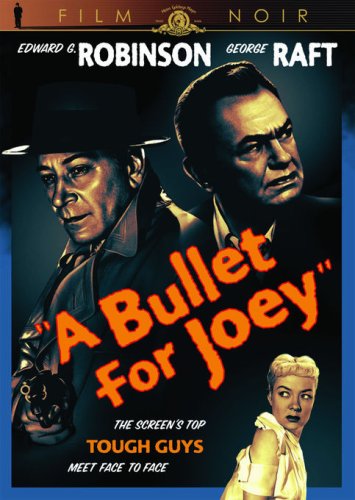
George Dolenz is the Montreal scientist working on an atomic something-or-other. Foreign spies (could they be.... Communists??!!) hire exiled American gangster George Raft to get Dolenz and his secret into their clutches. His secret weapon for this project is the seductive power of Audrey Totter. Working for the angels is RCMP detective Edward G. Robinson. The expected race against time ensues.The Montreal setting is unusual, as is the idea of Robinson as a Mountie, so that's fun. Rraft is very much the aging gangster by this point, but still rasps it out with the best, and the film is really about his redemption. Not only is Dolenz' research a pure McGuffin, so is he, his character nothing more than the means to have Robinson and Raft play cat and mouse. This isn't in the top rank of films noir, but it is still a lesson in how to pack a lot of entertainment into an economical 87 minutes.
Audio
Posted in: Disc Reviews by Archive Authors on September 8th, 2006
Synopsis
Jean Peters is Vicki, a top New York model, who is found murdered in the opening scene. Burnt-out cop Richard Boone comes pounding back from his vacation, rabid to take over the case. He is convinced her press agent Elliott Reid is the guilty party, and the screws are put to Reid. In flashback, we see Vicki’s rise to fame, and the effects it has on the people around her, including her sister Jeanne Crain, who might harbour feelings for Reid.