ABC Studios

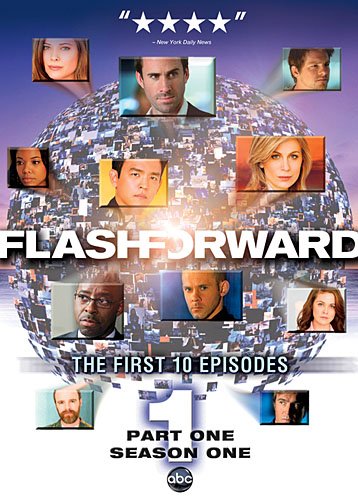
For all intents and purposes, it appears just like any routine Fall day throughout the world. People are busying themselves about their normal concerns. Suddenly everyone on the planet blacks out for exactly 2 minutes and 17 seconds. Just think about that part for a moment. Every human being collapses at the same moment. Think about all of the things that people are doing at any given moment. Driving cars. Flying planes. Performing delicate surgical procedures, or just walking across the street. Pretty much any activity is going to become dangerous as the blackouts occur. 20 million people worldwide die in the event.

Now, what makes this show different from your typical high-casualty disaster series is not the global body count. It's what happens to the folks who don't get killed that sets this series up. During that 2 minutes and 17 seconds, every person has something called a flash forward. It's a vision, if you will. They get a glimpse of the future from their own perspective. Investigation soon reveals that everyone's future vision was the exact same moment in time: April 29th, 2010 at 10:00 PM. Each person experiences that moment in their lives. Further investigation confirms that the visions are accurate and persons that were, or will be as the case may be, together at that time share the same confirmable experiences. Who or what caused these flash forwards, and why? Mark Benford's flash forward finds him looking at an investigation board containing crucial clues to the flash forward investigation. It puts him square in the lead to take the case, because now he's got a sneak peek at what key pieces of evidence will be found. He also has a line on pivotal players in the case. The feds set up a program called MOSAIC, which encourages people to share their flash forwards online. It allows people to make some sense of their visions, while giving the government a working database of flash forwards. Further clues uncover the fact that there were two people who were not effected by the blackouts and were up and around while the rest of the world was knocked out. The images are fuzzy, but their identities are of vital priority.

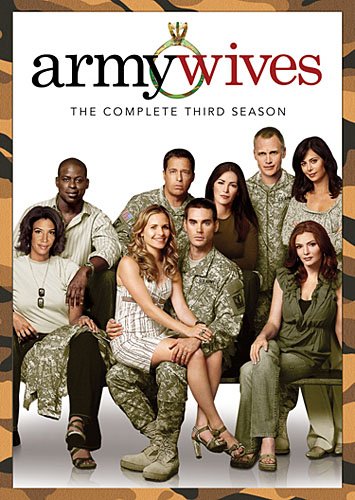
What if you took the Desperate Housewives and placed them on an Army base? If that thought has been keeping you awake at night, sleep tight, gentle reader. You can find out simply by picking up a copy of Army Wives on DVD. I’m not exaggerating about this at all. Army Wives has the very same soap opera plotting and tone as the ABC hit does. You gotta really be into that sort of thing if you have any hope at all of keeping up with the antics of these four friends, or of having any desire to. I’m afraid I have to confess that I am not in that group and so found the 19 episodes to be very trying indeed.

The series follows the trials and tribulations of four wives of enlisted Army personnel. They call themselves “The Tribe”. Claudia Joy (Delaney) is the unofficial head of the group. The other women are Denise Sherwood (Bell), Pamela Moran (Brannaugh), and Roxy LaBlanc (Pressman). The show often focuses on their rather emotional situations and makes a center for itself in the idea that these women are there for each other. In this second season the Army life aspect of the show was intentionally held back somewhat, and the stories dealt more intimately with the wives. Likely a good move for the target audience that would have very little interest in the military aspects of the setting.

For five years now, Lost has taken us through mystery after mystery. I’m beginning to think that the show’s title is more a mission statement for where they want to take the viewers. Each time Abrams appears to answer a question and move on, closer examination proves that nothing has actually been revealed. The series has become the poster child for misdirection and script sleight of hand. When I examine the 13 episodes from season 4, I’m left with the inescapable, pun intended, feeling that nothing significant has really happened here at all. But at the same time it’s the most significant event of the series. All the while I find myself compelled to watch episode after episode. Abrams would have been a great drug dealer if that producing gig hadn’t worked out for him. The show started out with enough directions and plot devices to put our brains into overload. From that point on, he’s been cutting each dose a little bit so that we find ourselves drawn to each hour fix chasing the high we got in the beginning. Of course, we already know we’re never going to feel that way again, but we’ll keep coming back for more as long as he continues to make us believe that we will. I’m not saying the show has declined at all. I’m saying that it doesn’t really ever go anywhere. Abrams continues to introduce major plot lines such as the hatch, the others, and now the freighter, with promises of linking it all together into some kind of epiphany, and for a short time he actually does. But hindsight leaves us scratching our heads, because once we come down we can’t really explain what the high was all about. And so, we’ll continue to tune in or buy the DVD’s to see where it’s all headed, even if we already know that we’re doomed to remain lost no matter how it all ends.

I will attempt to relate to you some of the important elements from this season without revealing much in the way of spoilers.

When we left J.D., Turk, and the rest of the staff of Sacred Heart Hospital at the end of their seventh season, there were good reasons to believe we had seen the last of Scrubs:

1) The show had suffered the lowest ratings in its history.

The idea of a British television series being adapted for American screens is really nothing new. Lately a lot has been written about the phenomenon as if it’s some recent trendy invasion of English telly. We’ve been watching British hits since at least the 1970’s. In those days it was the sit-com that got the most attention from across the pond. Till Death Do Us Part and Steptoe And Son became All In The Family and Sanford And Son, respectively. Both shows became even bigger hits here in the states and are remembered by more folks on both continents than the originals today. The latest hit from England was The Office. Unfortunately, Life On Mars was never destined to join those Anglo/American success stories.

Detective Sam Tyler (O’Mara) is hot in pursuit of a serial killer who has abducted his partner and lover. When he steps out of his SUV he is struck by an oncoming car. On his ipod David Bowie is singing his obscure track, Life On Mars. When Tyler wakes up he can still hear the song in the background. But this time it’s coming from an 8-track deck in a mint vintage 1970’s car. Turns out there’s a reason the car is so cherry. It’s actually brand spankin’ new, and Tyler is no longer in 2008. It’s 1973. Strangely, he still has his identity here. A police officer identifies the car as his. At his 125th Precinct, he’s recognized as the transfer from Hyde. His disorientation earns him a few introductory sucker punches to the gut by his new boss Lt. Gene Hunt (Keitel) who doesn’t like people coming into his station house barking out orders. It turns out he’s joined a special forces kind of team that also includes Detective Ray Carling (Imperioli) who feels passed over by Tyler. He was in line to be the new second in command. Detective Chris Skelton (Murphy) is a green detective who warms us fastest to Tyler. Also working more or less for the team is policewoman Annie Norris (Mol) better known in the squad as “No Nuts Norris”, because she acts more like a man, believing that a woman can be a detective. It seems whatever powers that have planted Tyler here have thought of everything. He has an apartment with a free spirit hippie neighbor named Windy (Ferrin), appropriately named as she kind of breezes her way in and out of his life. Eventually Tyler decides to temporarily accept his situation, hoping to figure out why he’s here and how he can get back home.

“There’s always a story. You just have to find it.”

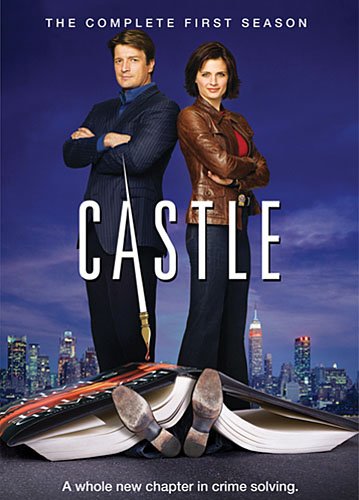
What happens when you’re a popular murder mystery writer and someone starts to use your stories and ideas to kill people in the real world? At first you become the prime suspect, particularly if you’re found to be completely self centered and annoyingly arrogant. That’s where a pretty good alibi might come in handy. Is playing poker with the Mayor and the Chief of Police good enough? So, you’re no longer a suspect. Now what do you do? You sign on as a consultant for the special crimes squad of the police department, and you help catch the real killer. Only instead of looking for him O.J. style on golf courses and steak houses, you team up with the cops and nab that good for nothing plagiarist. The problem with that is you might just find that you like it. Even worse, it might end up curing that writer’s block you got after killing off your lead character and proverbial golden goose, much to the chagrin of your publisher who also happens to be your ex-wife. Follow any of that? If you did, you now have the set up for one of the better premiere series from last season, Castle.

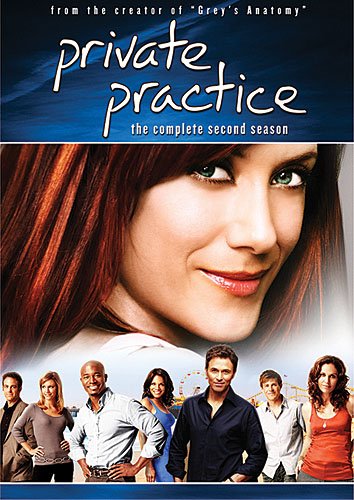
Shonda Rhimes had a big hit on her hands with Grey’s Anatomy, so after five years she did what comes naturally in her situation. You spin the success off in the hope that the fans just can’t get enough in just one night. At first it appeared to me she had chosen the wrong character to put out on her own. I mean, I never considered Kate Walsh as Addison to be one of the show’s more compelling characters. The show was presented as what the business calls an imbedded episode on Grey’s. What that means is that the situation is set up during one of the original show’s episodes. In this case a two parter called The Other Side Of Life. The idea is that you want to be sure that your existing show’s fans at least watch the pilot in the hope that they will consider it a part of their beloved series. I got to watch that episode when I was called upon to review the fifth season of Grey’s. I was new to the whole universe, so I believe I was able to approach the spin-off more objectively. To tell the truth, I didn’t like it at all. And so I considered Private Practice to be doomed even before I saw the first stand alone episode. That wasn’t boding well when I received this truncated season one set to review recently. True, I had warmed up to Grey’s by then, but I was still a bit put off by the new show. I watched it anyway.

Dr. Addison Montgomery (Walsh) is looking for a change. She’s feeling a little burned out in Seattle at Grace Memorial Hospital, where she carries a ton of baggage. She heads down to L.A. to visit a friend who has his own clinic in the sunny city. The clinic practices something called co-op medicine. Specialists from various fields come together to treat their patients in a more holistic manner. Dr. Naomi Bennett (McDonald), specializing in fertility, and her ex-husband Dr. Sam Bennett (Diggs) run the place. Dr. Violet Turner (Brennemen) is the clinic’s shrink. I guess you could call her a shrinking violet. Dr. Cooper Freedman (Adelstein) is the pediatrician. Dr. Peter Wilder (Daley) is the herbal medicine specialist. He’s also got a rep for sleeping with all of the other women and even running some out of the clinic. Dr. Charlotte King (Strickland) is a troubled soul who can’t sleep and has an apparent addiction to pills. Finally there is Dell (Lowell) the office assistant and “pretty boy”. Because of the strike there are only 9 episodes spread over 3 discs.

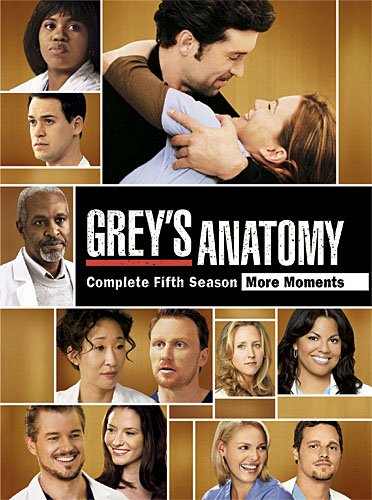
Grey’s Anatomy follows the life and tribulations of a group of interns at Seattle Grace Hospital. There’s certainly nothing original about the premise, except that the story is told by one of the more unlikely characters, Dr. Meredith Grey (Pompeo). As a lead she’s really not all that remarkable, but the show doesn’t put everything on her narrow shoulders. The series is populated by a solid supporting cast, giving it all a far more ensemble feel despite the title. James Pickens, Jr. is perhaps the most extraordinary actor in the show. He’s underused, but steals every scene he’s in. His Dr. Webber is a powerfully serious voice in an otherwise often frivolous world. Chandra Wilson as the intern teacher Dr. Baily is another standout performance, offering tremendous range. Her character, often referred to as a Nazi by her interns, is capable of outstanding empathy just when it’s required. Too many of the characters serve as eye candy, but I can’t say that any of them don’t have some good acting chops.

With all of that said, season 5 is not the way to have your first Grey’s Anatomy experience. I strongly recommend you begin at the start if you are not sure about this show. While I was able to gain some appreciation for the show, I had to work harder for it by starting so late. If you already like the show, nothing I could say would keep you from continuing your collection here. For those of you up on what’s going on, here’s the kind of stories you can expect in season 5: The biggest impact story thread has to be Izzie’s brain tumor. It also leads to a return by Supernatural’s Jeffrey Dean Morgan’s Denny character. Yeah, I know he died, but he learned a thing or two from his stint on Supernatural. Actually it’s Izzie’s tumor that allows us this return visit. Not really a spoiler here, as the show did a huge amount of promo spots talking about Denny’s return and Izzie’s illness. Another huge milestone is the addition of Romes phenomenal actor Kevin McKidd as new Dr. Owen Hunt. It’s a great character, possibly one of the best in the series. He’s a military doctor, so adds quite a bit of a new dynamic to the series. He’s going to be challenging the methods and techniques of the hospital. Controversy reaches Grace when a death row inmate wishes to donate his organs. The problem is that the execution will render his organs unusable. He’ll have to be killed at the hospital by someone on the staff. Mark tries to perform a face transplant. Unfortunately, it is still the romantic entanglements that drive this series.

When we left J.D., Turk, and the rest of the staff of Sacred Heart Hospital at the end of their seventh season, there were good reasons to believe we had seen the last of Scrubs:

1)    The show had suffered the lowest ratings in its history.