Posted in: Disc Reviews by David Annandale on August 20th, 2011
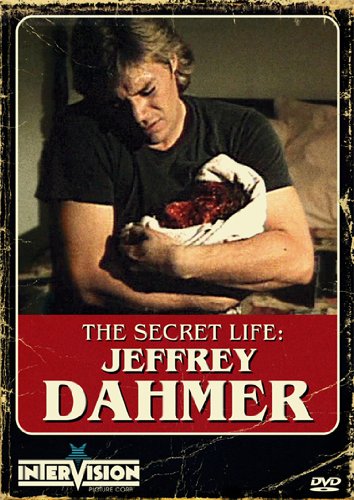
The grindhouses may be long gone, but their memory lingers on, thanks to releases like this one, which, being released in 1993, is from the twilight years of theatrical exploitation, and thus more accurately from the second, virtual life the grindhouse aesthetic found on home video. This is the life of Jeffrey Dahmer, narrated in retrospect by the serial killer (screenwriter Carl Crew). Dahmer recounts his obsessions and growing need to kill, and a fair bit of the film’s running time consists of Dahmer hooking up with young men and murdering them.

The film has, then, a very episodic structure, with very little clear narrative progression. Text on the screen fills us in as to dates and locations, and that is about it. The insights into the mind of a serial killer are of the most obvious kind. There is a bit of restraint present when it comes to the killings, in that there could have been a lot more gore, but they are certainly unpleasant, and I don’t necessarily mean that it a good way. No, they shouldn’t be fun, but the endless parade of murders becomes the film’s reason for being, and the lack of any connection between the audience and the victims is a problem. Given how recent the killings were when the film was made and released, it’s not too surprising that the victims’ families were a little upset. So this is an exploitation film in the purest sense, and interesting for that reason, and rather off-putting for the same reason.
Posted in: Disc Reviews by David Annandale on August 13th, 2011
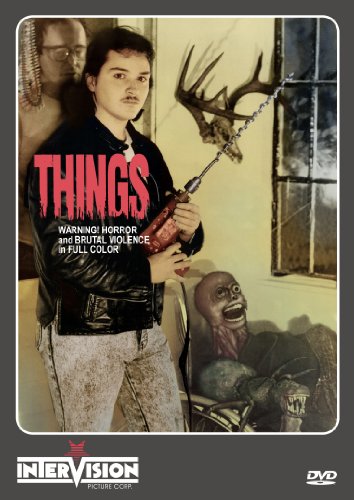
This is normally where I would summarize the plot of the film. I could tell you that this is the story of three friends in a woodland cabin who must fight monsters spawned by the wife of one of them. But that would be misleading. What the story is really about is two, sometimes three, guys sitting around and drinking beer. Later they switch to whiskey. And then there’s this one dude who puts a cockroach in the other dude’s sandwich...
As I’m hoping you will have realized from the above, this is no ordinary movie. In his excellent They Came From Within: A History of Canadian Horror Cinema, Caelum Vatnsdal argues that Things holds the title of Worst Canadian Horror Film Ever Made, and it’s really, really hard to believe that there could possibly be another contender. Badfilm connoisseurs, this release is manna from Heaven. This is a film that would embarrass Ed Wood. Tommy Wiseau would weep with despair over the future of cinema. Doris Wishman would beg to take over the camera and sound duties, just so such a thing could never happen again. I could go on.
Posted in: Disc Reviews by David Annandale on June 6th, 2011
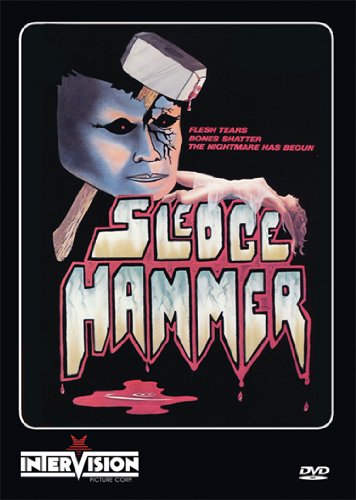
A mother locks her child in a closet so she can have an uninterrupted tryst with her lover. But the couple is rudely interrupted after all, as they are bludgeoned to death. Ten years later, a group of friends arrive at the deserted house to party down. After doing so for a fair bit of running time, they then fall prey to a hulking masked maniac, who not only has the titular hammer, but also has all sorts of supernatural powers.
This is, according to the box, “the first shot-on-tape slasher movie for the home video market.” This is a warning as much as anything else: don't be expecting John Carpenter or Dario Argento behind the camera. That the film is amateurish goes without saying, but I'll say it anyway. Viewers should be prepared, then, for lots of padding (a slow-motion scene of a couple walking that goes on for minutes), bland camera set-ups, ropey script (let's have a complete food fight sequence!) and whipped-up-in-the-kitchen gore. On the upside, once the supernatural kicks in, logic goes out the window, and all sorts of strange things start happening with no explanation whatsoever, resulting in a rather charming sort of dime store surrealism. This isn't a good film, but it is a likable one.
Posted in: Disc Reviews by David Annandale on March 3rd, 2011
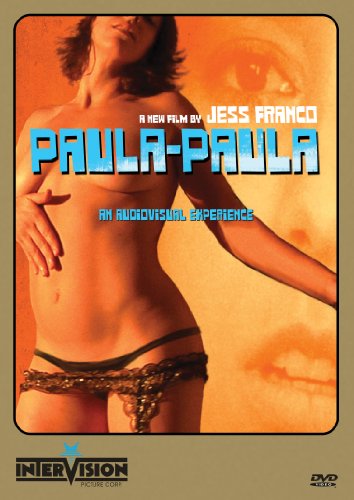
Paula (Carmen Montes), a dancer at a strip club, is arrested for the murder of Paula (Paula Davis), a fellow dancer. The arresting officer (Lina Romay) questions the near-catatonic Paula, and the rest of the film is a slow-motion, flashback of the dead Paula dancing, the two women making love, and the murder. Once the slow-mo begins, there is no further dialogue, except for a cryptic fable that Paula tells to the camera.
Jess Franco's latest effort is his most minimalist, and in some ways most personal, film to date. There is no set to speak of: the film was obviously shot in Franco and Romay's apartment, which doubles for both the home of the Paulas and, perhaps, the police station. I say “perhaps” because the notion of any definable space is a very tenuous one in this film. The only set dressing consists of a few aluminum screens, which play a role in the zero-budgeted surrealist effects. As has been pointed out elsewhere, there is nothing groundbreaking about the effects the Franco conjures here. The kaleidoscopic images, frequently involving Davis fusing and splitting from her double, would not have been out of place in the 1960s, and aren't going to break the back of even the most basic computer editing suite today.
Posted in: Disc Reviews by David Annandale on February 24th, 2011
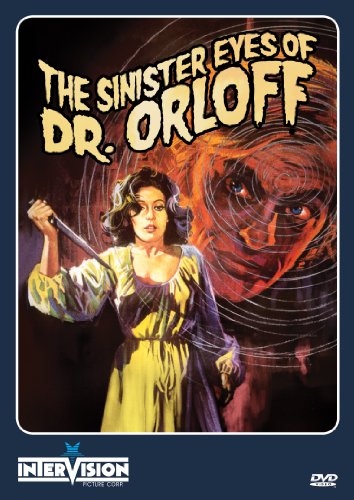
Haunted my recurring nightmares, crippled Melissa (Mona Proust), the heiress to a huge fortune, falls under the care of Dr. Orloff (William Berger). Unforunately, Orloff doesn't have Melissa's best interests at heart. Still enraged over having failed to win the lover of Melissa's mother, Orloff enacts his revenge by using his hypnotic powers to transform Melissa into a killing machine. One by one, the distinctly unsavory members of Melissa's family fall under the knife.
A 1973 effort by Jess Franco, the god-emperor of Eurosleaze, this is a pretty handsome film. Franco doesn't abuse the zoom lens quite as much as elsewhere, and he makes excellent use of his Gothic settings, especially in a remarkably strong stalk-and-kill sequence late in the film. There are quite a number of truly beautiful scenes, showing what Franco is capable of when he's interested. Meanwhile, the violence and nudity are very restrained by Franco standards, but the characters are just as depraved and twisted as ever (that's a good thing). The score (by Franco), meanwhile, varies from the disturbingly effective (abstract soundscapes punching home the nightmare Melissa is trapped in) to the WTF laughable (a folk song so dire it will live forever). This isn't Franco's best work, but it has a lot going for it, and fans are strongly advised to check it out, with two strong caveats in mind. One is that the subtitles are horrendous. The grammar is all over the map, vocabulary is mind-boggling (one character is “condoned as a pedophile”), and the subs go missing altogether for the entire sequence that explains Orloff's motivation! That's helpful! The other problem is the picture quality, about which more below.