Studio

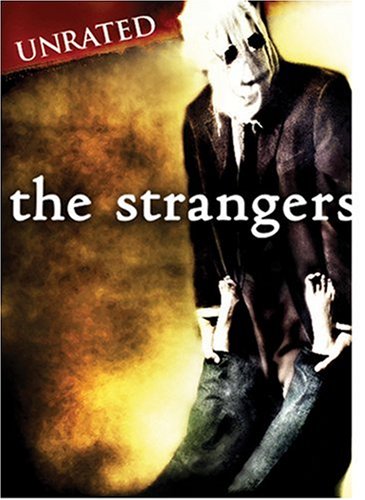
The very first thing you need to know is that this film has absolutely nothing in common with the 1980 cult classic except for the name. Everyone involved has admitted the fact, so, if you’re looking for an update on an old memory, you really are in for a disappointment. The truth is, even if you aren’t expecting the old story you’re in for a huge letdown. Everything about this film screams mundane, from the killer to the story to the acting. The problem is that the film has no niche. It’s definitely not a slasher or splatter film. You won’t find enough blood to give a fruit fly a transfusion. It’s not a horror film per se. The killer isn’t a supernatural being of any kind. He’s just your run of the mill escaped stalker. The film isn’t very suspenseful, and there isn’t any real mystery here. So, what in the heck is this movie? A mess, that’s what it is.


After a violent bank robbery, a trio of criminals descend upon the beach house retreat of a nun and her students. The bad guys take the women hostage, and make themselves at home, tormenting, raping and abusing to their hearts’ content, pushing their victims ever further over the edge.

At the level of plot, not a lot goes on here. The villains are ensconced at the beach house within the first ten minutes, and then story does little more than go through variations of torment until the inevitable retaliation. Nonetheless, there is a fair bit of interest here. The assaults, though very unpleasant and extremely nasty in their content, are, however, filmed with a certain restraint, with the camera concentrating on the faces of attackers and victims rather than on their bodies. Ray Lovelock’s gang leader is a deceptively pleasant pretty boy, and his character arc consistently plays out against expectations. And then there’s the climax, which turns up again almost beat for beat at the end of Quentin Tarantino’s Death Proof.

With the ember finally burning out too soon, the 4400 has come to rest as a complete series release from Paramount this month on DVD. Unfortunately there really is very little new to add to the set. Except for a single extra disc, all of the discs included here are identical to the individual set releases. To make matters a little worse, the discs are in a large book format with overlapped discs. Not only is the bottom disc hard to get out without removing the top disc, but it slips under the top disc’s hub, making it all the easier to damage. If you already have the set, spending the extra cash makes little sense to me here. The packaging isn’t anything to do back flips over; in fact I much prefer the slip case design of the individual seasons. Add to the mix that you’re likely going to see a price drop on the sets which will make them an even better deal if you haven’t already gotten them. Unfortunately none of the rental chains will have this set, so you will have to content yourself with missing those features, at least until they appear out of a huge ball of light someday. You never know.


When Miami Vice finally left the air in 1989, Don Johnson was a very hot commodity indeed. He decided to try and parlay that success into a film career that never really brought him the breakout roles and fortunes he envisioned. Not too proud to return to his roots, he signed a deal with CBS that gave him pretty much a blank check to star in whatever kind of television series he wanted. It was a rare deal that forced CBS to air, or at least pay for, whatever Johnson came up with. Many of us were expecting pretty much a Miami Vice clone when it was announced he would once again be playing a cop. It was all sounding pretty familiar. Bridges was a super cool cop, this time from San Francisco with a rather tattered personal life. He was going to be teamed up with a partner, who wasn’t going to be a cop, but an investigator whose cases would cross paths with Bridges’. It was rumored that the partner might not survive the pilot, thereby killing the buddy cop routine that was beginning to sound very much like Johnson’s previous show. It appeared doomed to failure, and even CBS was at first looking to back out of the deal. They tried to buy Johnson off, but he was by now very excited about the new show and insisted he get his episodes. But how could this new show not be compared to the old? How could anyone have the kind of chemistry with Johnson that John Diehl had? On March 29, 1996 everyone held their collective breaths as Nash Bridges appeared on the scene. Cheech Marin ended up with tons more chemistry with Johnson, helped by the fact the two had been friends for over 25 years previous. In short order Nash Bridges had arrived, and television audiences everywhere found themselves saying: “Miami Who?”


You would think that after 8 years, CSI would begin to show a little wear and tear around the edges. When you factor in the dilution of the two other versions of the franchise with a combined 11 years of episodes, you end up with nearly 300 total episodes of CSI. Certainly even the best of shows with the most imaginative writers can’t stay fresh for that long. Still, somehow, the gang at CSI continues to crank out compelling drama, rarely repeating itself. Every year I go into a new season of CSI expecting to find it starting to show its age a bit, and every year I continue to be amazed. The fact is that season 7 just might be the best year of CSI to date. Each episode begins with The Who asking the question: Who are you? I have to say that after seven years the answer is, still a fan.


Two inept thieves and their prostitute girlfriend decide to hit the big time, crime-wise, by kidnapping the little girl (clearly and disturbingly dubbed by an adult) of an automobile tycoon. When their contact manages to get himself run over by a car while crossing the street, they have to hightail it out of town until the heat cools (or something like that – don't press me too hard for clear logic in this film). So off they head to what I suppose is the South American jungle, by my goodness there seem to be a lot of pine trees in the jungle. There they hole up at the home of a friend-of-a-friend, a middle-aged man who has the role Jess Franco would be playing if this were a Jess Franco film. He has a beautiful wife, and one of the thieves takes it in his head to rape her. So their host now has vengeance on his mind, and there are cannibals (you were wondering when I was going to get to them, weren't you?) lurking in the woods.

This is the sort of movie that makes life worth living. Sure, you could throw away your 90 minutes on something that is actually good, but in that case you would miss the following: cannibalism sequences where, once the victim has been killed, the carcass being gutted is very, very obviously that of a pig; the most pasty-skinned, European looking cannibals on record, complete with gruesome 70s hairstyles (I swear Sonny Bono is among their number); characters trudging through the brush, ignoring the road visible not three yards from them; and of course, the truck that cruises by in the background of the cannibal village, supposedly deep in the heart of darkness, but clearly a stone's throw from a highway and a beach (look for this wonderful moment at the 92 minute mark). And I haven't even said a word about the hilariously chipper, gratingly hummable Euro soundtrack.

Hagar Shipley (Ellen Burstyn) is in her twilight years, and her son (Dylan Baker) is trying to get her into a home. Fiercely independent, possessed of a will that has been both a strength and a weakness (making life miserable for herself and all around her), Hagar fights back. She also looks back on her life, and in the flashbacks (where the young Hagar is played by Christine Horne) we see the tragic relationships that have brought us to the fractious family we see now.

I’m not sure if one can split the world into Stone Angel people and Diviners people, but when it comes to Margaret Laurence novels, I’ve always been of the latter, finding Hagar too hard a character to warm up to. Nor did I find it much easier in the film, though Burstyn does turn in a compelling performance. She is working, unfortunately, with a script heavy on the voice-over (which does Laurence’s prose no favours – much of it simply sounds awkward transposed off the page in this way). There’s a bit too much of the portentous, and a bit too much of a cast enunciating in an overly precise way for my liking.

I think it’s safe to say that HBO changed the face of television with the arrival of The Sopranos back in 1999. The show raised the bar for television across the board. Before we knew it, many of the cable networks were scrambling to offer up the next show that would generate the same praise from critics and audiences alike. To this day that show has generated more subscribers to a pay network than any other. So, we really can’t blame the network’s rival Showtime for trying to have their own Sopranos. And that’s exactly what The Brotherhood is.


My personal bias may be leaning through but I fully enjoy the Transformers. More than meets the eye, robots in disguise, Starscream for President! Well, he can’t be any worse than the two turkeys we got running right now. Anyhow, after the Generation 1 cartoon series came and gone, we got a slew of off-shoots and attempts at re-creating the cartoon hit that was the Transformers. In the middle of 2005, a series produced by a partnership between Hasbro and Takara came to the fold. It was a sequel to Transformers: Armada & Transformers: Energon. It was called Transformers: Cybertron. Fifty two episodes later, the series ended. Was it any good or did it just get sucked into a black hole?

The destruction of Unicron takes place in the Transformers universe and has resulted in the formation of a massive blackhole. This blackhole engulfs planets and Cybertron is the next inhabited planet in its path. Optimus Prime and his crew of Autobots decide to evacuate to Earth as they consider how to keep Cybertron safe. Landmine is the first Autobot to make it to Earth as he finds his way through a portal.

Very much in the tradition of such other overheated Mexican emotional dramas as Amores Perros and Y Tu Mamá También, Drama/Mex gives us two intertwining plot strands, each dealing with relationships as tormented as they are sexual. In one, upper-class Fernanda’s bad boy ex-lover Chino resurfaces, takes her violently, but she doesn’t exactly hate it, and this has, as one might imagine, some awkward consequences for her relationship with current boyfriend Gonzalo. Meanwhile, a middle-aged man, guilt-ridden over what he has done to his daughter (take a guess), is contemplating suicide when he runs into a precocious teenage hustler. In other words, basically enough material to give Sarah Palin a fatal coronary.

Audio