Studio

On its surface, Coastlines is a modestly produced film that was written and directed by Victor Nunez (Ulee's Gold), telling the story about a guy who was just released from prison for dealing drugs, but bites the prison bullet for the favor of a friend. He comes out and is looking for the financial windfall promised him, but also tries to get back in touch with his roots. On a deeper level, Coastlines, well, doesn't go that much deeper I guess.

The ex-con in question is Sonny (Timothy Olyphant, Deadwood), who quickly reunites with the criminal element of his past in Eddie and Fred Vance (played by Josh Lucas, Hulk, and William Forsythe, The Rock, respectively), who also give him the opportunity to get back into business for himself. He finds a bit of a conflict in this, because he is close friends with Dave (Josh Brolin, Into the Blue), who happens to be a Sheriff in town. Sonny also has feelings for Dave's wife Ann (Sarah Wynter, Species II).

I don't mean for this to be a joke, but when Paul Mooney recently said that he was glad that Hispanics got their (and I'm paraphrasing here) "African-American wake up call" in the midst of the illegal immigration debate of 2006, the problem wasn't whether or not the Hispanics were being treated fairly or not. The problem was that this discussion has been going on in some manner or fashion for almost four decades now without a large-scale epiphany that required action. However back in 1968, there was some action (which led to the coordinated efforts of students to walk out of their classes in Los Angeles High schools as a protest of the conditions there), and Walkout helps to tell the tale.

In this film that was directed by Edward James Olmos (Miami Vice) and produced by Moctesuma Esparza (who was one of the organizers of the protest), the film details the activities of Paula Crisostomo (Alexa Vega, Spy Kids) who is a pretty good achiever in school who hangs out with friends like Bobby (Efren Ramirez, Napoleon Dynamite). She has an influential teacher in Sal Castro (Michael Pena, World Trade Center) who helps inspire her to take action. When latino kids are punished for speaking Spanish in class, they are disciplined for it and the manner it's done is offensive. When latino kids are forbidden to use bathrooms during lunch because the inside of school is locked, they're forced to urinate outside in the courtyard. And even as she sees these things, she's dissuaded by her father Panfilo (Yancey Arias, Live Free or Die Hard). However in an era where Bobby Kennedy and Martin Luther King are touchstones for action, Paula thinks the same thing should be done, lawfully, to protest the conditions.

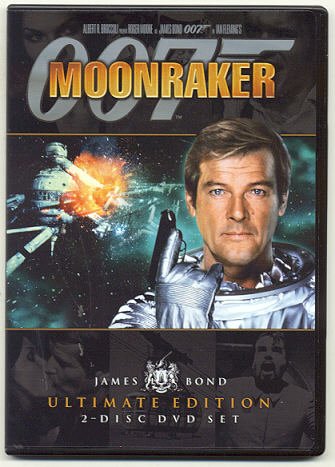
As a relatively topical fan of the James Bond franchise (though not so topical that I'd buy all of the films on DVD), I had a cursory knowledge of the actors who played Bond and the times that they had been cast. Little did I know however that by the time Roger Moore had signed onto the role in Live and Let Die that this was the third attempt to bring him aboard, and that maybe producers Harry Saltzman and Albert Broccoli were hoping that the third attempt brought the proverbial charm. Moore had been approached for the role as early as the Dr. No days, but was in the midst of doing The Saint television show, and Connery was chosen. Connery left and the opportunity came to Moore again, however he was not available and George Lazenby came on to do On Her Majesty's Secret Service. He left, Connery did one more and then finally, Moore was available to take the reigns.

And he came aboard to a Bond film that is probably his best and one of the best Bond films in the franchise. In Live and Let Die, James has to go to America (and subsequently, the Caribbean) to research the deaths of several British agents. He goes into Harlem to try and find out the whereabouts and criminal motivations of a mysterious boss named Mr. Big, and eventually makes his way to a fictional island called San Monique, where a United Nations delegate named Kananga (Yaphet Kotto, Homicide: Life on the Street) is waiting for his arrival, and using the results from a tarot card reader named Solitaire (a very young Jane Seymour, Dr. Quinn, Medicine Woman), he plans for the demise of Bond.

Posted in Disc Reviews by Joshua Noyes

Two guys who were used to drinking beer for fun suddenly become fierce competitors in the “Beer Drinking Olympics” in Germany. Todd Wolfhouse (Erik Stolhanske) and his brother Jan (Paul Soter) are from a German-American family but have never visited the Old Country until their grandfather dies and they fly to Germany to scatter his ashes. Todd and Jan arrive during the annual Oktoberfest celebration and accidentally discover a secret competition, "Beerfest," in which the world's leading beer guzzlers determine who ca... handle the most brew during several days of heated drinking games. Todd and Jan are no lightweights when it comes to downing brew and offer to compete, but the German branch of the family, the Von Wolfhausens, hesitate at their desire to enter the contest and inform them no mere Americans stand a chance winning the Beerfest honors. Determined to prove Americans can drink beer with the best of them, Todd and Jan bring their drinking buddies to Germany to defend America;s honor and prove to their German relatives that they too can drink as well as anybody.

In the continuing need for media mogul Russell Simmons to produce an HBO show and put the word "Def" in front of it, musician Mos Def approached Simmons with the opportunity to present a weekly show for urban spoken word artists to show off their wares. And surprisingly, not only has the show survived, but has thrived into a fourth season that has come out on DVD, with ten episodes in all, split over two discs.

The layout of the show is pretty straightforward, as Mos Def introduces the beginning and end of the shows and the acts in between. The latter is mostly done on a voiceover, however he does introduce the acts on stage from time to time. The show usually ends with a more recognizable name at the end, along with some words of wisdom by Simmons himself. And while most of the acts appear to be people who spend their time on anti-Israel message boards and in Starbucks whipping up vente lattes, the familiar names are fairly eclectic. Among the people you'll recognize are Ani Defranco, Kanye West, Ruby Dee and KRS One.

A small town is being terrorized by a gang of thugs who use extortion and violence to buy up all the businesses. The only person who tries to stand up to the gang is the sheriff, but then he meets a violent end. His son (Kevin Sorbo), who, one gathers from vague references, has military training, shucks his apathy, dons his father’s badge, and sets out to clean up the town.

The cover art is hilariously misleading, in that it shows what appears to be Sorbo leading his posse for the titular payback. But those folks behind him are actually the villains. Whatever. At any rate, this follow-up to the remake starring The Rock is mildly entertaining, but no more. Sorbo has little of Dwayne Johnson’s screen presence or sense of humour, and the storyline is utterly by-the-numbers. So routine is it, that the lack of action set-pieces really makes itself felt. On the upside, AJ Buckley is so completely unpleasant as the primary villain that he kicks the film to a semblance of life.

If you've seen any of Terry Gilliam's other films, you can probably guess that this one is pretty bizarre. Based on the novel of the same name by Mitch Cullen, Tideland is an eccentric, grotesque and imaginative tale of a child's resilience.

I'm going to say right off the top, I wanted to like Tideland, and for two reasons. One, Gilliam has made some incredible films in his career, from Monty Python and the Holy Grail to Twelve Monkeys and Fear and Loathing in Las Vegas. Other than the flawed Brothers Grimm, it's been seven years since a Gilliam-helmed film was released. So I wanted to like this one. I really did. Unfortunately, while I admired the creativity in Tideland, and was at times intrigued and repulsed, I ultimately found the film extremely unsatisfying.

There's definitely no doubt in my mind that the Superman films, particularly the first two, will always be remembered as excellent pieces of film not only because they introduced the world to the late, great Christopher Reeve but also because they're simply great films. When word first came around that Superman director Richard Donner had filmed an ENTIRE version of the 2nd film only to have it scrapped at the last second, the interest of fans immediately piqued. What was so risqué about the Donner cut that made Warner Brothers basically shelve the film for some 20+ years? Well thanks to renewed interest in the Superman stories via Superman Returns, Warner has finally decided to let fans see for themselves what Donner's visionary ideas were all about by showing us his cut of Superman II.

A bit of back-story for those of you interested. Originally hired to film both Superman and Superman II back-to-back, Donner was soon fired by the Salkinds over a stupid dispute they were having with actual Superman II director Richard Lester over some films he shot for them. Instead of actually working out an agreement between all parties, the Salkinds decided to fire Donner and bring in Lester to film the story. The end result is a film that's good in its own right but seemingly was missing a big part that made the original so great. Laughs seemed force, the romance seemed out of place, and the climatic battles seemed kind of dull in retrospect.

The return of the historical epic hit Hollywood hard in 2005/2006. Troy, Kingdom of Heaven, King Arthur and the two Colin Farrell vehicles, The New World and Alexander, all hit theaters pretty close to each other... and all flopped. The basic complaint was the same about all these films; they were too long, the pace was too slow and they were hard to follow. As much as these huge pictures cost, the studios quickly looked to the DVD cash cow to try to recoup some of the production co...ts. The first to hit was King Arthur, which was released in the theatrical PG-13 format (full screen only), and the director's preferred extended unrated cut (presented in widescreen). Antione Fuqua's fighting with the studio over the final cut of the film was widely known, so it was nice to get to see the director's original, more violent, vision. Audiences were pleased too, as this new cut was widely regarded as superior to the original.

A very similar thing happened with Ridley Scott's Kingdom of Heaven. The theatrical release was regarded as average, as it was on DVD. When Scott re-cut the film and released it as a four-disc special edition, however, consumers and critics went wild, declaring this new extended cut far superior to the original theatrical version. In fact, this new vision was named the DVD of the year last year by many critics. Scott has since said that this new cut represented more of his original vision for the story, but that the studio feared that it was far too long for theater audiences. (Remember, these are the same audiences who had complained that the film was too long to begin with, proving that filmmakers' would be best served creating their films on their own terms, without the input of the general public.)

The Prestige surprised me like no other film has since The Usual Suspects. The entire film plays out like a good bit of misdirection, slight of hand and illusion, with some pseudo-science thrown in for good measure.

Robert Angier (Hugh Jackman, X-Men) and Alfred Borden (Christian Bale, Batman Begins) are rival magicians, both inspiring to be the best the world has ever seen. They began as partners, working together as assistants to an established magician, but when a trick goes terribly wrong, their relationship is forever changed. When each man sets out on his own, their rivalry grows as fast as their individual careers, with each of them suspicious of the other, and always striving to learn the other's secrets. The question is, who will win in the end, and what will be the cost of victory?