Studio

Synopsis

Will Patton is the owner of the Black Pelican, a road house where he will tolerate no nonsense, and particularly no drug dealing. This doesn’t please local slimeball Jake Busey, and when Patton refuses to sell, Busey (through dirty fighting, of course) beats Patton to within an inch of his life. Patton’s nephew is Johnathon Schaech, undercover DEA agent, and he arrives in the boondocks to take over the bar and set things straight.

Synopsis

Starting in 1937, Peter Lorre starred in a series of eight films about the Japanese detective. In this set are the first, second, fourth and fifth in the franchise. WWII put an end, of course to a series with a Japanese hero played by a German-speaking actor. Whatever one might think of racist stereotypes (and it is best, in viewing such films, to try not to think of them at all), these are enormously entertaining programmers.

Synopsis

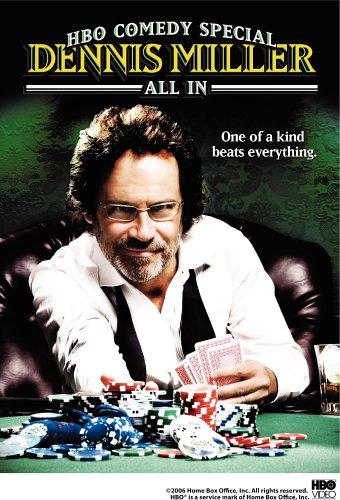
For the longest time, Dennis Miller was known as the guy who could subreference unlike any other comedian, with tactical precision and timing long before anyone had heard of the Gilmore Girls. While some of the material may have been a bit redundant, he certainly put a spin to it unlike any other.

Synopsis

Geena Davis is the Vice-President who was chosen as running mate by the Republican President because she would balance out the ticket (she’s an Independent) and help him with the female voters. When he is felled by a stroke, the possibility that she might become President fills the powers that be with dread, and her resignation is demanded so that the hard-right Speaker of the House (Donald Sutherland) can step in instead. Davis refuses, and the series follows her struggles as the first woma... to be President of the US.

Synopsis

In 1908, an inbred hillbilly (played by, who else, Newhart’s William Sanderson) had decapitated a family member, and is brought to a spooky asylum. A maniacal intern realizes that the face-like deformity on the man’s back is actually intelligent, and his obsession with cracking the mystery unleashes all sorts of horrors.

Not being a big fan of Black Hawk Down, I can't really tell you how many releases of the feature this makes from Sony. I know it's a title, which has seen at least two prior offerings. There is nothing new here to recommend the extended cut over the previous three-disc monster edition; however, it may be the way to go if you've yet to add this Ridley Scott war film to your collection. I'll be the first to admit that Scott does some of his finest work as director in this gritty combat picture; but his style is ...lso the reason why I feel Black Hawk Down fails to deliver, and pack the same emotional punch of a Saving Private Ryan or We Were Soldiers. Most of the young stars involved in this film, and in the grisly fighting, stay masked under a thick layer of dirt and grime throughout the 152-minute running time. While that contributes largely to the chaotic and confusing authenticity during battle scenes, it hinders the audience from getting attached to any of the characters.

I know character development needn't be sacrificed on the altar of battle realism; yet that's exactly what happens in Black Hawk Down. It's the kind of film, which needs Mark Bowden's book on which it was based to fill in the gaps left by the dramatization. The contemporary war efforts mentioned above are proof this sacrifice is an unnecessary one. Still, as disorienting as the film is, you can tell Scott is a seasoned director, who knows his way around a camera. And who knows? Perhaps his style creates some of the most realistic battle scenes known to film. And if this is all he wanted to accomplish, then Scott's film succeeds. But I can't imagine a director actively indifferent towards how his audience feels about the characters. And if this assumption rings true in Scott's case, then he can't look back on Black Hawk Down pleased with how it all turned out.

The truth may never come out as to why HBO cancelled Carnivale after the show's second season. They claim that it was a combination of decreased ratings and rising production costs equaling $2 million an episode. What doesn't make sense, however, is that the network also admits that they received as many as 50,000 emails in a single weekend following the cancellation announcement. The facts also show that they followed up this show that was “too expensive to be profitable” with Rome, a show that has been widely recognized as the most expensive television series ever produced.

Several months after the show was cancelled, HBO offered the show's producers the chance to shoot a 2-hour movie to finish up the story which was left hanging. They refused, as they claim that the entire story was planned out for six complete seasons, so a two-hour finale would not even come close to finishing up the story. The show runners then announced plans to finish up the story in comic book form, but nothing has been seen of this plan as of yet.

Synopsis

Tyler Perry once again dons multiple costumes to incarnate several characters, most prominently Madea, the no-nonsense but mischievous matriarch of a very fractious family. She is ordered by the court to take in a runaway as a foster child, and that project of reclamation joins that of helping out her nieces. They have a mother from hell. One sister is struggling to learn how to love again, while the other is being forced into marriage with the hideously abusive Blair Underwood.

Stan Lee and Jack Kirby have created some of the most iconic superheroes of our time. Marvel Comics brought us such great names like Spiderman, X-Men, Iron Man, and of course, The Incredible Hulk. Now, television has had a jaded history with comic superheroes as series material. A bad Spiderman and Captain America set of episodes are good examples. The Incredible Hulk is one of the exceptions. Why? Mostly because the series was less about super heroics and more about human drama. The Fugitive style set-up gives the writers the entire country to play with. Instead of superhuman villains, Banner is really his own worst villain. The very human McGee, who haunts Banner, is an aggressive writer out to expose The Hulk. This grounds the entire show in reality as much as is possible. Enter Kenneth Johnson, also known for the Alien Nation series, and you know that quality isn’t going to be compromised. Insurance is obtained through the extremely likable Bill Bixby as the Dr. Jekyll to Lou Ferrigno’s Mr. Hyde as manifested by The Hulk. His ability to pump up the action is rivaled by his surprising ability to convey emotion with his eyes. This Hulk appropriately doesn’t speak.

The series started with two tele-films, both included in this set. While the stories and cinematography seriously date this material, the themes resonate on into the 21st Century. Far better than the 200 million dollar film, this series is quite a catch on DVD. The episode 747 features Brandon Cruz who starred with Bixby as Eddie in The Courtship Of Eddie’s Father, another fond memory from my childhood. A nitpick Hulk fans still rage about is the name change from Bruce, in the comics, to David. As a homage to these fans, we are shown his middle name is Bruce. Johnson has addressed these “problems,” and I understand his wanting to create a very different character here. Comics and television are very different media. We would have been quickly bored watching a grunting, wise-cracking crime fighter after too long.

Synopsis

In 1985, Steven Spielberg backed this TV anthology series. It took its name from the very first SF magazine (which was briefly revived to coincide with the TV show), but have very little in common with that mag. It was almost purely fantasy-oriented, and its real model was the likes of The Twilight Zone (which itself was revived for TV the same year). Spielberg himself directed the pilot, and plenty of other big names singed on as well. So Harvey Keitel stars in an episode directed by...Clint Eastwood, for instance. Other directors of note include Joe Dante and Martin Scorsese.