Paramount

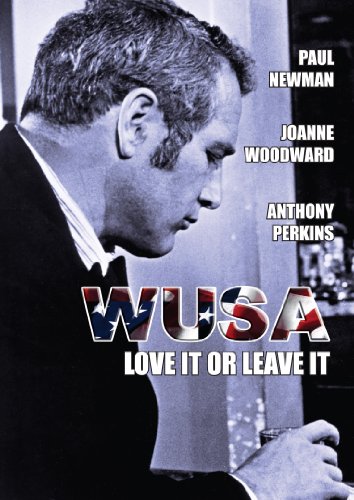
Cynical, alcoholic ex-musician Paul Newman arrives in New Orleans with barely a cent to his name. Following a tip from scam-artist preacher Laurence Harvey, Newman lands a job as a DJ for WUSA, an extreme right wing/white power propaganda radio station. Newman has no patience for his employers' message, but he's happy to take the money and drink himself into an apathetic stupor. Acting as the unwelcome voice of his conscience are the scarred hard-luck woman he has taken up with (Joanne Woodward) and the twitchy, anxious liberal (Anthony Perkins) who is about to discover that the survey work he has been doing in the city's ghetto is, in fact, in the service of Newman's dark masters.

Very much a reflection of, and commentary on, its turbulent times (1970), this is a film that is messy in its construction but ferocious in its convictions. The plot meanders more than is good for it, the script takes some rather pretentious flights into poetry, and Newman's character changes too little to be very interesting, with the result that the final scene lacks the kick that it clearly wants to have. Perkins, however, is magnificent in his painful, tortured sincerity, and the climax – a WUSA rally that becomes a hellish riot – is a knockout.

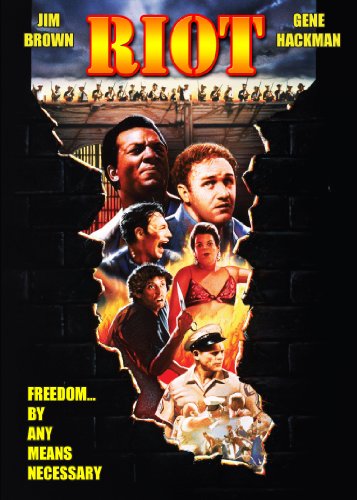
While the warden is away, the inmates of the isolation block break out out of their cells and seize a group of guards and administrators as hostages. Caught, by pure chance, in the wrong place at the wrong time, is Jim Brown, whose sentence is short enough that he wouldn't choose to become involved. However, before he knows it, he is, along with Gene Hackman, leading the riot. The ruckus is, in fact, a cover for an escape attempt: the inmates are digging a tunnel while, as a stalling tactic, Hackman presents a list of grievances to the authorities. But even as Brown becomes more and more enmeshed in the running of the operation, Hackman becomes more and more engaged with the protest, forgetting that it is supposed to be a charade.

Nice, gritty jailhouse piece, shot entirely at the Arizona State Penitentiary, and featuring not only plenty of real inmates, but the actual warden playing the warden of fictional prison. As one would expect of a film starring both Brown and Hackman, the characters are a tough lot, and the action is brutal. Characterizations are strong, with even the minor figures clearly defined. The only false note is sounded by the clumsy pseudo-Johnny Cash prison song that thuds against the ears several times over the course of the film. Otherwise, this is a bone-crunching good time, and is another example (along with Rosemary's Baby) of how different films merely produced by William Castle were from the films he actually directed himself.

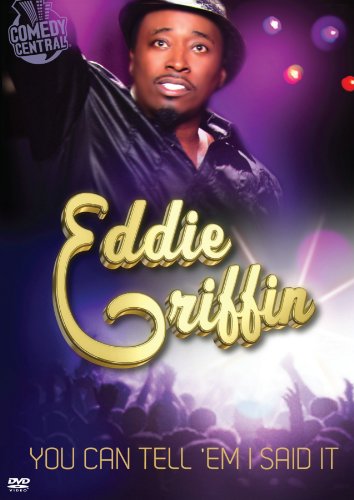
One of the most underappreciated films in my opinion in the last ten years is Undercover Brother. Stop looking at me strangely! Seriously, it was a very funny movie. It was because of one man and I don’t mean Neil Patrick Harris (though he was hilarious). That man would be Eddie Griffin. Eddie Griffin has starred in almost fifty different films but he also makes a respectable living doing stand up comedy. One such concert is new to dvd and we get the chance to talk about it my brother.

Live from Oakland, California, we have the star of Malcolm & Eddie, Deuce Bigelow, and Meteor Man (okay, some more than others), the one, the only Eddie Griffin. *waits for crowd applause*. Let’s find out what he has to talk about, shall we? The first thing out of Eddie Griffin’s mouth? Well, it would appear he wants to have his way with Michelle Obama, the president’s first lady.

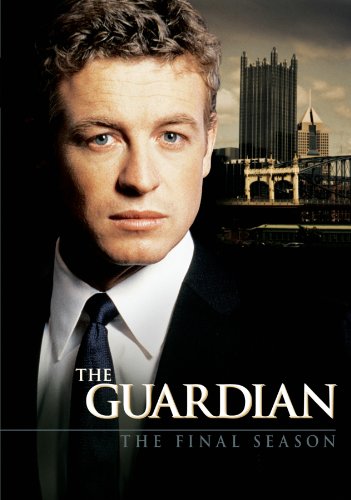
Simon Baker is riding high these days. Last year his new series, The Mentalist, was the highest ranked new drama of the year. That accomplishment got the show paired with CSI in that enviable Thursday night time slot. I’m amazed when I hear folks tell me how the actor appeared to come out of nowhere. A few film roles and he’s Mr. Television. Well, count me in with the small group that isn’t so surprised and saw him coming as far away as 2001 with a sleeper CBS series called The Guardian.

Baker played Nick Fallin, a talented young lawyer who just got busted for cocaine. Nick won’t see the inside of prison, however. His father, Burton (Coleman) is the senior partner at one of Pittsburgh’s most influential corporate law firms. Instead of jail, Nick is given five years probation and ordered to serve 1500 hours of community service. His court ordered assignment is Legal Services Of Pittsburgh, formally Children’s Legal Services. He’s placed under the charge of Alvin Masterson (Rosenberg), an idealist who set up the law clinic originally to speak for children who have no one else to do so. He’s resentful of Nick’s pampered lifestyle and at first wants to make the gig hard enough on him that he might ask to be assigned elsewhere. Eventually they warm to each other as Nick becomes more vested in the job than he thought he would be. Much of the show’s conflict is derived from Nick juggling these two worlds. He still has a duty as a shark attorney for his father’s firm, yet must find time to help these indigents and children that have come to the clinic for help.

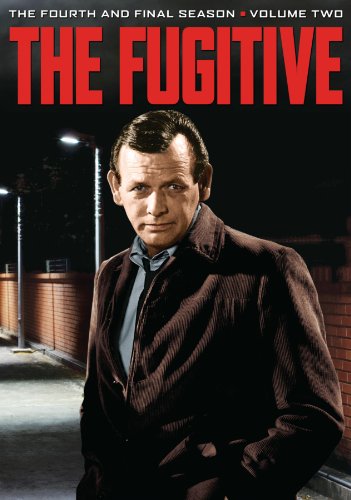
“The man is Richard Kimble, and, not surprisingly, the man is tired. Tired of looking over his shoulder, the ready lie of the buses and freight trains. Richard Kimble is tired of running…”

The elusive “one-armed man” is one of the best-known television icons of all time. The plight of Dr. Richard Kimball has been the subject of numerous imitations and even a feature film staring Harrison Ford as Kimball and Tommy Lee Jones as his pursuer. Tim Daly left the ranks of comedy to fill the shoes of Kimball in a very short-lived revival series. While some of these efforts managed to capture the essence of The Fugitive, none can truly compare to the real thing.

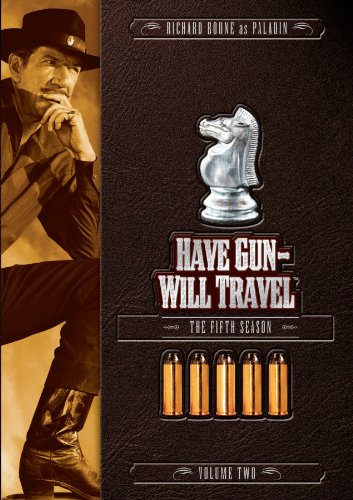
“’Have gun, will travel’ reads the card of a man. A knight without armor in a savage land…”

Those words ended every episode of Have Gun Will Travel, sung by Johnny Western in a time that such words could be sung without irony. Outside of Richard Boone’s black-clad, craggy Rhett Butler gone-to-seed gunfighter, that song was all I could really recall about this venerable Western from television’s golden age. Would it, like so many revisited shows from my youth, ultimately disappoint? Or would it hold up fifty years after it was originally broadcast, viewed as it would be by the far more jaded, cynical man I’ve grown into?

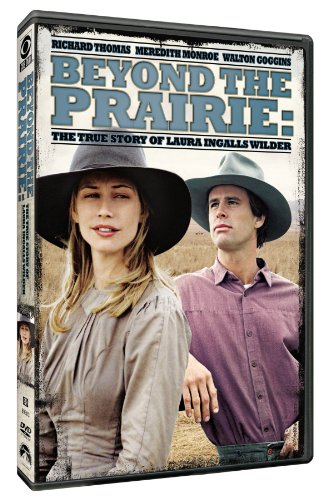
I have never watched Little House on the Prairie, so I admit to having no frame of reference when I approached this set, which actually contains two separate made for television movies: Beyond The Prairie: The True Story of Laura Ingalls Wilder, and Beyond The Prairie: The True Story of Laura Ingalls Wilder Continues. Now, since I’ve used up a large portion of my review space just mentioning the titles of these two films, I will try to be as succinct as possible. Suffice to say that, while I was aware of the show, all I really know about the lady is that she grew up on the prairies in a small house of some kind, and that she is beloved by a certain portion of the population. Also, if memory serves, she may or may not have been friends with NFL Hall of Famer Merlin Olsen.

The two films chronicle the life of Ingalls Wilder, from her days as a teenager growing into womanhood on the 19th century Dakota frontier to her eventual marriage to Almanzo Wilder and their emigration to Missouri. The films are quite authentic in their depiction of the harsh realities of frontier life, particularly the Dakota winters, and show death and loss as a constant danger, even when the focus is on wholesome family drama. Blizzards, hail storms, starvation, and disease are among the constant threats that loom over these characters, and the films do a pretty good job making these things real.

Paranormal Activity 2 is both a prequel and a sequel to the first film, Paranormal Activity. Paranormal Activity followed Katie Featherston and her boyfriend Micah Sloat. For some unknown reason, a demon was terrorizing the couple. By the end of the film (October 8, 2006), Katie was possessed by the demon. She kills Micah and then mysteriously disappears. When Paranormal Activity first came out, I had no interest in seeing it. My friends talked about the film, and said it was ‘jumpy’ especially the scene when Katie is pulled out of bed. However, I always thought the film was about aliens, not demons! Flash-forward to late October 2010; I decided to watch a marathon of horror films to celebrate the Halloween holiday. Paranormal Activity was on the list of must-see films, partly because I wanted to be able to say that I had seen it! It was simple, realistic, but left me wanting more.

Two weeks later, Paranormal Activity 2 was released into theaters on Halloween. I am going to keep this review spoiler-free. I want you (our readers) to experience Paranormal Activity 2 spoiler-free, because if you know what is coming, the film will be less interesting. This horror film is not like the majority of others released on DVD in recent years. There are no trails of blood, decapitated heads on spikes, or people sewn together to make a human centipede. Paranormal Activity 2 relies on its shock value to get people into the theaters and to buy the DVD. Believe me when I say, Paranormal Activity 2 has more than enough shock value to satisfy anyone looking for an adrenaline rush.

Paul Rudd is desperate for a promotion. Moving from the drudgery of the sixth floor to the executive seventh will, he feels, cement his financial status and convince his girlfriend (Stephanie Szostak) to marry him. Opportunity knocks, but also has a price: he must find an idiot to bring to boss Bruce Greenwood’s dinner party, where these unfortunates will be ridiculed. Rudd doesn’t like the idea, but then he (literally) runs into Steve Carrell, a man of such transcendent idiocy that Rudd can’t resist the siren call he represents. But before they can make it to the dinner, Carrell’s well-meaning stupidity threatens to completely derail Rudd’s life.

This is a remake of 1998’s The Dinner Game (Le diner des cons). Francis Veber’s farce clocked in at 80 minutes. Jay Roach’s bloated retread is half again as long, and only half as funny. The Paul Rudd character in the original, played by Thierry Lhermitte, was a superior, cruel SOB who deserved to have his life taken apart. Furthermore, the characters never actually make it to the dinner of the title. The remake, of course, finds it necessary to stick literally to its title, and gives us the dinner, thus inviting us to engage in precisely the form of cruel laughter it pretends to condemn. It also tries to make Rudd sympathetic, and having his character be a nice guy runs counter to the very premise of the film. End result: a film that tries much too hard to be funny, laboriously working every last predictable gag until those horses are fit for nothing more than the glue factory. There are some amusing moments, but this is, by and large, a gigantic, time-consuming waste of the talent involved.

"If you're going to face the fires of Hell, you need to be prepared."

And that's exactly what someone should have told the folks behind the horror thriller Case 39. This has been one of those cursed films from the very beginning. The film appears to have begun production way back in 2006. It appears the film was done, at least in one form, by 2007, but there were reshoots and pick-ups for so long that it's going to be hard to imagine what the film might have originally been intended to look like. A fire on the set destroyed quite a bit of the set; fortunately no one was badly injured. The movie took so long to make that the life changes are quite noticeable in the characters. When the film did finally reach the box office on October 1st in 2010, the numbers were very disappointing. The film only took in $13 million with a budget that is listed at $26 million but was likely considerably more than that when you put it all together.