Paramount

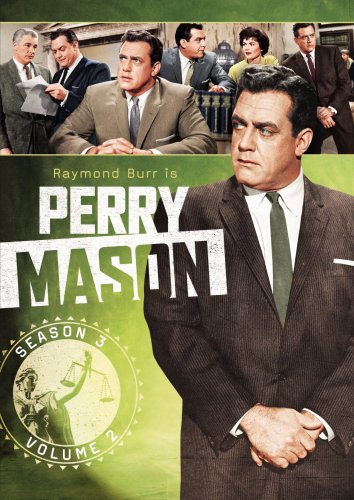
Erle Stanley Gardner wrote crime fiction, and while many of his 100 or so works are unknown to most of us, he created a character that has become as identified with criminal lawyers as any other in fiction. It was in these crime novels that Perry Mason first faced a courtroom. He developed a style where he would investigate these terrible crimes his clients were on trial for. He would find the real killer, and in what has become a Hollywood cliché, reveal his findings in a crucial moment during the trial. While we may not remember the novels, we all remember the man in the persona of Raymond Burr. Burr had a commanding presence on our screens and enjoyed a well deserved 11 year run as the clever lawyer. What makes this run so amazing is that the show followed pretty much the same pattern the entire time. We always know what’s going to happen, but we wait eagerly for that gotcha moment when Perry faces the witness on the stand. We know when he’s got the guy squarely in his sights, and we can’t sit still waiting for him to pull the trigger. OK, so maybe that’s a little over the top, but so was Perry Mason. From the moment you heard that distinctive theme, the stage was set. To say that Perry Mason defined the lawyer show for decades would be an understatement. Folks like Matlock and shows like The Practice are strikingly similar to Perry Mason. If you haven’t checked this show out, this is your chance. See where it all began.

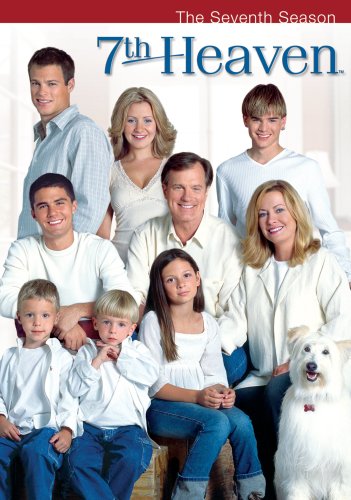
One of the hardest parts of reviewing DVD’s for this site is getting dropped in to the middle of a show I neither followed nor cared to follow and being told to judge fairly and objectively. Getting one’s bearings can be the toughest part of such a task, but this I will attempt to do with Seventh Heaven – The Seventh Season. As if playing catch-up with only one season to go on isn’t enough, the series hurls character after character at the unsuspecting viewer at a furious pace. It’s the type of show one should really get in on at the ground floor to get the most out of it, and I am keeping this in mind as I say most of these characters are profoundly obnoxious.


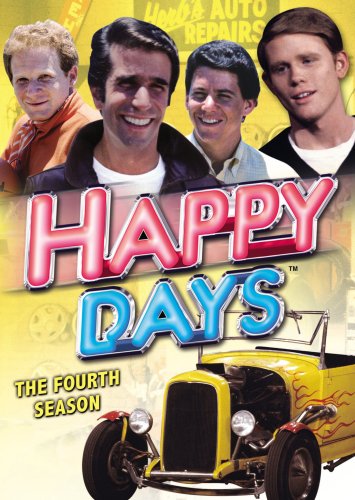
What kind of woman could possibly make the oh-so-tough Arthur Fonzarelli fall hopelessly in love? We find out in the three-part opener of Happy Days – The Complete Fourth Season in one of the great names of the small screen, Pinky Tuscadero. Pinky (a stunning Roz Kelly) shows spunk as a female version of Fonzy (Henry Winkler in his career-making role), and it’s surprising she wasn’t used more in the series run. Perhaps CBS felt fettering Fonzy with a regular gal-pal took away from his enigmatic qualities, which he would eventually lose anyway in the show’s eleven seasons.


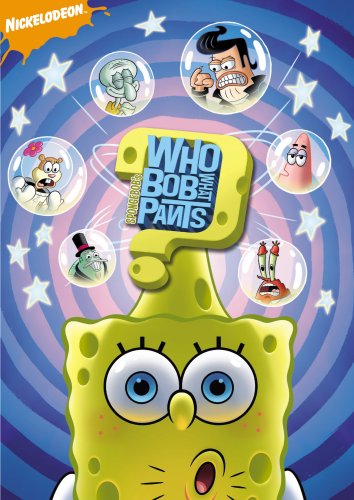
Another cheery bit of nonsense in this release, consisting of a half-dozen SpongeBob cartoons. The disc gets its title from the first episode, “What Ever Happened to SpongeBob?” In this story, our hero, rejected by all his friends for his consistent screw-ups winds up, after an amnesia-inducing bonk on the head, becoming the hero of a crime-ridden metropolis. Weird and funny stuff, and the same is true for the other pieces. That said, there's even less of a connection than usual between the pieces, not even a hint of a thematic commonality that has usually been the case with these releases. What we have are six apparently randomly chosen episodes, adding up to 78 minutes of silliness.


Audio

It’s the final roll call for everyone’s favorite Marine. Gomer Pyle began life as a one of the down home residents of Mayberry, where Andy Griffith held court as the sheriff and Don Knotts blundered his way to fame and fortune. It’s no small task indeed to find a way to shine as a minor character who wasn’t even there from the beginning; he replaced Floyd after the second year. But shine he did. Much of the character’s charm and success has to be given to Jim Nabors. The shy naive Gomer worked as an auto mechanic in Mayberry, but for his own series he appeared in one of the most unlikely of places, the U.S. Marine Corps. There Nabors found the perfect comedic partner in Frank Sutton, who played his superior Sgt. Vince Carter. The chemistry and remarkable timing these two brought to the Andy Griffith spin-off made it an instant hit. Critics at the time were very skeptical of the move, and most of the predictions called for a swift end to Gomer Pyle U.S.M.C. But before you can say “surprise, surprise, surprise”, the series became as popular, if not more so, than the parent series, at least for a time. In syndication the show was always a hit.


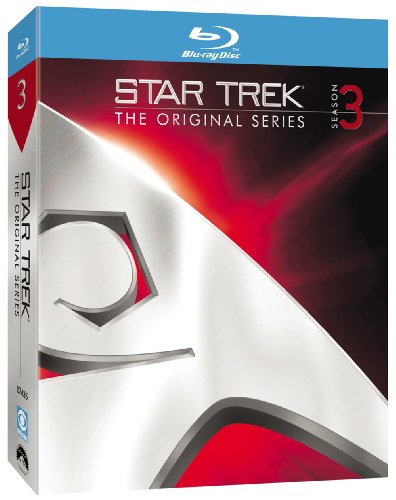
"Space...The Final Frontier. These are the voyages of the Starship Enterprise. Its 5-year mission: to explore strange new worlds, to seek out new life and new civilizations, to boldly go where no man has gone before!"

Paramount was bold indeed when they undertook the remaster project of the original series. Not only did they clean up the prints, but they took the decidedly risky option of redoing most of the f/x shots from the original prints. We all know just how cheesy the old work looked when compared to today’s computer abilities. You could see a box around spacecraft that allowed the obvious cutout to maneuver through a cardboard star field. There were often mix-ups where phaser shots would be used for photon torpedo commands and the opposite. The planets often utilized matte paintings that look somewhat ridiculous now. We forgave these flaws with a complete understanding of the limitations the crew had at the time. While Star Trek showed us computers that were remarkably similar to the PC’s we use today, down to the floppy drives of our own yesteryear, the use of computers to create f/x was still many years away. So Paramount decided to “fix” these “flaws” and make much of the show look like it might have had it been produced today. It was a serious risk because of the extreme possessiveness fans have for these kinds of shows. Just ask George Lucas how much fans like their sci-fi tinkered with. The project encompassed a few years, and the results are quite attractive. But how do they stand up for the fans?

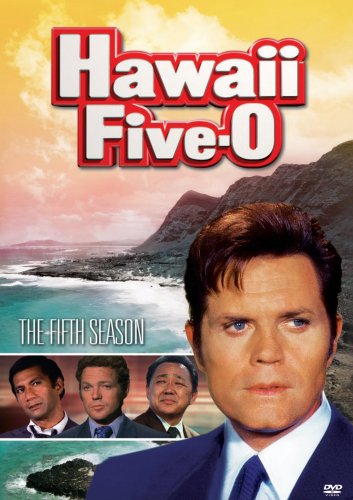
Working in Hawaii on one of televisions hottest shows in the 1970’s was too good a job for most of the cast and crew of Hawaii Five-0. This meant that there was very little cast turnover for the series in general, and none going into the fourth year. Jack Lord saw his star rise considerably, and while he began to see some serious pay hikes, even he wasn’t about to kill the golden goose. With this kind of consistency, fans were never disappointed or turned off by drastic changes in the cast or formula. With this cop show it was all about tropical locations and formula. The fifth season was no exception to the rule.


After just 5 years on the air, the unlikely duo of Oscar and Felix take their final victory lap in this the 5th and final season of The Odd Couple. Even though the show lasted a mere half decade, it remained in our collective consciousness for over 40 years and shows no sign of slowing now. Both of the stars, particularly Klugman, went on to do many huge things later, but they never did escape these small sit-com roles. You might as well come along for the ride and enjoy that last victory lap with them.


If you weren’t around in the 1970’s, you might be surprised to find out that film superstar Michael Douglas was once in a television cop show. It was this influential crime drama that allowed Douglas to show off the acting chops that would earn him a spot in the Hollywood elite for decades to come. It didn’t hurt any that he was able to team up with Karl Malden, an undervalued talent in his own right. The two of them literally bring the show to life.  The series was run by Quinn Martin, himself no stranger to groundbreaking television. Martin was the same talent who created the crime drama with The Untouchables. His uncanny ability to come up with a clever premise was responsible for such milestones in television history as The Invaders and The Fugitive. Later he would continue to shape the look of television with shows like Tales Of The Unexpected, The FBI, and Most Wanted. He was the Steven Bochco of his time. Long before NYPD Blue, Martin was able to make San Francisco, the city itself, an iatrical character for Malden and Douglas to interact with. The show had tremendous style, even if the cases were purely formula. Certainly you won’t find anything in these plots you haven’t seen a hundred times before. What you will find is a unique presentation that somehow makes even the most mundane story appear quite compelling. If you enjoy the Bochco and Wolf dramas or fall in with such classics as Starsky and Hutch or Miami Vice, you owe a tremendous debt to Martin for setting the table for all of those fantastic meals that would follow.


James West (Conrad) was a Union Army vet. He’s the kind of act first think about it later kind of guy. Artemus Gordon (Ross) was a typical con man. He could create the most convincing disguises and was also a master of sleight of hand. Together they worked for the Secret Service in the days of the western frontier. The two of them were the prototype of the future spy. They would use incredible inventions and Bond-like gadgets, along with their own skills at trickery, to investigate major Federal crimes, often plots against the United States. Think of James Bond in the Wild West.