Shout Factory

“On TV it looks so real.”

When I first walked out from the theater after watching Nightcrawler, the thing that stuck with me the most is how great Jake Gyllenhaal was in this film.  This isn’t the first performance he’s caught my attention in; he’s an actor who pretty much any time I see him in a film, he’s one of the most memorable aspects of the film.  Whether it’s his moody performance in Donnie Darko, his offbeat portrayal as a cop in Prisoners, or even him taking a risk as a gay cowboy in Brokeback Mountain, every role he does something more with the character where we can believe he is this person we see on the screen.  Nightcrawler is no exception, and in this role Gyllenhaal is simply terrifying as Lou Bloom.

"Ever since I was a young boy, I played the silver ball, From Soho down to Brighton, I must have played them all, But I ain't seen nothin' like him, In any amusement hall, That deaf, dumb and blind kid, Sure plays a mean pinball." 

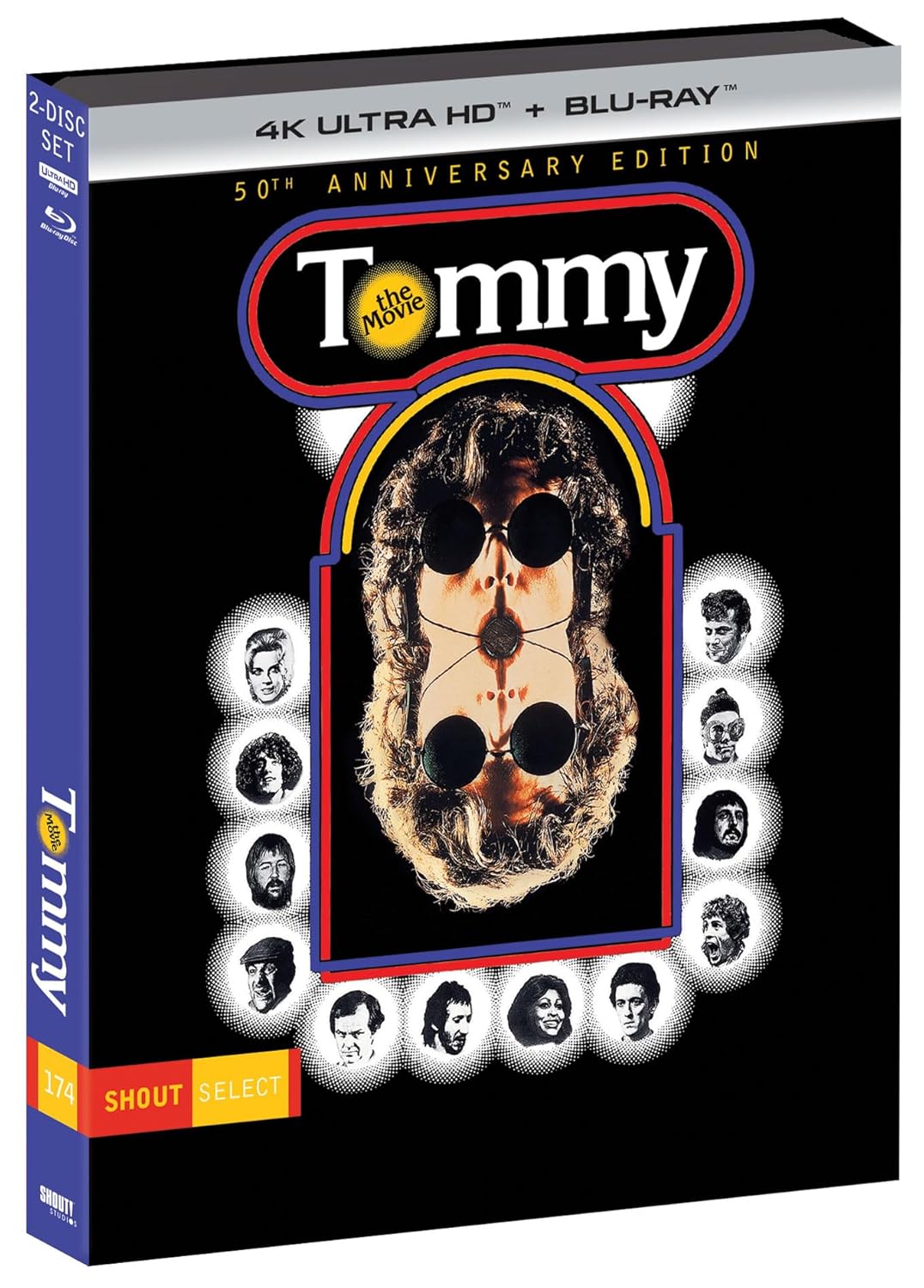
I was first introduced to The Who through the original Tommy album. It was one of my mother's favorites when I was young, and she had actually written out by hand her interpretation of the story the rock opera appeared to tell. I can't remember those scribblings, and I'm not even sure if they're still tucked away in that Decca album I have around here somewhere. But the music always stayed with me. Now, I didn't ever become a huge fan of the band. I always liked them and collected a couple of their albums over the years. I did play a lot of pinball, however. I fell more in with the likes of Elton John. So you can imagine how excited I was in the summer of 1975 when my favorite musician was cast to play the Pinball Wizard in a movie from the music that had been stuck in my head for years. And while the soundtrack version has been the version I've often found stuck in my head, the original album was never far away either. Apparently that's also the case with Pete Townsend and Roger Daltrey. They would reunite and perform the rock opera live celebrating the release's 50th anniversary. Now the film is also celebrating 50 years. I sure feel old. But watching Tommy again sure brought a childhood of memories flooding back in. Shout Factory delivered.

"Not everybody can become United States Marines. We want the best and we settled for nothing but the best, because there is nothing prouder, nothing finer, nothing standing as straight as a United States Marine. Now they got the Air Force, they got the Navy, they got the Army, they got the Coast Guard - and if you want to join them, go ahead. They got plenty of room. But if you want a challenge, if you want to try something difficult, try to achieve the impossible - try 13 weeks of hell at Parris Island, South Carolina, and find out if you got what it takes, find out if you really are a man, then the Marines might be what you are looking for. Tarawa ... Iwo Jima ... Belleau Wood ... the frozen Chosin Reservoir. First to fight, we have never lost a war. We have always come when our country has called."

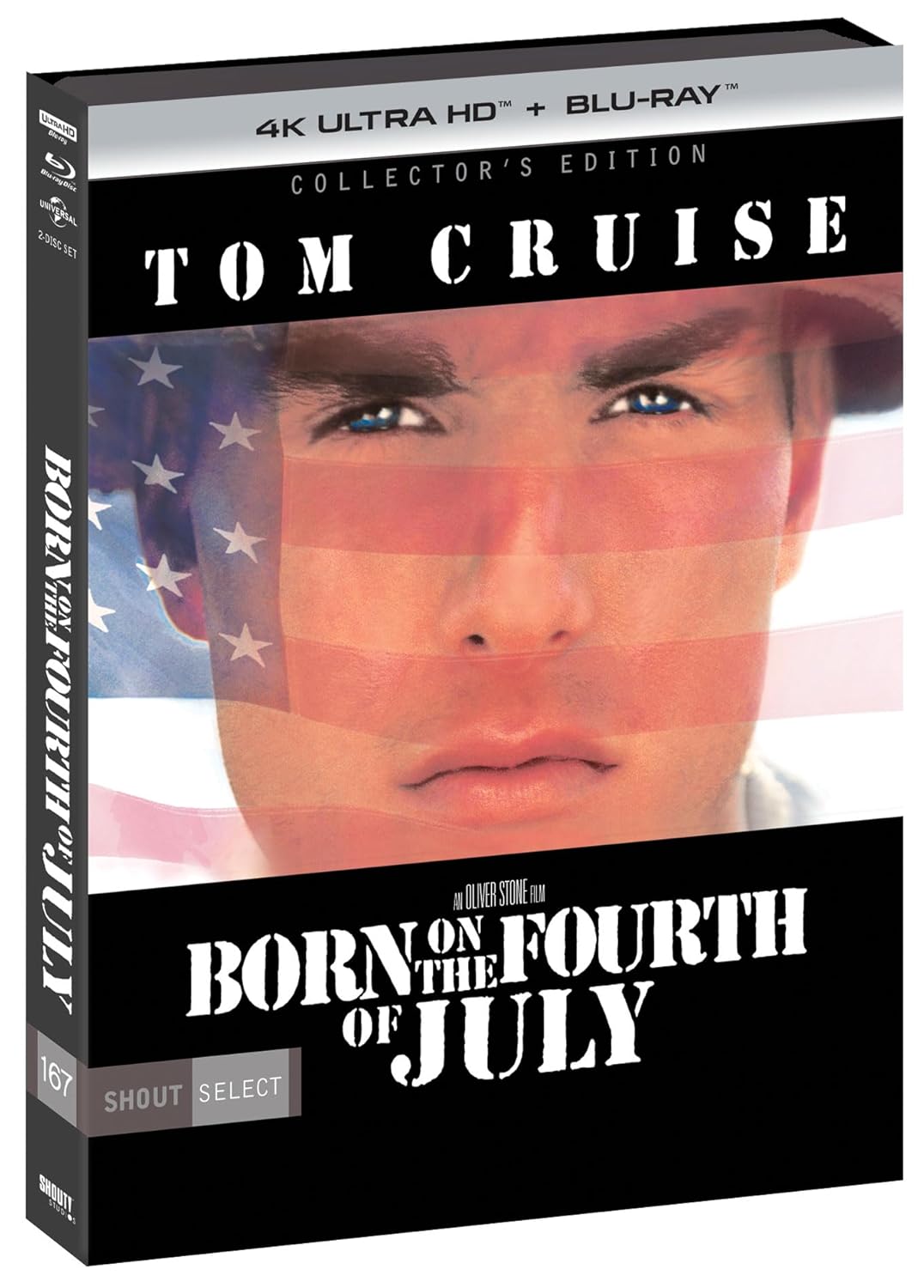
Born On The Fourth Of July has been both a controversial film as well as one of Tom Cruise's first breakout roles. Over time the film has become appreciated more as feelings on the Vietnam War have pretty much come full circle in the American political mind. Now it can be viewed for the remarkable performance Tom Cruise delivers and the rather stark reality check Ron Kovic's autobiography provided in 1976 to a nation that might not have been ready to hear it. Times have changed, and I think they're well reflected in Oliver Stone's film Born On The Fourth Of July, which Shout Factory has now made available in 4K for the first time.

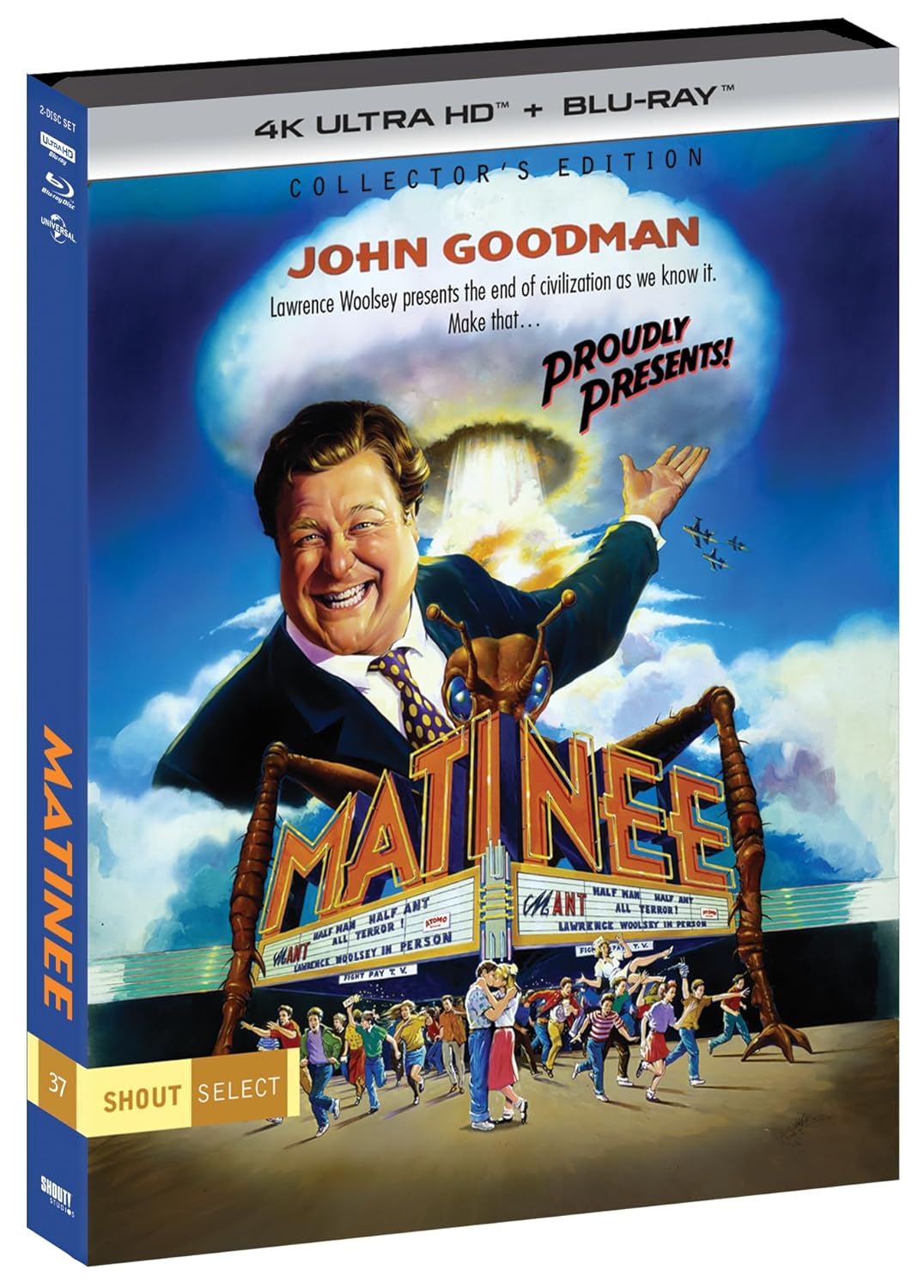
In 1993 when this film came out, 1962 just seemed like another time that as a teenager I just couldn’t wrap my head around. While the kids in Matinee were excited about these giant monster films, I could sort of relate, as I was getting into horror myself, but instead of atomic bugs, I was getting into the slasher heavy hitters like Freddy Krueger and Jason Voorhees. So a film about kids spending most of their time at a movie theater was something I could relate to easily, and as I got older I simply continued to appreciate the film more as I consumed more films from the past and grew to appreciate filmmakers like Val Lewton, William Castle, Roger Corman, and Lloyd Kaufman, the guys who knew how to turn a cheap film into an event experience through a variety of marketing gimmicks. The idea of ambulances being staged outside a theater because audience members may faint or having people in costume lunge at unsuspecting guests. These innovators make going to the movie theater an experience even if the movie wasn’t all that great … and now 30 years after the release of Matinee, I find myself bitten by the bug of nostalgia. I can’t help but miss how I used to consume movies, either spending an entire day at the multiplex sneaking into R rated films or hitting the video store and grabbing a bunch of videos to watch with friends. Now we have streaming, and it just isn’t the same. The movie theaters may not have the sticky floors that we all hated, and to be fair I do like the stadium seating, but it’s just not the way it used to be, and with ticket prices skyrocketing along with crazy rates at the concession stands, well, it isn’t too hard to understand why people want to believe the theater experience is dying.

I don’t mean to be so bleak, especially when Matinee is far from being a downer; instead it is a charming love letter to a time where as a kid things would have been so simple, but for adults the terror of an atomic missile strike kept many parents in fear. Gene Loomis (Simon Fenton) is your typical kid, but with his father being in the military his family bounces around a lot, and while his father is deployed he feels the need to be “the man of the house” and look after his mom and his little brother. This new deployment has them brought down to the Florida Keys, and at the worst time imaginable, during “he Cold War, and when the Russians are threatening to drop atomic bombs on the States. We see how the kids are prepping with bombing drills and folks around town are emptying out the store shelves (a scene oddly reminiscent to when the COVID panic recently struck and the nation was in a panic over toilet paper). Gene is eager to simply just leave the base and find his sanctuary at the local theater and just watch movies all day. It’s at the movies he happens to run into one of his idols, Lawrence Woolsey (John Goodman), who has come to town to premiere his new film, a B-monster movie called MANT, and he’s going to be presenting the film in what he calls “Atomic Vision”.

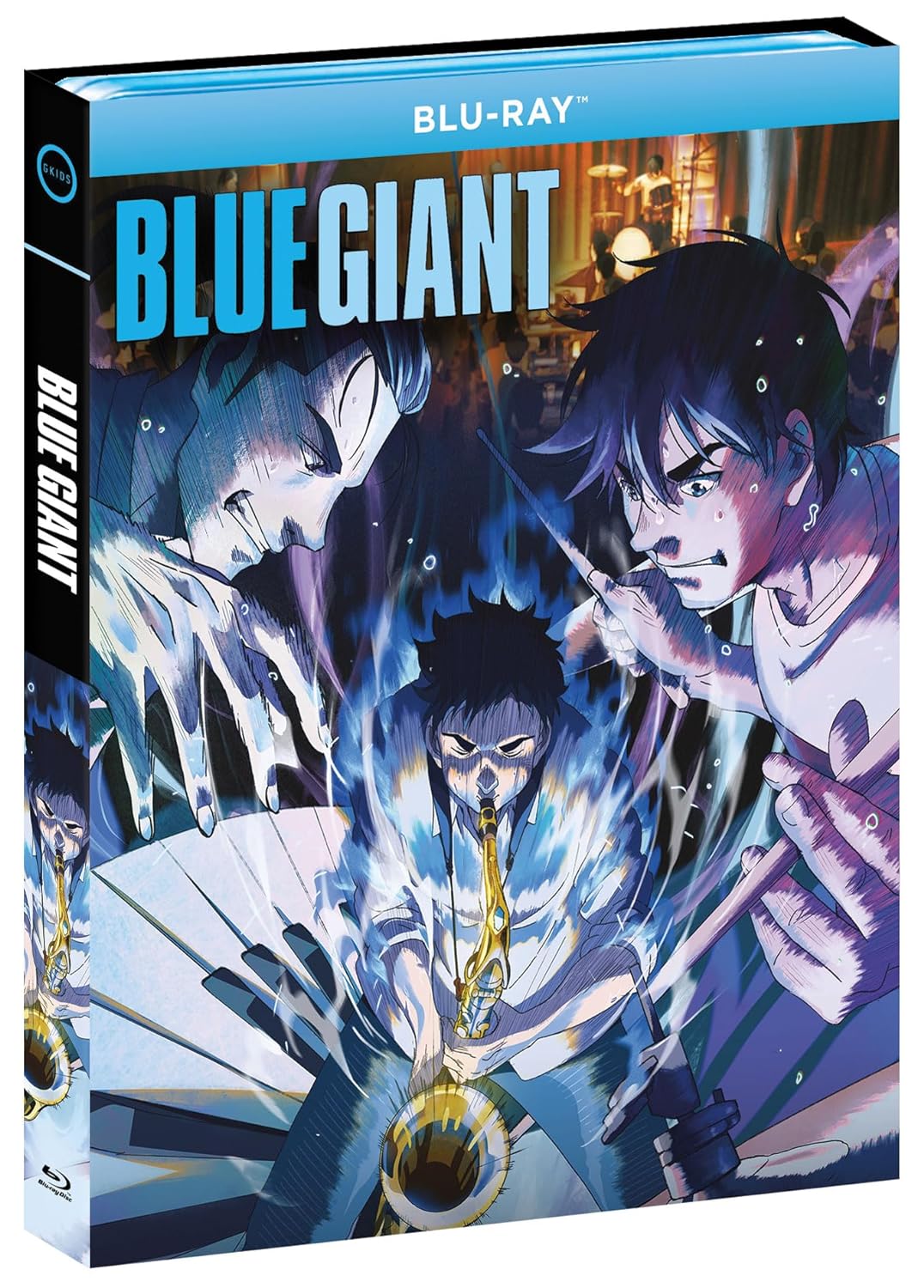
As many of you know, there isn't a type of media that I don't enjoy reviewing.  Sure, my film reviews are most numerous, but I have also dabbled in books, video games, and music when it comes to critiquing.  Music is really fun, because I'm one of the few people I know that will literally dissect every song whether it is a hit or a throwaway.  Needless to say, I almost never hold back.  So imagine my excitement when I come upon a new anime that blends an interesting story with the amazing style of jazz music.  I honestly don't even listen to jazz, but the chance to expand my musical repertoire is something I crave to do.  Let's take a look at Blue Giant.

A cold wind is blowing, and somewhere a saxophone is playing.  A car whooshes by; Dai Miyamoto (voiced by Yuki Yamada) tries to play, but the weather is so frigid that he is having a lot of trouble.  He keeps trying, because one day he will be a famous musician.  A black cat slinks by and rests beside him.  Dai gasps after playing a difficult note, and the pain is too much to bear, so he takes time out to have a chat with the feline.  However, the cat soon leaves him, and he goes back to his playing.

"You know your weapons. It's a lever-action breech-loader. Usual barrel length's thirty inches. This one has an extra four. It's converted to use a special forty-five caliber, hundred-and-ten-grain metal cartridge, with a five-hundred-forty-grain paper patch bullet. It's fitted with double-set triggers, and a Vernier sight, marked up to twelve-hundred yards. This one shoots a mite further."

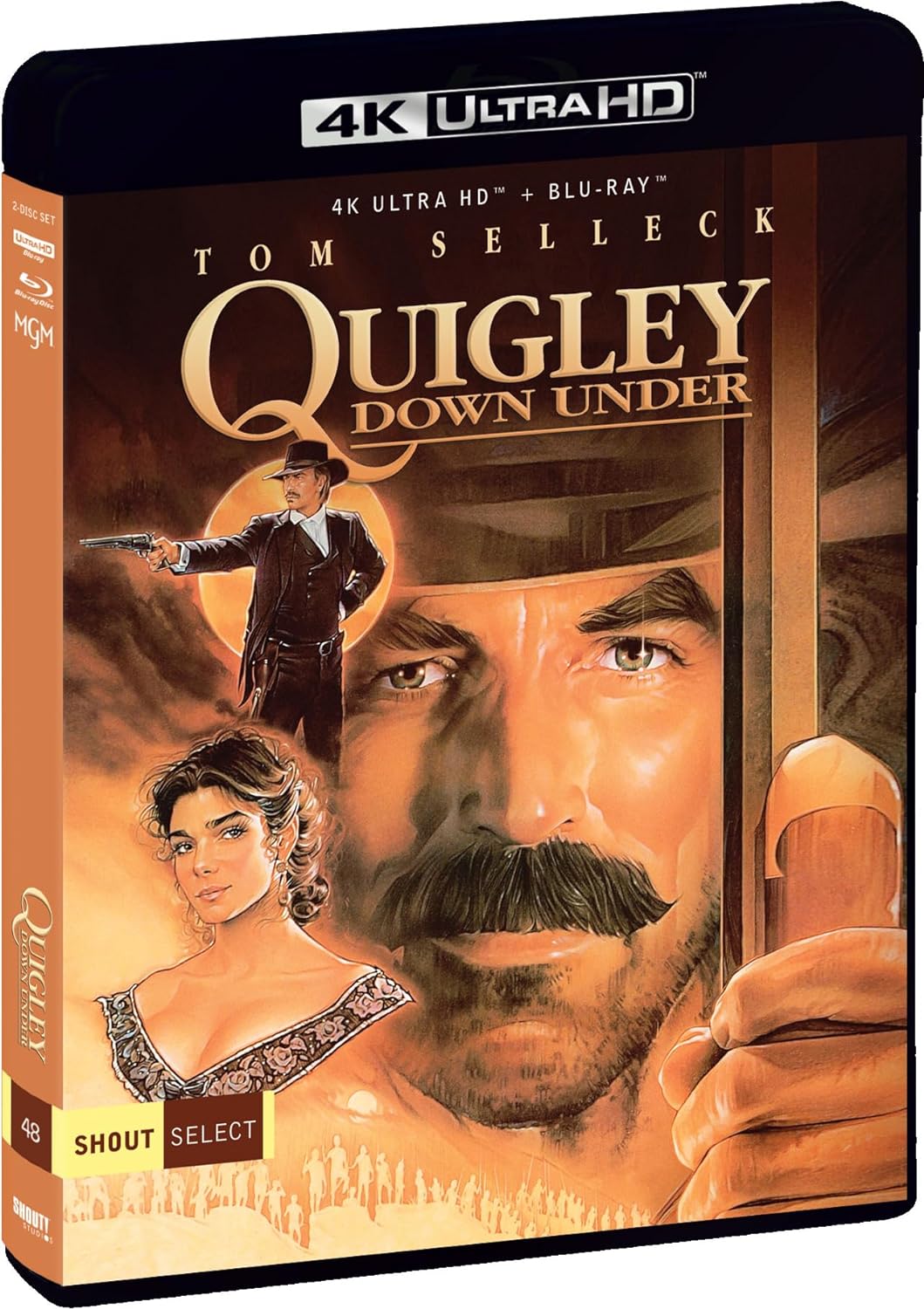
It almost happened again. Lightning almost hit Tom Selleck for a second time, and I don't mean in a good way. Tom Selleck was having fun and a tremendous amount of success playing Magnum P.I. on television. It was a character he got on the strength of a recurring character on The Rockford Files, and it was a huge hit. But in 1981 it didn't seem so much like a blessing. Casting calls went out, and he was approached to play an archaeologist trying to beat the Nazis to some kind of a McGuffin or another. The Magnum commitment kept him from taking the role, and it went to Harrison Ford, who turned it iconic. But Selleck still had Magnum. Then a few years later he was approached to play an American sharpshooter in the Aussie Outback but once again had to turn the role down. That was 1984, and Warner Brothers was working on a John Hill script called Quigley Down Under. There were some delays, and the film ended up leaving Warner Brothers for MGM and losing director Lewis Gilbert for Simon Wincer. With that kind of turnaround issues, the film took until nearly 1990 to go into production. By then Magnum was off the air, and he checked in on that film again to find it had a new staff and new life, and yes, it was still available. Selleck finally got his swashbuckling part, but it's really more Pale Rider (Eastwood) than Indiana Jones, and the new director would later know more than a little bit about Indiana Jones when he went on to direct several episodes of The Young Indiana Jones Chronicles. He would also return to the outback with the last Crocodile Dundee film, so this ended up being one heck of a circle. And in 1990 we got to check out Quigley Down Under.

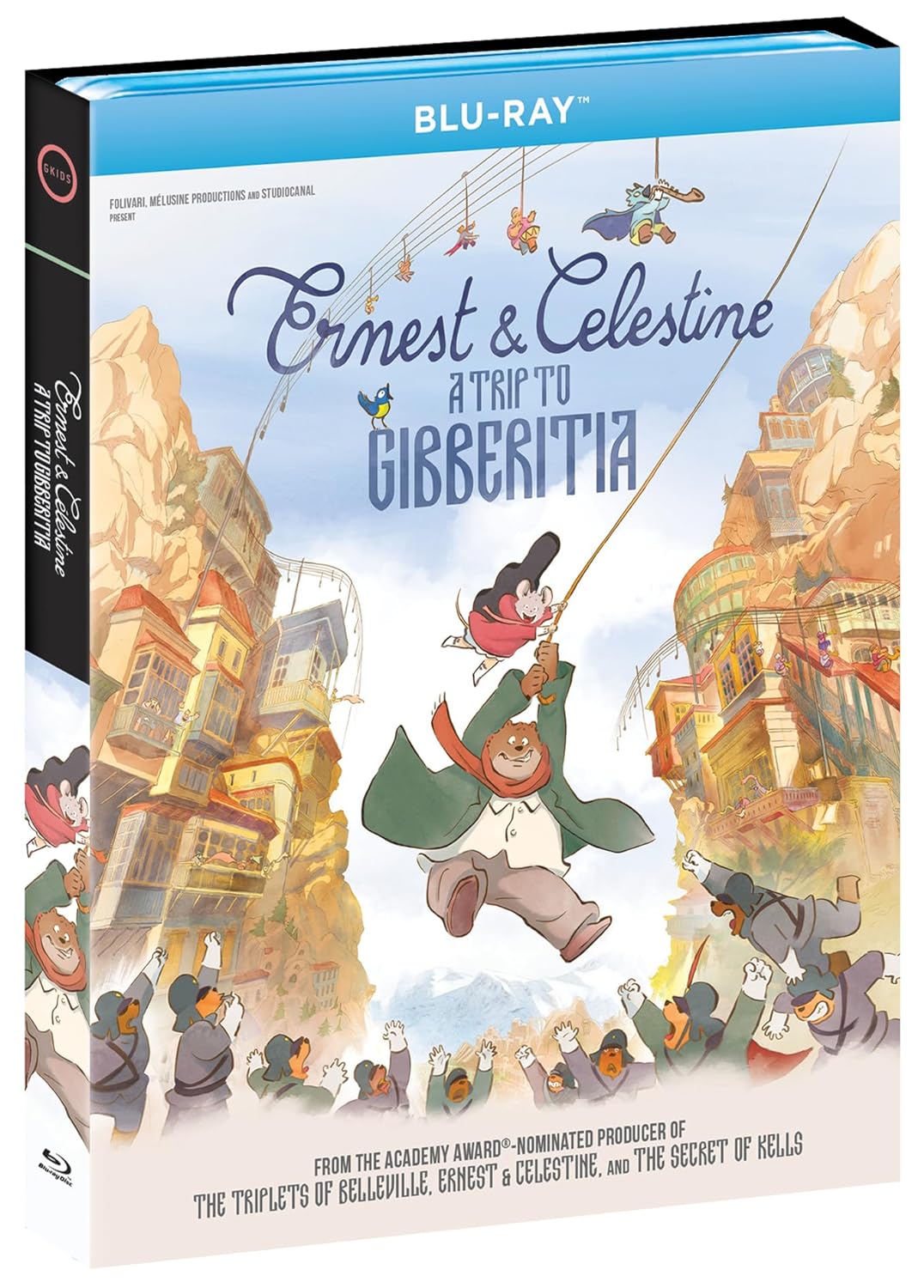
Sequels are a funny thing.  Most of the time in modern Hollywood, they come within a breath of the first film, usually after a large box office in order to capitalize on its earnings.  Sometimes, they can take years, even decades to make.  Blade Runner: 2049 came out in 2017, 35 years after the original film.  In addition, many times when a sequel takes so long to materialize, the intended audience has flown the coop, and it has dismal results.  See Basic Instinct 2 or The Two Jakes.  Other times, it inspires new waves of fans to flock to the theaters, such as Tron: Legacy or The Incredibles 2.  Today, we are taking a look at Ernest & Celestine: A Trip to Gibberitia, a sequel to the original Ernest & Celestine movie which was nominated for an Academy Award and took home many other film awards.  It's been a decade since the original film; can the sequel keep the spirit of the original and produce a quality film?  I'm happy to say, yes, it certainly did.  Let's take a look.

Since the film does not provide a quick recap from the original, I'll go ahead and provide this.  Ernest and Celestine had each won their freedom from their respective imprisonment.  Their only wish was to live together as best friends and have exciting adventures ... after Ernest gets some sleep.

Sequels are a funny thing.  Most of the time in modern Hollywood, they come within a breath of the first film, usually after a large box office in order to capitalize on its earnings.  Sometimes, they can take years, even decades to make.  Blade Runner: 2049 came out in 2017, 35 years after the original film.  In addition, many times when a sequel takes so long to materialize, the intended audience has flown the coop, and it has dismal results.  See Basic Instinct 2 or The Two Jakes.  Other times, it inspires new waves of fans to flock to the theaters, such as Tron: Legacy or The Incredibles 2.  Today, we are taking a look at Ernest & Celestine: A Trip to Gibberitia, a sequel to the original Ernest & Celestine movie which was nominated for an Academy Award and took home many other film awards.  It's been a decade since the original film; can the sequel keep the spirit of the original and produce a quality film?  I'm happy to say, yes, it certainly did.  Let's take a look.

Since the film does not provide a quick recap from the original, I'll go ahead and provide this.  Ernest and Celestine had each won their freedom from their respective imprisonment.  Their only wish was to live together as best friends and have exciting adventures ... after Ernest gets some sleep.

By JC.

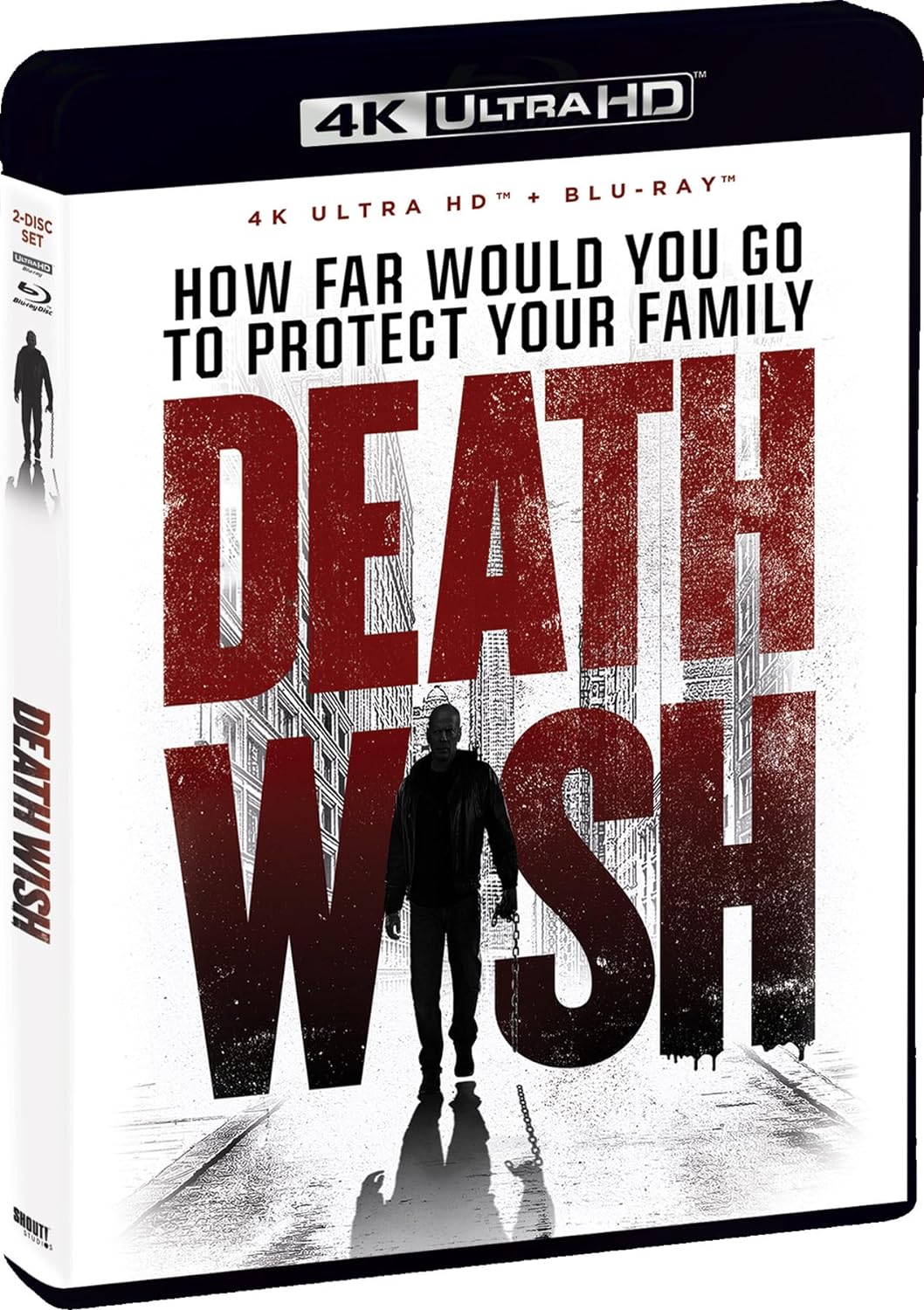
Cinematically speaking, the name Eli Roth has been synonymous with murder and mayhem. The director is best known for his work in the horror genre, bursting on the scene with 2002’s Cabin Fever and upping the ante with Hostel and Hostel: Part II a few years later. So it was a bit surprising to hear he’d be taking on a remake of Death Wish — the iconic 1974 Charles Bronson revenge flick — until I started thinking about the bloody possibilities. If the Hostel films gained notoriety as prime examples of “torture porn”, then it seems like Roth has graduated to “revenge porn” with this slick and (intentionally) silly re-imagining.

"I met him fifteen years ago. I was told there was nothing left. No reason, no conscience, no understanding, even the most rudimentary sense of life or death, good or evil, right or wrong. I met this six-year-old child, with this blank, pale, emotionless face and the blackest eyes ... the devil's eyes. I spent eight years trying to reach him, and then another seven trying to keep him locked up because I realized that what was living behind that boy's eyes was purely and simply ... evil."

Blumhouse and David Gordon Green recently finished a sequel/reboot of John Carpenter's Halloween with mixed results. He got Jamie Lee Curtis to return for all three films in the trilogy. Most of the various sequels and reboots did not include the original film's star, but Green was not the first one to get her to return to the role of Laurie Strode. To celebrate the 20th anniversary of the first film, Curtis returned to the role in the somewhat neglected. It was the seventh overall film in the franchise, and like the recent trilogy, it erased all of the various sequels and claimed to be a continuation of the original film. It produced a respectable $55 million on a $17 million budget and was the next final film in the series before Rob Zombie did his own reboot of the franchise that lasted for two films and finally led up to the David Gordon Green attempt to revisit and pretty much conclude the franchise with three more films. Curtis returned for Halloween Resurrections, which was a kind of meta/reality show take on the material, but Rob Zombie took it back to the beginning. Is that really the end of Michael Myers and company? I doubt it. There's still bank to be made from the franchise, and after a respectable few years, someone else will tackle the tale. Where they will start from is anyone's guess, but they could do worse than look at Halloween H2O: Twenty Years Later as a jumping-off point. I doubt anything like that is going to happen, but the franchise could certainly do worse,... and it has.