Posted in: Disc Reviews by Archive Authors on February 26th, 2006
If there is one genre that can get away with releasing films direct-to-DVD, it is horror. By nature, most of the best horror films are low budget affairs anyway. Classics like Halloween and Friday the 13th, as well as more modern affairs such as The Blair Witch Project, are perfect models of the power of a smart, low-budget horror film.
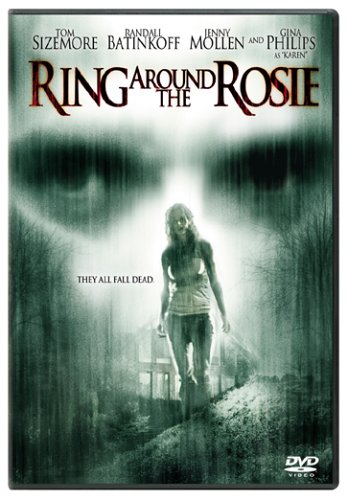
Of course, for every Cabin Fever, there are fifteen versions of The Brotherhood III – Young Demons out there, just waiting to suck. Ring ...round the Rosie has several good things going for it. For a low budget affair, it is surprisingly well-produced. Quality audio and video can make even the worst film at least pleasant to observe. The film also has some nice “what's in that shadow?” tension, and Tom Sizemore even found some time between court appearances and stints in rehab to contribute to the film in a key supporting actor role.
Posted in: Disc Reviews by Archive Authors on February 25th, 2006
Synopsis
Quite frankly, I didn’t remember much about 13 Going on 30 when I first saw it (yes, I’m copping to watching it), but in revisiting it for the purposes of the review, I found that it was a cute film whose story is quite clearly lifted from the ‘80s Tom Hanks film Big (right down to the scene where the main character rides in a limo), but the performances by the cast is actually quite commendable.
Posted in: Disc Reviews by David Annandale on February 8th, 2006
Synopsis
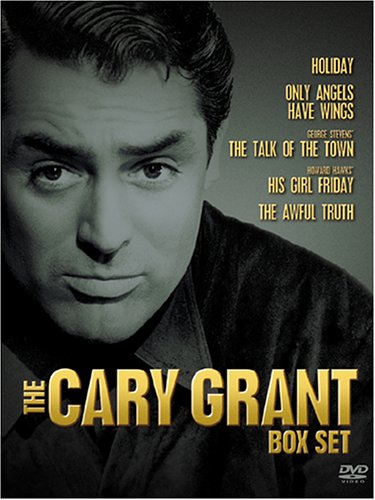
Though they span a mere five years of his career, these are some of Cary Grant’s best films. They are also among the directors’ best films. Viewers wanting to see comedy from Hollywood’s Gold Age at its best and most sophisticated will be amply rewarded by spending a few evenings with this collection.
Posted in: Disc Reviews by Gino Sassani on February 7th, 2006
The most amazing thing about this one-joke movie is that it was based on a John Grisham novel: Skipping Christmas. Chris Columbus certainly does not display his biting wit and the skills he debuted with Gremlins 20 years ago. It’s hard to imagine this is the same guy who kicked off the Harry Potter series.
When their daughter joins the Peace Corps and leaves for South America during the Holidays, the Kranks decide to skip Christmas altogether and go on a cruise with the money they save. Why these altern...tive plans require a complete boycott of the season is never fully explained. No cards. No party. Not even a Seasons Greetings, it seems, is allowed to intrude on the Kranks’ plans. The neighborhood is up in arms over this “un-American” act. Their hostile activities leave one glad there weren’t any Jewish or Buddhist families in the neighborhood. Now, of course, you can’t really just skip Christmas, particularly if you’re in a family Christmas film. The daughter decides to come home with her fiancée and so suddenly Christmas is back… and in overdrive.
Posted in: Disc Reviews by Archive Authors on February 7th, 2006
A sequel to Ingmar Bergman’s 1973 classic Scenes from a Marriage, Saraband reintroduces us to Marianne (Liv Ullman) and Johan (Erland Josephson) after 32 years apart, when Marianne decides it’s time to pay her ex-husband a visit. Upon arrival, she becomes involved in strained family relations between Johan, his son Henrik (Borje Ahlstedt), and Henrik’s daughter Karin (Julia Dufvenius). There are implications that Henrik and daughter share an incestuous relationship, highlighted by a scene where they lie...in bed together, and another where they share an open-mouthed kiss. This tension and madness is complicated by the death of Anna, Karin’s mother and Henrik’s wife, who had been the functioning glue holding them together and preventing the likelihood of a three-way steel cage death match. With her out of the picture, these three are allowed to let their dysfunctional lights shine. Marianne – for whatever reason, perhaps an unknown feeling of obligation to Anna – gets involved in the proceedings, but soon finds out that people will die the way they live, and there is just no getting through to anyone in the long-term – especially in the moments of their lives depicted here. “Too set in their ways,” is understatement with regards to Johan, Henrik, and Karin. And as is often the case when a well-liked loved one dies, Anna’s absence brings out the worst in everyone.
While film is a visual medium, Saraband does not treat it as such. Its problem has nothing to do with incompetence from Bergman’s direction, nor does it involve inadequate performances from the actors. The central issue at hand is the script’s poor use of dialogue. The words are well-written, but their overall function goes against what film is designed to be, and are better suited for the stage than the screen. I would venture a guess there are more words of speech in this film’s two-hour running time than in a novelist’s entire manuscript. Accompanying the wordiness is the urge for exposition. I understand budget restraints may have prevented the film from showing all it wants to show, but that still doesn’t make the extensive expository dialogue interesting. While this film could be a fantastic play, as a movie, it’s a sluggish viewing experience. Still, I do get the feeling from Bergman this is a deep, personal film, which was made for his own benefit rather than the pleasure of any audience. As such, it succeeds in tackling the issues and emotions Bergman feels at this point in his life, as he draws the curtain on a long, glorious career. But that also illuminates what is, perhaps, the film’s greatest weakness – it’s simply too personal to be interesting.
Posted in: Disc Reviews by Gino Sassani on February 1st, 2006
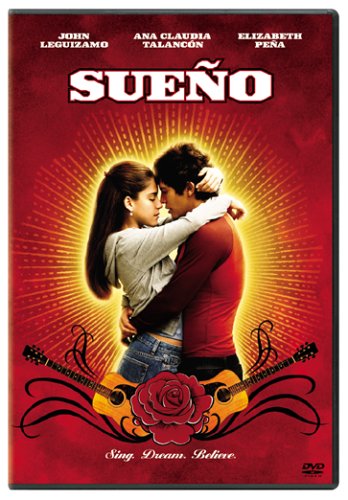
The opening titles of this film are a bit misleading. The font is a colorful, comical display played against animation more suitable for the opening of a Pink Panther film. Instead of a comedy, we are presented with a film likely to appeal to a very limited audience. To the film’s credit, it doesn’t abandon the themes and style it intends to portray in an effort to gain more mass appeal.
Antonio is a young man living in Mexico. His dreams are filled with playing music. Like most young ambitious music...ans he longs for the “big time”. When his mother dies, Antonio travels to America where his uncle has painted a picture of a golden field of dreams which turn out to be a rundown taco stand. We’re not really told if the move to America was under legal circumstances or not. Still, Antonio uses every spare moment to capture his musical career. The chance comes in a Latino band competition. The prize is $10,000 and a chance to perform with a big “mystery musician”. Suddenly we have a film with an abundance of clichés. Throw into the mix a mistaken romantic triangle and the stage is complete. It’s no real surprise how any of this turns out.
Posted in: Disc Reviews by Archive Authors on January 27th, 2006
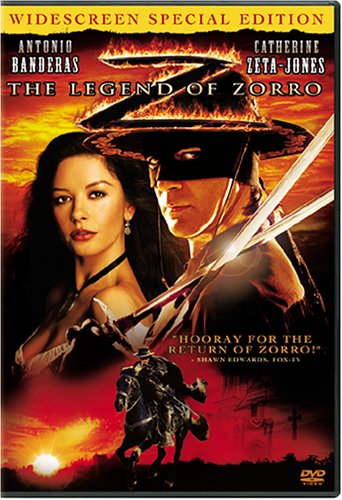
When news of a sequel to 1998’s The Mask of Zorro was first announced, I was very excited as I really enjoyed The Mask of Zorro. The film had an interesting story and great acting from Banderas and Hopkins. But as I learned more and more about the sequel, I became extremely worried as neither of the two screenwriters (Ted Elliot or Terry Rossio) were returning. Also, we would be introduced to their cute little child (and EVERYONE knows how much adding little children to sequels can do for a film’s likea...ility). Could The Legend of Zorro take all these usual negatives and make a positive sequel? Unfortunately, the answer is no.
The first big problem with this film is the character of Elena (Catherine Zeta-Jones). Elena, in the first film, was delight. She was funny and Zeta Jones’ performance was a joy. In this film, possibly because Zeta-Jones has blown up since then, it seems like the screenwriters don’t have anything better for Elena to do than nag her husband. This scenario results in Elena becoming the type of wife that says “NO!---YOU still need Zorro!” to her husband. To sum up her role in the film, she wants Zorro to stop ‘Zorroing’ because he is neglecting their only son. She threatens to leave Zorro if he puts the mask back on again. Naturally, Zorro promises not to.
Posted in: Disc Reviews by Archive Authors on January 21st, 2006
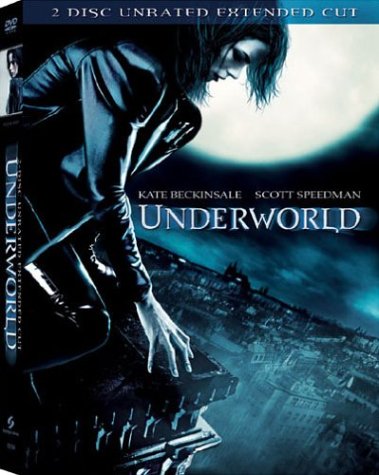
Having originally seen Underworld on HBO one summer night, I recall myself finding the film fairly dull and vapid. When I heard of a director’s cut coming out, I thought back to my original viewing of the film Daredevil, which was made that much better via more explanation of plot and the characters. Maybe this could occur for this film. Unfortunately, Underworld is not that much better this time around.
Underworld stars Kate Beckinsale as Death Dealer Selene. We learn, at the be...inning of the film, that there is a ancient blood feud that is occurring between vampies and Lycans (creatures we call werewolves). Unlike the typical werewolves we are use to seeing on screen, these Lycans can change form at will. Cue in the Death Dealers who try to kill off all of these Lycans. Why so much animosity toward the Lycans you may ask? Well, according to Selene, the Lycans are planning something big and this may be in correspondence to the ‘Awakening’. A vampire named Kraven (Shane Brolly) is in charge until the ‘Awakening’. Naturally Kraven doesn’t get along with Selene.
Posted in: Disc Reviews by Archive Authors on January 17th, 2006
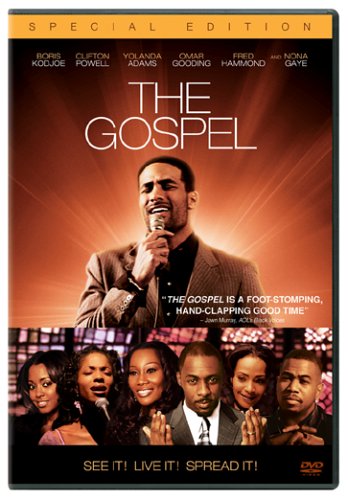
The Gospel is the first mainstream film to come out in quite sometime that deals with the role of the African-American church. Reading the title of the film, one must think The Gospel is an overly heavy religious filled film right? Well, I am very happy to say that the film is not particularly a religious film, but what a film that has the type of characters that can make a viewer become a believer. Not necessarily the type of believer of the church, but the type of believer in the music that is sung in...The Gospel. The film deals with the economic and social function of the whole church mainly how the church operates as a stabilizing force, a stage for random personalities, an area for various power battles and a business that must find a way to make a profit otherwise it will find itself going out of business.
The films features such well-known singers as Yolanda Adams, Fred Hammond, Martha Munizzi and ‘American Idol’ finalist Tamyra Gray. Even though the film does have a plot, the film never spends too long on one area only to return to the musical performances, which is where the film become so enjoyable.
Posted in: Disc Reviews by Archive Authors on January 11th, 2006
The Academy Awards ceremony continues to devalue itself by giving honors to films, which are mediocre at best, or films that try desperately to force a political agenda down the American people’s throats, while gems such as 2004’s Downfall linger in relative obscurity, and certainly do not receive the recognition they deserve. Director Oliver Hirschbiegel’s study of Hitler’s final days transcends the triviality of being considered a film and instead functions as a window into the past. And for a little more th...n two hours, it feels like we’re actually watching Hitler’s (and a country’s) downfall instead of a movie portraying the events. Part of this authenticity is due to the meticulous recreation of war-torn Berlin in the last ten days of the German dictator’s life. The filmmakers’ painstaking research, which consisted of hours-upon-hours interviewing several of the still-living participants, as well as taking a healthy dose of its story from the memoirs of Traudl Junge, Hitler’s secretary, succeeds in placing us right in the middle of the drama. But the proceedings would be nothing without the criminally overlooked performance of Bruno Ganz, who doesn’t just play Hitler; he becomes him. If Ganz cannot win a Best Actor Academy Award for what he does here, then the whole system no longer contains merit, and the little gold statue means nothing.
Of course, whenever Hitler’s involved in anything, there will always be a lot of controversy that surrounds him. It doesn’t help the film’s global acceptance that Ganz plays Hitler not as a two-dimensional dictator, but as a flesh-and-blood man with his own feelings of pride, uncertainty, and even warmth. But make no mistake. Any critic or viewer that tries to tell you Hitler is shown in a positive light did not even begin to watch the film closely enough. Thus, the only real controversy lay in the fact that Downfall de-poofs stereotypes of what a German under the Reich was… and more importantly, of what Hitler himself was. He is first and foremost a mentally unstable villain. But like all predators, he is not without his share of humanity which does invoke sympathy at times. All the while, the film never tries to justify Hitler. It just tries to understand him, and it is enormously successful in doing so.