AVC MPEG4

"That be the cold hand of fate I feel down my nape."

With each of the previous Pirates Of Caribbean films pulling in over a billion dollars in total revenue, it was indeed the cold hand of fate that determined the franchise would not end. Like Captain Jack Sparrow himself, this franchise isn't going to be easy to kill. It's true that the last two films, the third in particular, were rather universally scorned by the critics. But they still pulled in a boatload of money and quite honestly weren't near as bad as all of that. Like the theme park attraction that the franchise was named after, you have to consider these movies as rides. The only intention is to entertain. And by all accounts they've been doing a pretty good job of that for several years now. Even when the rest of the supporting cast bowed out of the franchise, it isn't finished yet, and there's no indication that the voyage is nearing its end any time soon.

Italian writer and director Giuseppe Tornatore was born in the small village of Bagheria on the island of Sicily in 1956. The life and culture of his home village has had a tremendous influence on his work. Many of his films have an autobiographical nature to them that he takes no pains to disguise. Earlier we reviewed his love letter to movies with Cinema Paradiso, which also took place in Bagheria. This time we explore five decades of life in that same village, known here by its nickname and the title of the film: Baaria.

The journey begins in the 1920's Peppino ("Giuseppe") Tornatore is a young boy whose services have been sold to a local shepherd to feed the family. He learns the trade but discovers it's not what he wishes to make of his life. When the Communist Party begins to make inroads in his village, Peppino is attracted to the message and soon works his way to becoming an important leader of the party. He falls in love with Mannina (Made), and the two must elope because he has no personal fortune and her parents are against the relationship. It is up to Peppino's father to take the ostracized couple into his own home when her family rejects them both. While there is no real plot here, the film follows the young boy through 50 years of life in the village and beyond, taking in the various historical events that effected Sicily at the time. Fascism and eventual World War take their toll. Peppino has a front-row seat to the land riots that rocked the country. His party loyalties cause serious trouble for the man as he goes up against both the established government and even the Mafia.

"The punishment's gotta fit the crime."

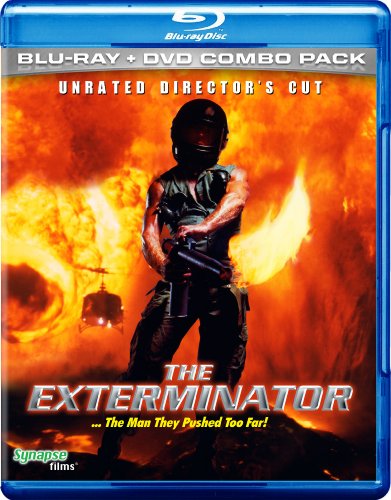
Believe all of the hype and controversy. In the language of the day The Exterminator was one bad mother. And when I say one bad mother, we're not talking Casey Anthony. The Exterminator came at the tail end of the era of grindhouse, exploitation, and revenge films. So, how do you close out a memorable era like that? You do a movie with all three. You put the violence and the grit out there for all to see, and you don't make any apologies about any of it. That's exactly the attitude that writer/director James Glickenhaus plays it, and the result is... well... one bad mother.

“Now this might be the room of any small boy, but it happens to belong to a boy named Christopher Robin, and like most small boys, Christopher Robin had toy animals to play with. And together they had many remarkable adventures in an enchanted place called The Hundred Acre Wood. But out of all of his animal friends, Christopher Robin’s very best friend was a bear called Winnie The Pooh.”

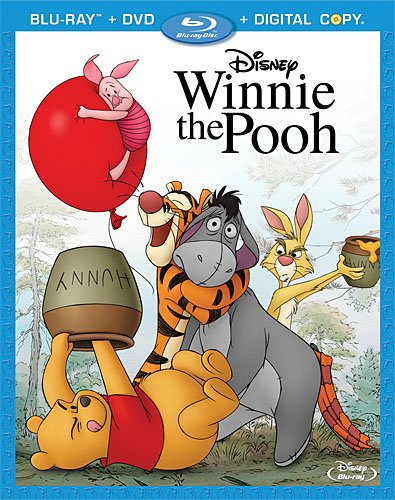
“Oh Bother”A.A. Milne was quite an eclectic writer. He wrote murder mysteries that even appeared on Alfred Hitchcock Presents. From that fertile mind would also come a place known as the Hundred Acre Wood. In that select place some of literature’s finest characters had the greatest adventures any boy could imagine. And adventures are certainly no fun on your own. Young Christopher Robin was joined by Piglet, Tigger, Owl, Rabbit, Eeyore, and, of course, Winnie-The-Pooh. Who didn’t fall in love with that silly old bear… Winnie-The-Pooh. OK, so maybe Dahmer or Bundy might have been exceptions. Still, anyone growing up in the last 30-40 years who isn’t a psychopath has had a love affair with Winnie-The-Pooh, all stuffed with fluff.


“People once believed that when someone dies, a crow carries their soul to the land of the dead. But sometimes, something so bad happens that a terrible sadness is carried with it and the soul can't rest. Then sometimes, just sometimes, the crow can bring that soul back to put the wrong things right.”

OK, let me get this out of the way. The Crow was a vehicle for Brandon Lee, son of martial arts legend and movie star Bruce Lee. The elder Lee trained Brandon in martial arts from the day he could take his first steps. When Brandon was only eight years old, his father tragically died just before finishing production on Enter the Dragon, a movie which would go on to become an international blockbuster making Bruce Lee the greatest icon of martial arts cinema. Brandon followed in his father’s footsteps studying martial arts and drama.

“I'm not a doctor. I haven't been to medical school; I haven't even been to high school.”

A beautiful and moving film based on John Irving’s best-selling American classic The Cider House Rules deals with sensitive and controversial subject matters wrapped inside a captivating coming-of-age story. John Irving had second thoughts about trimming his huge novel into a two-hour film and only agreed to adapt the screenplay after the studio agreed to allow his son, Colin Irving, to be in the movie (He plays Major Winslow in a small role as a notifying officer delivering bad news).

“For what it’s worth, I read your first book. I'm not Jewish, but I liked it.”

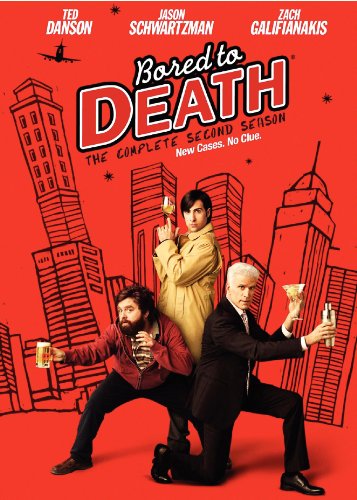
In the spirit of disclosure, the first time I tried watching Bored to Death, I gave up early in the first season. The title described the experience of this viewer. Jason Schwartzman has never really clicked with me. His schtick always seemed a little too precious and self-aware for my tastes.  Pressure from friends who insisted the show got better in the second half of the season got me back. I did find myself falling into sync with the stoner-noir rhythm of the series and laughing out loud at writer/creator/inspiration Jonathan Ames’ absurdist humor by the final third of the first season.

"Now children, are you sitting comfortably? Then I'll begin..."

A good ghost story is actually pretty hard to pull off. Unlike a typical slasher or monster movie, ghost stories can't really depend on visual elements to carry the burden. Certainly, there have been those films where apparitions take on some pretty creepy forms, and that can go a long way. The Asian horror market has explored that world often enough. Still, some of the best ghost stories make their impact on what you can't really see. It's the tale and the telling that makes a film like The Others come to life. It's a film that hasn't really gotten the attention or credit it has deserved over the years. Perhaps with Lionsgate's new Blu-ray release of the 2001 film some of that can be corrected.

“I'm just a hard working man trying to get by.”

HBO has a way of making series that feature cities like one of the major characters, and How to Make it in America showcases New York City. Not the NYC of Sex and the City, which was all uptown preppie, How to Make it in America takes it to the streets. Not since Woody Allen have the boroughs been so lovingly represented. Much like the hustle of the NYC, How to Make it in America crackles with street-savvy vigor and style.

"This is not the opening of a TV show. This is real life."

If you had to describe the fourth season of Chuck in one word it would be Mother. This season Chuck learns that his mother was also a spy and that she didn't really just abandon her family. She went deep undercover and now may or may not be one of the bad guys. It helps that Momma is played by genera favorite Linda Hamilton who makes some sweet references to her earlier works on Terminator and Beauty And The Beast. The man she went undercover to get was Alexei Volkoff, played by one of my favorite and incredibly underrated James Bonds, Timothy Dalton. This is the story that really dominates the season, but there are some other events of note to be found: