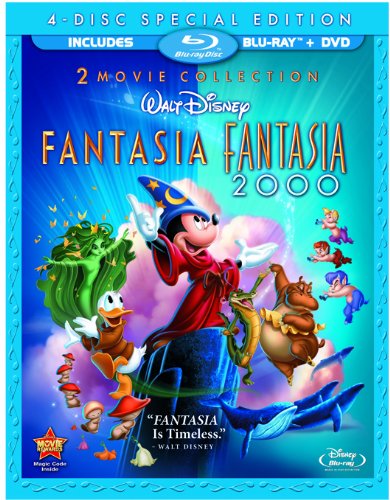
AVC MPEG4

"Nobody thinks of it from the whale's point of you."

I think this is the very first film I've ever seen that was made in Iceland. Of course, Iceland isn't one of those movie-making meccas known throughout the world for their movie magic. The truth is, there haven't been too many films set in Iceland and even fewer shot on location there. Now that Harpoon has come along, I don't expect that is going to change any time soon.

And the George Lucas Award for the filmmaker who has mined the most out of his movie this year....the envelope please. It's James Cameron for releasing not one, not two, not three, but four different versions of Avatar in less than a year. But I'll have to give him a pass, just this once. This 3-disc collection offers enough goodies that it will tempt you to trade in your still-new version for this complete collection. Better yet ... put it at the top of your Christmas list. The film comes in three versions. One with 8 minutes added. Another with 16. What's the point of having the new version if not to see the most extensive edit?

"September 19th. Dear Diary, as I sit here thinking about picking up the pieces of what used to be my life, I realized something. Every room in this house holds a painful memory for me. Even though he's suffering, something somewhere in me wants him to suffer more. A few months and a divorce can take you through just as many emotions as 18 years in a marriage. And I'm starting to feel all of them at once. But the one that is clear is rage. Signed, a Mad Black Woman."

Lately I've had an opportunity to watch a ton of Madea on Blu-ray. Lionsgate is bringing out all of the Tyler Perry collection on high-definition Blu-ray of late. It makes sense that this wave of releases would also include Diary Of A Mad Black Woman. This is where Madea's cinematic life began. Watching these films has been a bit of a blessing and a curse. The blessing part comes from some of the pure hilarity that can be Madea. The curse comes in the form of Perry's Jekyll and Hyde style of presenting these absolutely classic comedy moments with tales of faith and redemption. Again, both styles are admirable and good on their own. I just have trouble with the mix. However, Diary Of A Mad Black Woman is better than most of his efforts in that department. Because Madea relates more integrally with the other story, it doesn't come across near as awkward as some of the others. This was probably the best of this recent wave of Tyler Perry movies. And so it seems I saved the best for last.

"How do you do? My name is Deems Taylor, and it's my very pleasant duty to welcome you here on behalf of Walt Disney, Leopold Stokowski, and all the other artists and musicians whose combined talents went into the creation of this new form of entertainment, Fantasia. What you're going to see are the designs and pictures and stories that music inspired in the minds and imaginations of a group of artists. In other words, these are not going to be the interpretations of trained musicians, which I think is all to the good."

Just three years after Walt Disney introduced the world to the animated feature in 1937, Uncle Walt was already experimenting with the idea. The man was always fascinated with music as much as he was with animation and the wonderful fairy tales that would become his studio's trademark. It was inevitable that he would come up with the idea of blending music with animation to create something quite unique in the world of entertainment. You have to remember that not only had there only been three years since the first animated feature, but that sound itself in motion pictures was still only a couple of decades old. By 1940 Walt Disney had combined both elements to create something truly magical.

"Well when you gettin' "got" and somebody done "got" you and you go "get" them, when you get 'em everybody's gon' get got."

When Tyler Perry started writing his small plays, he probably never had a clue just how far it might all go from there. The plays had a solid audience, but there was always concern that the appeal would be too narrow. That didn't stop Perry from putting together a few relatively low-budget films located in his adopted film hometown of Atlanta. For the most part the studio got pretty much what it expected. The payoffs weren't huge, but they more than covered the costs. Perry's creativity attracted some big-name actors and cameos, and that wasn't bad for business either. The mainstay of his moderate success was his cross-dressed character, Madea. Mabel Simmons was a wildcat old lady. She didn't take no "stuff" and she spoke her mind. The racial profiling here was a bit rough, but nothing more than the blacksploitation films of the 1970's. Anyway, it was all harmless fun, and no one seemed to be all that upset over the characterizations. There was talk of sending Madea to that big old folks’ home in the sky when the numbers for Madea Goes To Jail came in. They weren't good. They were extraordinary. The film pulled in over $90 million at the domestic box office with very little money spent. Tyler Perry, that one-man writer/director/producer/ and three-character actor, had a bona fide hit on his hands. And we’ve continued to deal with loud-mouth Madea ever since.

Most of the huge names of Broadway are gone. Certainly there are young talents that have created some memorable shows. Perhaps one day they will build up the mountain of classics that we received from the likes of Rodgers, Hammerstein, Bernstein, and others. There are even a couple of writers out there that have amassed that kind of a career. Andrew Lloyd Weber absolutely comes to mind as a fine example. But Stephen Sondheim is the last of a dying breed. It's been quite a while since he's created anything new, but his shows live on in revivals and film versions where they will likely continue for decades to come.

In March the writer/composer celebrated his 80th birthday in style. The bash was held at the celebrated Lincoln Center in New York. The performers included a who's who of Broadway for the last 40 years. The music was provided by the world renowned New York Philharmonic, conducted by long-time Sondheim conductor Paul Gemignani. The event was hosted by David Hyde Pierce. The concert lasts about two hours but you'll find time flies by as the show demonstrates the incredible variety of Sondheim's work. Pieces from all of his milestone shows are on display. Often the performers who originally gave voice to these pieces are on hand to deliver this tribute performance. Many of these performers hadn't seen each other in decades. They likely haven't performed these particular pieces in a long time. But not a single performance was less than magical. An absolute treat for any fan, to be sure. Sondheim also wrote a small number of scores so the show is not quite all song. There's a dance routine attached to a sample of music from the Reds score.

The axiom in Hollywood these days is that more is better. Every year we get inundated with blockbuster films sporting $200 million budgets, groundbreaking f/x, epic journeys and casts of thousands. Enter first-time director J. Blakeson and his intimate and quite claustrophobic thriller, The Disappearance Of Alice Creed. Right from the start we know that we're in for something completely different. There are no opening credits of any kind. There isn't even a title screen. We don't get that until about 90 or so minutes later when the film is over. In between you will experience the leanest, meanest little movie you likely have ever seen.

Two hoods, Danny (Compston) and Vic (Marsan), are preparing meticulously for their big crime. They kidnap Alice Creed (Arterton) and tie her to a bed with a blindfold and ball gag. Everything is planned down to the most minute detail. It all seems to be going perfectly. But, like all so-called perfect crimes, there are going to be some hitches in this one.

Most people remember the Bee Gees from their disco days and Saturday Night Fever. They sold a lot of records and achieved more fame than at any time in their careers. But the Brothers Gibb had been performing since the 1950's as children. They would headline automobile races and appear on local radio and television shows. They would quickly gain attention for their harmonies and eventually for their own songs. By 1967 they had begun to gain international attention, appearing on the national rock-and-roll shows. The brothers would become known then for their power ballads and love songs. Hits like “Words” and “How Can You Mend A Broken Heart” put their particularly unique voices on the charts around the world. But by the 1970's the sound was already beginning to fade. The Beatles had broken up, and the era of the vocal bands appeared to have died, at least for a time. They saw their stardom plummet almost overnight.

Then came the disco scene and the movie that launched both the Bee Gees and John Travolta into instant superstardom. The album of the film's soundtrack would go on to be the best selling album in history until Michael Jackson's “Thriller” came along. Before anyone knew it the world was in a disco frenzy, and for many of us who grew up in the 1970's, music died for a while.

Tyler Perry burst on the scene in 2005 with Diary of a Mad Black Woman. It was one of the worst-reviewed movies of the year, but when it raked in over $50 million dollars at the box office, Tyler Perry silenced critics and became a force to be reckoned with in Hollywood. Before his movie-making career, Perry was already a huge success in the African-American community, having written several Christian and family-oriented plays upon which many of his movies are based.

After Diary, Perry went on to star in and direct the sequel, Madea’s Family Reunion, which did even better at the box office. And since then, he’s created his own studio, released three more movies, is set to release a few more, and currently produces a sitcom, Tyler Perry’s House of Payne, on TBS.


Tyler Perry once again dons multiple costumes to incarnate several characters, most prominently Madea, the no-nonsense but mischievous matriarch of a very fractious family. She is ordered by the court to take in a runaway as a foster child, and that project of reclamation joins that of helping out her nieces. They have a mother from hell. One sister is struggling to learn how to love again, while the other is being forced into marriage with the hideously abusive Blair Underwood.

I hope that outline makes the plot sound as bizarrely split as it really is. This feels like two completely different movies yoked together with violence. On the one hand, you have Perry mugging it up as Madea and her husband, dispensing pithy aphorisms and grits in what passes for comedy. On the other, you have the saga of the nieces, which involves horrific abuse both mental and physical, and builds to emotional climaxes so over the top we’re in Southern Gothic territory. And then the slapstick re-enters the picture for a dangerously simplistic solution to at least one real problem. This is a picture as smug in its own morality as it is confused in its tone.