Posted in: Disc Reviews by Gino Sassani on September 26th, 2025
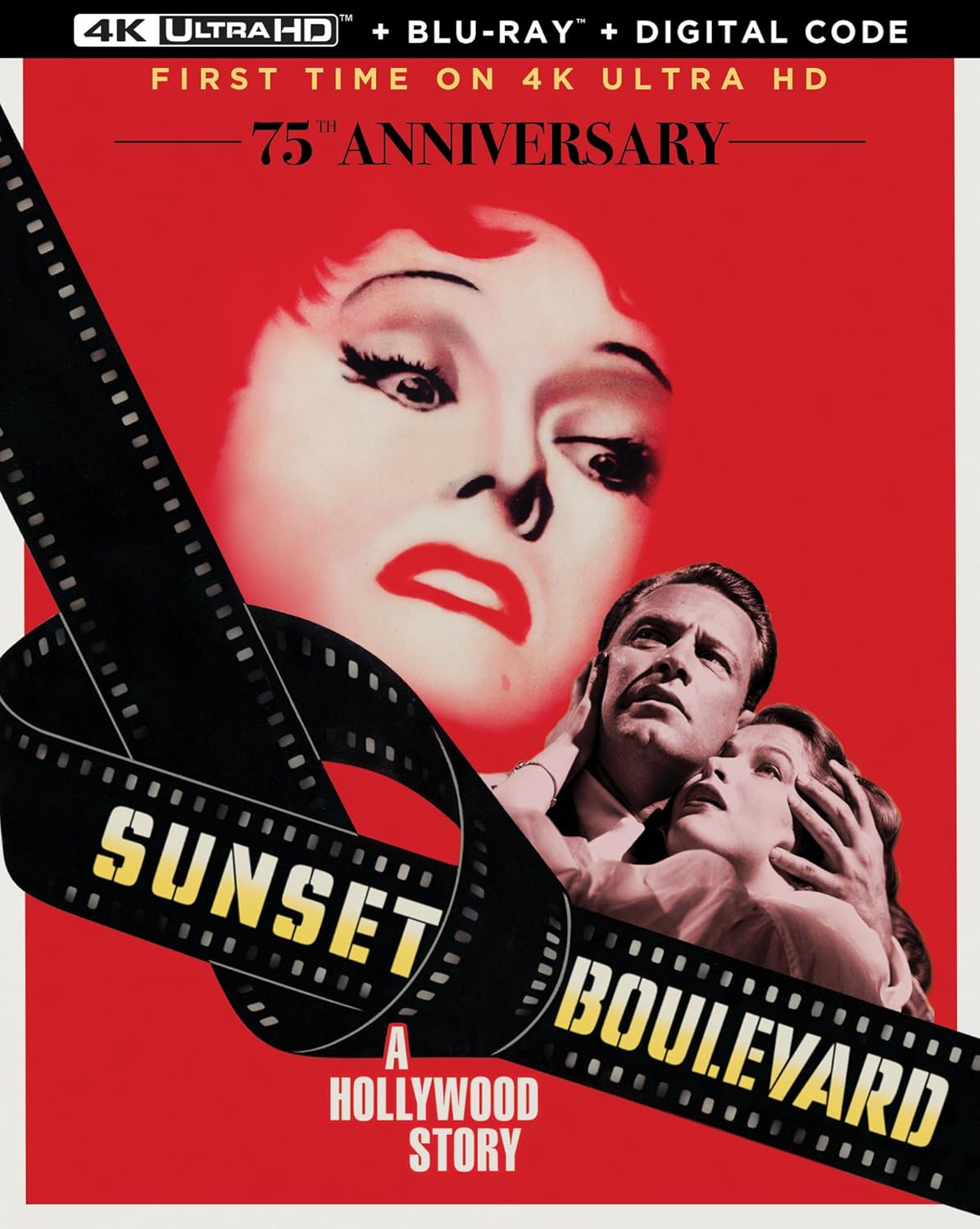
"Yes, this is Sunset Boulevard, Los Angeles, California. It's about five o'clock in the morning. That's the Homicide Squad - complete with detectives and newspapermen. A murder has been reported from one of those great big houses in the ten thousand block. You'll read about it in the late editions, I'm sure. You'll get it over your radio and see it on television, because an old-time star is involved - one of the biggest. But before you hear it all distorted and blown out of proportion, before those Hollywood columnists get their hands on it, maybe you'd like to hear the facts, the whole truth. If so, you've come to the right party. You see, the body of a young man was found floating in the pool of her mansion - with two shots in his back and one in his stomach. Nobody important, really. Just a movie writer with a couple of 'B' pictures to his credit. The poor dope! He always wanted a pool. Well, in the end, he got himself a pool - only the price turned out to be a little high. Let's go back about six months and find the day when it all started."
The term "classic" is misused these days. I know many fellow critics who fall in love with too many films and rate them high with the idea they are going to be "classics". More times than not, in five years, let alone 50 or 75 years, no one has even heard of or remembered the movie. The truth is that kind of high-end designation can't be made for at least 20 years. I don't give out very many 5-disc ratings. Far less than anyone else on the site, and with literally thousands of more reviews to count. Sunset Blvd. is one of those films. If you're still quoting a film 75 years later? That's the very definition of a true classic, and Billy Wilder's film passes anyone's grade for that distinction. I know that IMDB presents the film as Sunset Boulevard, as do some of the film's posters. On screen and in the copyright filings for the movie it is Sunset Blvd., and that's how I will refer to it here.
Posted in: Disc Reviews by Sean Boelman on July 16th, 2024
Given that Glauber Rocha is considered one of the most important filmmakers in the history of Brazilian cinema — and Latin American cinema in general — it’s surprising that it took this long for one of his films to be released by the Criterion Collection. The filmmaker’s sophomore feature, Black God, White Devil, one of his most acclaimed works, takes the honor of being his first movie to get the Criterion treatment. Black God, White Devil is considered one of the most influential films of the Cinema Novo movement, which happened in Brazilian cinema as a reaction to other social filmmaking movements like Italian neorealism and the French New Wave. In Criterion’s recent quest to expand the label’s Latin American cinema offerings — Victims of Sin and Soy Cuba are notable recent releases — the Cinema Novo movement marks a necessary addition.
The Western follows a Brazilian ranch hand who, after killing his oppressive boss, goes on the run with his wife, leading them to a group of bandits and a messianic figure who preaches violence and revolt. Like many Latin American films of the era, Black God, White Devil is focused heavily on socioeconomic issues.
Posted in: Disc Reviews by Brent Lorentson on May 29th, 2024
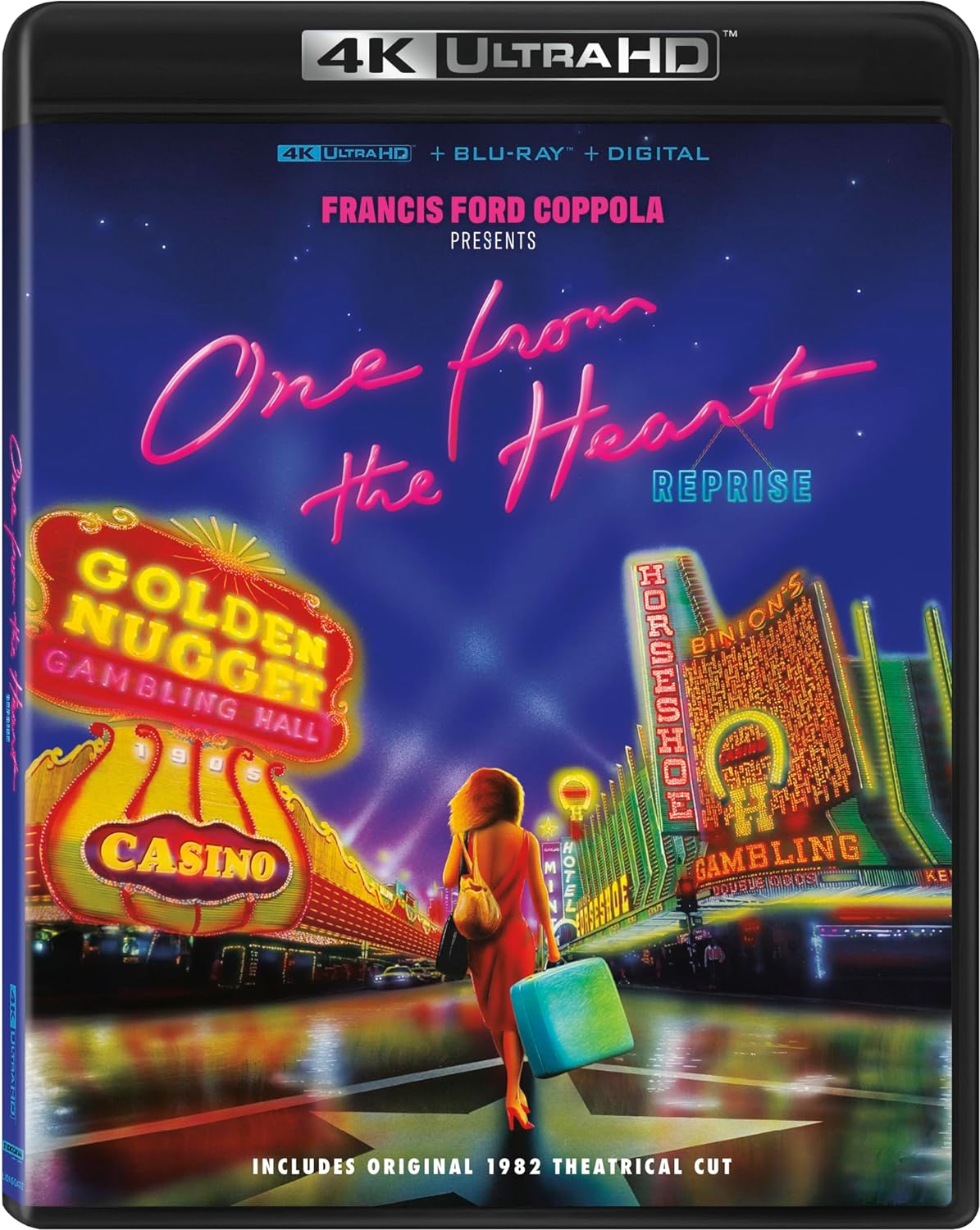
Francis Ford Coppola is one of those directors that you don’t have to love, but you have to at least appreciate his contribution to cinema. Personally my favorite film of his is Apocalypse Now, and then The Godfather II. I know other film geeks out there will argue with what his ‘best” film is, but I think it’s fair to say he’s one of the greatest film directors out there no matter how you may rank his films. When the chance to review One From The Heart came along I jumped at the opportunity, because, well, it’s a film I had never actually seen or even knew that Coppola had done. In watching the bonus features on the disc, I found it amusing that this was supposed to be a simple film for him to do after the insane task of directing Apocalypse Now. This was supposed to be a simple rom-com with a budget of $2 million, but things got out of hand. Coppola bought a studio for his American Zoetrope company and used all the studios stages to build sets for the film, and in the parking lot even had a real jet parked for one of the films sequences. In the end the film’s budget ballooned to over $25 million (that translates to about $88 million in today’s economy), and to make matters worse, the film was a big giant dud at the box office. But is the movie any good? A simple yes or no won’t suffice for this film, but one thing I’m sure of, it is something to marvel at, and you can certainly see where the money went on this production.
As I mentioned, Coppola decided to build all his sets for this film, and that feat alone deserves to be applauded, because he managed to make his version of the Las Vegas strip look like the real thing. He’s created his own dreamlike world and given it a style that is so unique I have to applaud this. The sets on this film are pure Hollywood magic, and they are so good with these practical FX I had to re-remind myself that you cannot believe what you are seeing on TV.
Posted in: Disc Reviews by Gino Sassani on December 5th, 2023
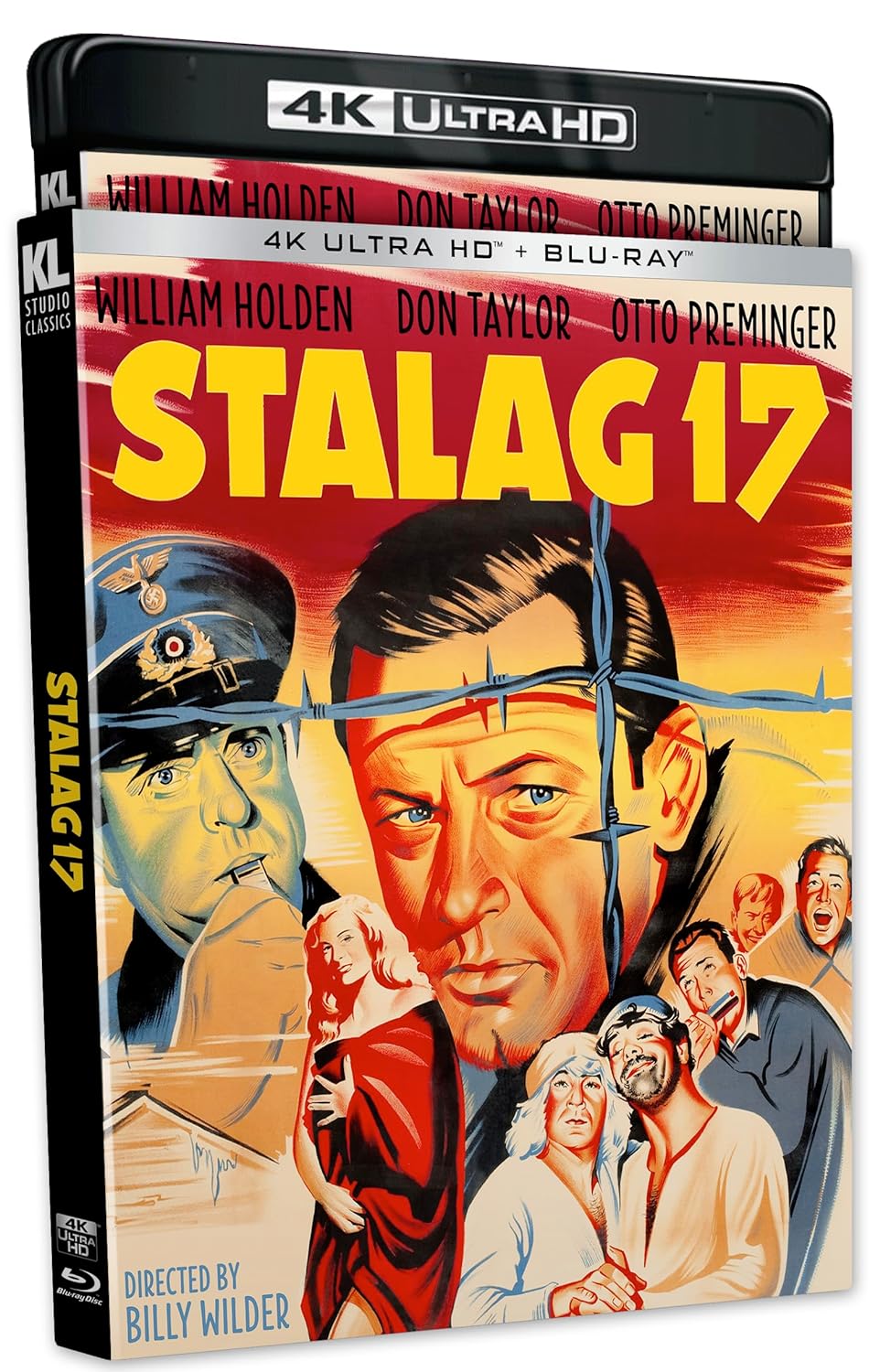
"I don't know about you, but it always makes me sore when I see those war pictures ... all about flying leathernecks and submarine patrols and frogmen and guerillas in the Philippines. What gets me is that there never w-was a movie about POWs - about prisoners of war. Now, my name is Clarence Harvey Cook; they call me Cookie. I was shot down over Magdeburg, Germany, back in '43; that's why I stammer a little once in a while, 'specially when I get excited. I spent two and a half years in Stalag 17. "Stalag" is the German word for prison camp, and Number 17 was somewhere on the Danube. There were about 40,000 POWs there, if you bothered to count the Russians, and the Poles, and the Czechs. In our compound there were about 630 of us, all American airmen: radio operators, gunners, and engineers. All sergeants. Now, you put 630 sergeants together, and, oh mother, you've got yourself a situation. There was more fireworks shooting off around that joint ... take for instance the story about the spy we had in our barracks ..."
Stop me if you've heard this before. The premise is we're in World War II, but not where all of the action is. There aren't any big firefights, and you won't see or hear any of those big guns raining Armageddon down on some poor hapless pinned-down soldiers. Instead we're inside of a German POW camp, which they called Stalags. This one is run by a self-important commandant who takes pride in the fact that there has never been an escape from his Stalag. The prisoners themselves are always trying to find a way to outwit the camp Sergeant, a rather rotund officer named Shultz. Of course, I'm talking about Hogan's Heroes. But I'm not. 12 years before the CBS comedy would hit the airwaves, iconic film director Billy Wilder gave us a quasi-serious version of that particular scenario in the film Stalag 17. The film was based on a contemporary Broadway production written by Donald Bevan and Edmund Trzcinski based on their own actual experiences at the real Stalag 17. The film was originally planned as a vehicle for Charlton Heston, but when Wilder came on to direct, he immediately dismissed the idea, believing that it would become a Charlton Heston film more than a film about its own actual elements, and he was likely correct. Heston was big at the time, coming off larger-than-life parts like Moses and Ben Hur. The role went to William Holden, and the casting would become one of those lightning-in-a-bottle kind of things that can elevate a film from good to classic. And by the way, Wilder and gang sued Hogan's Heroes when it did arrive on the scene but were not successful.

Posted in: Disc Reviews by Gino Sassani on August 18th, 2023
"It's always open season on princesses."
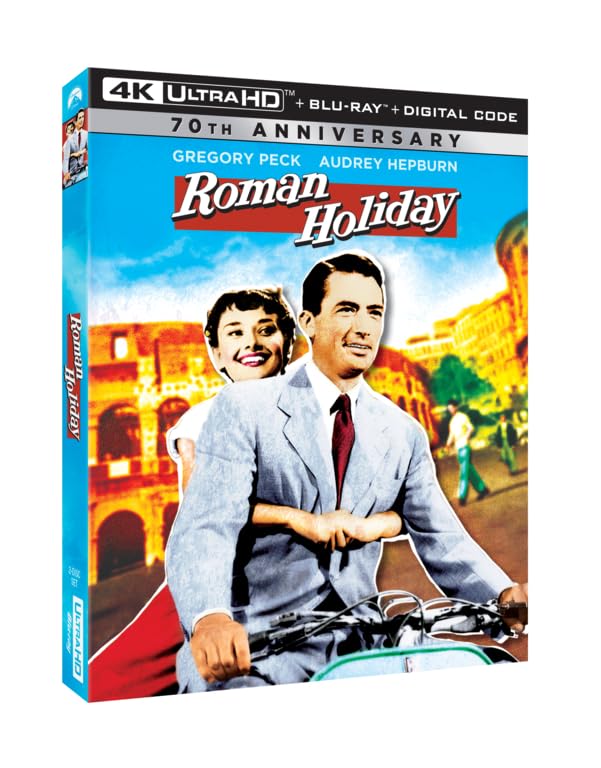
Roman Holiday is one of those classic films that had an extremely hard time getting made. Frank Capra had the rights to the story for several years. Most of what he had was based on a screenplay by Dalton Trumbo, but that was extremely problematic, as Trumbo was one of the original Hollywood Ten and was blacklisted. They were a group of Hollywood people who refused to answer questions before the Joe McCarthy-led House Un-American Activities Committee that was pretty much rooting out communist with little regard to whether they were there or not. The committee ruined thousands of lives, and in 1947 the group had turned their attention toward Hollywood. Many played along by attending the hearings, and some even passed on names of others to avoid trouble for themselves. The Hollywood Ten stood up to the madness, and it got them blacklisted. They couldn't work for any studio in the country. That meant Trumbo could not be given credit for his screenplay, and it was Ian McLellan Hunter who acted as a beard for Trumbo and took the credit and sold the rights to Frank Capra, who planned on directing the film with Gary Cooper and Elizabeth Taylor in 1949. By then at least eight other writers took shots at revisions, and the piece truly suffered under the "too many cooks" situation. The budget appeared to skyrocket, and Capra ended up selling it to Paramount for $35,000. Paramount also spent too much money and time going through various rewrites. Finally the project ended up with William Wyler, who went back to pretty much the script that Trumbo wrote under Hunter's name, and in 1991, Trumbo's writing credit was deservedly restored.
Posted in: Disc Reviews by Brent Lorentson on August 17th, 2023
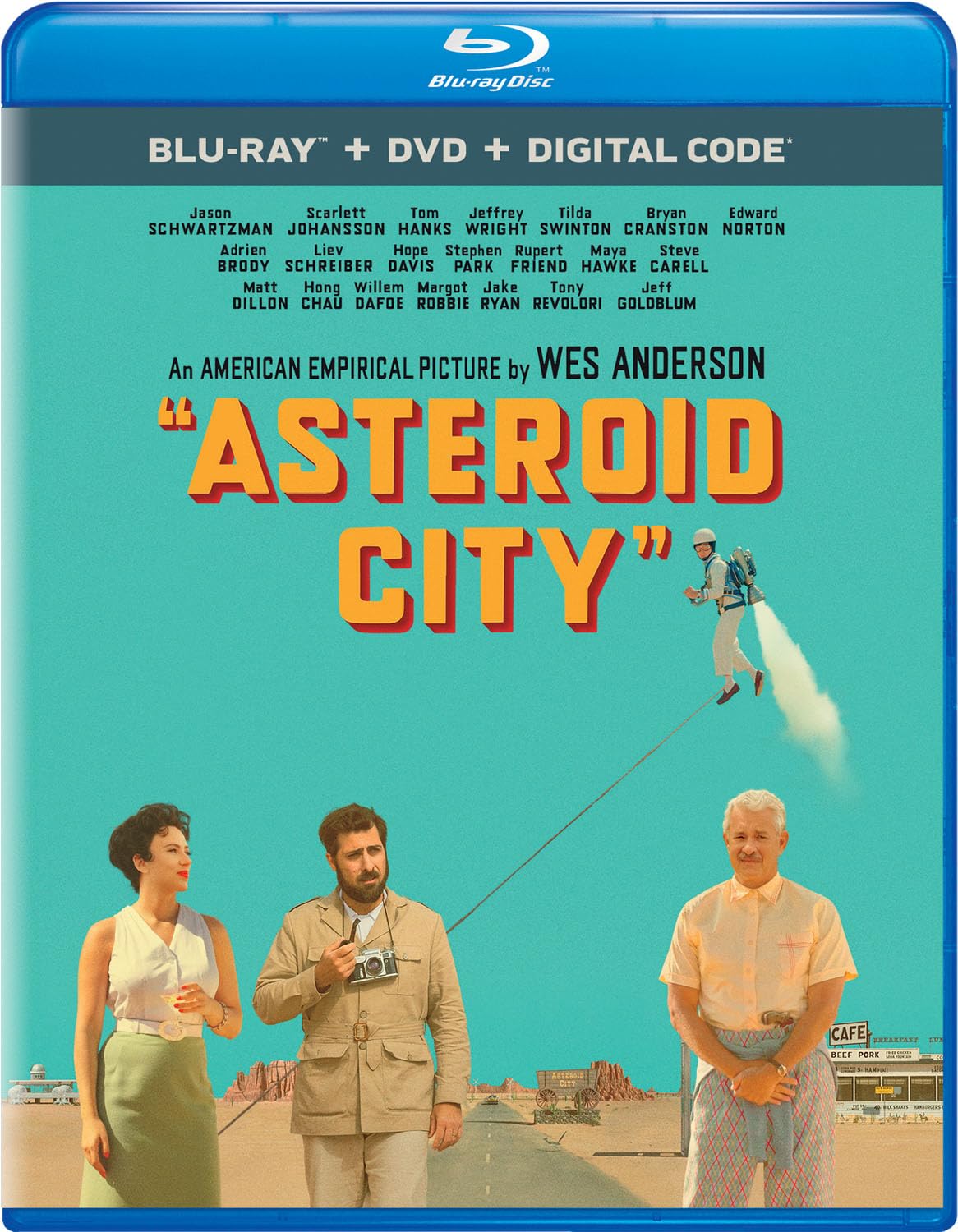
Wes Anderson is pretty much the perfect example of being a cinematic auteur. He has such a unique style that you can simply look at a couple seconds of his work, and you just know immediately you’re watching a Wes Anderson film. Even from his early days with Bottle Rocket and Rushmore to The Fantastic Mr. Fox and now Asteroid City, these films are all very different, but still one would say are uniquely Wes Anderson. His films are a bit divisive, and I completely understand, but those who are fans tend to really love his work. Personally the only my favorite from him is Moonrise Kingdom; it was a perfect blend of style, charm, and heart; then he has a film like The French Dispatch that got plenty of critical love, but I just couldn’t really get into it. That brings us to his newest release, Asteroid City, which boasts a huge ensemble cast with many familiar faces from his previous films and some big-name stars we get to see him work with for the first time. Is this a trip to the desert worth taking, or should you simply take a viewing detour?
The film is done in a unique way. The black & white portions are dramatized portions about a play that is being produced for a 50’s style TV show by a famous playwright, Conrad Earp (Edward Norton). We get to see the drama unfold as the production of the play comes to life for the TV show with the stars played by Jason Schwartzman and Scarlett Johansson. Then there is the director of the show, Schubert Green (Adrien Brody), who has his own sort of drama with his wife and his cheating ways. Maybe I missed something, but none of this was hinted at in the trailers, and to be fair, this really took me out of the film, because the behind-the-scenes action of the TV show is constantly interrupting the pace of “Asteroid City”, which is basically a movie within a movie.
Posted in: Disc Reviews by Brent Lorentson on May 24th, 2023
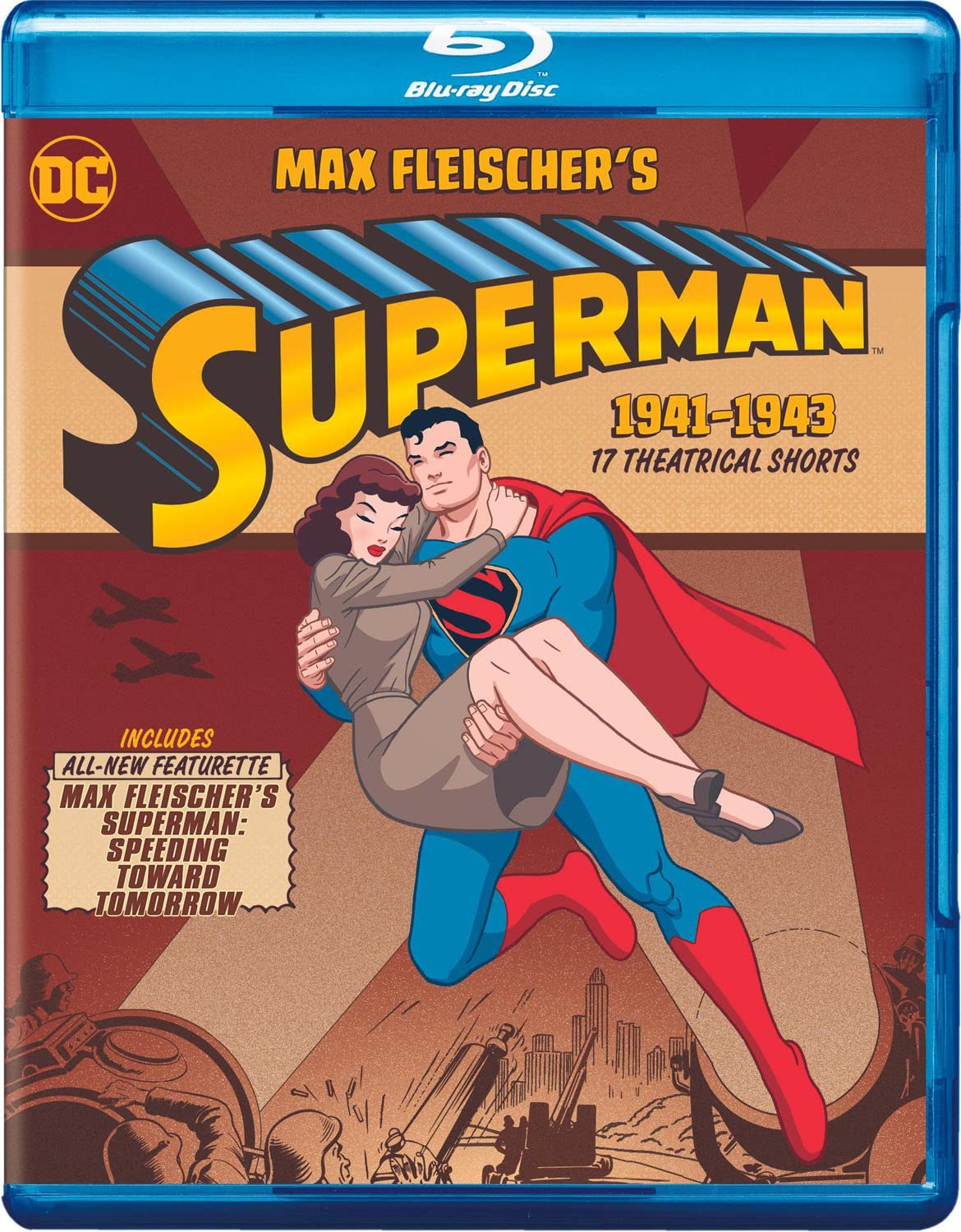
When Superman was first introduced to us, it was in Action Comics #1 back in 1938 from the writer Jerry Siegel and the artist Joe Shuster. Since then the character has become a cultural phenomenon that’s been featured in just about every form of media from radio shows, TV shows, cartoons, movies, and everything else in between. The character has evolved quite a bit since those early comic book days, and one of the characters biggest evolutions came with the Max Fleischer cartoon series. It was 17 animated short films that played in theaters before the feature film began, but these short films would draw in audiences that wanted to see this caped hero and his amazing adventures.
The collection contains 17 animated shorts.
Posted in: Disc Reviews by Michael Durr on April 25th, 2023
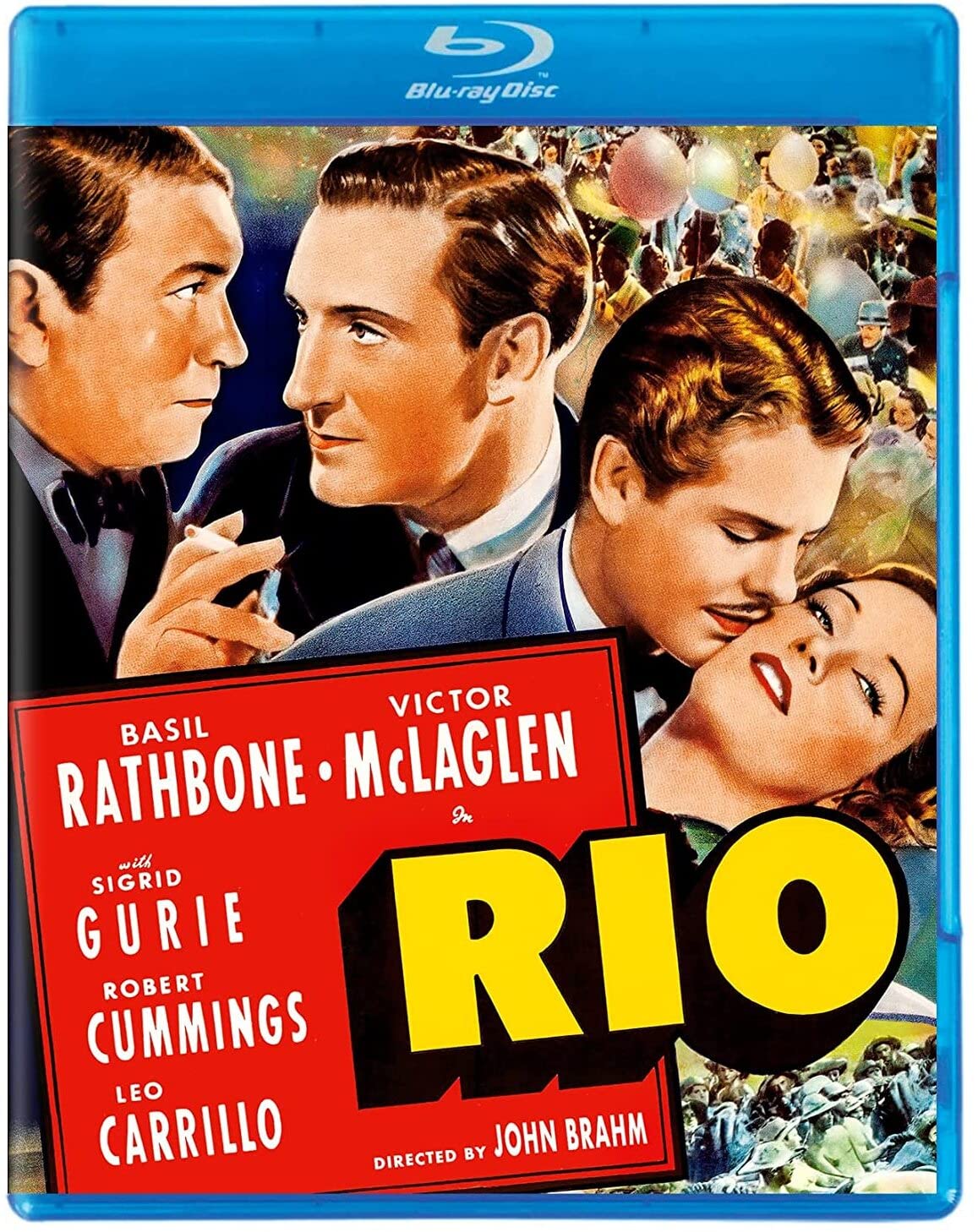
If someone were to read my biography below, one would probably learn one of two things, I have an unhealthy obsession with Alyssa Milano movies, and I deeply appreciate Basil Rathbone, the man who popularized Sherlock Holmes films. While many would argue who the best Holmes would be (Downey, Brett, Cumberbatch, etc), my heart will always go to Basil. So naturally, when I saw the movie Rio with him in the starring role had come to Blu-ray, I jumped at the opportunity to review it. Let's take a look.
We get a tight close-up of a sign that reads Paul Reynard & Associates Investment, Paris Branch. Here the board of directors are meeting and waiting for a phone call from the one and only Paul Reynard (played by Basil Rathbone). Where is Mr. Reynard? Why, he's in London securing a loan. We soon see Paul's friend, Dirk (played by Victor McLaglen) telling the board of directors to hold, Paul should be in soon.
Posted in: Disc Reviews by Gino Sassani on February 23rd, 2022
"And I thought we were pals."
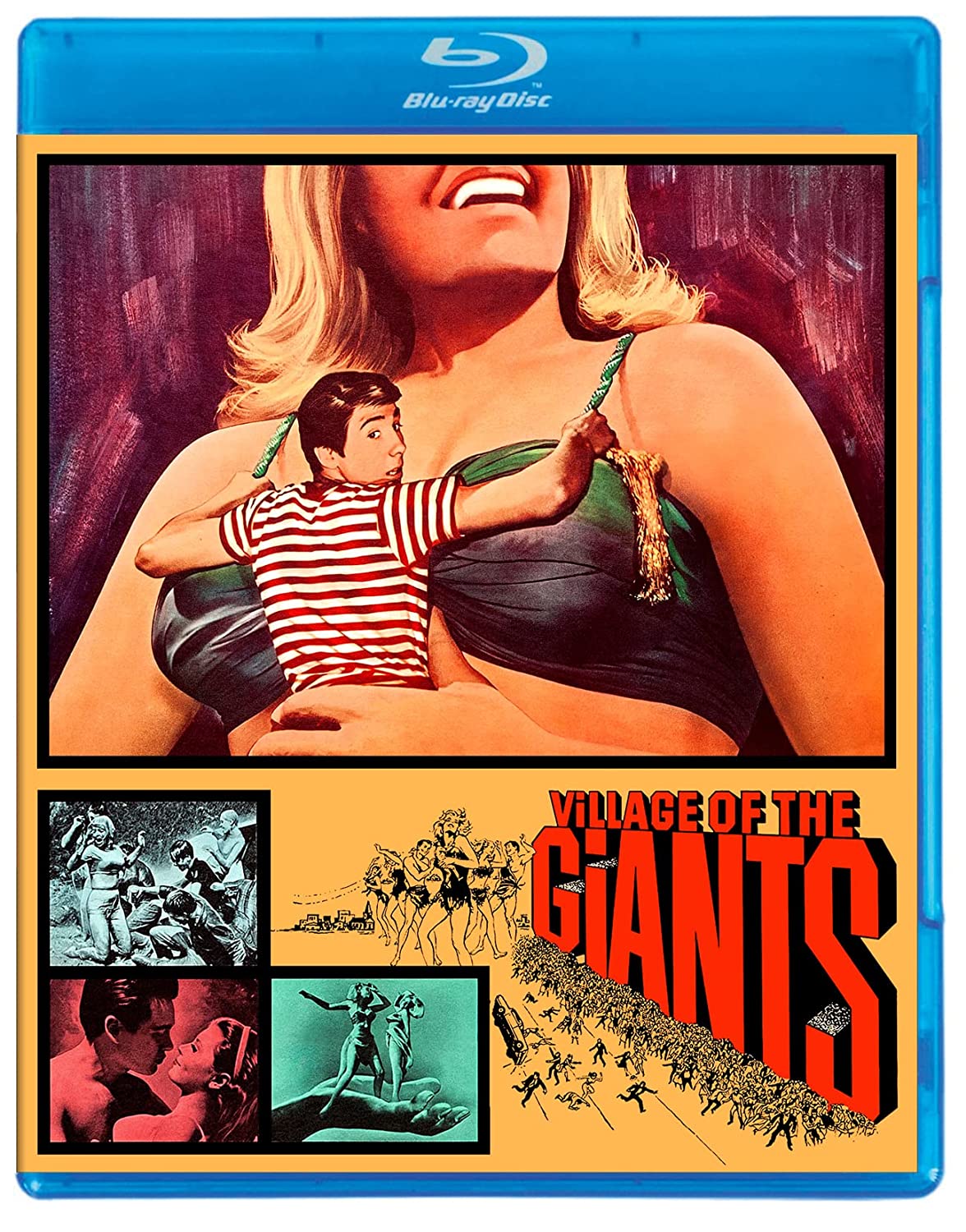
Bert I. Gordon and I shared a friend. He was one of Forry Ackerman's favorite people, and when I would see Forry, he never failed to mention Gordon. Bert I. Gordon was once the king of schlock. He was as much a marketing genius as he was a filmmaker. Like William Castle, he knew how to find something zany and odd which was just different enough to bring in the audiences. I saw most of his films of the 60's and 70's at drive-ins where most of his films were shown in those days along with many of the Hammer and AIP Poe films from Roger Corman. If you look at the B films in the science-fiction/horror genres from that time, you will find them dominated by Gordon, Corman, and Castle. Gordon often used stories in public domain so that he didn't have to pay a writer and he would adapt them with some clever "hip" idea and out would come a cheapie, but something that was always a hoot to watch. Previously you could only see Village Of The Giants in the television set where it was lampooned by those guys at Mystery Science Theater 3000, and I have that version. Now thanks to the folks over at Kino, there's a respectable version out on Blu-ray, and every schlock or Bert I. Gordon fan needs to pick this one up.
Posted in: Disc Reviews by Michael Durr on July 21st, 2020
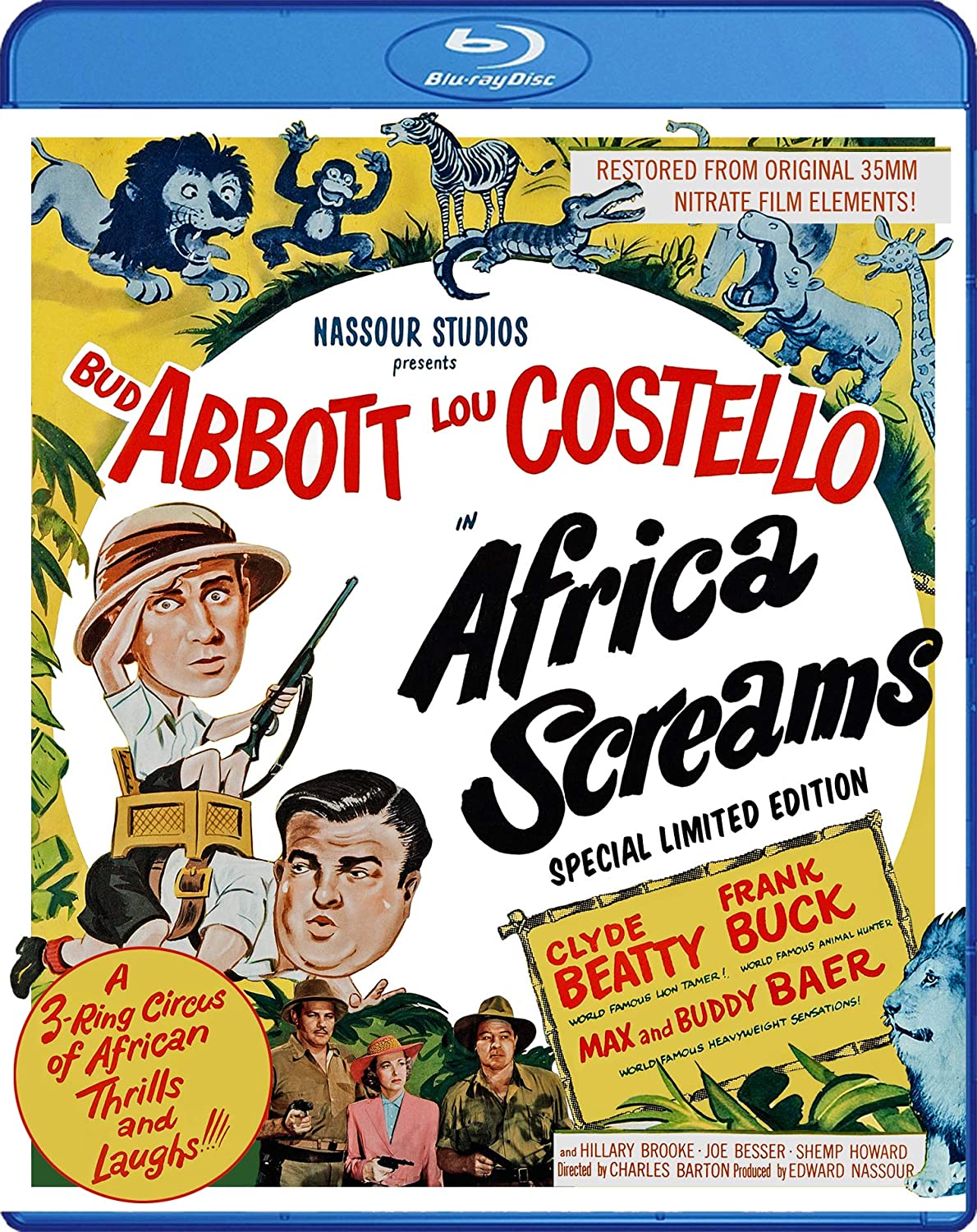
Despite my dad being away a lot on business as I grew up, he would often make the most of his time spent with me and leave lasting impressions on my mannerisms and character to this very day. We would play baseball (even though I wasn't very good); he would teach me about money and how to be financially sound (which for the most part I think I do OK). He would also introduce me to the things he enjoyed, like root beer floats and Abbott & Costello. Even though these days I can't have many root beers, I can enjoy an Abbott and Costello movie almost any time I like. One of those movies I remember watching with my dad was Africa Screams. It was my distinct pleasure to watch that movie again and bring my review to you today.
Stanley Livington (played by Lou Costello) stares down a menacing creature with a gun and a whip. Except when we pan to the fearsome creature, it's actually a small kitten. But the tiny cat does have a snarl, and it's enough to send Stanley back into the department store from which he came. Buzz Johnson (played by Bud Abbott) comes around to tell Stanley that the cat is not that scary, but Stanley is still a little concerned.