Video

When Wes Craven delivered his first Nightmare On Elm Street film back in 1984, there wasn't much expectation for the film to do anything but deliver a little profit for the new independent studio New Line Cinema. The film did quite a bit better than that. It made the small studio into a player in the industry with the budget to make mainstream films that would have never been possible if not for Craven's little Nightmare. You could say that The Lord Of The Rings owes its very existence, at least in the form of the Peter Jackson films, to Freddy Krueger. Of course, the studio just couldn't help itself, and they continued to cash in on the franchise time after time. After the 7th film, it appeared that even the fans were about done with Freddy Krueger. A misguided attempt to pit Freddy against Friday The 13th's Jason might have pulled in good money at first. But the film ultimately disappointed, and a follow-up became very unlikely, indeed. But, like all good cinema monsters, you can't keep a good fiend down. A Nightmare On Elm Street joined the increasingly long line of horror films that received the remake/reboot/reimagining/regurgitation treatment.

A lot of the 70's and 80's slasher films have been remade by now. All of the big franchise names have been reborn. Michael Myers, Jason, Leatherface, and now Freddy Krueger have all been given the reanimation treatment. With most of these bad guys, there was little problem with replacing the man behind the mask. No one actor had played any of these characters exclusively throughout the franchise run. While Kane Hodder came closest with both Freddy and Leatherface, he was not the only performer under the hood for either monster. Freddy Krueger was different, however. In all of the Nightmare films of the original run, Robert Englund had been the only actor to play Freddy. There was an attempt to replace him in the early goings of the second film, but the filmmakers discovered rather quickly that you can't just put a stuntman in the makeup and turn him loose. Freddy had a personality that had become quite intermingled with that of Englund. So the very first question that had to be answered when the subject of a do-over came up was who was it going to be in the red and green sweater wielding that knife glove. Could anyone but Robert Englund make the part work?

Written by Diane Tillis

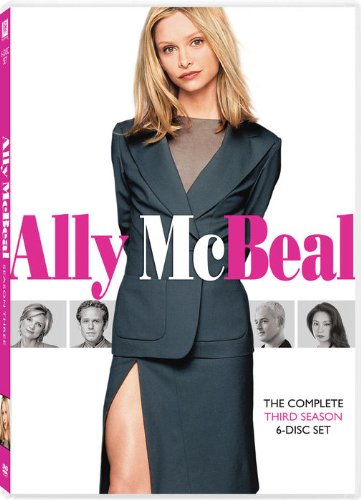
I’ve come to learn that you either love the 1997 – 2002 American drama-comedy series Ally McBeal, or you loathe it.

A hitman is getting into his senior years; a notable luxury for someone in his line of work. To feel more secure, he plans to pull off one last job before calling it quits. In order for this film to have an interesting plot something surely must go wrong, and it does. Now reunited with his son, who is aspiring to learn from dear ole (estranged) dad and elevate himself in the crime world, Charlie Valentine hopes to settles things in one way or another.

Gangster films either have too much Scorsese or too much Tarantino in them, and not enough originality. With a slew of typical scenarios, over-wrought tough guy dialogue and enough self-congratulatory bravado to make Joe Pesci blush, this film is hardly bringing anything fresh to the table.

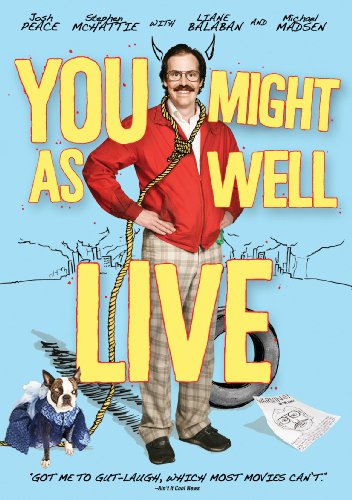
Robert Mutt feels like a hopeless loser and tries to “off” himself (several times). Even in death, he is a failure and finds himself in a mental asylum. Upon receiving some experimental treatment from a new therapist, his confidence is (seemingly) restored and he sets back out into the real world to become a real “somebody.”

Without a doubt, this would be classified as a “Dark Comedy” for it does not skimp on the nudity, vulgar jokes, drugs, violence, cannibalism, and other assorted bits of madness and politically incorrect gems. At the same time, the film is almost endearing in how relentless it is. The disabled are fair game for jokes, but also play the most sentimental roles for our lead (especially one catatonic girl who wins his heart). Mutt is as naive as a young child, and even though the man who is bent on ruining his life is clearly a manic pedophile, he still assumes the best of him and does his best to simply get around him. Mutt's quest is an adorable one but it takes him to the strangest places imaginable. Thanks to hallucinating his life long hero, Clifton Manitoba, an infamous baseball player, and getting some advice from said hallucination, Mutt does everything from dealing out animal porn DVDs to roller skating with a transvestite to find the three things he needs to fell like a somebody: some money, a girl, and a championship ring.

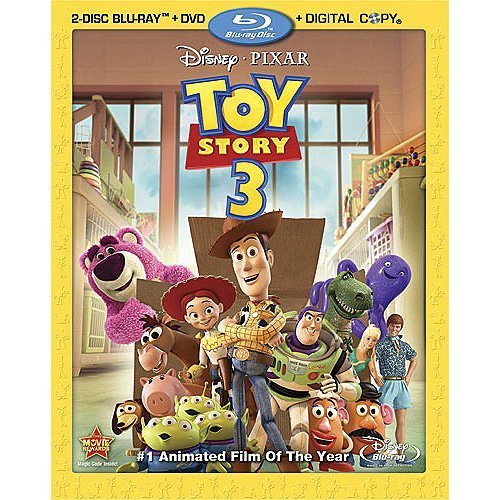
"The Toys Are Back In Town"

That's right. All of your favorite toys are back in Pixar's latest great film Toy Story 3. This time the toys are dealing with the inevitable. Andy (Morris) is about to go off to college. It's been a long time since he's played with his friends, and they are getting desperate and worried they will get tossed away. Although Andy bags them to be stored in the attic, a misunderstanding sends them to the curb and a date with the garbage truck. After that close call they decide to get themselves donated to Sunnyside Daycare, where they hope to live out their lives with tons of children to play with them. But things aren't all that sunny at Sunnyside. The place is ruled by the iron paw of Lotso Bear (Beatty) and his cronies. The bad guys include Big Baby. He and Big Baby once were accidentally abandoned by their owner and Lotso was replaced, making him bitter. Now the toys have to escape the armed camp of Sunnyside.

In 2024, the Earth’s ozone layer has been depleted (or so most assume), and life is protected by an electromagnetic shield designed by Connor MacLeod (Christopher Lambert). Eco-crusader Virginia Madsen, however, believes that the ozone layer has restored itself, and the corporation that runs the shield is maintaining it for its own purposes. Meanwhile, back in the past, villain Michael Ironside sends assassins to the future to kill Lambert, who is an aging man as the film begins… The assassins fail, Lambert becomes young once more, and he summons Sean Connery back from the dead. Ironside arrives to take care of his nemesis personally.

I could go on, but I feel a brain embolism coming on. The Highlander concept was never the most intelligent SF/Fantasy idea (and I’m not just talking about casting Frenchman Lambert as a Scot and Sean Connery as a Spaniard), but here the vacuity becomes painfully evident, and the time travel aspect is beyond stupid. The dialog is equally mind-numbing, and for a storyline of comparable inanity, the closest thing would be Battlefield Earth. From Lambert’s embarrassing old-man voice to the ridiculous assassins, new idiocies assault the viewer with every passing second. Granted, the production was shut down before the movie was completed, but it is hard to imagine the film was really salvageable. This edition represents the closest version yet to what the filmmakers had in mind. The special effects have been heavily overhauled, but this isn’t a case of George Lucas-style endless tinkering. The previous version of Highlander 2 had effects that were slapped on by technicians who were not part of the original team, and the look of the film has been notably improved (the shield, for instance, is now blue instead of a garish red). So the film looks much better, but no amount of effort can make a silk purse out of this sow’s ear.

Written by Diane Tillis

Jumping Jellybeans! Scooby Doo deserves mention in any article that discusses the best and most-loved animated television series in history.

In 2004 DOG the Bounty Hunter first took to the airwaves. On the surface it looked like yet another one of those reality cop shows where camera guys followed the men in blue as they took down the bad guys. Dog wasn't a cop; in fact he'd spent a part of his life on the other side of the law. Still, he was decked out in a Kevlar vest with a badge hanging from a chain around his neck. The cameras followed him around as he kicked in doors and stalked his criminal prey. But this isn't really quite your typical reality cop show. These guys aren't cops. They're bounty hunters. It's a family business that provides bail bonds to get the bad guys out of jail and has the muscle to track them down if they decide to skip their court appearances. This Dog doesn't get stuck holding the bag for nobody.

The Chapman family lives mostly in Hawaii. They do spend a lot of time at a second home in Colorado, where Dog is originally from. But it doesn't really matter what the location might be. The job is always the same. The team is strictly a family affair. Dog (Duane) Chapman is "Big Daddy" and the driving force behind the operation. Beth is Dog's wife and runs the business side of the operation. That doesn't mean that she's not right there on the hunt offering logistic support. Dog's right-hand man is his brother Tim. They have been partners for decades. Then there are Dog's two sons Leland and Duane Lee. This is the core group. They operate out of two SUVs as they track and take down the fugitives. The youngest member of the team is Dog's daughter Baby Lyssa. She's a small and shy girl, but she gets in her share of licks every now and again. There is also Dog's nephew Justin, who has a spotty record of commitment to the group.

For me, I’ve never understood the fascination behind zombies unless it involves Milla Jovovich (See Resident Evil). They are undead, lumber around, make strange noises and have a primal urge to eat brains. So, admittedly I saw Colin in my review pile and mostly shrugged. Another zombie movie, *twirl finger*. However, after reading the back jacket, I realized this one had something more: it was told from the zombie’s point of view.

Colin (played by Alastair Kirton) walks into his house and closes the door. He calls for Damien, presumably his roommate. We hear gunshots in the background and a general ruckus. Colin walks over to the sink and starts to wash his hands. He notices a steady flow of blood down his arm. That’s when he pulls back his sleeve to reveal a massive wound.

Season 5 of this most well-meaning of sitcoms finds a major change. With the cast now having aged to the point that not all the girls could reasonably be in high school together, Mrs. Garrett (Charlotte Rae) opens Edna's Edibles, a bakery-slash-coffee-shop, and the opening two-parter establishes the new status quo (essentially doing whatever is necessary to keep the main characters together). Otherwise, things proceed as they always have, with each story combining standard sitcom hijinks with Important Life Lessons and forays into weighty subjects. So, for example, the friendship between Natalie (Mindy Cohn) and Tootie (Kim Fields) hits a rough patch when Natalie's reaction to being asked out by Tootie's cousin is perceived, by Tootie, to be racist.

The series' flaws and strengths are much as they always were. On the one hand, the commitment to deal with serious issues is commendable, and the actual integration of these themes into the structure of the stories is fairly smooth. On the other, the performances are thuddingly broad, and the dialogue (and its attendant jokes) is both chronically and acutely awful. In the final analysis, only viewers who have retained a devotion to the show will really be able to get much out of this.