Video

This documentary is a mainly a sea of praise for the late guitar legend, as it promises to not focus on “drudging up scandal and outworn hypothesis about his lifestyle and ultimate death.” historical footage tells the biographical portions while high-profile interviws with the likes of Lemmy Kilmister (Motorhead), Eric Clapton, Mick Taylor (Rolling Stones), Stephen Stills (Crosby, Stills & Nash) and moany more, plus narration by super-fan Slash (Guns N Roses).

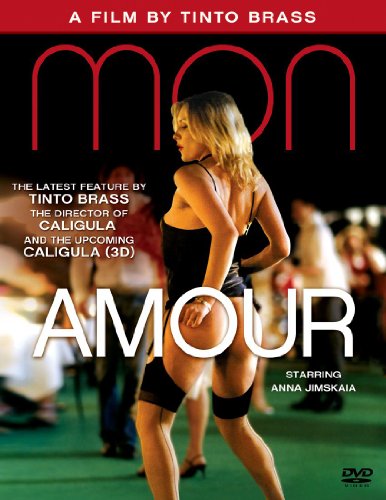
After a series of releases from erotic cinema specialist Tinto Brass's early career, Cult Epics now gives us one of his latest works. Marta (Anna Jimskaia) loves her husband Dario (Max Parodi), but he has become inattentive and selfish in bad, when he shows any interest in sex at all. Feeling lonely and unappreciated, Marta takes in the sights of Mantua, and in a museum she encounters Leon (Riccardo Marino, who is no more French than I am Martian), a sexually aggressive alpha male with whom she begins a passionate affair, with an eye (of course) to re-igniting Dario through jealousy.

Zeus' mighty bolt has been stolen, and whomever holds it may have the power to topple the king of the Gods. Zeus suspects Poseidon's estranged, half-human son is the Lighting Thief and threatens his wrath upon the entire realm if it is not returned. Percy Jackson is Poseidon's son, making him a Demi-God, but as far as he knows, he is a just a high school student living with Dyslexia, ADHD and struggling to live with his abusive step-father. As mythic monsters and Gods all start to threaten Percy's life, his best friend and his mother both reveal themselves to be protectors of his life, both with connections to Greek Mythology.

Written by Diane Tillis

Only once in a blue moon will a filmmaker come along to change the way films are created…for an entire country! Kazakhstan – born director Timur Bekmambetov is best known in America as the director for Wanted (2008) and for producing 9 (2009) alongside Tim Burton, but in Russia he is known as the man who changed the film industry after the collapse of the Soviet Union.

We begin in Vietnam, where the unit of which Jacob Singer (Tim Robbins) is a member comes under attack. Jacob is bayonetted, and as he struggles with his wounds, the film flashes forward to his post-Vietnam life in New York City. He works for the post office, is divorced, is still grieving over the death of his youngest son (Macauley Culkin), and is living with his new girlfriend (Elizabeth Pena). He is also being tormented by visions of demonic figures. And then suddenly this life turns out to be a dream, and he's at home with his wife and all of his kids are alive. Or is that a dream? And what really happened in Vietnam?

Manchuria, the 1930s. The Japanese army has just acquired a treasure map, and are transporting it across the desert wastes by train. But the man who sold the map wants it back, and engages a snappily dressed killer (Byung-hun Lee) to steal it back. He is, of course, the Bad. He stages a spectacular (and spectacularly violent) train robbery. As fate would have it, at precisely the same moment, the Weird (Kang-ho Song) is also robbing the train, and the Good, in the form of a bounty hunter (Woo-sung Jung) is on board, too. The Weird makes off with the map, and what follows is a series of chases as the various factions scramble to get that map.


Most people are aware that I don’t care for romantic comedies but nothing gets under my skin more than a horrible prison movie. My attempts to forget the movie are usually successful until the next time a similar movie appears in my review pile. Maybe it is the cliché plot, the contrived and stereo-typed characters, or the male on male forced action. How would a movie fare where it simulates the jail experience in a behavioral experiment? I dare to find out.

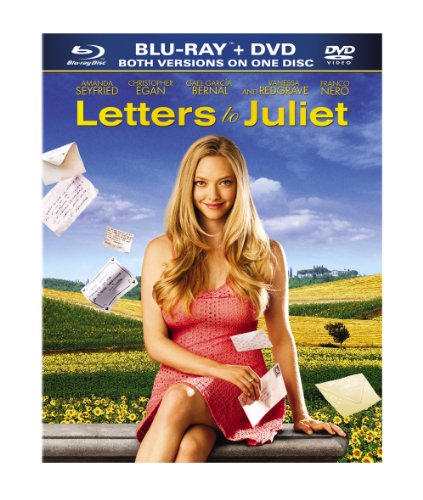
When I met my husband, and found out he wrote reviews, I never pictured myself writing as well. I had never really played with the concept, other than some short stories. But here I sit, once again, in front of my computer screen with another disc in front of me. And what do we have this time? A romantic comedy. Yes folks, I love the torture. I was asked to do Letters to Juliet as a favor for my busy husband who is adjusting to his busy new job. This has to land me home made waffles in bed sometime in the near future. But was this one really that bad? Could there be a decent romantic comedy out there? Meh, we shall see. And away we go!

Tennessee Williams was both a prolific writer and celebrated personality in his day. His plays are still making the rounds of community theaters and even more than a few higher- end performance halls around the country. Songs have been written about the guy, and he's quite honestly become a bit of a mythic legend over the years. A lot of that owes, in no small part, to his huge hit A Streetcar Named Desire. The 1947 play was a huge hit on its own. The thing even snagged a Pulitzer. There hadn't been a bigger play before it, and few have reached the popularity and classic status since. Then director Elia Kazan got his hands on the material.

"There is a fifth dimension beyond that which is known to man. It is a dimension as vast as space and as timeless as infinity. It is the middle ground between light and shadow, between science and superstition, and it lies between the pit of man's fears and the summit of his knowledge. This is the dimension of imagination. It is an area which we call the Twilight Zone."

It would be very hard, indeed, to argue against the impact that The Twilight Zone has had on television. To say that the series was a milestone in that medium would be an understatement of the worst kind.