Video

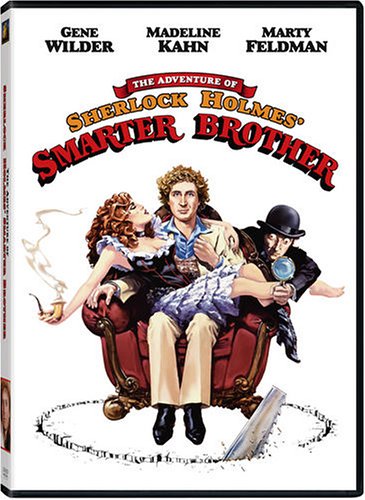
The Adventure of Sherlock Holmes’ Smarter Brother has everything that Young Frankenstein had except Mel Brooks (although he does make a very brief vocal cameo). With the combined comedic genius of Gene Wilder, Madeline Kahn, and Marty Feldman, how could this film go wrong? Like Young Frankenstein, Sir Arthur Conan Doyle’s Sherlock Holmes offers a rich classical mythology to mine for material. A wonderful supporting cast featuring the likes of Dom Deluise can’t miss, right? No so elementary, my dear Watson. Focus. ...hat’s the rub. I’m not referring to the work of the cameramen here. Gene Wilder appeared so sure of his own brilliance that he forgot to bring the story.

The game’s afoot, and it smells like it, too. Never before has so much talent been squandered on so little substance. I understand this is a farce, and I’m fully prepared for the absurd. I’m just not prepared to go nowhere. I was extremely disappointed at every turn. Toilet humor replaces wit. There are also no straight men. What’s Costello without Abbott? Everyone is so into trying to be funny no one offers to be the foil. Simply uninspired. The entire film makes one feel they are witness to one large in joke and we’re on the outside of the punch line. The musical numbers make the film all that much more intolerable.

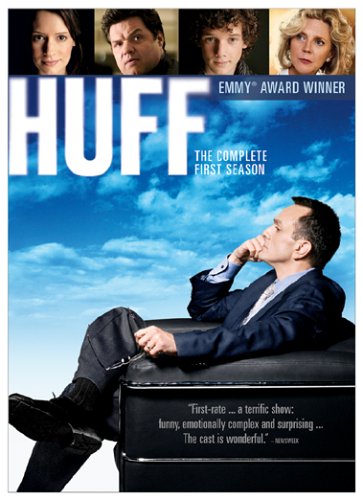
Huff – The Complete First Season, the Emmy Award-winning series from Showtime, comes to DVD from Sony Home Entertainment, and I have to say I couldn’t be more pleased with discovering it. The one thing I miss about premium channels in my cable package is getting to take part in the onslaught of superior original programming channels such as Showtime and HBO have to offer. Needless to say, Huff is a fitting inclusion to my reasons for jealousy towards all you subscribers out there. It follows the life of...Craig Huffstodt (Hank Azaria), a psychiatrist in need of a few answers himself after witnessing the shocking suicide of a young gay patient during a therapy session. The tragedy reminds him to focus more on his own life, and start actually living it – but as the first thirteen episodes of this season attest, Huff has too much “angel of mercy” in him for such a task to be easy. The show, unflinching in its honesty, examines both sides of the “helping others” coin. Often times, one person helped translates to the neglect of several others much closer to the do-gooder. I enjoyed that aspect of the show, as well as its well-drawn characters.

Hour-long dramas such as Huff are free to create more depth and realism to their characters. In this particular case, it’s like watching a great novel set to film. Instead of telling you what to think or believe about a person or situation – as films do - Huff manages to “let it be,” and allows the viewer to draw conclusions on their own. Azaria has a stellar cast to fall back on, too. Blythe Danner (Huff’s mother); Oliver Platt (his oft-unscrupulous attorney); and Paget Brewster (his wife), put everything they have into their characters; and Bob Lowery (writer and series creator) knows how to present them in a lifelike manner. You don’t just get their shining moments of humanity or inhumanity – you also get to observe these men and women, when life throws them a curve, and they’re forced to walk a different path – unnatural to their basic natures, but realistic to the human condition. It’s a warts-and-all series that, like life, manages lighthearted moments of humor one minute, and heartbreaking tragedy the next. Who knows how long it will last? But with this first season, Lowery and company have built a strong foundation deserving of many more to come.

Synopsis

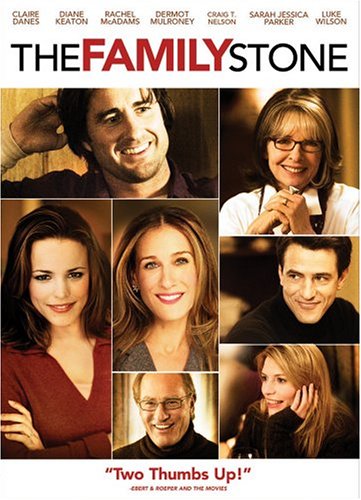
Sarah Jessica Parker is the very Manhattan, high stress and rather repressed fiancee of Dermot Mulroney. They head off to small-town New England for Christmas with his family, headed by matriarch Diane Keaton. This is the family Stone of the title, and their free-and-easy lifestyle clashes with Parker’s, and she is seen as an interloper. She is subjected to no end of humiliations, principally at the hands of Rachel McAdams. But when Mulroney’s brother Luke Wilson shows up, Parker finds herse...f a rather oddball ally.

Manny Coto almost saved Star Trek. After 2 years of Rick Berman’s floundering on Enterprise, Coto came in and gave the show its legs. It was too little too late, of course. The show would be canned when most critics, myself included, thought the show was finally clicking. This near resurrection should come as no surprise to anyone who has seen Odyssey 5. Coto created this Showtime series. Superior f/x and a compelling story arc drove this cable cousin to Stargate SG-1.

The astronauts of the Space Shu...tle “Odyssey” encounter one situation the nerds at NASA hadn’t prepared them for: the total destruction of Earth. The five surviving crewmen don’t have time to consider their situation before an alien approaches them with a sad story. It seems that every time he reaches a sentient species, he arrives after they have destroyed themselves. Fortunately for everyone, he has the power to send the crew’s consciousness back to their bodies 5 years in the past. They will relive the last five years, but with the knowledge they already possess in an attempt to uncover the conspiratorial elements that will eventually destroy the world.

I must first admit that I never saw The Sentinel when it originally aired in the 90’s. I guess this one never made my radar. It’s basically a cop show with a somewhat sci-fi or maybe paranormal twist. It seems that Jim Ellison’s (Burgi)plane went down in the jungles of South America. While the crash killed his crew, he not only survived, but somehow obtained strange super powers. The idea is that this ancient jungle tribe develops a “sentinel” to be their guardian. For years Ellison protected the village before his...eventual rescue. Now he’s a cop with a certain advantage. Ellison has heightened hearing and vision. The rub is he can’t really control when or where it kicks in. As I watch the series, predictably the powers always kick in at just the right time. His other senses are also super-active, but sight and sound make for the most used power. Of course there has to be a team. Blair Sandburg (Maggart) is an anthropologist who studies Ellison. Captain Banks (Young) also contributes to the team This was an early UPN show. It should be noted that this series has nothing at all to do with the upcoming film with the same title.

Video

Synopsis

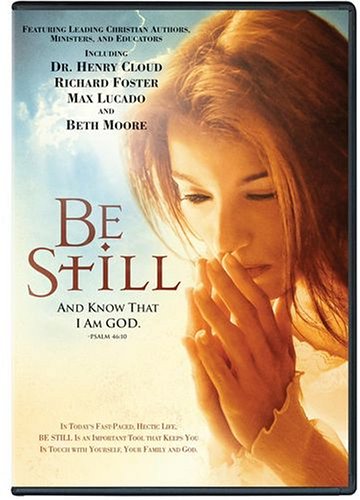
Not much to is. This is one larger film and a series of shorter ones (though they are all of a piece) extolling the virtues of contemplative prayer, which, it appears, consists in sitting quietly and listening to God, rather than speaking yourself. The whole thing drips in every “inspirational” cliché you can imagine (lots of shots of parks, clouds, sunsets, gentle spring rains, and so forth). Oddly, for a piece that’s supposed to help viewers practice being quiet, some of the speakers here ...re hardly advertisements for that fact. Priscilla Shirer, in particular, speaks in a Camille Paglia-style torrent of words, making one extremely doubtful that she has ever had a quiet moment in her life. But whatever. Those who like this sort of thing will surely like this sort of thing. Obviously, I’m utterly outside the demographic for this thing. For a chuckle, check out the consumer review on Amazon to see how this bit of flotsam can generate hugely polarized viewpoints. Hilarious.

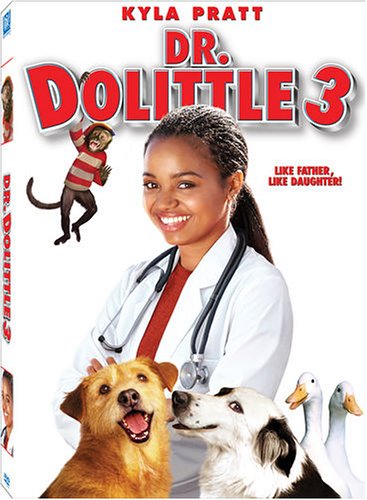
Dr. Dolittle 3 is yet another unnecessary direct-to-DVD sequel of a film, whose glory has long since passed. Young actress Kyla Pratt takes center stage as the next generation of Dolittle to inherit the gift – or curse – of hearing animals speak. At the outset of the film, she is ashamed of her gift, and her lineage. But when she is sent to an old family friend’s ranch for the summer, she begins to see that a talent is what you make of it. Along with telegraphed comedy, lightweight rivalries, and a budding rom...nce with a young ex-bull rider, Kyla’s feature debut is a harmlessly amateur piece of family film fluff, sure to delight the kiddies (but only the very young).

From an adult’s perspective, the film contains a lot of weaknesses – namely stemming from a core plot founded and developed on one cliché after another. The slapstick aspects of the humor have also been done to death – and here, they’re not very effective. The whole “will they or won’t they save the ranch” thing also feels like familiar territory, and tension is absent as a result. It’s been said there’s nothing new under the sun – certainly, this is the case at the Durango Ranch in Dr. Dolittle 3. But sometimes, a film filled with regurgitated plot points matters not when the eyes appealed to are that of a child. Kudos to the animal trainers, though – they do a fabulous job making all the ensuing hijinx feel authentic.

Synopsis

Judi Dench is the Mrs. Henderson of the title. Newly widowed in 1937, she decides to put her considerable fortune into owning a theatre. She buys a dilapidated building, has it redone, and hires Bob Hoskins to run it. He is just as headstrong as she is, but their memorable clashes work out to the benefit of their musical revue. When the box office begins to flag, Dench suggests having naked women on stage. A phenomenon is born, one that will not close even during the worst of the Blitz.

Clint Eastwood’s film Million Dollar Baby tells the story of an aging fighter trainer named Frankie Dunn (Eastwood) who eventually decides to train a hillbilly girl (Swank) who thinks she can be a boxer. Dunn runs a gym in the Los Angeles area. One day a girl named Maggie Fitzgerald, from Missouri, approaches Dunn informing him that she has been working at a waitress job since the age of 13. She tells Dunn that boxing for her is the only way she can escape this type of job her life has thrown at her.

< ...>Dunn, naturally, doesn’t want to give this girl a chance because there is no way he will train a girl. Dunn’s former boxer Scrap (Morgan Freeman) convinces Dunn to give this girl a chance because she knew growing up that she would be nothing but trash if not given any chances. Scrap serves as the film’s narrator, similar to his role in The Shawshank Redemption. His voice is very flat and subdued usually putting no effect on what he is ever saying. He talks about how the girl walked into the gym, how she refused to ever leave and how Frankie decided to finally train her. Scrap, to some, may just serve as a person who tells us what is going on, but he is more. Scrap serves as an individual breathing life into his own when he is not focusing on Maggie or Frankie.

Dawson’s Creek follows the lives of Dawson Leery (James Van Der Beek) and his friends, as they struggle through their formative years and – in this final season – search for their places in the adult world. The first episode pulls a cruel tease in finally putting Joey (Katie Holmes) and Dawson together before the rug is pulled out from under their love affair the very next episode. Some might say it’s a decision from which the season never recovers – I say the show never had its footing to begin with. Plagued ...y writer and executive producer Kevin Williamson’s penchant for overwriting every single character, the two-hour finale has more laughable life affirmations that in no way resemble the ways that actual people talk than you can shake a stick at. His dialogue – and that attributed to other series scribes – revels in its own verbosity. No matter what the character’s intellectual playing field, he or she has something profound, deep, and flowery, to say; and such speech is usually followed by a self-congratulatory retort from another character – as if the writers are throwing out a line they think sounds terrific, and they’re so pleased with themselves, they must have the other conversational participant pat them on the back for thinking of it. I can’t tell you how many times you’ll hear things like, “So true”; “Well-put”; “I never thought of it that way”; “I couldn’t have said it better myself”; blah, blah, blah…

The final decisions for the two-hour finale are also terribly clichéd and can be seen coming from a mile away. Williamson drives one major character’s death into the ground so much that by the time he/she actually goes, you’ve lost all emotional attachment to the character, and are just thankful you don’t have to listen to one more weeping goodbye. On an unrelated note, the show heavily promotes the gay lifestyle. What your feelings are with regards to this are your own business, and as a free citizen, you have every right to them, but what Dawson’s Creek is guilty of is its refusal – along with the rest of popular entertainment – to feature positive characters opposed to the lifestyle. In this case, the show skirts the issue all together, with the exception of a moment where Jack (the primary gay character) refers to such thinking as living in “the Stone Age” – a relatively small potshot, but still a potshot. I’m not suggesting the gay characters be portrayed in a negative light – but it would be nice if the writers had a large enough understanding of the human race not to paint the opposition in such broad, generic strokes. Of course, if these writers had such ability, they wouldn’t be the pompous lit-class rejects they come across as in this show.