DVD

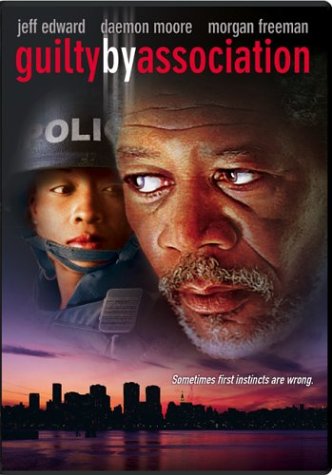
A cautionary tale about gangs and racism we have the story of Rick Brown convicted of drug offenses and now out on probation trying to get his life back together. With no where to go he gets sucked back into his own life. Lieutenant Redding (Morgan Freedman) is on the hunt for a ruthless gang killer. Things soon go bad for Rick and he finds himself in the middle as the violence erupts. Unfortunately the acting, directing and storyline is so weak that you are not really interested if the two s...orylines are ever going to come together.

Video

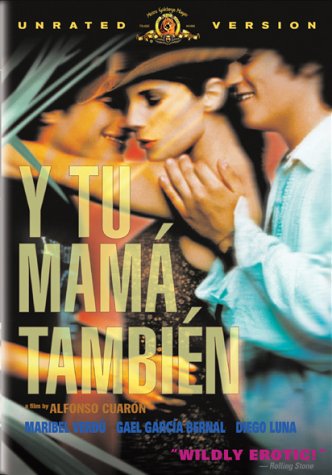
Don’t be fooled into thinking that Y Tu Mama Tambien is just another trite love triangle movie, one that would have some catchy Sum 41 or Weezer song in all the promos. This movie is about far more than that. It’s about the nature of friendship, the consequence of action, teenage machismo, self-realization and learning what it means to enjoy life. This isn’t the Mexican version of Road Trip, either. They don’t get into wacky hijinks or the comedy of the absurd. Almost everything about Y Tu Mama T...mbien elicits audience reaction through its genuineness, its ability to get viewers to recognize the reality in the sometimes unorthodox relationships. It’s also got one of the most smoldering sexy women I’ve seen on the big screen talking about some seriously caliente subject matter (and at least according to female viewers I’ve spoken two, the two young men are attractive, too).

Y Tu Mama Tambien proves that no matter what language is being spoken, no matter what country a story takes place in, teenage boys are teenage boys. Such is the case with Julio (Gael Garcia Bernal) and Tenoch (Diego Luna). They’re typically immature, sort-of adhering to a “boys club” manifesto (advocating such values as smoking pot and masturbating), splitting their sides over farting in a car and describing the bouquet. To each other, they put up a brave front at the idea that their women are heading abroad for the summer, shrugging it off as their chance to dip their beaks in other wells. When left alone with them, though, they’re sentimental and weepy (though that might just be to get them laid one last time, another sign of their age). They sit around, smoking pot and using the local country club when it’s closed on Mondays, and their summer starts slipping away from them, in relative ho-hum fashion. Even through some of their stranger behavior, they remain imminently identifiable, which is one of the many factors that make the film accessible to even the casual movie fan; one doesn’t have to have an interest in foreign movies to appreciate it. Moreover, it gives the audience a real chance to care about the boys, a credit to Garcia and Luna’s polished, authentic (and more than a little brave at this point in their careers) performances. They encounter the stunning Luisa (Maribel Verdu) at a family party. She’s stunning, and the two instantly try to ply her with their “charms.” Not long after the party, they convince her (or she decides) to go with them to a surfside paradise, a place only they know, a beach called “Boca del Ciel” (Heaven’s Mouth). The catch: it doesn’t exist. They made it up while trying to entice her, and now, they have to find such a place. Tenoch and Julio are resourceful young men, and eventually will set off in a beat up station wagon on a quest for the perfect beach. Along the way, they hope to have sex with Luisa…though neither of them are sure how, much less even thought of what that might do to their trip.

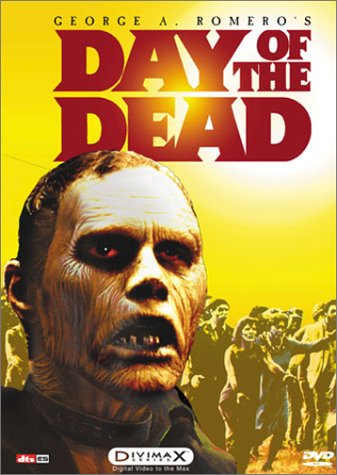
Decades before The Blair Witch Project drew attention to the small independent filmmaker, George Romero and a small band of Pittsburgh natives took the horror genre by surprise with the stunning and atmospheric Night of the Living Dead. Day of the Dead was the third and (so far) final entry into the Romero zombie trilogy. Romero admits that this is the least acclaimed film in the series while professing that it is his own favorite. There is absolutely no question that makeup magician Tom Savini did some of his greatest work in this film. The gore effects are as realistic as they are gruesome. Tom has told me countless times that he carries a certain extra pride about the work he did on the film. The problem is the story is just too over the top to be taken at all seriously. Most of the acting is really B grade with the notable exception of Howard Sherman’s brilliant portrayal of Bub the mascot zombie.

Synopsis

Angel: Season Two (a spinoff from the wildly popular Buffy the Vampire Slayer) follows the continuing adventures of Angel (David Boreanz), the vampire who searches for redemption while battling otherworldly demons and spirits on behalf of man. Angel and his team of modern day Ghostbusters find ways to track down trouble before it gets out of control, giving each episode an action-packed and imaginative flair, with numerous long-term story arcs running throughout the season. The overall theme of the en...ire season seems to be the character’s journey from relative good to a dark, lonely, near-resignation to evil, all played aptly by the brooding Boreanz. I wish I could tell our readers more, but I have a severe handicap when it comes to capturing the essence of the series that has made it (and its progenitor) so popular.

The problem is that before receiving my copy for review, I had absolutely NO contact with anything even remotely related to this show. Not only had I avoided watching Angel, I never watched a single segment of Buffy the Vampire Slayer (though I did see the movie). This left me in a difficult position, as the show presumes prior knowledge of the backstory, and seems to rely on the viewer’s presumably previously forged emotional attachments. I don’t know if the previous season explains why Wesley, the staff nerd, is with Angel Investigations, but I am pretty sure that it wasn’t just to be the show’s dry witted foil to the bubbly, at times overly-Valley Cordelia. The way everyone reacts to the idea of Darla being around certainly points to some sort of encounter in Season One, but we only see her as part of Angel’s distant past here. I’m not sure what the conflict is in Angel, or why he wants to be human, because I have no idea who the character is to this point. I’m not asking the writers of shows like this to cater every year to the uninitiated, but for some reason, this show felt a lot more difficult to get into from the start of Season Two than something like NYPD Blue, or the inimitable (at least for the first six years) X Files. On its own, Angel: Season Two is a reasonably well written, very imaginative and occasionally thrilling product (though sometimes it takes the “kitsch” a little too far), but without Season One to build on, this one feels an awful lot like a big inside joke. Since I’ve never been a vampire lore enthusiast, Angel: Season Two just wasn’t my thing.


Synopsis

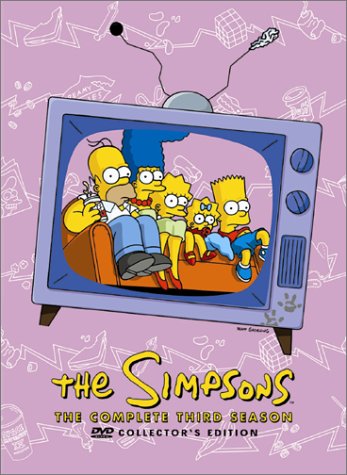
Popular culture aficionados and entertainment critics alike have been saying for quite some time now that the last ten or twelve years of television has seen some of the worst shows in the medium’s history. The nineties were filled with more flashes in the pan than an Iron Chef marathon, and even the longer running shows seem to be forgettable tripe the further away they get in our collective rear view mirrors. It’s mindboggling to think a show like Mad About You ran the better part of the decade, isn...t it? What about Wings? Remember the sixty-eight Steven Bochco creations that weren’t NYPD Blue? In the last twenty years, there really are very few shows that will be remembered for decades to come, and even fewer sitcoms. You’ve got your B-listers like Frazier (snooze), Married With Children (good for about three years), Home Improvement and the fluffy Friends (which I still cannot see the redeeming quality in). There really are only three “immortals” in the last two decades of situation comedy on the small screen: The Cosby Show (pre-Rudy’s moustache), Seinfeld (pre-Susan’s death), and the top of the heap, The Simpsons. In fact, some (myself included) consider The Simpsons the best prime-time comedy of all time, besting even giants like All In the Family, Cheers or M*A*S*H. Blasphemy, you say?

Think about it this way: from the season we have here, the show’s third, from 1991, through the 2001 season, no show on television was as consistently funny as The Simpsons. Each episode was packed with two or three levels of jokes and allusions, maximizing rewatchability to a level that no show ever had, using everything from broad humor gags to obscure movie and literary references. Its animated nature meant that things could happen to characters that one couldn’t do to real-life actors, and that there was never any travel budget. Want to do The Simpsons in Tokyo, Australia, Africa, Los Angeles? Just draw a different background. That means The Simpsons had a bigger universe to work in. It also means that the characters never age, meaning there’s never any need to do a “cute infusion” like The Cosbys did. Bart will always be ten, Lisa will always be eight, and Maggie will never speak a line. All In The Family and The Cosby Show, even <i <married With Children had to throw new pie-faced smiling little scamps into their later episodes in an effort to punch up the cute factor. Instead, this tactic just ratchets up the annoying factor and pronounces the show’s death-knell even more clearly. That’s never going to be an issue for Springfield’s first family. Their cartoon world also allows The Simpsons to be far less politically correct in their humor. What other show could have the main character beating up a former President? How many jabs at both the right AND left wings have you seen Friends make over its run? Somehow, in spite of being yellow-skinned, four-fingered doodles, even periphery Simpsons characters find a way to be fully three dimensional personalities (it’s not really a mystery…the writing staff has to be a Murderer’s Row lineup of brains and comedians). Musical numbers and guest spots on live-action shows either seem overly-contrived or thrown-together, and are always a nightmare (remember Cop Rock?). The Simpsons, the most musical show on television, finds a happy medium, every time. One simple, mathematical fact has to be the strongest evidence to this show’s long term brilliance. If one took away the fifty worst episodes of The Simpsons, it would leave over 250 shows that are funnier than everything else on TV. That’s TEN YEARS of comedic gold. No other show can make that claim, and that’s why this is the landmark show of the last 25 years, even with its weaker last two years.