DVD

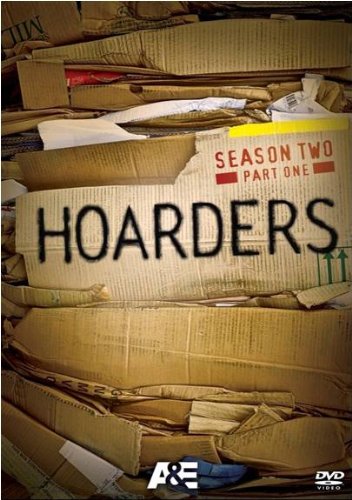
"Compulsive hoarding is a mental disorder marked by an obsessive need to acquire and keep things, even if the items are worthless, hazardous, or unsanitary. More than three million people are compulsive hoarders. These are two of their stories."

The reality television craze has entered its second generation. In the beginning, shows merely found folks who were willing to put themselves in odd circumstances for the chance to earn some big payday. That first wave included such shows as Big Brother, Fear Factor, and Survivor. These shows quickly evolved, or devolved, depending on your point of view, into the relationship game. Instead of cash, these contestants went looking to marry, most often a millionaire. It turns out that Chuck Barris actually invented the reality show in 1965 with The Dating Game and later with The Gong Show. He discovered, way ahead of his time, that we wanted to see real people make complete fools of themselves for love or money. When the writers’ strike hit, these shows became a gold mine to network executives looking to fill prime-time slots. That's when everyone noticed just how cheap these shows were to make.

This single DVD contains 9 Christmas episodes of CBS’s most endearing comedies. All were influential to those that came after. These weekly shows offered that much-needed relief from the pressures of whatever decade they appeared in. The stars are names that everybody knows, even those that appeared 50 years or more ago. Celebrate Christmas with these classic moments in television history.

In the first season of Showtime’s Californication, we were introduced to David Duchovny’s character, bitter yet upbeat writer Hank Moody. Hank, after moving to Los Angeles on the heels of his first novel – a critical darling entitled “God Hates Us All” – has recently lost his long-time love and, by extension, his daughter, to a straight-arrow bore who makes his girlfriend Karen (Natascha McElhone) feel safe.

The first season told us the story of Hank’s attempts to win Karen back and his increasingly perilous relationship with a sixteen-year-old Lolita, whose inclination for combining sex with a wicked right hook leads to one of television’s all-time great novel titles. Oh yeah, and it also featured lots and lots of raunchy sex between Hank and many gorgeous women. This was a major reason for the show’s notoriety, but what really makes the show work is Duchovny’s portrayal of Hank. He imbues him with a charming kind of good-natured nihilism and, even when he is being a grade-A jackass, we still like him.

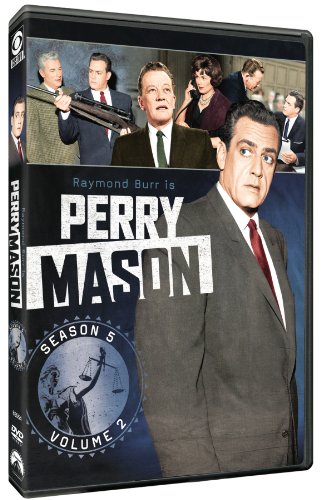
Erle Stanley Gardner wrote crime fiction, and while many of his 100 or so works are unknown to most of us, he created a character that has become as identified with criminal lawyers as any other in fiction. It was in these crime novels that Perry Mason first faced a courtroom. He developed a style where he would investigate these terrible crimes his clients were on trial for. He would find the real killer, and in what has become a Hollywood cliché, reveal his findings in a crucial moment during the trial. While we may not remember the novels, we all remember the man in the persona of Raymond Burr.  Burr had a commanding presence on our screens and enjoyed a well deserved 11-year run as the clever lawyer. What makes this run so amazing is that the show followed pretty much the same pattern the entire time. We always know what’s going to happen, but we wait eagerly for that gotcha moment when Perry faces the witness on the stand. We know when he’s got the guy squarely in his sights, and we can’t sit still waiting for him to pull the trigger. OK, so maybe that’s a little over the top, but so was Perry Mason. From the moment you heard that distinctive theme, the stage was set. To say that Perry Mason defined the lawyer show for decades would be an understatement. Folks like Matlock and shows like The Practice are strikingly similar to Perry Mason. If you haven’t checked this show out, this is your chance. See where it all began.

At this rate, it’s going to be quite some time before you complete your collection. I’m not even sure that DVD will still be a viable format before the end of the series on DVD. It’s another half season, and the episodes continue to fly at us at a snail’s pace. But slow and steady wins the race, and as long as the quality episodes continue to deliver that classic Mason charm and style, I guess folks like us will continue to come back for more.

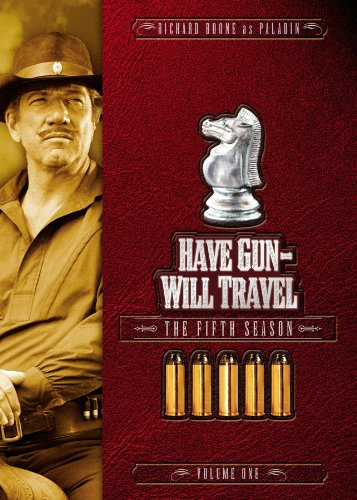
’Have gun, will travel’ reads the card of a man. A knight without armor in a savage land…”. Those words ended every episode of Have Gun Will Travel, sung by Johnny Western in a time that such words could be sung without irony. Outside of Richard Boone’s black-clad, craggy Rhett Butler gone-to-seed gunfighter, that song was all I could really recall about this venerable Western from television’s golden age. Would it, like so many revisited shows from my youth, ultimately disappoint? Or would it hold up fifty years after it was originally broadcast, viewed as it would be by the far more jaded, cynical man I’ve grown into?

The verdict? It’s pretty darn good.

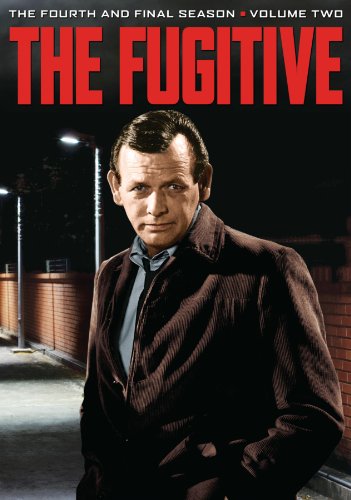
“The man is Richard Kimble and, not surprisingly, the man is tired. Tired of looking over his shoulder, the ready lie of the buses and freight trains. Richard Kimble is tired of running…”

The elusive “one-armed man” is one of the best known television icons of all time. The plight of Dr. Richard Kimball has been the subject of numerous imitations and even a feature film staring Harrison Ford as Kimball and Tommy Lee Jones as his pursuer. Tim Daly left the ranks of comedy to fill the shoes of Kimball in a very short-lived revival series. While some of these efforts managed to capture the essence of The Fugitive, none can truly compare to the real thing.

Written by Diane Tillis

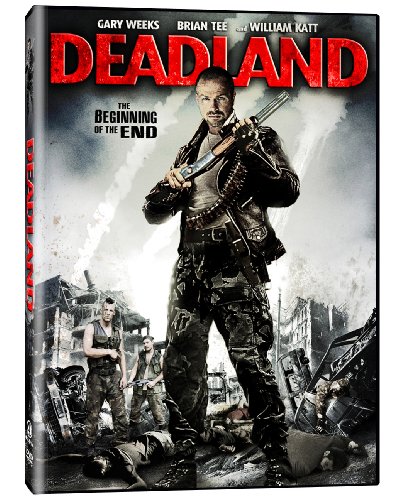
Deadland is about a man searching for his wife five years after an apocalyptic event has changed the world.

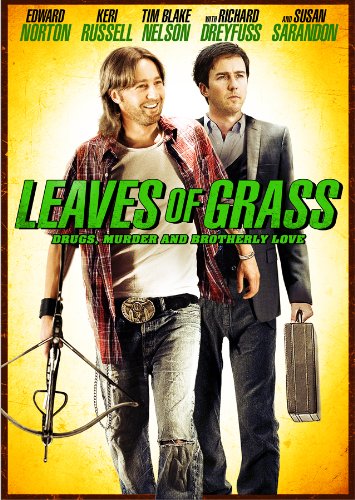
Leaves of Grass, the latest film from writer/director/actor Tim Blake Nelson, is one of those rare films that defies both description and expectation. While marketed as a violent stoner comedy along the lines of Pineapple Express, Leaves of Grass is far more difficult to categorize. Yes, there is comedy, though not as much or of the type one would expect. And yes, there is violence, but a far more realistic and less cartoony variety than you would think. But there is much more to this little film - there is thought and reflection and philosophy and poetry behind every piece of dialogue, and you get drawn into it so that, halfway through the film, it doesn’t even strike you as odd that you just watched Keri Russell recite Walt Whitman while gutting a catfish.


As the film opens, we are introduced to the lead character, Bill Kincaid (Edward Norton in the first of his two roles here), a Classical Philosophy professor at Brown. We meet him as he lectures an adoring group of students on Plato and soon afterward is fighting off the advances of a young female student. Bill is clearly a brilliant academic, and is being courted by the big schools. We also learn about his humble roots; he grew up poor in a little town near Tulsa, and earned his way into the academic elite.

Supergroups generally don’t last very long. In one album and out the next, it is usually a case of too many egos trying to co-exist. A favorite band of mine can certainly be described as a supergroup: Velvet Revolver. The lineup is made up of powerhouses from such great bands as Guns n Roses and Stone Temple Pilots. It is grandiose power rock and a whole lot of awesomeness.

It is the year 2005, Velvet Revolver has just released the album Contraband in the year prior. The album would eventually sell over 2 million copies and even won a Grammy for their efforts. As a result of their success, a tour was pretty much automatic. So, it was little surprise that the tour ended up in Houston, Tx for a show at the Verizon Wireless Theater. The band put on a great show and the crowd was enthusiastic in return.

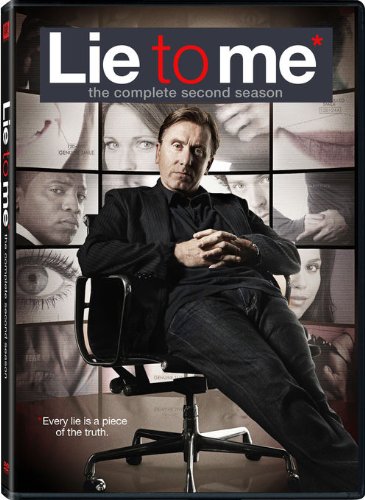
"Cal Lightman sees the truth. It's written all over your face. It's also in your voice, your posture, the words you choose. Give him five minutes and 20 questions and he'll know whether you went off to Argentina to cheat on your wife, lied about a well-timed stock sale, or murdered a one-night stand."

I spent quite a few years as a detective. My specialty turned out to be in the interview room. When some of my fellow detectives had a suspect they couldn't break, they often called me in. It was my job to get the person talking. You see, the company’s insurance recovery from the theft was based on how much I could get the thief to admit they had taken over and above whatever they just got busted for. I have to admit that I rather enjoyed the job. I was able to read the person's emotions well enough to gauge how my approaches were making the suspect feel. The key was to be able to separate the truth from the deception. Well, it turns out there's a science behind what I just took as instinct. Apparently, our faces and body language are almost impossible to control, and anyone who could read and translate that language would be nearly impossible to deceive. I don't recall consciously looking for any of these things. I could just tell. After watching a season of Lie To Me, I'm not so sure that there wasn't more to it than just instinct.