HEVC

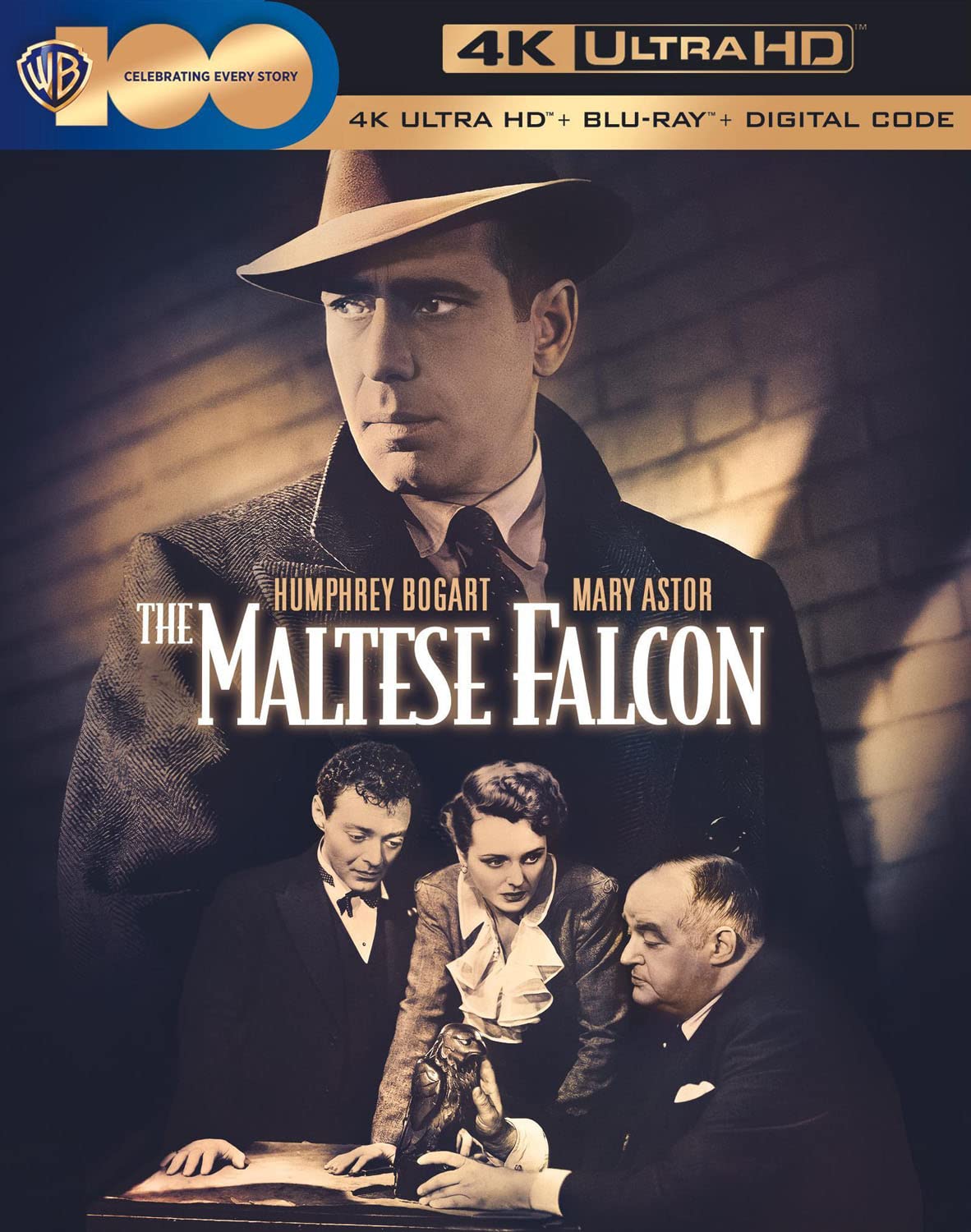
"In 1539 The Knight Templars of Malta paid tribute to Charles V of Spain by sending him a Golden Falcon encrusted from beak to claw with rarest jewels --- but pirates seized the galley carrying this priceless token, and the fate of the Maltese Falcon remains a mystery to this day."

What is not a mystery today is the significant role that The Maltese Falcon has played in cinema history. The film itself was a remake. In fact, it was actually Warner's third attempt to film the Dashiell Hammett novel in a single decade. The first version came in 1931 and starred Ricardo Cortez as Sam Spade. That film also featured Dwight Frye as Wilmer Cook. The film was a moderate success but never really delivered on the potential of the source material. Five years later Warner would attempt a comedy version of the story in Satan Met A Lady. It was a total flop. It would only take another five years before the studio took its third crack at the material. In this case, the third time certainly was a charm.

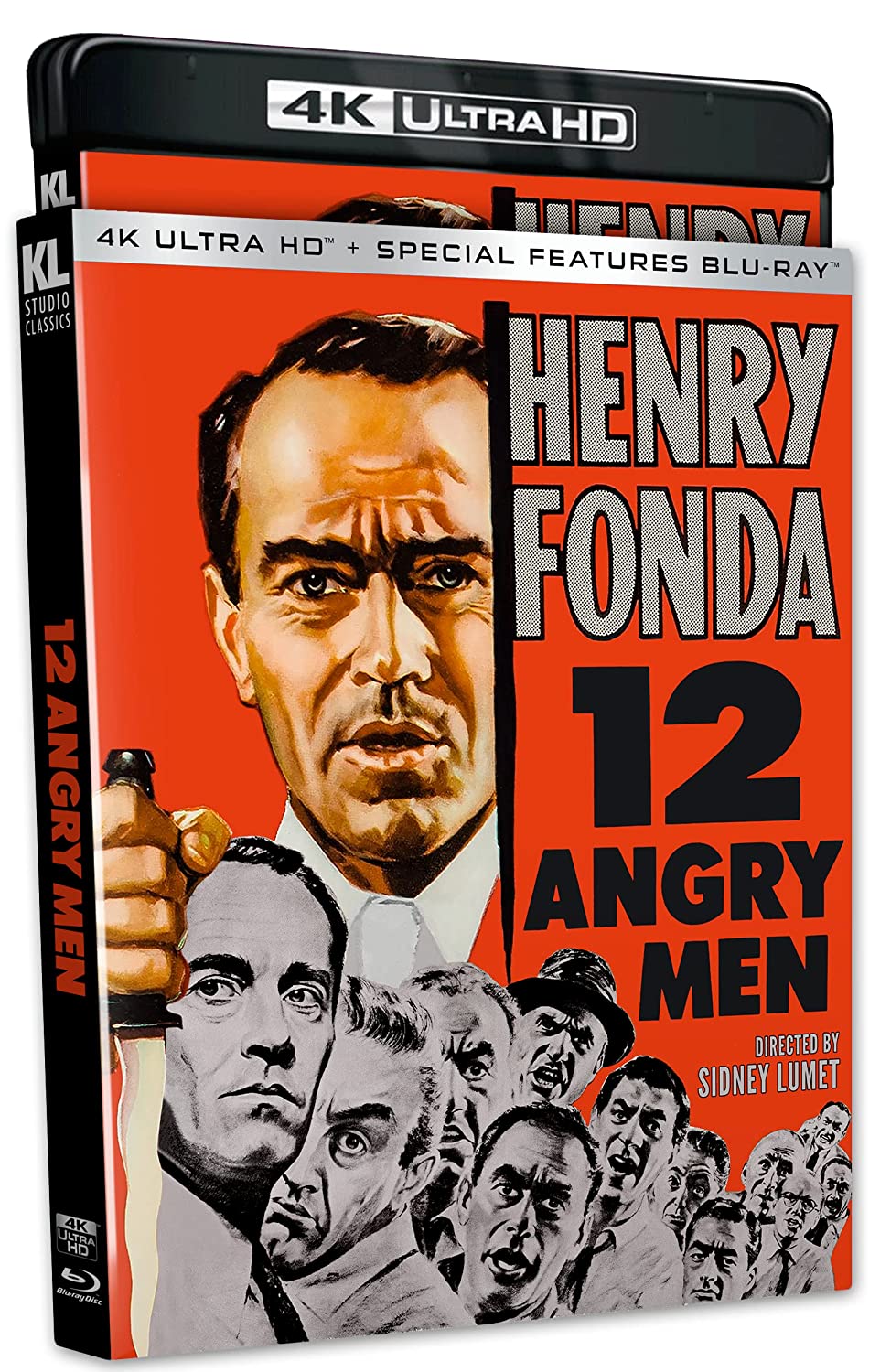
12 Angry Men is one of those rare films that appears to defy all the Hollywood constants and yet become one of the best films of its kind ever made. The setting is entirely too claustrophobic. With the exception of two bookend scenes, the entire film takes place in the tight quarters of a jury deliberation room. The story had only a couple of years earlier been the subject of a live television drama, so the story was far from a fresh idea. The director was a complete unknown who had not at that point directed a major picture. Enter Henry Fonda, the only member of the cast who was a strong A-list name. He was also the driving force behind getting the film made. He produced the film and was involved with most of the major decisions. With all of these elements going against it, you would expect the film to fail miserably, and that’s exactly what it did. During its premier run, the film only lasted a week and was a complete financial failure. It happens all the time, and we would expect the story to end there, but it didn’t.

Enter the 1970’s. There was a rush of independent television stations that were looking for anything and everything to fill up air time. This constant need for programming meant pretty much any film that could be had cheaply was bought and aired, often for an almost nauseating number of showings. 12 Angry Men was one such film, but something amazing happened. People began to notice just how brilliant the film actually was. By then that first time director, Sidney Lumet, had gone on to rather remarkable success. Films like Fail-Safe, Dog Day Afternoon, Serpico, Murder On The Orient Express, and Network had exposed just how much talent the young man actually had. Suddenly the kid from Philly was hot, and the public became interested in his earliest work. Everyone discovered what Fonda already knew back in 1957: Lumet was a genius. These television airings led to revival screenings at local movie houses, and before the first year of the 1980’s this one-time failed film was an admired classic.

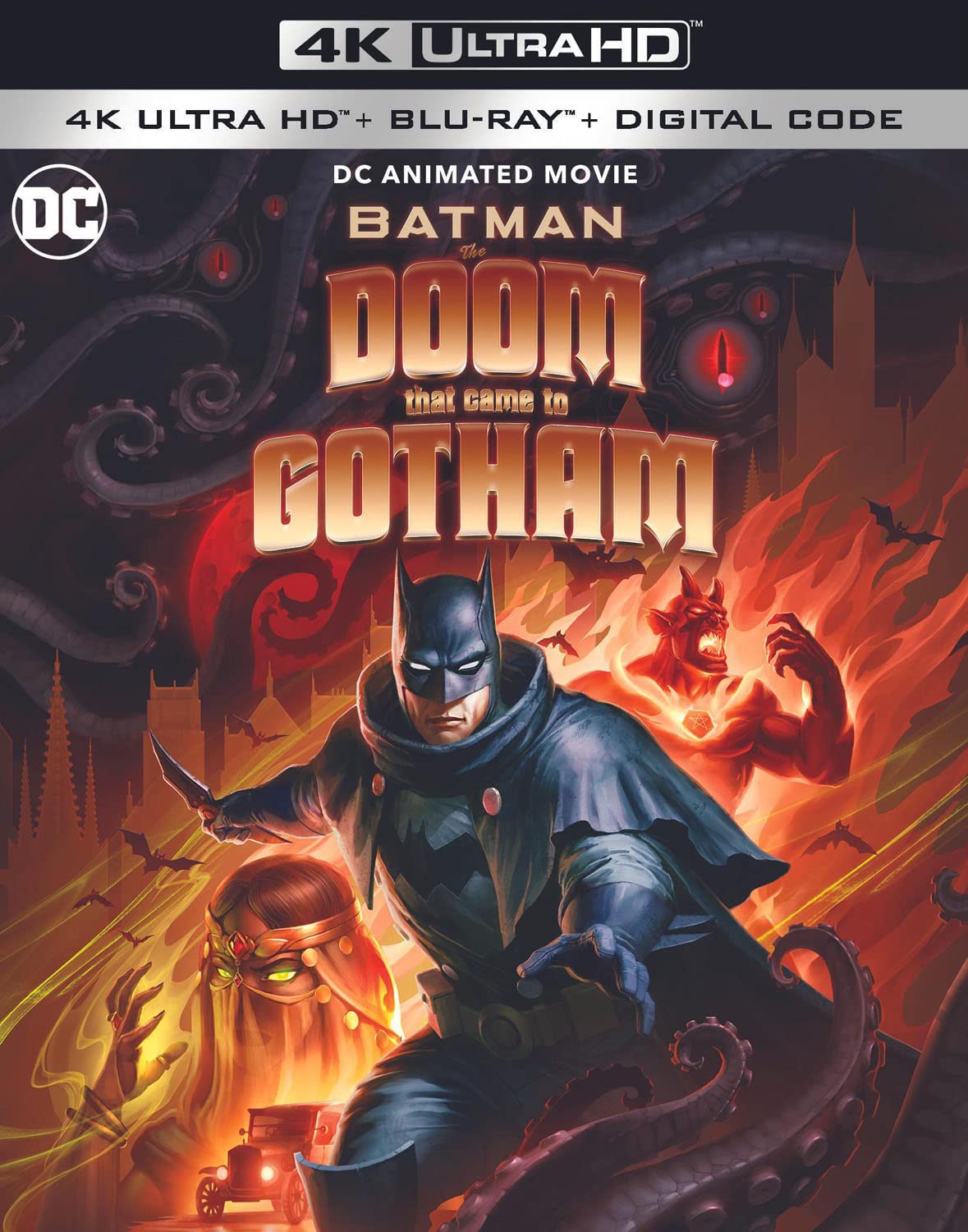
"Him is he who bays and slavers forever outside time and space, who shambled down out of the stars when Earth was new and spawned abominations in the seas and blights upon the land. Woe to man when He comes again. To gaze upon his form is to invite madness. That is why in order to serve Him I chose to make some adjustments. Him, The Lurker is on the threshold, and behold, He is coming..."

The latest release from the Warner Brothers animation team in the world of DC Comics is Batman: Doom That Came To Gotham. This series of animated films is no longer part of any shared universe as the many that came before might have been. At least for now these animated adventures are standalone stories, often with their own atmosphere and universe. That's certainly true of Batman: Doom That Came To Gotham. This is likely the most uniquely-styled entry in the series of animated feature films.

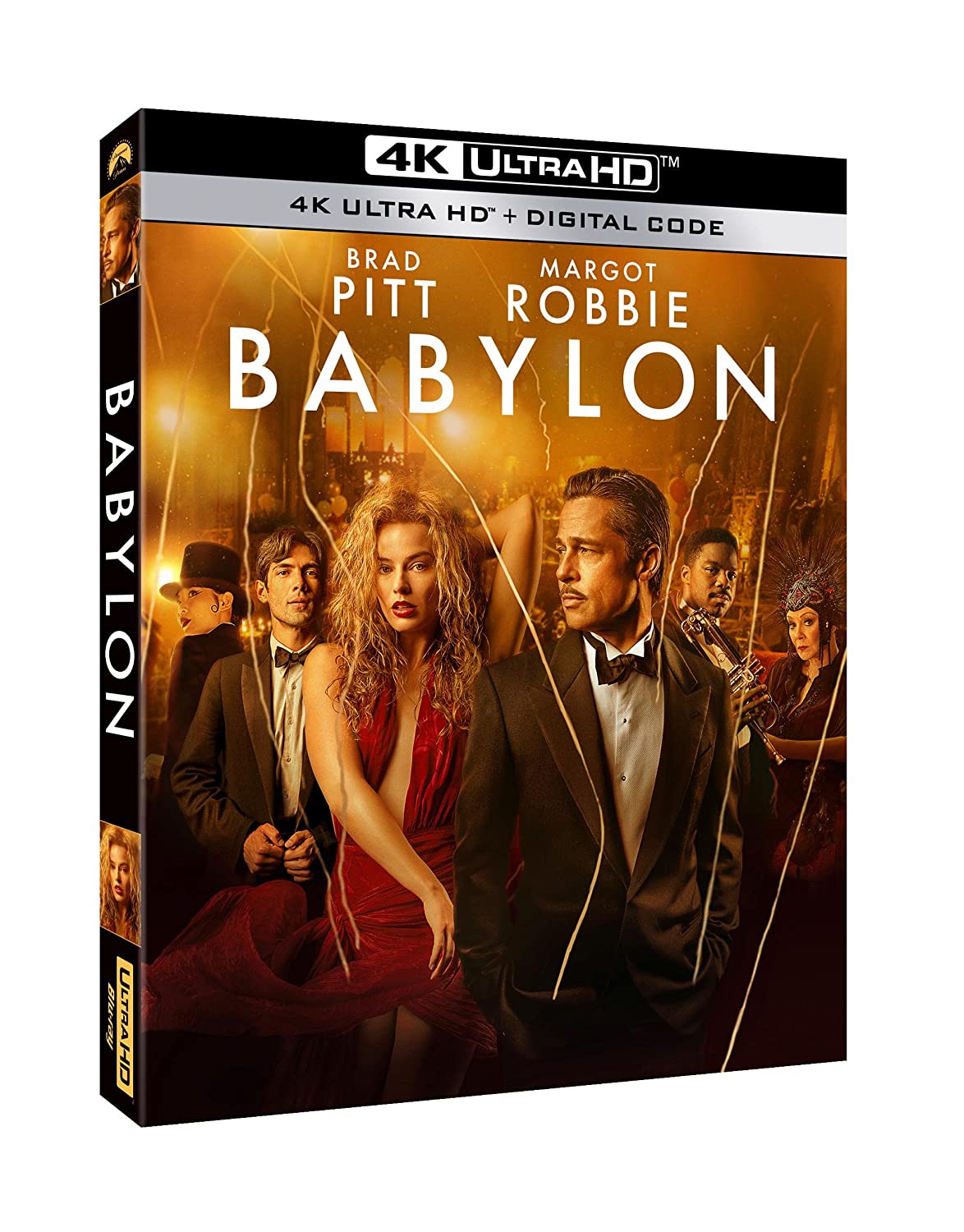
Damien Chazelle seems to have a thing for dreamers, or at least those who want to be larger than life. Whether it is a drummer aspiring to reach perfection in Whiplash, or an actress wanting to be a star in La La Land, to even being the first man to walk on the moon in First Man, he’s always made these films with an enthusiasm and energy that we can’t help but want to see them succeed. In his new film Babylon, he seems to be doing something  a little different and on a grander scale as he explores  the early days of Hollywood  as it made the transition from the silent film era to the “talkies” (basically what we’re used to seeing on the big screen today, just minus all the CGI effects).  A lot of money was injected into the production of this film, and you see it in every frame of this movie that is certainly a love letter to a time when Hollywood was trying to figure things out and entertain its audiences. But what I don’t think anyone was expecting is how deep this film was willing to go into the drug abuse and the sordid debauchery that went on in these early days of cinema.

The film opens innocently enough with Manny Torres (Diego Calva) simply trying to get an elephant to a big Hollywood party. Manny is a Mexican-American who is just trying to get his foot in the door, and we get to see these early struggles pay off, but first we get to experience this party that is lavish and epic with a strong Caligula-on-cocaine vibe. It’s at the party where we meet the rest of the cast we’ll be following over the course of the film. There’s Nellie LaRoy (Margot Robbie), who believes she is a star who just simply hasn’t been discovered yet; there is also Sidney (Jovan Adepo), a horn player who is just trying to get by; there is Elinor St. John (Jean Smart), a Hollywood gossip reporter, and then there is Jack Conrad (Brad Pitt), the biggest silent film actor in the business. Then we get to see the moment where Manny first meets Nellie and the moment where he falls in love with her; then moments later see how Nellie is simply plucked from the crowd to become a star, This sequence is so well crafted at letting the audience experience the party while getting to know these characters and several others, all while we are subjected to various sex acts and body fluids and drugs that when it ends we can feel the hangovers that these characters are experiencing.  Unfortunately for most of these characters, they are due on set in just a matter of hours.

“You got everything money can buy, except what it can’t. It’s pride. Pride is what got you here. Losing is what brung you back. But people like you, they need to be tested. They need a challenge.”

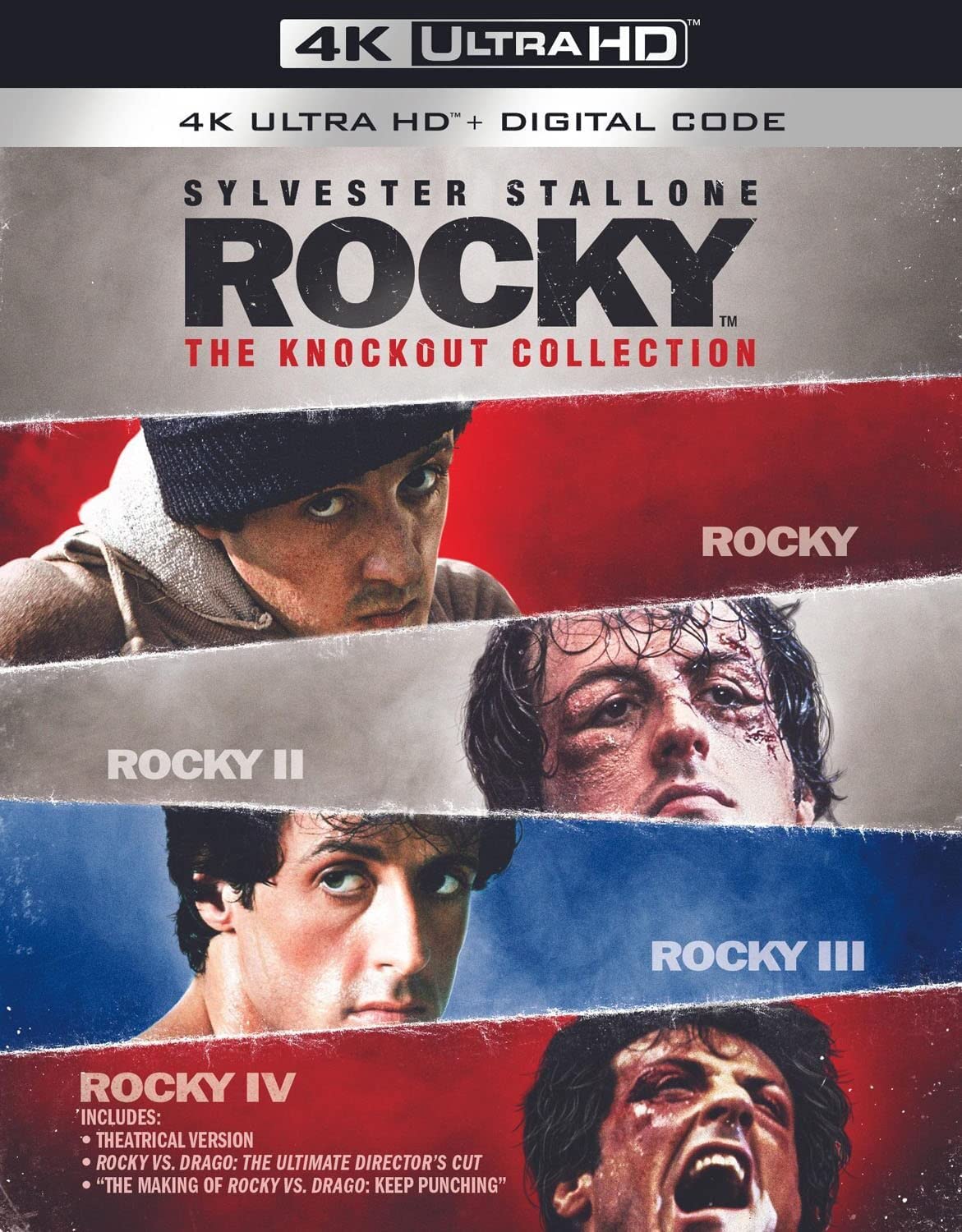
There have been a ton of boxing films. They’ve been popular going back to the silent era. Most of them have many of the same themes. But there was always something about Rocky that stood out above all of the rest. That “something” can’t really be described or defined. As the Supreme Court once said about the definition of obscenity: “I can’t define it, but I know it when I see it.” That’s all you can say about Rocky. Some might call it heart. That’s about as good a word for it as anything else. Rocky himself would call it “stuff in the basement”. It almost demeans it to put a word on it at all. Whatever you call it, you don’t necessarily see it in Rocky … you feel it. Now the first 4 films are out together on UHD Blu-ray in 4K.

"Inspired by the global threats of the Second World War, the U.S. Navy welcomes a surge of aspiring aviators ready to fight in what they called The Big Show. But now it's 1950, and after five years of peace, a true conflict is growing at the North and South Korean border. This is a story from America's forgotten war."

One of the best things about this job is that we get to see some of the up-and-coming talents as they evolve into superstars. I was lucky enough this week to get a double dose of one of the most dynamic young stars out there. Of course I'm talking about Jonathan Majors, who plays US Navy aviator and hero Jesse Brown. Just one night after watching the UHD/4K disc for this review, I was treated to my second dose of Majors at a press screening for the upcoming Creed III, where Majors plays the antagonist Damien Anderson. The roles could not have been more different, and Majors stole every scene in both films. I already can't wait to see him once again. I missed our screening of the new Ant-Man & Wasp film, so I have his portrayal of Kang to look forward to. The buzz I heard was that he had been the best part of the film, and I believe it after Devotion and Creed III. I'm sure there'll be more to say about this talented young actor, but let's talk about Devotion out on UHD Blu-ray in 4K from Paramount.

"King Kong ain't got nothing on me."

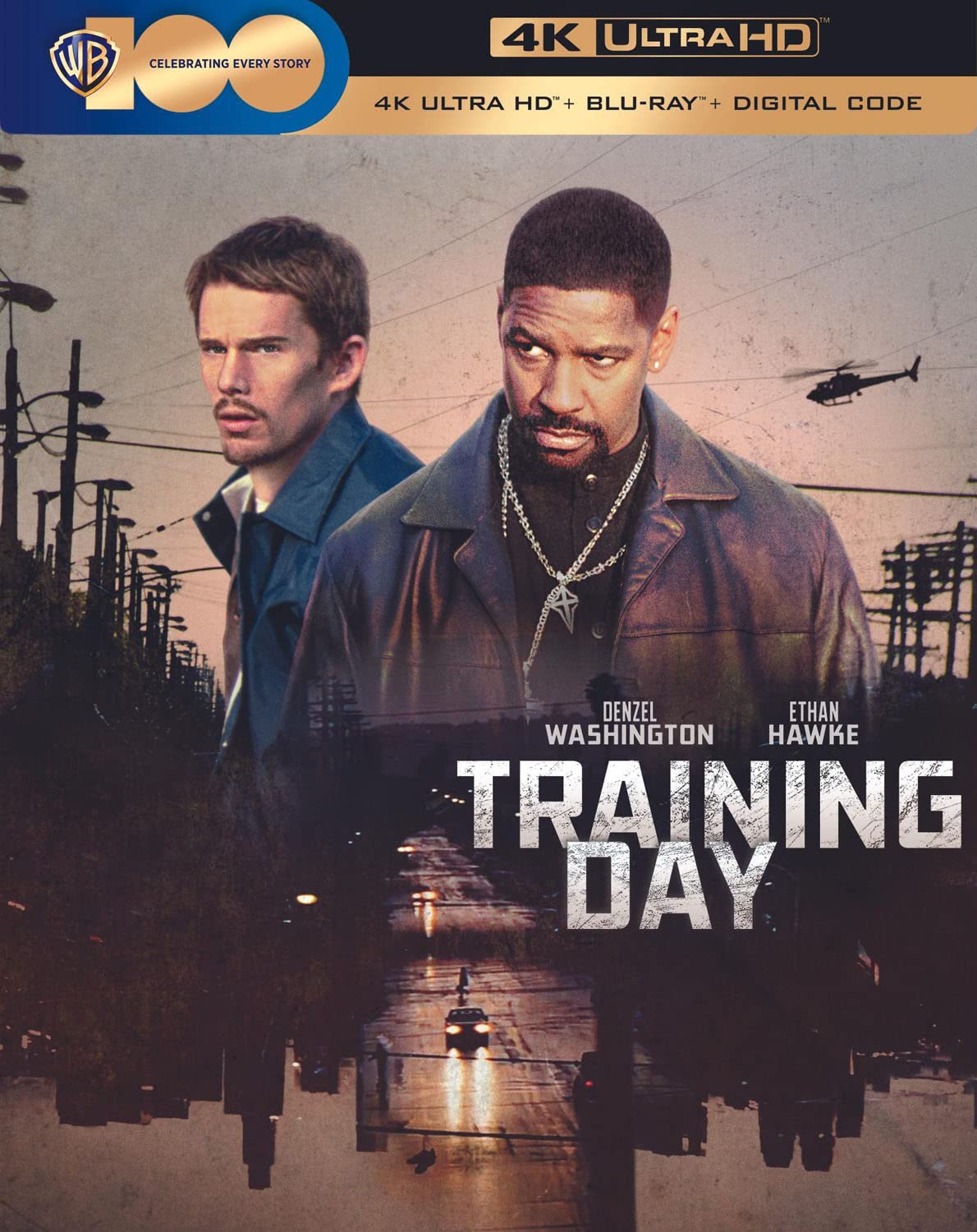
Training Day stars Academy Award-winning actor Denzel Washington in the role of Alonzo Harris. Harris, who is one of the meanest, baddest cops in the city of LA, is a person who cruises the streets in his customized Caddy. Harris, in one of the film’s opening scenes, meets Jake Hoyt (Ethan Hawke), a young cop whose dream is to be promoted to the elite narc squad. Naturally, this is Jake’s first day of training, and he is thrown into the arms of Harris. Alonzo tries to show him the streets so he can understand everything. He has Jake smoke pot just because he can. In one interesting scene, possibly Alonzo being a tough-ass to Jake, he doesn’t arrest two rapists like Jake wants to, but instead, proceeds to beat the living crap out of them.


“We deal in lead, friend.” 

In the fall of 1956, Anthony Quinn watched a special screening of Akira Kurosawa’s The Seven Samurai and had an epiphany: this Japanese masterpiece, inspired by the great American westerns of John Ford, would, itself, make a great American western. Quinn acquired the rights and contacted his then close friend Yul Brynner and pitched the idea of him playing the bad guy and Brynner the good guy. Brynner screened Kurosawa’s film and called in producer Walter Mirisch, who in turn contacted director John Sturges (Bad Day at Black Rock, Gunfight at the OK Corral, The Great Escape). Sturges loved the concept and immediately set about acquiring the rights, ultimately forcing Quinn out of the picture. Quinn sued, but lost.

"Life is not like the movies."

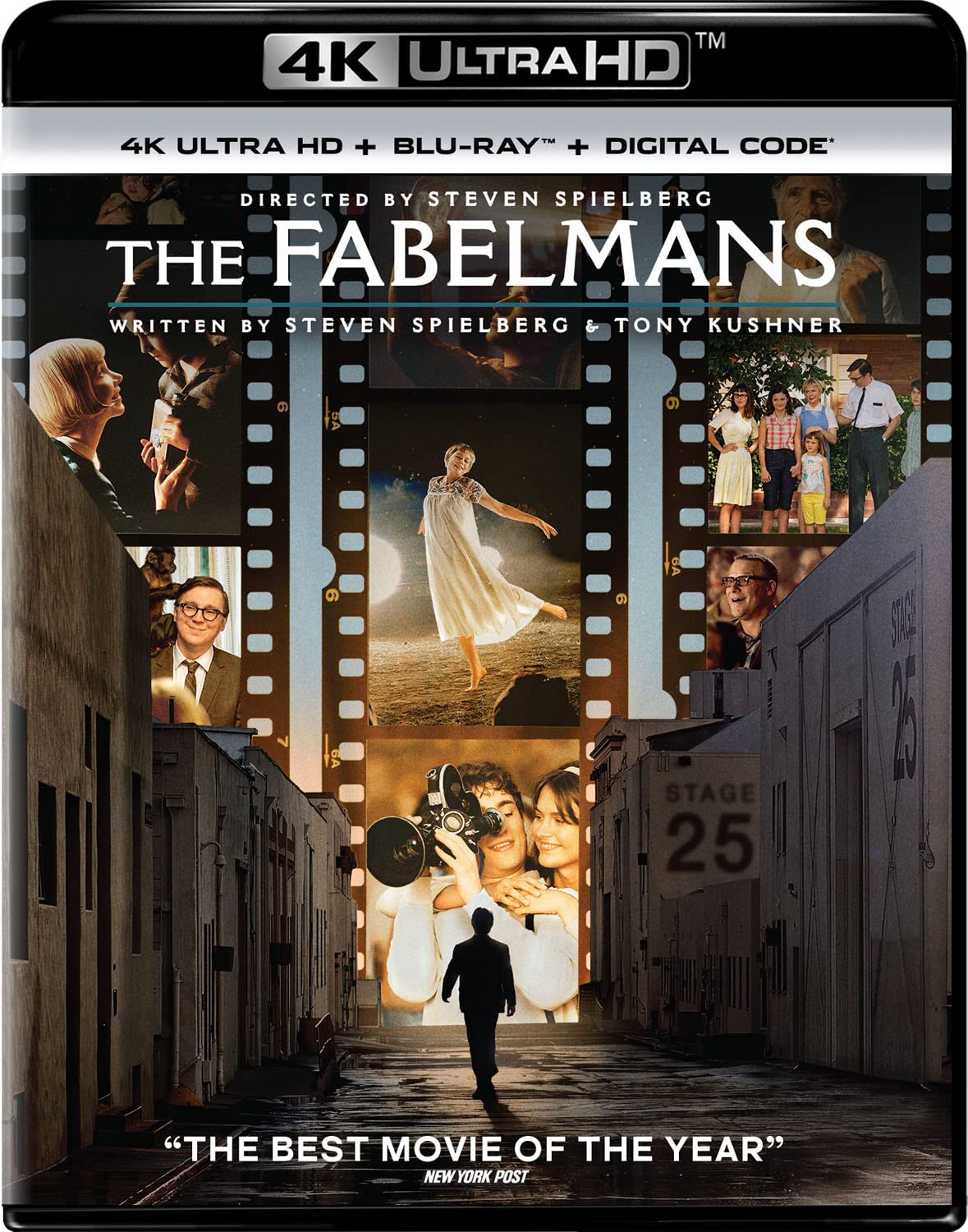
Maybe sometimes life is exactly like the movies. You know the old phrase of art imitating life and that kind of thing. That's exactly the territory that's covered in Steven Spielberg's latest film The Fabelmans. It's an autobiographical film where the names are changed to protect both the guilty and the innocent. It's also the first time that Spielberg has directed his own writing in over 20 years. In those 20 years Spielberg has become something of a moviemaking machine, and I think he felt it was time that the machine walked away from the spotlight for a minute and allowed the man behind the machine to show his face again. It used to be about heart; lately it's been about box office, and more recently it's been about surviving after the hit the industry took with COVID. I think Spielberg had a lot of things to get off his chest, and it looks like he might have found the time and place to do just that. While the film is a love letter to people who still think movies are a kind of wizard's magic, it was also a little bit of therapy for this particular wizard. Like all autobiographies, it's not really finished, and that's the most profound takeaway I had when the film ended.

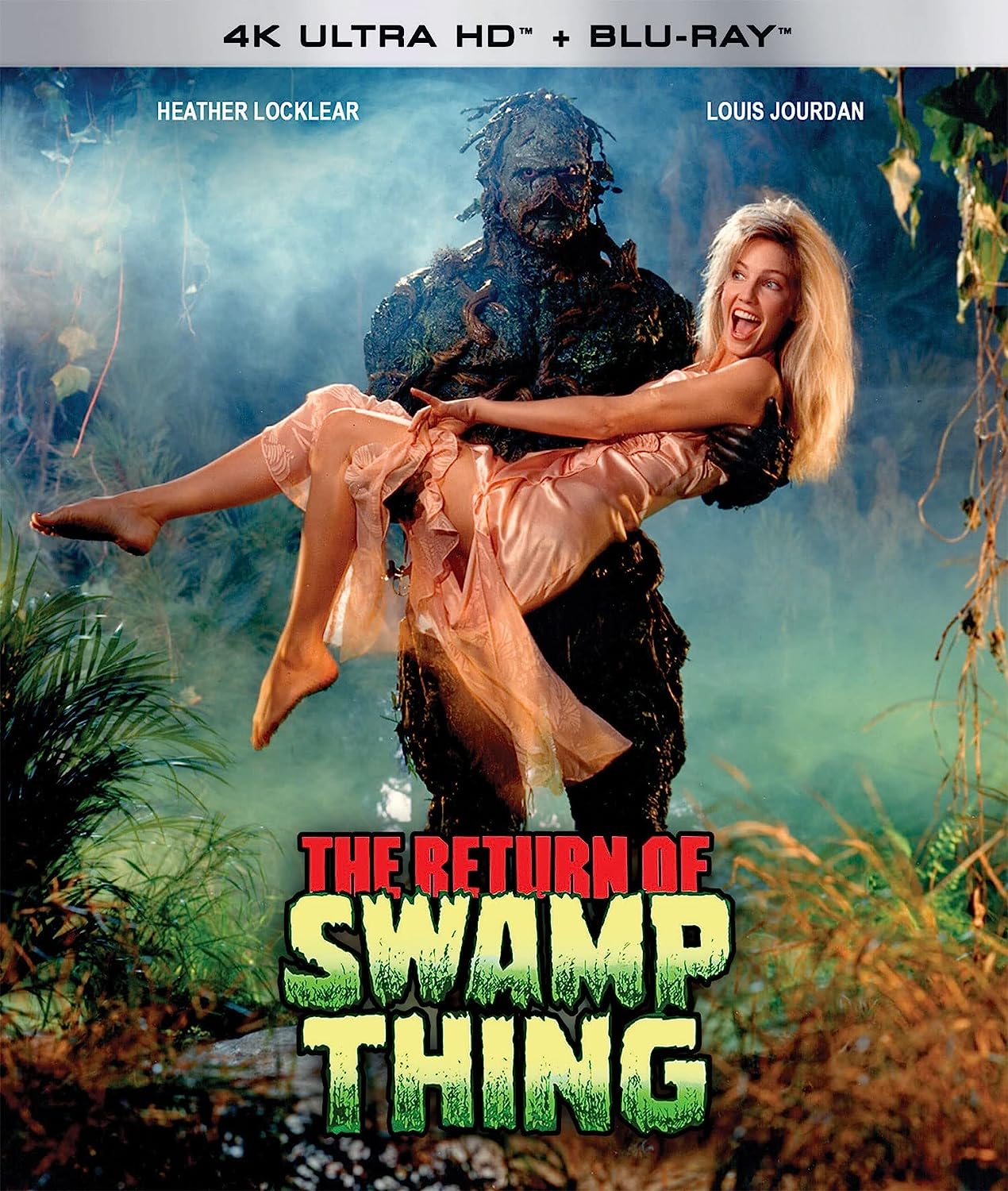
This may come to a surprise for some, but there was a time that comic book movies just weren’t taken seriously. We had Richard Donner and his Superman The Movie film, and then there was Tim Burton’s take on Batman.  Every other movie that was based on a comic book property was treated as cheesy camp fodder that no one took seriously. Wes Craven’s attempt at adapting Swamp Thing was slightly impressive for the time, but in retrospect I’m just not really a fan of the film despite how much I like the DC character. As for the sequel, The Return of Swamp Thing, I know I’m in the minority when I say how much I enjoy this camp classic.  The first Swamp Thing I felt took itself too seriously and was lacking in the fun practical FX department, but to be fair, it also had a low budget and felt the need to be an origin story. Helming the sequel is one of the B-movie workhorses of the industry, Jim Wynorski, who is responsible for the 80s kill-bot classic Chopping Mall. It’s time to return to the bog and deep dive into the camp classic from 1989, The Return of Swamp Thing.

The film wastes no time getting things started when a group of hunters are attacked by Leech Man in the swamp, and it is Swamp Thing (Dick Durock) that comes to the rescue.  I’m a fan of these practical FX suits, and just seeing this fun showdown in the film’s opening minutes definitely sets the tone for the rest of the film. If this sequence leaves you groaning and rolling your eyes, well, to be fair, this film just isn’t for you.  But if you like your old TOHO man-in-suit battles, and enjoys some goofy B-cinema from Roger Corman or Lloyd Kaufman, then this film you are going to eat up.  From the get-go we know this film is very tongue-in-cheek, and sure, I one day want to see a straight-up horror adaptation of the character, but till then, this is what we got.