AVC MPEG4

It has been a very long time since I have done a film or television review thanks to a wonderful thing known as life.  Life often gets in the way of even the most basic hobbies but is often rewarding, or at least pretends to be.  So, surely the first review I have had in such a long time will be a wondrous one full of majestic characters and a stirring plot worthy of rousing ambition to the sounds of chaotic beats.  *Looks across at package*  Hazbin Hotel Season One on Blu-ray.  *Googles the synopsis*  *Sighs deeply*  I mean, if my editor wanted me to stay in quasi-retirement, he should have said so.  At least the chaotic beats part seems to be accurate.  Let's take a look.

Are we familiar with the story of the angel Lucifer and Lilith, the first woman?  No?  Well then, let's go over it.  Lilith was the first woman with Adam, and she left that man because he was controlling (mmmm hmmm).  She then shacked up with the angel Lucifer instead.  Then they gave Eve, the second woman, free will through the famous apple.  This created Hell, and then those two, Lucifer and Lilith, were sent there as punishment.

It would seem that ever since Hereditary came out in 2018, it kind of paved the way for the new sub-genre of horror, “grief-horror”, basically horror films that delve into the emotional horror of losing loved ones and the reckless attempts people may make to reach out to them in the afterlife. This isn’t subject matter most horror fans enjoy; for me I find an odd sense of comfort with these films. When Talk to Me came out, that film especially struck a nerve with me, and I absolutely loved that film from the first-time Australian filmmakers and brothers Danny and Michael Philippou.  Talk To Me managed to bring something new to the supernatural genre, and the grief the main character was going through was very relatable for me, so of course I was going to be a little excited about what this duo would do next (at least before they tackled their sequel to Talk To Me). As it would turn out, I wouldn’t have to wait long for their next film, and Bring Her Back tackles the horror of grief in a manner that has stuck with me.

Bring Her Back wastes little time with setting the tone of the film as we see Andy (Billy Barratt) and his sister Piper (Sora Wong) return home to find their father dead in the shower. To further the trauma for the kids, a social worker intends to separate the siblings. Andy wants to have guardianship of his sister, but because he’s not quite 18, it isn’t allowed. After some desperate pleas by Andy, they allow him to stay at the foster parents’ home on the condition that he behaves himself. The relationship between Andy and Piper is very much the heart of this film. They are step-siblings, and because Piper is blind, Andy has played the role as her guardian for some time even before the passing of their father. The film really does a good job of establishing this bond early on, and it’s necessary, because once they get to the foster parents’ home, things definitely take a turn.

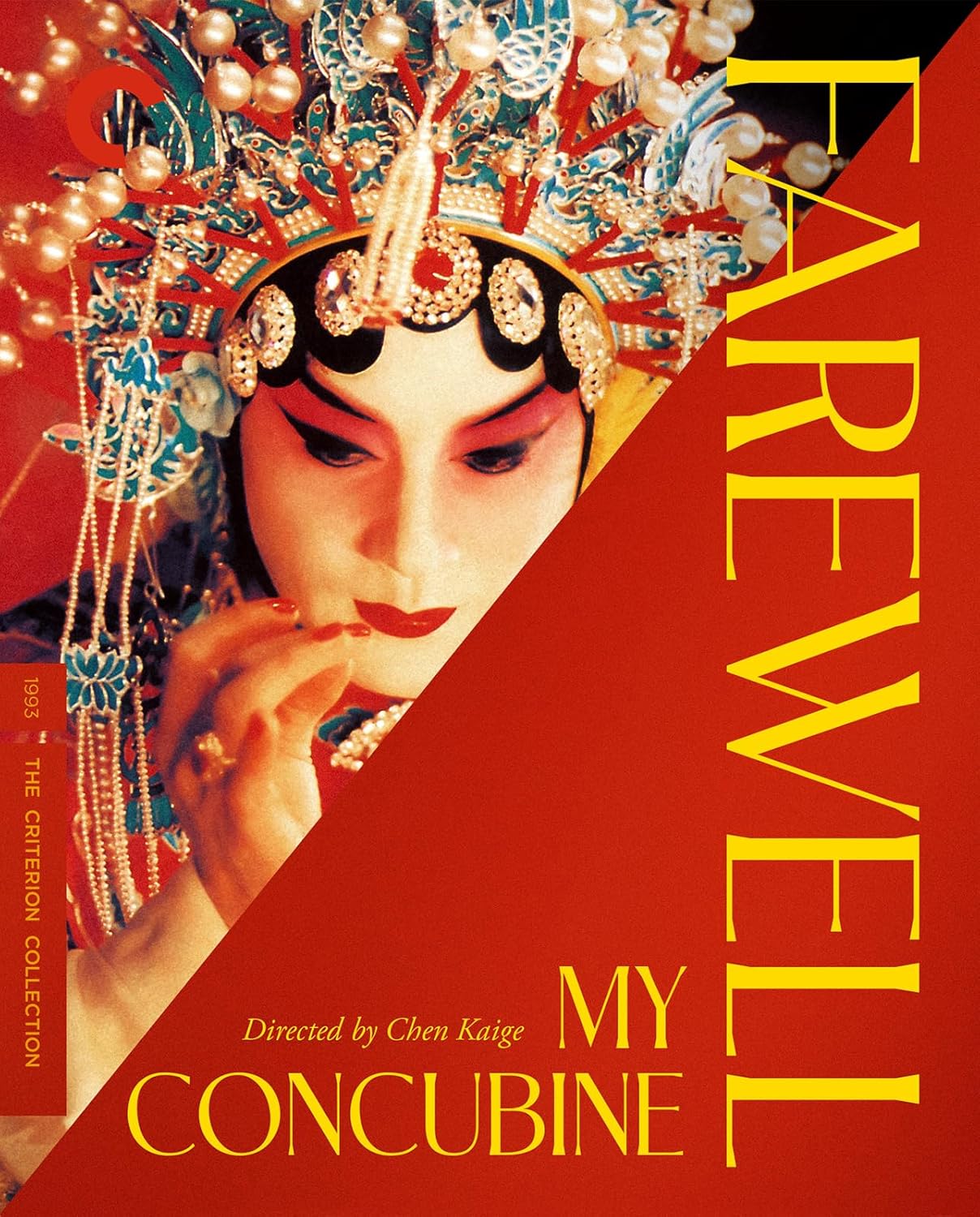
When a new 4K restoration of the 1993 Palme d’Or winner Farewell My Concubine — the first Chinese film to ever take home the top prize at the Cannes Film Festival — debuted at the 2023 Toronto International Film Festival, physical media collectors were waiting for the announcement that it would be released through the Criterion Collection. Well, fans did not have to wait long, as the Academy Award nominee for Best Foreign Language Film is being released by Criterion on both 4K and Blu-Ray, and this gorgeous restoration alone makes this edition worth picking up. That’s not even to mention the quality of the movie itself, which is considered a seminal film in Chinese cinema for both its content and form.

Based on the novel of the same name by Lilian Lee, Farewell My Concubine follows a decades-long friendship between two boys who meet at an opera training school in Peking in 1924, growing up through some of the most tumultuous times in Chinese history. Lee and Wei Lu use the story of a love triangle to frame this exploration of identity, cultural expression, and other themes that serve both as a cultural time capsule and a commentary on issues that are unfortunately still relevant today.

Given that Glauber Rocha is considered one of the most important filmmakers in the history of Brazilian cinema — and Latin American cinema in general — it’s surprising that it took this long for one of his films to be released by the Criterion Collection. The filmmaker’s sophomore feature, Black God, White Devil, one of his most acclaimed works, takes the honor of being his first movie to get the Criterion treatment. Black God, White Devil is considered one of the most influential films of the Cinema Novo movement, which happened in Brazilian cinema as a reaction to other social filmmaking movements like Italian neorealism and the French New Wave. In Criterion’s recent quest to expand the label’s Latin American cinema offerings — Victims of Sin and Soy Cuba are notable recent releases — the Cinema Novo movement marks a necessary addition.

The Western follows a Brazilian ranch hand who, after killing his oppressive boss, goes on the run with his wife, leading them to a group of bandits and a messianic figure who preaches violence and revolt. Like many Latin American films of the era, Black God, White Devil is focused heavily on socioeconomic issues.

"Somebody went to a lot of trouble here, and I want to find out, lawsuit or no lawsuit. I'm not the one who's supposed to be caught with his pants down."

The word "classic" gets thrown around a lot. Everybody has their own list. I get that. Whenever someone starts listing films from the last year or so, I just smile and take it with a grain of salt. Because I know they don't know what they're talking about. I don't know how many years it takes to be a classic. Is it 10  ... 20 … or even 30 years? Well, how about 50 for a nice round number? The film has certainly stood the test of time. That's one of those things you can't say about a film under a decade or two old.

"I, Bass Reeves, do solemnly swear that I will execute all lawful precepts directed to the Marshall of The United States for the Western District of Arkansas without malice or partiality, perform the duties of Deputy Marshall and take only my lawful fees. So help me God."

He was the inspiration for the Lone Ranger. Bass Reeves is one of the biggest icons of the old west and perhaps one of the least remembered.  He served for 35 years and managed to bring in over 4000 wanted men for their day in court and likely the noose. It's a huge story, and the filmmakers of Lawmen: Bass Reeves have taken on the enormous task with just 8 episodes of this limited series with no follow-up planned or on the books. Were they able to meet such a challenge? That's going to require some explanation. The series was based on the first two of a series of books written by Sidney Thompson, who serves as a consultant on the series.

As many of you know, there isn't a type of media that I don't enjoy reviewing.  Sure, my film reviews are most numerous, but I have also dabbled in books, video games, and music when it comes to critiquing.  Music is really fun, because I'm one of the few people I know that will literally dissect every song whether it is a hit or a throwaway.  Needless to say, I almost never hold back.  So imagine my excitement when I come upon a new anime that blends an interesting story with the amazing style of jazz music.  I honestly don't even listen to jazz, but the chance to expand my musical repertoire is something I crave to do.  Let's take a look at Blue Giant.

A cold wind is blowing, and somewhere a saxophone is playing.  A car whooshes by; Dai Miyamoto (voiced by Yuki Yamada) tries to play, but the weather is so frigid that he is having a lot of trouble.  He keeps trying, because one day he will be a famous musician.  A black cat slinks by and rests beside him.  Dai gasps after playing a difficult note, and the pain is too much to bear, so he takes time out to have a chat with the feline.  However, the cat soon leaves him, and he goes back to his playing.

"Jack, we have done our jobs and done them well. This fight was passed down to us and will continue with or without us. But we will always be better than the institutions we serve, and that is what matters when it matters most. There are no heroes in our profession. But occasionally there are good men. Men who act on what is right, not simply doing what they are told to do. I have not always lived my life with honor. But perhaps I have done enough to die with it. I hope the same for you." 

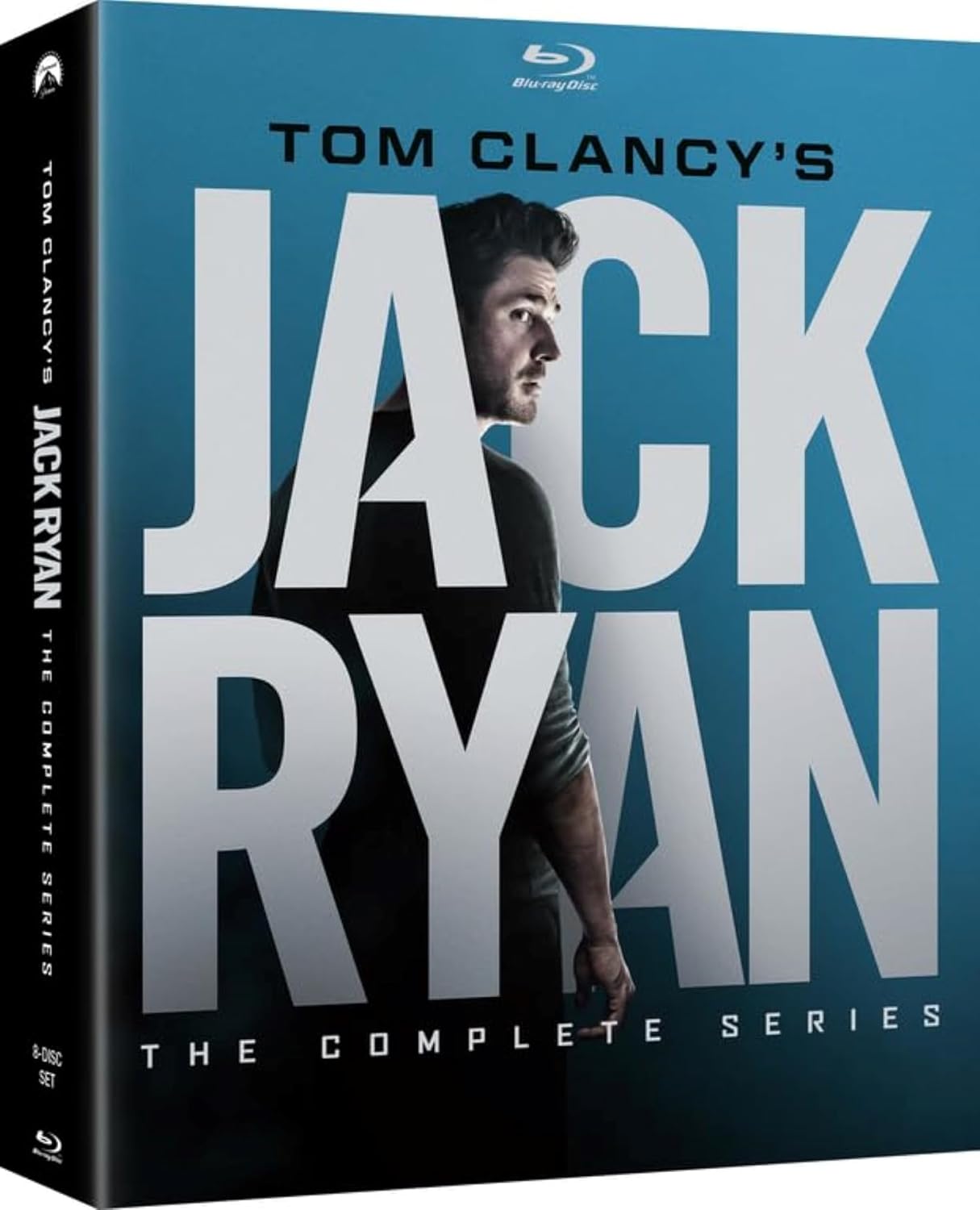
Witness the birth of -- actually make that rebirth of --one of the most popular action heroes in literature. Tom Clancy’s Jack Ryan has been a character of many jobs and many faces over the years. Baldwin, Ford, Pine, and Affleck have all stepped into the role of the man who has been a soldier, an analyst, an operative, and a president. What might appear as a clear advantage for this Amazon Prime streaming television show can be just as much a liability. When you throw in the Tom Clancy novels, comic books, and fan fiction, there is a ton of Jack Ryan history that pretty much gives us a story arc from his humble beginnings to extraordinary exploits and wearing the face of a few good performers. It's a tall order for the series and perhaps an even taller order for actor John Krasinski, who has created a nice little horror franchise with wife Emily Blunt on the side. I don't really have the time or energy to watch streaming shows and films. There's always a backlog here of discs that need to be reviewed, and I've created a rather comfortable viewing experience with my home theatre I call The Reel World. Our motto: Here there be monsters. So I have not had the opportunity to check out this show even though I've heard pretty solid things from my colleagues. Thanks to Paramount's production of the series and their release of the first season on Blu-ray, I've finally had my chance to see what all the talk's been about. Let's just say, I get it.

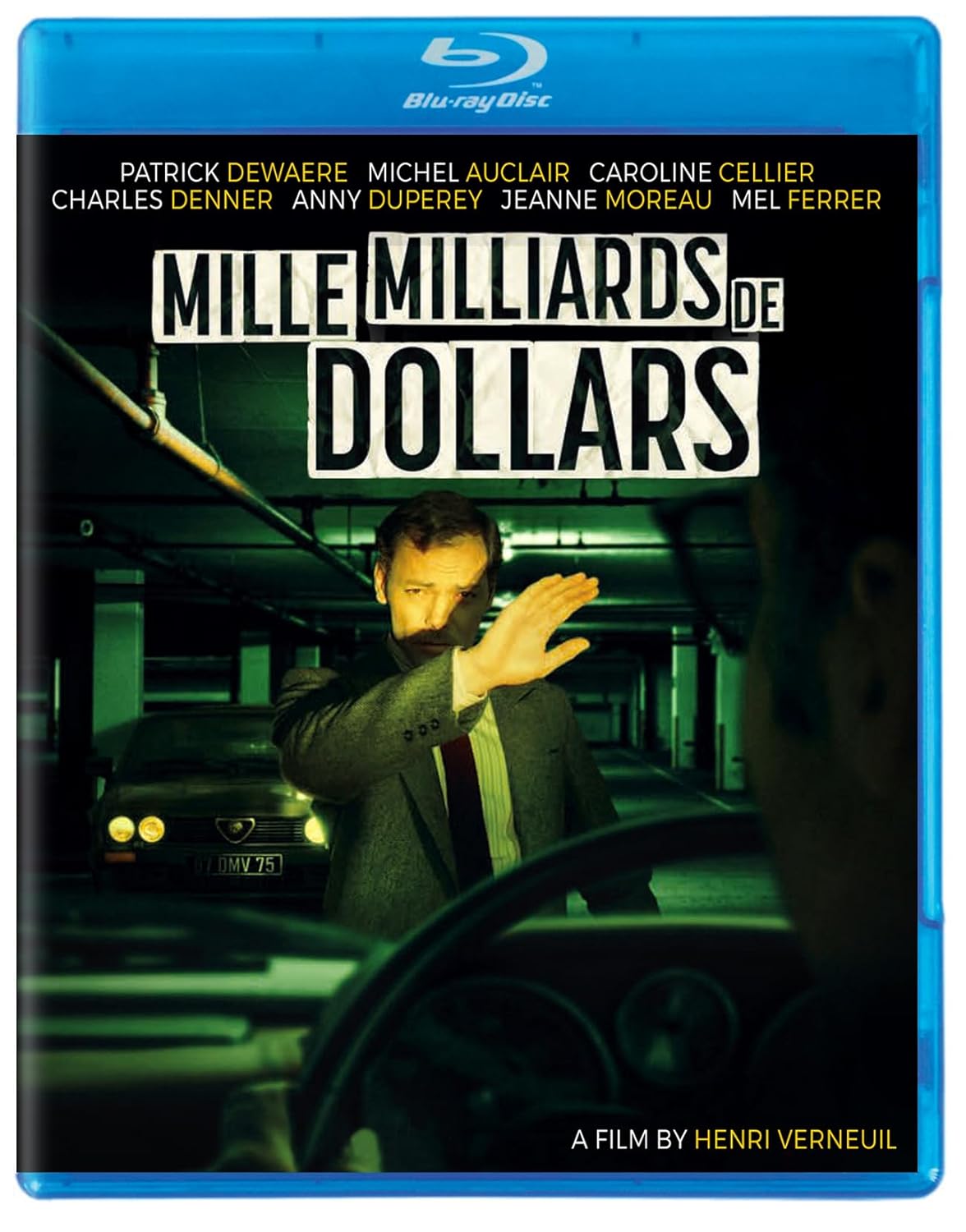
While times may have changed a bit, many countries, especially in the 1970's up until the turn of the century looked down in disgust at those from the United States, from the way they looked, to way they acted, right down to the language they spoke.  However, one of the things they most feared was that the US was going to take over their companies and do things the "American" way.  Today, we take a look at a film called Mille Milliards de Dollars.  In this film, we are introduced to the GTI, the Garson Texas International company, who are secretly taking over France Electronics, one of the biggest companies in Paris.  It's quite the scandal and should be a very interesting film.  Let's take a look.

We start the film with a call to the La Tribune switchboard.  They are looking for Mr. Paul Kerjean (played by Patrick Dewaere), and it appears to be a personal call.  Seems like the right time to put this person on hold and cue up the credits with some opening music.  Kerjean seems preoccupied for a little while (or simply a clever way to play more credits) and finally answers the phone to hear a mysterious voice.  The voice does not want to give his name, but wants to meet at a nearby parking garage to provide some very important information.

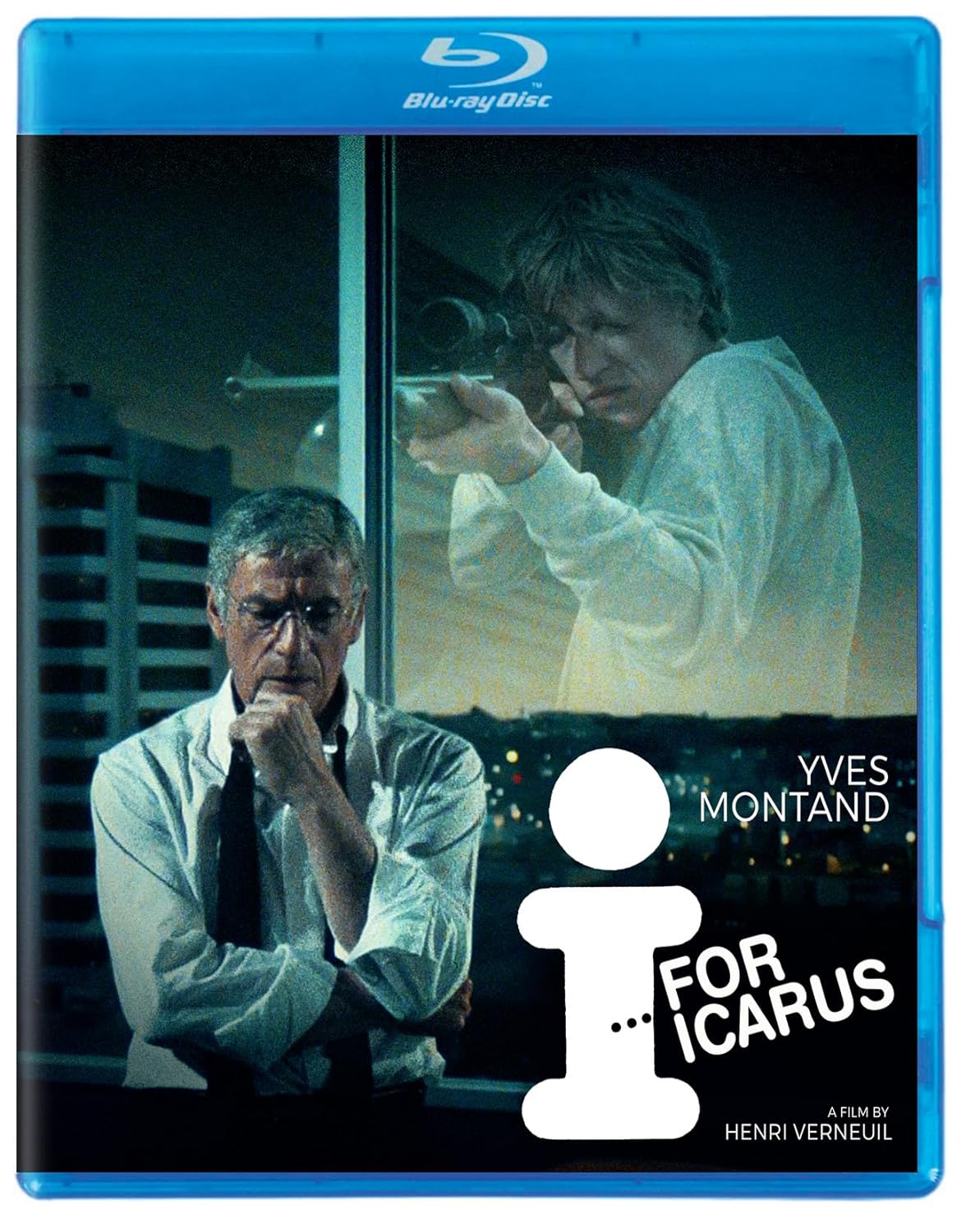
On November 22nd, 1963; President John F. Kennedy was assassinated in Dallas, TX at approximately 12:30pm.  Quite possibly everything else about the event can be disputed in such a manner, and I won't even attempt to confirm one theory or disapprove another.  We have had movie after movie about this assassination, taking it in about every angle imaginable.  Those movies are not regulated to the United States, either, as other countries have also dabbled in the storytelling of this infamous event.  Many times these foreign productions treat it as a fictionalized event set in their own country, but the similarities are often so obvious that it cannot be disputed.  Today's film is I ... For Icarus, a French film that explores the controversy behind the assassination of President Marc Jarry, who was killed by Karl Eric Daslow.  Attorney General Henri Volney disputes the lone gunman theory, and this is the story of that investigation.  That sounds awfully familiar; let's take a look.

The movie starts out with a simple phrase that essentially reads that this story is true as a I have imagined it from beginning to end.  Ennio Morricone's score is queued up as we launch into the credits.  Before I go further, I found it odd that they listed all of the people involved in the making of the film in alphabetical order before the movie even started.  That alone runs for several minutes before the movie even starts.  Anyway, on with the show.