"You know your weapons. It's a lever-action breech-loader. Usual barrel length's thirty inches. This one has an extra four. It's converted to use a special forty-five caliber, hundred-and-ten-grain metal cartridge, with a five-hundred-forty-grain paper patch bullet. It's fitted with double-set triggers, and a Vernier sight, marked up to twelve-hundred yards. This one shoots a mite further."

It almost happened again. Lightning almost hit Tom Selleck for a second time, and I don't mean in a good way. Tom Selleck was having fun and a tremendous amount of success playing Magnum P.I. on television. It was a character he got on the strength of a recurring character on The Rockford Files, and it was a huge hit. But in 1981 it didn't seem so much like a blessing. Casting calls went out, and he was approached to play an archaeologist trying to beat the Nazis to some kind of a McGuffin or another. The Magnum commitment kept him from taking the role, and it went to Harrison Ford, who turned it iconic.

"They say everybody's good at something. Me? I talk to fish. That's how I met my friend, Storm. He's always there when I need a lift. Some people think that makes me a joke, But I don't care. You know why? 'Cause I'm also good at something else: breaking heads ... I'm Aquaman."

This film release marks the end of the DCEU as we know it (also known as the Snyder-verse). The DCEU has been an interesting ride to say the least, full of ups and downs. And while it never truly challenged Marvel with their multi-phased game plan, it did provide unique opportunities that gave some deserving talents a platform to showcase their abilities. Momoa was one of them. For me, his casting was among the most unique and triumphant. When he was first announced, I had to take a hard look at that decision, as it went against the grain as far as traditional casting for Arthur Curry went.

"Consider what you are about to do."

I first read Frank Herbert's initial Dune book back in the mid 1970's. I was introduced to one of the most complicated and extraordinary universes of literature I have still ever encountered. It's a masterpiece followed by several more books over the years that have more completely brought this world to life. The material's cinematic journey as been somewhat less captivating and quite a disappointment. The 1984 David Lynch film was a train wreck and quite possibly one of the greatest film failures in history. Since then a lot has changed. Today computer-generated images have progressed to the point that with enough money and artistic expertise a filmmaker can depict anything the mind can conceive. Images have become photorealistic, and the worlds of Herbert's Dune universe can finally be brought to the silver screen with almost no limitations. But is that enough?

When Contagion was released in 2011, it was considered a horror film, more a flight of fancy than anything else. It wasn't a great box office winner. But in 2019 all of that changed as we lived through the pandemic that was mere science fiction before then. Looking back at the film, it becomes a game of what they eerily got right and what was far off the mark. Much of the world disaster element, thankfully, never came through, but in hindsight it is quite surreal the things the film did get right. The idea of a therapy drug possibly being downplayed by the government and an internet guy trying to drive those discords. The fear of a quickly-created vax also looks very much like what is still playing out in the world today. The film depicted a nasal vax that I wish had been true. The film avoided much of the political fallout, but you really must see this film in a post-COVID world.

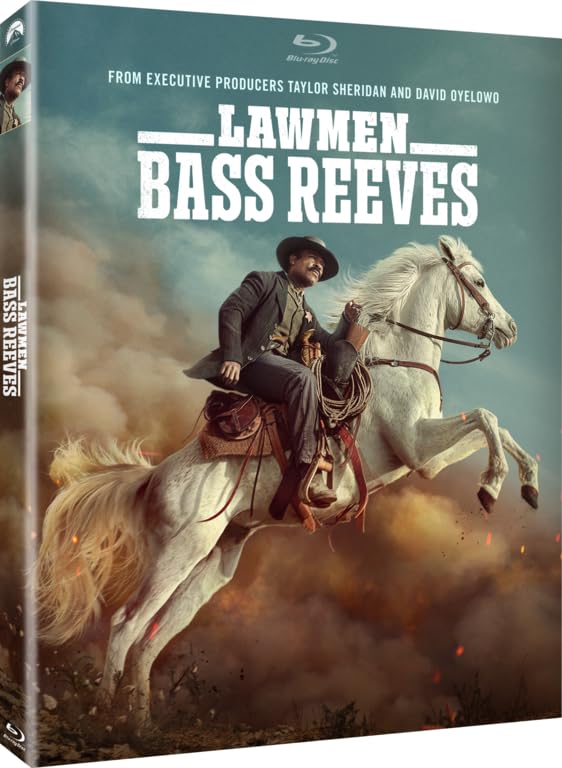
Taylor Sheridan is back at it again. You have to admire the ever-growing body of work he's brought to the television/streaming screens. He's really the first one to dominate that landscape the way the likes of Dick Wolf and Steven Bochco have dominated our network television screens for decades. As a writer I often find him a little weak in plots and overall storytelling. But what he does very well is world-building and creating authentic and compelling characters. He did it with the likes of Kevin Costner in Yellowstone. There's Jeremy Renner in The Mayor Of Kingstown and Sylvester Stallone in Tulsa King. He has the ability to bring the best actors to these projects because they know he's going to create something compelling and fun to watch. He talked Harrison Ford and Helen Mirren into doing the awesome Yellowstone spinoff 1923.

“The greater the spy. The bigger the lie.”

I had some reservations about the plot of this story when it was first announced. A reclusive author who writes espionage novels about a secret agent, and a global spy syndicate realizes the plot of the new book she's writing starts to mirror real-world events, in real time. That was a bit much for even someone with my imagination to digest easily. However, I remained excited. How could I not be? We are talking Matthew Vaughn’s panache, which took Kingsman to great heights. Then there’s Sam Rockwell’s compulsive dancing; I’m honestly starting to believe that he has that his character has to dance written into all his contracts. It’s sort of like Samuel L Jackson and his favorite expletive, which shockingly didn’t happen in this film. Not to mention that this film’s cast’s chock full of Hollywood heavy hitters that include the already mentioned Rockwell and Jackson, as well as Henry Cavill, John Cena, Bryce Dallas Howard, and Bryan Cranston.

I’m a sucker for a good “Invisible Man” story. Ever since H.G. Wells put out his story in 1897, he’s captivated readers, and his story has been a part of Hollywood history since 1933. For decades we’ve gotten to see Hollywood tackle the story and offer viewers some FX wizardry that has ranged from cheap and silly to simply Hollywood magic (aka CGI or even better, a man in a green suit). A good portion of these films have been good. I’ve always been a fan of the 1992 John Carpenter film Memoirs of an Invisible Man, and more recently in 2020 we had The Invisible Man, which I’d argue might be the best of the “Invisible Man” films. Then you have a film like The Man Who Wasn’t There, a 1983 release that tries to reinvent the story and fails in such a way that you have to wonder if anyone involved with the making of the film had ever seen the previous films or read the books, because the result is a mixture of bad to awful, and no amount of bare breasts could save this film, though they inserted plenty to test this theory. So what makes this a film I’d wager many involved wish it could just vanish from their film resume?

While times may have changed a bit, many countries, especially in the 1970's up until the turn of the century looked down in disgust at those from the United States, from the way they looked, to way they acted, right down to the language they spoke.  However, one of the things they most feared was that the US was going to take over their companies and do things the "American" way.  Today, we take a look at a film called Mille Milliards de Dollars.  In this film, we are introduced to the GTI, the Garson Texas International company, who are secretly taking over France Electronics, one of the biggest companies in Paris.  It's quite the scandal and should be a very interesting film.  Let's take a look.

Every now and then we talk about books on this site. It's rare, and it really has to be something I'm interested in reading. You see, a book takes up far more of my time than any single film. We get solicited at least once a week. Once in a while something will look interesting enough for me to give it a try. And once in a while the book turns out to be more than worth my while, and I'll want to talk to the author and share that with all of you. Such is the case with The Execution, Life & Times Of Patrick O'Donnell by Gavin O'Donnell. The book is part historical and part fancy. Most of all, it's 100% entertaining. It was a quick and easy read and left me thinking all the way up to the end. I can't recommend the tome to you enough. Read it. You're going to learn a few things. I promise you're going to be talking about it. I got to talk to the man behind the words. Now you get to hear what he had to say. Bang it here to eavesdrop on my conversation with Gavin O'Donnell all the way from the UK: Gavin O'Donnell.

Once you've heard the interview, make sure you hit the link to your right and pick up a copy for yourself.

If you're a fan of some of the old almost-forgotten films, then you're a fan of Film Masters. For a few years now they've been digging up a lot of these old "classics" and spending the time and resources to give them the full 4K restoration treatment. It appears that lately they've had their sights on some of the early films from The Filmgroup, which of course is the moviemaking machine of Roger Corman. Corman became the king of making quality low-budget films that almost always made at least a little money. In the 1960's and 1970's you could watch these wonderful budget horror and science fiction films doubled up at your local drive-in theaters. I certainly have memories of those days, and they were completely made up of Roger Corman or Hammer films. Corman gave their first break to some of the biggest names in the filmmaking industry: Francis Ford Coppola, James Cameron, Joe Dante, Peter Bogdanovich, Martin Scorsese, Jack Nicholson and Ron Howard. They all got their first breaks directing films in what has become known as The Roger Corman Film School.