I’ll admit it; when it comes to Netflix, I’m a fan of the shows that they put out, but their movies rarely impress me.  I kind of look at Netflix films as the modern version of direct-to-video releases. They have big stars, but the quality just isn’t up to par with the big releases you’ll see in the theater. Even big name stuff like The Irishman -- it was good,  but not the masterpiece I was expecting. Honestly, my favorite films on Netflix are The Babysitter films with Samara Weaving, just a fun little film, that is basically the kind of expectations I have for a Netflix film, and even the more recent release of We Have a Ghost I thought was charming and may have done well on the big screen. As for Knives Out 2, fun but forgettable. So when I see films from the streaming service get Oscar nominations and even win, I can’t but feel the need to pull the wax out of my ears and make sure I heard that right.

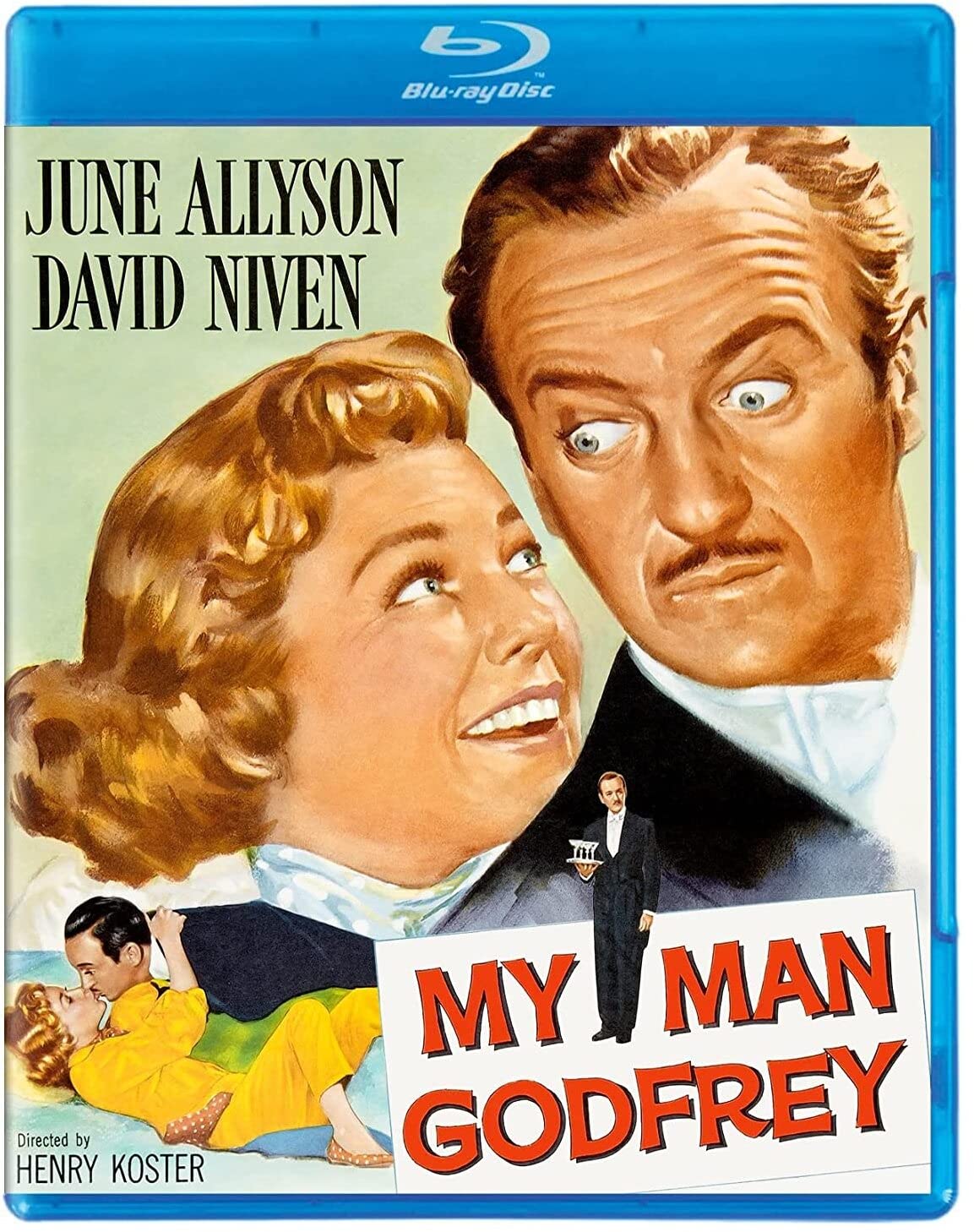
Most of you have never heard of Irene Dunne. You all have heard of Lucille Ball, of course. What if I told you that if there hadn't been an Irene Dunne, there would not have been a Lucy, at least not the actress/character who we all remember today. It was by Dunne's performance as her co-star in in a film called Joy Of Living that Lucille Ball was inspired to create the character that would be Lucy. You see, Irene Dunne was the original master of the ditzy screwball comedic character that we all associate with Lucy. KL Studio Classics have brought us two of Irene Dunne's films. When Dunne left acting, she devoted herself to international causes and was selected by President Dwight D. Eisenhower as an official delegate to the United Nations. Her acting career included three films, each with Cary Grant and Charles Boyer. She's an actress who never quite held up over the years, but she should have. She was nominated five times for an Oscar but never ended up taking one home. Thanks to these two releases from KL Classics, you get to see a couple of her lesser-known works

“Never accept death when suffering is owed.”

So I think it safe to say that when it comes to the Fast and Furious franchise, it is no longer about cars or street racing anymore. In the beginning it felt like we were getting a window into a secret underground world that spanned multiple continents. However, I would say that is no longer the case. Dom and his family have gone legit. Not only have they gone legit, but they now unofficially work for the government in some capacity. No, it is no longer about the cars and street racing anymore. In fact, I would go as far as to say that we aren’t tuning in to see them use their skills on the behalf of the government either. There is one thing that keeps us coming back for more. We want to see what over-the-top, outrageous, death-defying, impossible stuff they are going to do next. At least that is what got me in the seat. In the last couple years, we’ve watched Dom and his family do things that may be theoretically possible, but that we know to be ridiculous. I mean, we watched them go to space in a Pontiac Fiero just a movie ago. Needless to say, this franchise has pushed the boundaries of what we know to be possible, and they’ve done it in a fashion that keeps us coming back for more.

"Where there's life ... there's hope. Bob Hope, that is."

Few American entertainers have had a career to match that of Bob Hope. He lived 100 years and spent over 80 of those years in the entertainment industry. He appeared in over 70 films, wrote various books, and has over 300 appearance credits to his name on television and radio. He cut out a niche for himself during World War II that carried him through the Korean War and the war in Vietnam. He conducted literally hundreds of appearances for GIs out in the field, performing sometimes for audiences at the front. He brought a ton of his celebrity friends and was Mr. USO for decades. An honest look at his career is impossible here. Thanks to the folks over at Kino, we have the opportunity to explore a couple of his films from the 1930's. You can pick up each of them on Blu-ray now, and we'll give you an idea of what you're going to get for your money

I kind of felt like I was brought in at the middle of the story. The story is intriguing nevertheless. I’m a sucker for a good fashion heist movie or con movie. In some respects, Righteous Thieves is both. However, I would have appreciated greater context before being dropped in the middle of things. As the film opens up, we are brought into a flashback featuring a younger version of our main character, Annabel, as she attempts to steal a valuable painting. She is discovered by the painting’s owner, who instead of turning her in, takes her in. Based on this introduction, I was expecting the owner, Josef, to be a prominent member of the film. I suppose in spirit he is, but this is the only interaction we get with him, which to my mind was not enough to make the needed lasting impression. In my opinion, we could have benefited from more inclusion of this character, even if it was simply in flashback form. It would have gone miles towards connecting more with the Annabel character played by Lisa Vidal. Vidal isn’t the only familiar face, as the film also features Twilight’s Cam Gigandet, as well as Station 19’s Jaina Lee Ortiz and Carlos Miranda.

What began in 1968 allowed individuals with intellectual disabilities to have the chance to play athletics and be a part of the greatest sporting event on earth, the Olympics. One of the most popular and favorite sports in the Special Olympics is basketball. These extraordinary players learn a lot about sportsmanship and friendship, and also have lots of fun. When Marcus (Woody Harrelson) is kicked out of professional basketball for pushing head coach Phil Perretti (Ernie Hudson) and gets arrested for DUI, he is assigned by the judge to coach a Special Olympics team called the Friends. This group of special needs players who play basketball at the local church are unorganized and not ready to compete against the rest of the teams. When Marcus finally arrives to meet the Friends, a bunch of fun-loving characters like Johnny (Kevin Lannucci), Darius (Joshua Felder), Cody (Ashton Gunning), Cosentino (Madison Tevlin), Craig (Matthew Von Der Ahe), Blair (Tom Sinclair), Benny (James Day Keith), Arthur (Alex Hintz), Marlon (Casey Metcalfe), and Showtime (Bradley Edens), he realizes these guys need a lot of help and instruction to finally win a game. With help from program director, Julio (Cheech Marin), assistant coach and friend Sonny (Matt Cook), and new-found friend Alex (Kaitlin Olson), he finds that these new-found team members will win his heart.

When you come across a movie that is co-written by Alec Coppel, it is hard to not have a certain expectation from the film. Sure, he may have numerous writing credits, but the one that I feel most film enthusiasts will point out is Alfred Hitchcock’s Vertigo. While many hail Vertigo as Hitchcock’s masterpiece, it is widely considered one of the best films of all time. I somewhat disagree with this ranking; personally I’m more fond of Rear Window and Strangers on a Train, but I do respect the story of Vertigo, and of course its place in film history. At first glance Moment to Moment has all the earmarks of a Hitchcockian thriller, but what makes this film stand out is that it is foremost a romance that happens to have a thriller element, and it is because of that that director Mervyn LeRoy thrives with this film that is equally charming and thrilling to the very end.

"We watched as the bombs shattered the second comet into a million pieces of ice and rock that burned harmlessly in our atmosphere and lit up the sky for an hour. Still, we were left with the devastation of the first. The waters reached as far inland as the Ohio and Tennessee Valleys. It washed away farms and towns, forests and skyscrapers. But the waters receded. The wave hit Europe and Africa too. Millions were lost, and countless more left homeless. But the waters receded. Cities fall, but they are rebuilt. And heroes die, but they are remembered. We honor them with every brick we lay, with every field we sow, with every child we comfort, and then teach to rejoice in what we have been re-given. Our planet. Our home. So now, let us begin."

It all started when Steven King wanted to remake the sci-fi cult classic When Worlds Collide. These films must have been favorites to him, as he would indeed go on to remake George Pal's better known film War Of The Worlds and the Robert Wise classic The Day The Earth Stood Still. But it just never really happened for When Worlds Collide, at least not directly.

“In the 1940’s, a new genre – film noir – emerged from the world of hard-boiled pulp magazines, paperback thrillers, and sensational crime movies. These films, tough and unsentimental, depicted a black and white universe at once brutal, erotic, and morally ambiguous.”

Film Noir officially started in the 40’s, but the movement was well underway by the early 30’s. You can trace its roots to the Great Depression and the arrival of the dime pulp magazines. These were highly stylized, mostly mystery stories that provided cheap escapism for the masses who were not having a good time of it. Writers like Raymond Chandler crafted the mold that was easily transferred to the silver screen. These were low-budget films that were intended to be second billing with the more mainstream releases. They were shot quickly. Many have a very flat look, created intentionally. The lighting was often minimal, crafting odd shadows and unusual textures.

"All my life I wanted to be a cop, you know. It's like I can remember nothing else. I remember this one time  somethin' happened. A domestic argument or somethin'. Somebody stabbed somebody or somethin'. And -- there was this crowd around this tenement. I must have been nine, ten years old. I was this big. I went over to see what was going on. I noticed the red light -- goin' around and around, all these people, and I couldn't see. And I kept saying, ‘Do you know what's goin' on? Do you know?’ Nobody knew. It was like a big mystery behind that -- that crowd there. All of a sudden, the crowd just parted. Like the Red Sea, you see? And there were these guys in blue, and I said, ‘They know.’ What do they know? What do they know?” 

Frank Serpico was a New York City cop in the 1960's and early 1970's.